Politicians in this country are generally reluctant to talk about the impact of faith upon their actions – and for that I must take my share of the blame. In 1996, I interviewed Tony Blair about his religious beliefs for the Sunday Telegraph, as the basis for an “as-told-to” piece to appear, bearing his byline, on Easter Sunday.
Uniquely in my experience of working with politicians on such pieces, the final version was even stronger than the original. Blair’s knowledge of theology is deep and rigorous, and he had clearly weighed every word with great care. His “view of Christian values”, he wrote, “led me to oppose what I perceived to be the narrow view of self-interest that Conservatism – particularly its modern, more right-wing form – represents.”
Most strikingly, Blair identified Pontius Pilate as “the archetypal politician, caught on the horns of an age-old political dilemma. We know he did wrong, yet his is the struggle between what is right and what is expedient that has occurred throughout history.” These words returned to haunt him in 2003, when he himself struggled with the decision to go to war in Iraq.
As you might imagine, the piece caused a bit of a stir and – as he reveals in his diaries – TNW’s own Alastair Campbell, then Blair’s director of communications, was not a fan of the whole exercise (“As I said to TB, never talk about God… I sensed a mini-disaster, as it was Easter, and they were trying to spin this as Blair allying Labour to G-d.”)
I sympathise with Alastair. In the mid-’90s, the cold war was over, secularism was unchallenged as the cultural norm in much of the West, and headlines about the religion of an aspiring prime minister were doubtless a distraction that New Labour could do without as it fought to win office.
As it happens, Alastair’s famous line – “We don’t do God” – was an intervention in a particular interview in 2003 rather than a general edict. But it absolutely captured the spirit of the time, and the default position around Westminster that, in their public remarks, it was best for politicians to steer clear of faith. Inadvertently, I had helped to close down the debate.
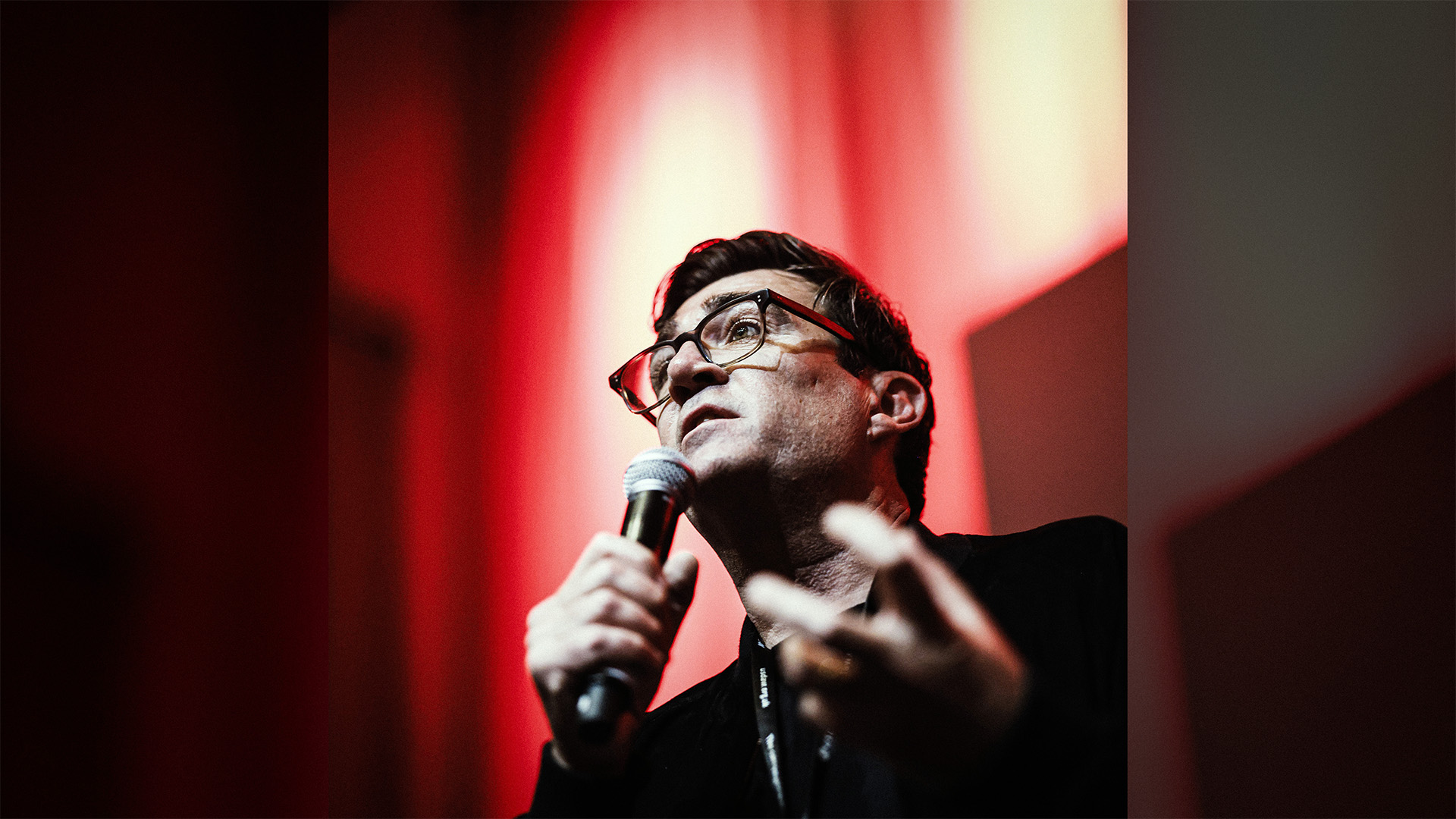
So why, 30 years on, does it matter that Andy Burnham is the first Catholic prime minister? Yes, Boris Johnson was baptised into the Church of Rome – but was later confirmed as an Anglican. Only after he left office did Blair formally convert. Burnham, in contrast, is a cradle Catholic who became an altar boy. But again – so what?
It matters, first of all, because the new prime minister has told us, with unusual but admirable candour, that it does. In a lecture last October hosted in Manchester by the Christian think tank Theos, he spoke warmly of Pope Francis – whom he met at the Vatican in April 2023 – and explicitly identified his social teaching with “the Catholicism that I remember from my upbringing – archbishop Derek Worlock, who was a big influence that era… in the early 1980s, I was an altar boy. I used to have to press the button on his tape-recorded messages in the church, and to me, that kind of church was always about speaking for people without power, those who needed to be built up.”
As archbishop of Liverpool from 1976 to 1996, Worlock was a figure of great civic and political significance, a progressive churchman who had been present at the reforming Second Vatican Council and a formidable defender of his adopted city against the Thatcher government – notably after the Toxteth riots in 1981.
“I can pray for [my neighbour’s] soul,” he said, “but I cannot turn my back on how he is to live: his wellbeing, his freedom, his prosperity or poverty, his house, his job, and so on.” In understanding Burnham’s formation, Worlock is as significant an influence as the three politicians he singled out in his speech on Friday accepting the Labour leadership: David Blunkett, Margaret Beckett and Neil Kinnock.
At the Theos event, the then Greater Manchester mayor also singled out Pope Francis’s emphasis upon a “culture of encounter” – engagement rather than suspicion, dialogue rather than hostility – as a principal precondition of the renewal of public trust. And it is hard to exaggerate how central that daunting task – the revival of the electorate’s belief in the political process – will be to his success or failure in No 10.
Reflecting upon his refusal as health secretary to cut the hospital chaplaincy service, Burnham recalled how much the presence of a priest had meant to his grandmother in the last days of her life.
“The state really had no sight of the spiritual,” he said, “and in many ways, pushed it to the margins. It didn’t want to deal with it at all. It almost saw it as a danger to even import that into the way services should be provided.”
This led Burnham to a conclusion that now seems potentially consequential: “you’ve got to see people’s health as a combination, not just of physical, social, and mental, but spiritual, too.” What might this mean in practice?
Suggested Reading
The trouble with Andy Burnham’s place-first politics
For a start, he is enthusiastic about the involvement of religious groups in the provision of services – a predisposition hitherto associated primarily with George W Bush’s “compassionate conservatism” and David Cameron’s “Big Society”. “Imagine, rather than making our faith-based organisations, our community and voluntary organisations, constantly scrabble for funding – imagine if they had… the feeling of core funding coming through to sustain them ongoing. It would be like drops of rain on barren soil, wouldn’t it?”
The centrality of devolution to Burnham’s politics also maps closely onto the Catholic principle of “subsidiarity” formally defined in Pope Pius XI’s 1931 encyclical Quadragesimo Anno. This decreed unambiguously that “it is an injustice and at the same time a grave evil and disturbance of right order to assign to a greater and higher association what lesser and subordinate organizations can do.” On this basis, centralisation is not just ineffective; it is unethical.
Closely aligned with this is the ancient ideal of “synodality”, strongly endorsed by Pope Francis, which values “ecclesial assembly” as a necessary adjunct to hierarchy. Again, we shall see whether Burnham is true to this principle and his pledge to head a collegiate and pluralist government.
To be clear: this is not proto theocracy; or the “integralism” of US Catholic post-liberals like Adrian Vermeule, according to which the state should be subordinate to the spiritual authority of the Church; or the sinister germ of a Mancunian Gilead. Quite the opposite, in fact.
In 2015, Burnham said that the conservative papacy of Benedict XVI (2005-13) had alienated him from his religion: “[I]t seemed at some point with the change of popes to click into a more judgemental mode and became much more obsessed with sexuality and issues related to sexual behaviour. And in that period, I drifted more and more away, and [Joseph] Ratzinger [Benedict XVI] said he wanted a ‘smaller, purer’ church, which I found quite terrifying, actually.”
At odds with the formal teachings of the Holy See on abortion, same-sex marriage, and trans, Burnham is what traditionalists call a “cafeteria Catholic”: picking and choosing from the doctrinal buffet. Fortunately for the prime minister, Leo XIV has made it clear that, if not quite a cafeteria Catholic himself, he is certainly not planning to pick a fight on these contentious issues.
In April, he told reporters on his flight back to Rome from Equatorial Guinea. “I think it’s very important that the unity or division of the church should not revolve around sexual matters,” he said. “We tend to think that when the church is talking about morality that the only issue of morality is sexual. And, in reality, I believe there are greater and more important issues such as justice, equality, freedom of men and women, freedom of religion that would all take priority before that particular issue.”
The second reason to take Burnham’s Catholicism seriously has much less to do with his personal history than with the very specific context in which he is becoming prime minister: to reiterate, this is emphatically not 1996, when I interviewed Blair. So much has changed in the past three decades.
Today, the settled secular mood of the mid-’90s feels very distant. After 9/11 and the surge in Islamofascism, the so-called “New Atheists” – the most prominent of whom were Richard Dawkins, Sam Harris, Daniel Dennett and Christopher Hitchens – led the charge against jihadi terrorism and Christian fundamentalism.
Suggested Reading
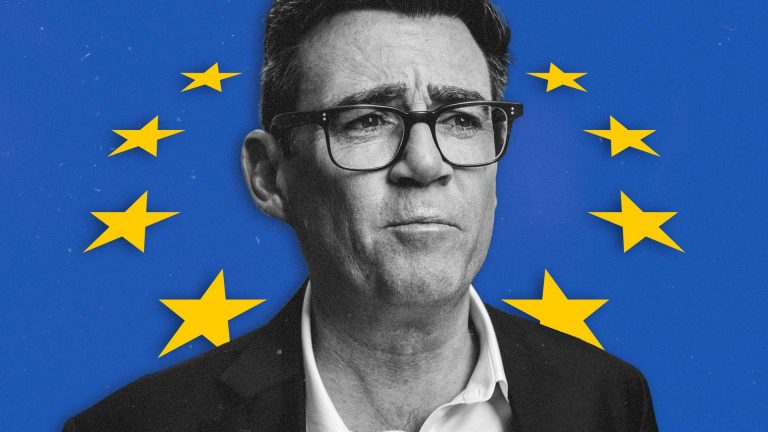
The EU’s Burnham question – is the new PM worth the risk?
Yet that campaign to stamp out what Dawkins classified as “the God delusion” fizzled out as quickly as it had arisen, consumed by internal culture wars and, more significantly, by an unexpected renewal in religious sensibility and a rolling back of what Max Weber called “disenchantment”.
It is true that church attendance figures do not suggest any scalable return to institutional religion. But this is a poor metric to use when seeking to understand popular mentalities in the digital, networked era.
Everywhere one looks – from AI millenarianism and the fixation of tech oligarchs like Peter Thiel with the Revelation of St John, via the “cultural Christianity” of Tom Holland’s great book Dominion (2019) and startling revival of pilgrimage, to what Tara Isabella Burton has called the “Remixed religions” of the young (bespoke and made-to-measure) – there is a fresh interest in the metaphysical, the mythical and the transcendent, more often experienced online than in pews or temples.
The sacred has returned to stake its claim. And this is because, at a time of immense social and psychic stress, of deaths of despair and a pandemic of loneliness, secularism has proven to be so woefully anaemic; a technocratic slogan machine entirely incapable of rolling out a map of meaning when one is most needed.
In the populist era of nationalism and wokery, political discourse has too often been reduced to what the great scholar of totalitarianism and cults, Robert Jay Lifton called “thought-terminating clichés”: on the right, “take back control” and “Make America Great Again”; on the left, “#BeKind” and “#TransWomenAreWomen”.
This is Orwellian Newspeak masquerading as argument. It offers precisely nothing to the soul. As Yuval Noah Harari has so brilliantly observed, “the entire contract [of modernity] can be summarised in a single phrase: humans agree to give up meaning in exchange for power.” Well: now we want some of that meaning back.
In this connection, the remarks of Richard Moth, archbishop of Westminster, to the BBC’s Laura Kuenssberg on July 12, were instructive. Addressing the likely appointment of the first Catholic prime minister, Moth said: “It certainly has meaning to me. I’m sure it does to him… It informs the way we think about things, certainly looking at it from a Catholic perspective, and… a really big accent on the value of the human person [my italics]”
He is absolutely right. Those who have not moved on from the ‘90s and still see politics as, essentially, a branch of economics will insist that Burnham’s prospects will depend entirely upon the cost of living, mortgage rates and growth. And, of course, there is much truth in this.
Yet what this framing fails to do is to perceive these variables in a human context and to understand that the political leaders of the 21st century are confronting familiar economic challenges in a quite new and ethically complex setting.
In the age of AI, unprecedented digital surveillance, increased longevity and the cult of “transhumanism”, assisted dying and radical changes to the definition of work, identity, allegiance, place and autonomy, voters are asking questions that simply cannot be answered on a spreadsheet. Humanity, especially thus challenged, cannot possibly be reduced to a data set or a utilitarian calculus.
It is not just that people think politicians are all the same. It is that they no longer expect them to say anything of interest, value or consequence: at best, they look forward to a spot of entertainment or “authenticity”. The “message discipline” of the 1990s has bequeathed a political culture in which everybody tries to say the same thing and nobody really says anything.
Is it not striking that by far the most significant and resonant contribution to the debate on AI in the past year has been made not by a politician or a reflective technologist but by Pope Leo in his encyclical Magnifica Humanitas?
There are 1.4 billion Catholics in the world and two billion Muslims. How many heed the words of the UN secretary-general, António Guterres? How many have heard of him?
At the heart of today’s “polycrisis” lies a crisis of meaning. My hunch – my hope – is that prime minister Burnham understands this.
Yes, he will surely wear his religious beliefs lightly. That is his style. Yet I also think that, in a quiet but unmistakable way, those convictions will be of the highest importance to what he now does.