PICK OF THE WEEK
Electra/Persona (National Theatre, London, until October 10)
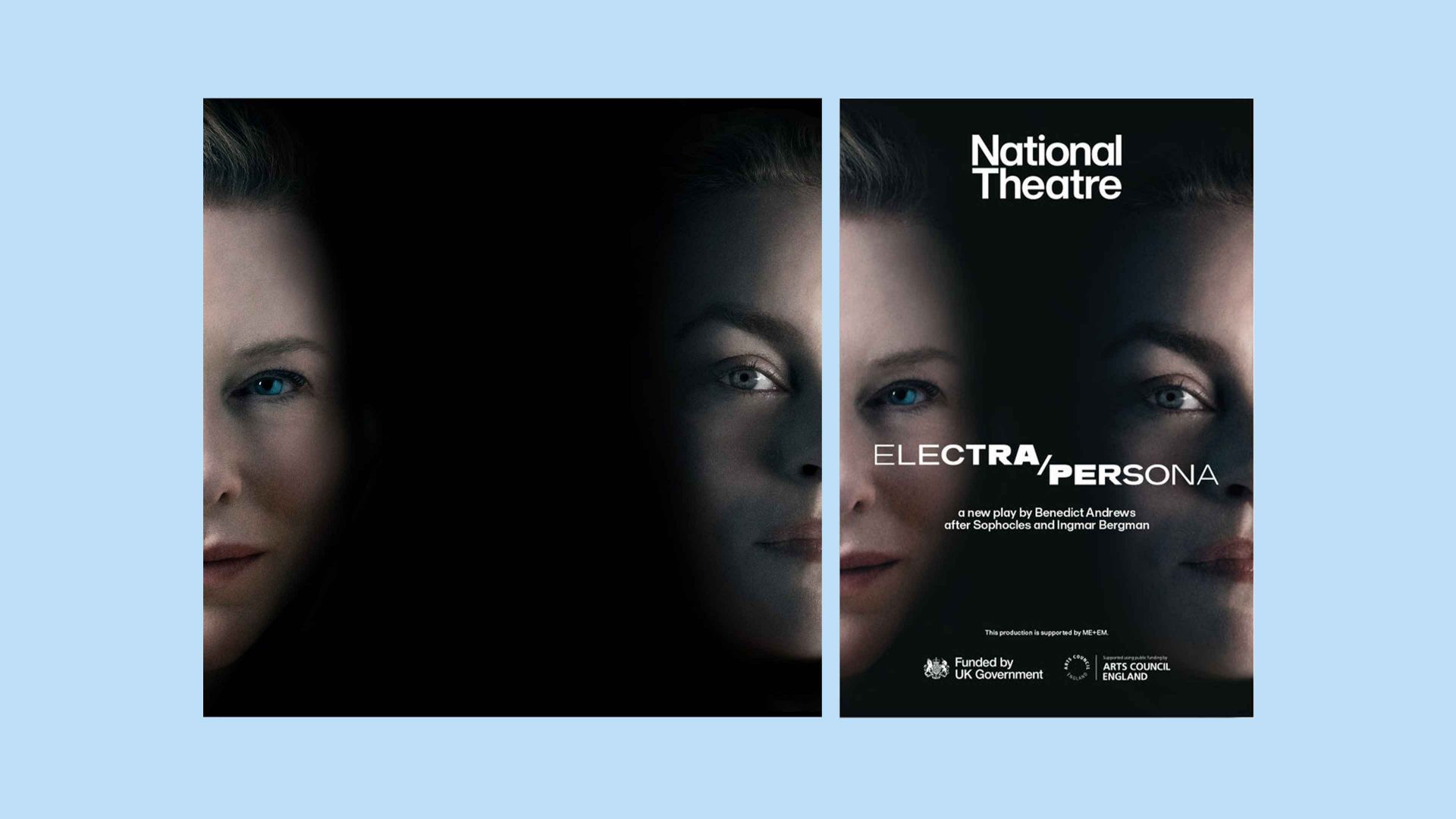
Well, I did say it was going to be a summer of myth. What started last month with Christopher Nolan’s The Odyssey now shifts to much more complex dramatic territory, as Benedict Andrews juxtaposes and mashes up Sophocles’ Electra (c.420 BC) with Ingmar Bergman’s mid-period masterpiece Persona (1966).
And, as if that weren’t ambitious enough, his two leading actors, Cate Blanchett and Nina Hoss – a welcome reunion following their sensational collaboration in Todd Field’s Tár (2022) – alternate roles from one performance to the next. So, on the evening I saw the play Blanchett took the part of Clytemnestra, who has killed Agamemnon on his return to Mycenae from the Trojan war as punishment for his sacrifice of their daughter Iphigenia; and, after the interval, of the psychiatric nurse Alma.
Meanwhile, Hoss was Electra, consumed by grief for her dead father and longing for her brother Orestes to exact vengeance from their mother Clytemnestra; and then Elisabeth Vogler, a stage star who has fallen silent for months after playing Electra in Sophocles’ drama. On other nights, the roles will be reversed.
This is, in fact, an old theatrical tradition. In 1935, John Gielgud and Laurence Olivier famously took turns as Romeo and Mercutio; 20 years later, Richard Burton and John Neville alternated as Othello and Iago at the Old Vic; more recently, in 2011, Benedict Cumberbatch and Jonny Lee Miller switched parts as Frankenstein and the Creature in a fine production, also at the National, that I was lucky enough to see.
But swapping two roles? That’s audacious. The production works as well as it does because Andrews engineers such a powerful dialogue between Sophocles and Bergman; and because of the world-class quality of the cast – Blanchett and Hoss are supported by Ella Lily Hyland as Electra’s sister Chrysothemis and then the psychiatrist Anna, and by Patrick Robinson as Clytemnestra’s lover Aegisthus and Elisabeth’s unnamed husband.
Characteristically, Andrews lets the two texts seep into one another: in desperation, Clytemnestra tells Electra that she has found her “a clinic”; and there are moments of Sophoclean cruelty and violence in the second part of the production. He also imports much that is entirely new, including a significant (though unattributed) reading by Alma from Roy Scranton’s Learning to Die in the Anthropocene: Reflections on the End of a Civilization (2015).
This is emphatically not a standard double bill but something beguiling and unique. Sophocles explores the archetypal roles within which people are trapped by destiny and the gods: the mother seeking vengeance for her daughter, the daughter defined by seething grief for her father.
Bergman, on the other hand, is intrigued by the modern fluidity of the self and the multiple roles that a person plays. Are any of them real? And is Alma’s garrulous self-disclosure more or less power-hungry than Elisabeth’s determined silence?
In homage to the movie, Andrews makes extraordinary use of a camera and a large screen, recreating (amongst much else) the iconic shot in which the faces of Alma and Elisabeth merge. His magnificent production ends with a prayer to the gods, as timeframes separated by more than two millennia merge into one. Theatrical art of the highest and most enthralling quality.
Suggested Reading

The profound lesson Tony teaches us about Anthony Bourdain
FILM
& Sons (selected cinemas)
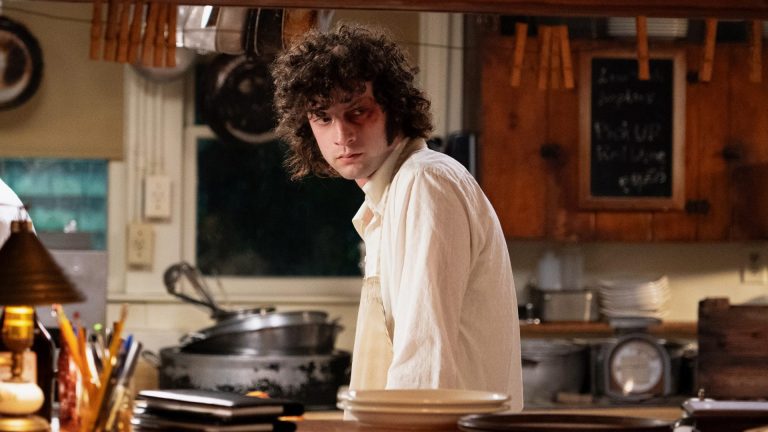
Looking more like a long-haired, bearded Aleksandr Solzhenitsyn than his usual dapper self, Billy Nighy is Andrew Dyer, an ageing literary legend, in Pablo Trapero’s absorbing adaptation of David Gilbert’s 2013 novel. Subsisting on booze and pills, Dyer lives with his youngest son, 17-year-old Andy (Noah Jupe), and Czech housekeeper Gerde (Anna Geislerová), both of whom are understandably fretful about the state of the patriarch’s health.
For his first English-language movie, Trapero and his Oscar-winning co-writer Sarah Polley, have shifted the story from Manhattan to Oxfordshire, where Dyer shuffles around his Georgian mansion, a jaded lock-in for 20 years, listening to jazz but creatively inert. They have also significantly changed Gilbert’s ending (to the movie’s benefit, I think).
Posturing as an etiolated Lear, Dyer summons his elder sons for a family conference. Richard (Johnny Flynn) is a screenwriter, with a secret plan to turn his father’s greatest novel, Saturn’s Salute, into a blockbuster, and a recovering addict with five years of sobriety under his belt; while Jamie (George MacKay) is a flailing artist who, wherever he goes, records everything on video camera.
They both despise Dyer for the pain he caused their mother Isabel (Imelda Staunton), whose heart was broken when he had an affair and fathered Andy. As Jamie reminds him: “Mum was catatonic for a year.”
In the course of an awkward and spiky summit in his study, Dyer makes an astonishing claim about Andy’s true identity which leaves Richard and Jamie reeling in disbelief. I will not spoil the nature of his bombshell except to say that it is sci-fi-adjacent; but that, much to the credit of Trapero and the exemplary cast, its sheer wildness does not derail the movie.
As becomes powerfully clear in Dyer’s reunion scene with Isabel – Nighy and Staunton firing on all cylinders – & Sons is a really a moral exploration of the quest by failed men for redemption as fathers and husbands, and their narcissistic (and unforgivable) hope that their children will simply be better versions of themselves, “the possibility of what could have been.” Vainglorious artist that he is, Dyer is fixated not by the happiness of his sons but by his own legacy: “What it is that we leave behind.”
Boosted by a comedy wardrobe of frayed leisure gear, Nighy’s effortless wit – “I am actually old enough to be drunk at any hour” – leavens what is otherwise a plangent and often heart-wrenching story. Dyer is clever enough to know that his life has been “a parody of living” but lacks the wisdom to do much about it. And therein lies his tragedy.
Suggested Reading

What happened to Marisol, the celebrity artist who disappeared?
TV
Ludwig (BBC One, iPlayer)
By coincidence – not that sleuths believe in such a thing – two terrific English detective series return for their respective second seasons in the same week. The first features David Mitchell in splendid form once again as John Taylor, AKA acclaimed puzzle-setter, “Ludwig”, who was pressed into service when his identical twin DCI James Taylor (also Mitchell) went missing and sister-in-law Lucy (Anna Maxwell Martin) sought help.
Now an official crime scene consultant at the Cambridge Police Authority, John is partner in all but name to DCI Russell Carter (Dipo Ola) – who is still mourning the death in a car crash of his fiancée Mandy, daughter of chief constable Ronan Ziegler (Ralph Ineson, variously familiar as Finchy in The Office and Galactus in The Fantastic Four: First Steps). The professional chemistry between James and Russell, still hesitant and intermittent, is at the heart of this second tranche of six episodes.
So too is the search for answers about John: alive but very much in the shadows, trying to unpick what he believes is a dark and murderous dynastic conspiracy. Enter local MP, Joanne Kemper (Sian Clifford, so good in last week’s Lady), who is tipped for No 10 and close to the chief constable. What game is she playing?
Karl Pilkington is back as James’s former partner, DI Matt Neville, as are Dorothy Atkinson as DCS Carol Shaw and Dylan Hughes as Henry Betts-Taylor. New to the ensemble are Mark Bonnar as Gareth Fisher, editor of the local paper where Lucy secures a gig as a freelance photographer (enabling her to play gumshoe too); Ben Ashenden as DC Ethan Cole, who decides John is an embedded MI5 agent (a misapprehension he of course does nothing to correct); Rumi Sutton as DC Caitlin Sullivan; and Michael Wildman as DCC Clint Radley who clearly knows more than he is letting on. There’s also a hilarious cameo in episode four from Stephen Merchant as a nasty snooker player with a chip of chalk on each shoulder.
The comic engine of the show, created by Mark Brotherhood, remains Mitchell who brings depth, pathos and eccentric charm to what might otherwise be generic cosy crime. Nobody can deliver a line like “Pac-Man was created on a napkin!” or “We need to uncover who didn’t do it” with such panache; or sound so nervously plausible as he asks DCS Shaw if he can “go home now”. A third season is already in the works.
Suggested Reading

The strange death of sex in the movies
TV
Bookish (U&Alibi via Sky, NOW and Virgin Media, August 26)
…and the second series, set in postwar London, stars its creator, the great Mark Gatiss, as Gabriel Book, a Molière-quoting antiquarian bookseller and amateur detective, who advises Inspector Bliss (Elliot Levey) on his murder cases and has a letter from Churchill in his pocket which opens many doors.
Gabriel is still happily married to his beloved childhood friend Trottie (Polly Walker): a platonic relationship, for he is gay and homosexuality still harshly prosecuted. Jack Blunt (Connor Finch), a former convict revealed to be the son of Book’s German lover Felix (Jonas Nay), lives with them and works in the shop – as, part-time, does war orphan Nora (Buket Kömür)
As in season one, there are three two-part stories: Memento Mori, Dead Man’s Whistle and Killer Nacht, in the third of which Gabriel and Jack head to Germany on top-secret business for eye-patch wearing spook “E” (Simon Callow). Meanwhile, Trottie is pursued by the dashing Colonel Reggie Winters (Rupert Graves). And there are guest star appearances by Jason Watkins and Miranda Richardson.
At the preview I attended, Gatiss talked about the deep research he and fellow writer Matthew Sweet undertake (with particular reference to Angus Calder’s 1969 classic The People’s War) to ensure that they capture the reality of London in 1946: bananas and nylons are rationed, traitors are still going to the gallows, and the cold war is beginning to make its chilly presence felt.
And – yes – a third season is on its way, with a two-part Christmas special already in the can.
 Most popular


My truly deranged encounter with Trump apologist Kellyanne Conway


The moral depravity of Robert Jenrick


Is this the real reason Trump keeps falling asleep in public?

Suella Braverman’s book has sold only 106 copies. This is why