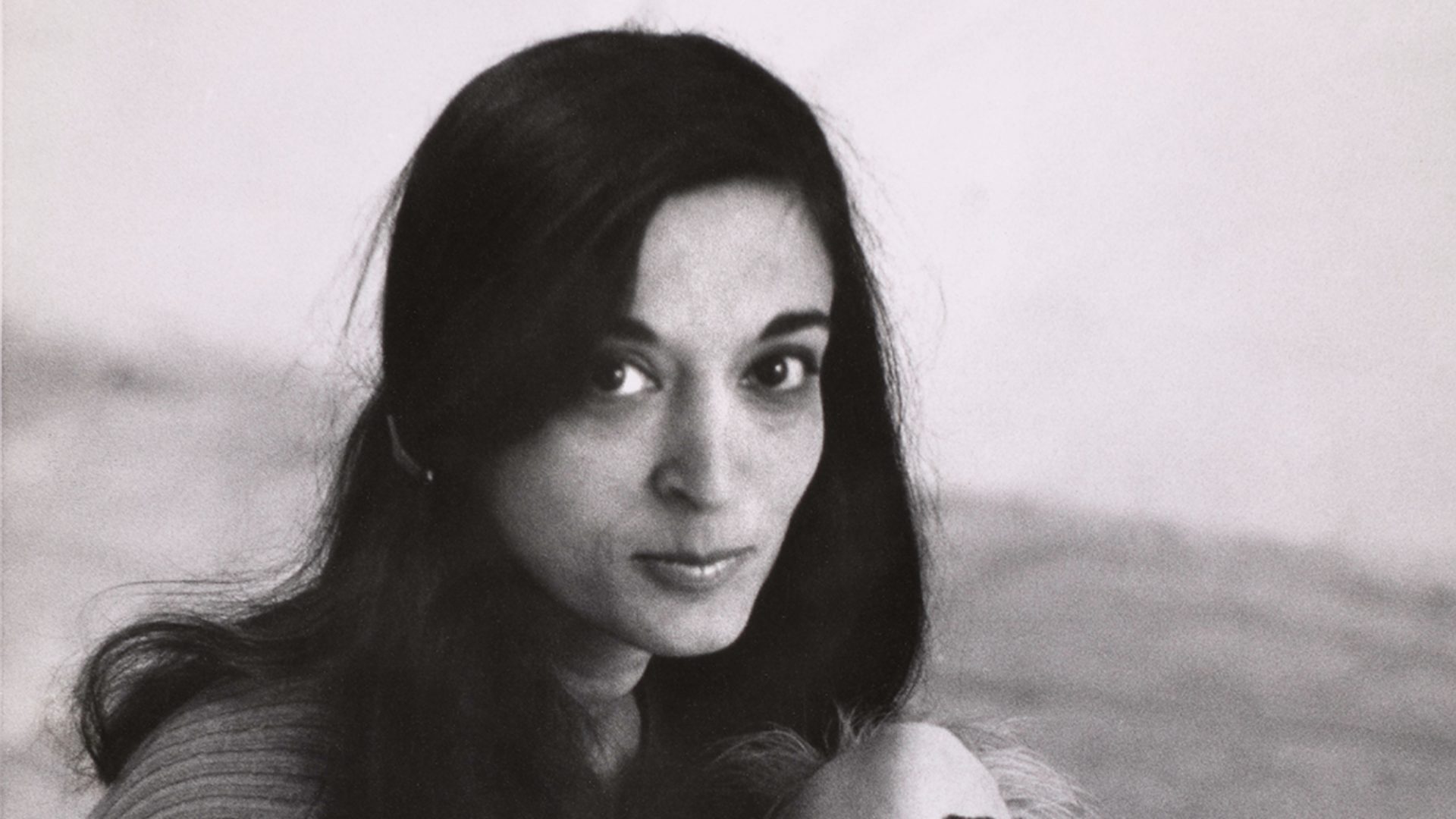
When the Venezuelan-American artist Marisol was 11, she fell silent, a state that she purposefully maintained for years and never entirely relinquished.
Not speaking was her response to the trauma of her mother’s suicide in 1941, after which drawing became her principal means of communication. By the 1960s, she was a sculptor whose exhibitions attracted snaking queues of visitors, her reticence glamourised by journalists who crowned her “the Garbo of the art world”. But when she disappeared from the New York art scene at the end of the 1960s, it was as if she had never existed at all.
Centro Botín’s current exhibition explains that this was neither the first, nor in reality the last time, that Marisol Escobar slipped from public view. Its title comes courtesy of her astonished gallerist Leo Castelli, who, on learning that she planned to follow her successful 1957 New York debut with a flit to Europe, asked: “How can you leave when things are just beginning?”
Perhaps she was never fully present in the first place – unlike other stars, abandoning her surname (a process that seems to have begun in her teens) seems to have been less an insistence on her fame than an indication that a part of her had already left the room.
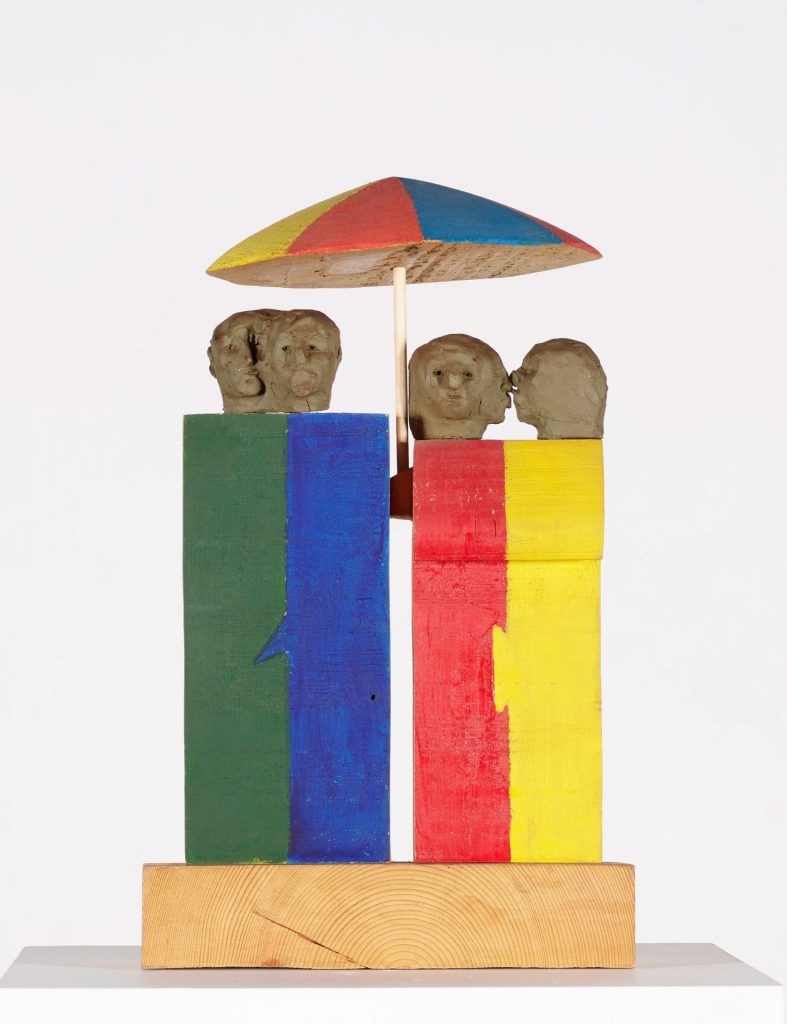
Marisol is best known for carved and often painted wooden figures, made mostly after her return to New York in 1960, among them lifesized portraits of famous figures from Hugh Hefner and John Wayne to the Kennedy family, Harold Wilson, General de Gaulle and the British royal family.
Prolific and attention-grabbing as it was, this period of Marisol’s career amounted to a decade at most, which was brought to an abrupt halt in 1968 when, in a repeat of her European exit almost 10 years earlier, she left New York for Asia. When she returned, the 1960s had rolled into the 1970s, her friend Andy Warhol had been shot, and the city’s art scene had moved on without her.
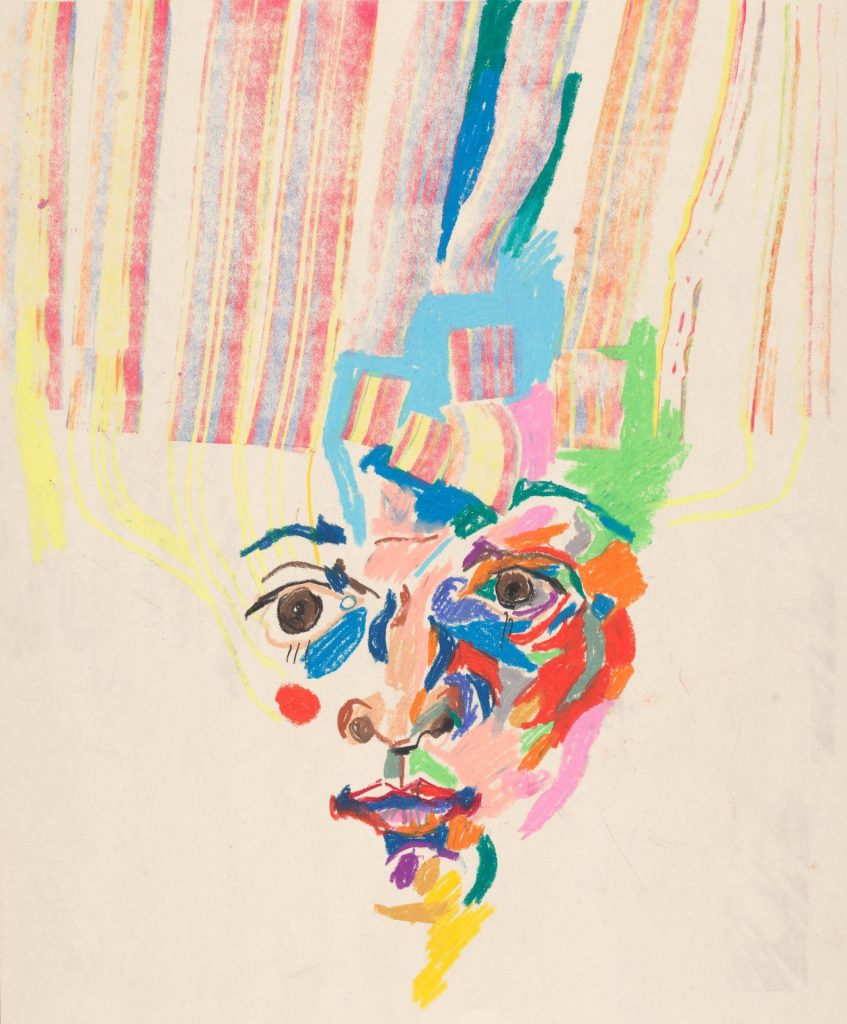
Against these soaring highs and lows, Marisol’s lifelong commitment to drawing offers a reliable constant that spans the artist’s earliest memories and the Alzheimer’s that claimed her last years. Staged in collaboration with the Buffalo AKG Art Museum, to whom the artist bequeathed her estate at her death in 2016, When Things Are Just Beginning features a wealth of sculptures and archival material in an exhibition that, through drawing, finds deeper connections between phases of her career.
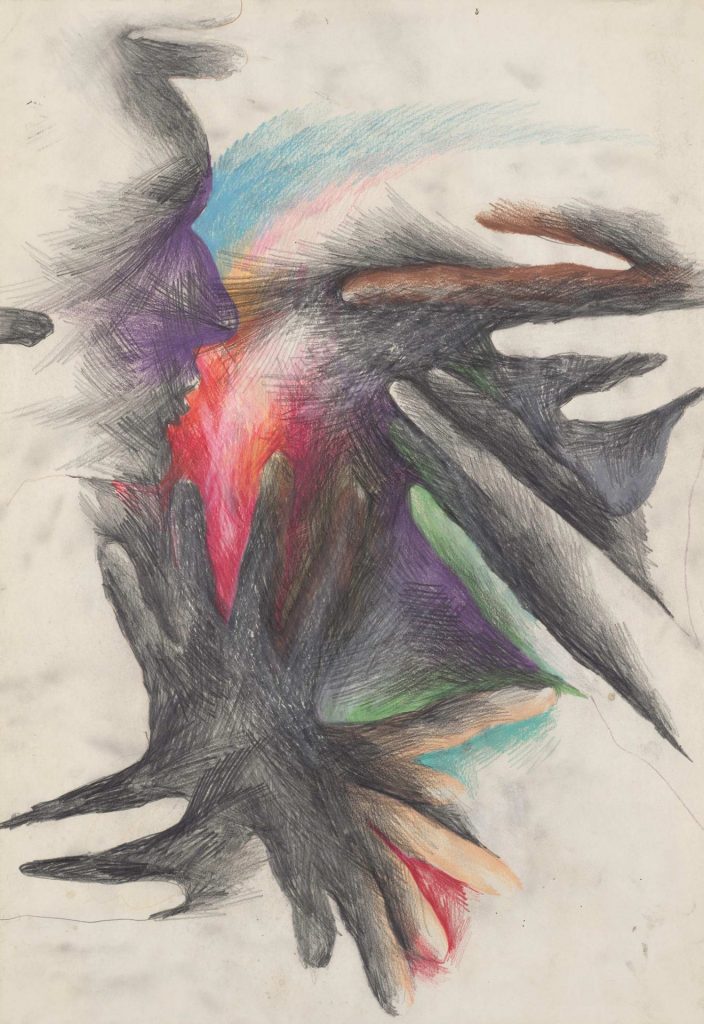
One highlight from Centro Botín’s expansive show is a sketchbook from 1958-1960, discovered in its hiding place under the artist’s studio carpet. Its 16 pages contain all the colours of her crayon box, the carefully drawn outline of a face or hand embellished with brilliantly coloured ovals that here are eyes, or lethally manicured fingernails, but there are petals and elements of a geometric design, as neat as a stained glass window.
Areas of vigorous but controlled pencil strokes suggest intense discipline, and the overall effect is of the work of a highly conscientious child. In places, the drawings are annotated with cryptic phrases that read like snippets of conversation. “Your gift is dying” is one example. “Your gift bloomed” is another.
Despite their vivid colours, the drawings are wearily melancholic, their practised repetitions suggesting forms and motifs developed over time, perhaps as a form of self-soothing. In addition to the incalculable impact of her mother’s death, for which she blamed herself, her peripatetic life, which involved regular changes of school, as the family moved from Paris to Caracas, New York and Los Angeles, presumably added to a profound sense of rootlessness.
As private and introspective as these drawings seem to be, their shifting forms present a link to the sculptures of the 1950s and 1960s, and their preoccupation with the body. The monochrome bronze sculpture Triumph (1959) seems entirely its own category, but its multitude of tumbling figures ties it to brightly coloured drawings from the same time, in which figures and faces transform, disintegrate and multiply.
Against the vigour of the drawings, the sculptures are noticeably static, emphasised in Andy Warhol’s films, such as Marisol Exhibition, 1964, in which the artist poses next to her sculpture Women and Dog, 1963-64, so still that she might almost be mistaken for one of the figures.
Warhol was fascinated by Marisol, and almost certainly modelled his own enigmatic persona on her example. They were great friends, but from today’s vantage point it’s hard not to conclude that Warhol, who described her as “the first girl artist with glamour”, helped to cultivate what became an obsession with her looks.
Marisol’s appearance was routinely exoticised, and in a Life magazine article that showed her surrounded by carved wooden figures, inspired by an exhibition of Pre-Columbian sculpture, she is described as a “Latin beauty” almost a full paragraph before she is described as a “sculptor”.
Time magazine was equally entranced, and opened its June 1963 feature with a description: “Marisol is a black-haired, wide-eyed, unmarried woman of 33 who speaks in monosyllabic whispers so faint that by comparison Jackie Kennedy would sound like a cheerleader.”
For Glamour magazine, she was profiled by none other than Gloria Steinem, who wrote that “In a town where either talent or a beautiful face are cachet enough, Marisol has both.” But though Marisol certainly had both beauty and talent, Steinem was wrong if she thought that Marisol would be given free rein with both.
Suggested Reading

The tiny dolls with souls at the heart of a museum repatriation debate
Though Marisol achieved considerable acclaim, and represented Venezuela at the 1968 Venice Biennale, her wider celebrity rested on her taciturn beauty. So long as her art was fun, and gently irreverent, with the references to sexual and cultural violence that are so obviously implied in her 1962 sculpture of a fellated Coke bottle, veiled in Pop Art’s throwaway humour, Marisol was treated as an exotic but ultimately harmless entertainment.
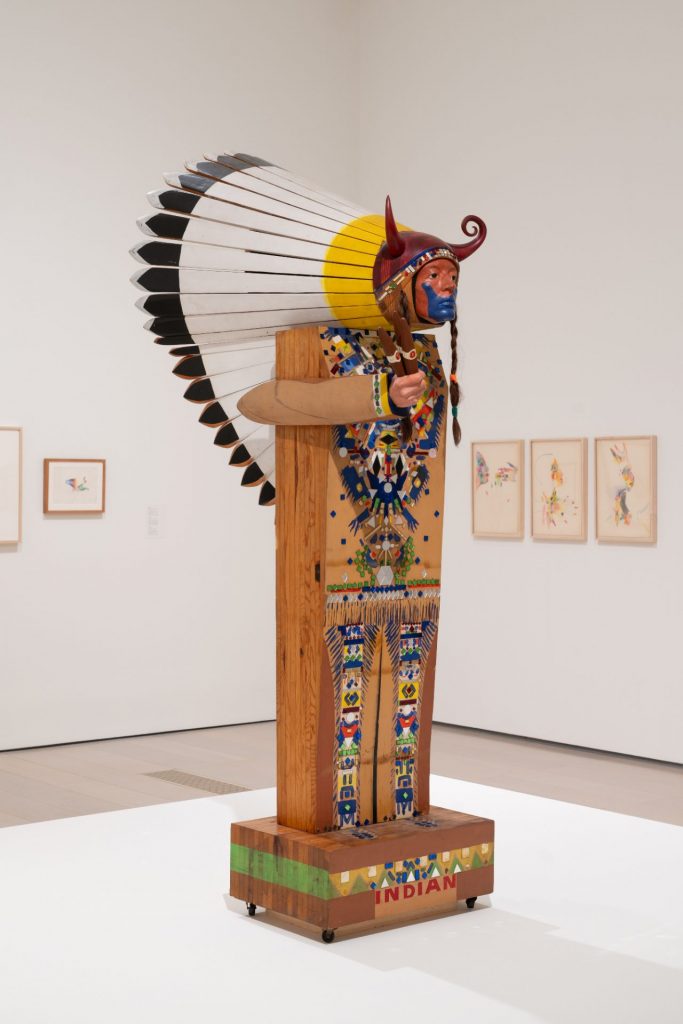
As the 1960s hardened into an urgent political arena defined by feminism, the civil rights movement, and anti-Vietnam war protests, Marisol’s art shifted accordingly, her 1969 sculpture Indian a challenge to the casual racism of the traditional “cigar store Indian”.
On her return from Thailand and India, her work was less obviously rooted in popular culture, angrier, and fatally, less fun. She worked with the choreographer Martha Graham and used her own mask-like face in surrealist oddities such as Triggerfish I (1970). The sculptures remain disparate and resolutely mysterious, but in the drawings Marisol allows a glimpse behind the mask.
Marisol: When Things Are Just Beginning is at Centro Botín, Santander until Oct 25