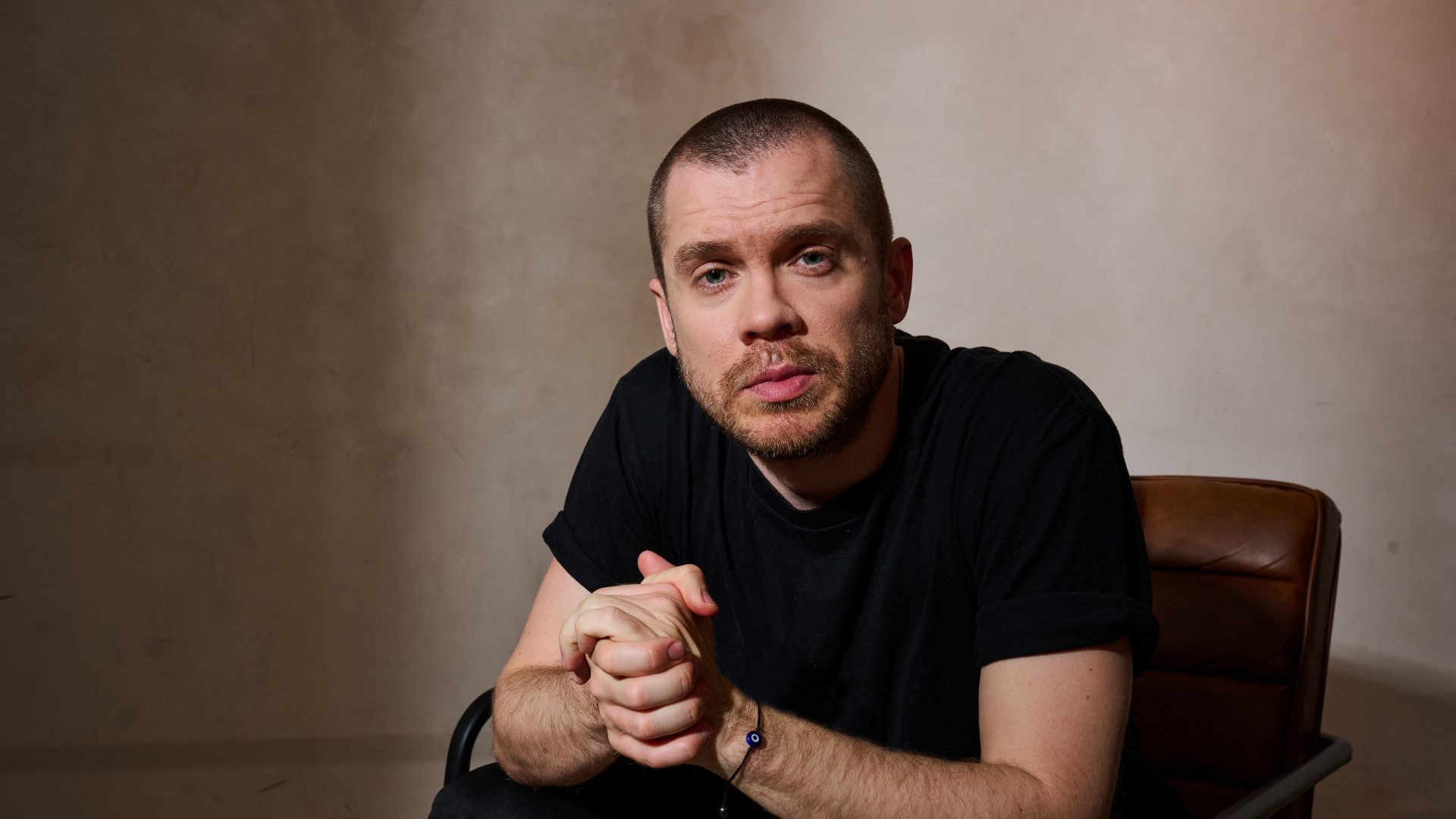
A hot July evening in an ancient quarter of London: in the packed nave of Southwark Cathedral, it is mercifully cool for the hundreds of us who have gathered to hear Dr Martin Shaw talk about his masterly book Liturgies of the Wild: Myths That Make Us with Lord Rowan Williams, former Archbishop of Canterbury, and actor and director Sir Mark Rylance.
In this Gothic house of worship – a lone bird fluttering under the high vaulted ceiling, occasionally shedding a feather – the energy of myth, legend and folk memory crackles between the three friends and sages. Wearing his signature fedora, Shaw tells tales old and new, weaving his narratives as if drawing lore from the air. Williams talks of the storytelling task of ministry and reads a poem he has written in response to George Herbert’s Man (1633).
Rylance also recites one of his own compositions, a heart-breaking reflection upon the death of his daughter, inspired by a journey he and his wife made to the Grand Canyon and “a great geological nonconformity” they witnessed in the strata. He also sings, a cappella, Bob Dylan’s Dark Eyes. It is an enchantment.
It is also very much in keeping with what is turning into a summer of myth – a form which Shaw describes in his book as “an ancient technology that enables emotional literacy”; “a crossroads between the timeless and the time-bound… connecting tissue between us and the universe”; and “the original ecstasies: tales ground down by the gleaming teeth of wolves, containing the whispers of a Ghanaian grandmother, fulsome with the blue longings of the moon.”
Suggested Reading

The awful truth about the revolting film Elon Musk wants you to watch
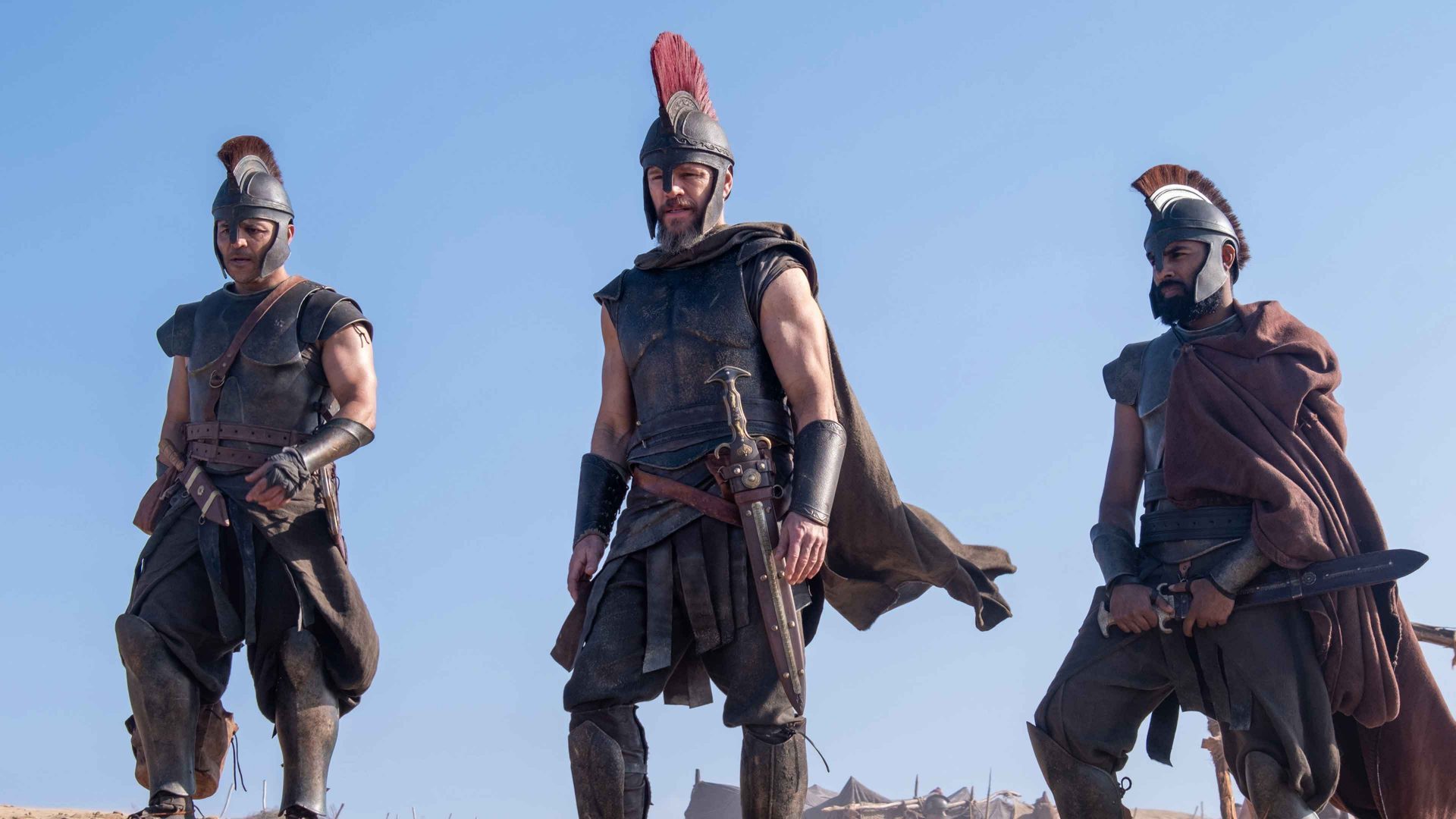
At the centre of it all is The Odyssey (general release, July 17), directed by Sir Christopher Nolan and already a box-office hit. When an early tranche of tickets for the IMAX adaptation of Homer’s epic poem went on sale a year ago, they were snapped up with the speed of Glastonbury passes. In the first 24 hours of regular pre-release sale last month, major venues reported early takings of at least $5 million. It is likely that Nolan’s new movie will outperform his Oscar-winning Oppenheimer (2023), which grossed $976 million.
Starring Matt Damon as the returning warrior king Odysseus, Anne Hathaway as his Spartan-born queen Penelope and Tom Holland as their son Telemachus, The Odyssey is the mighty heart of this season of myth. A 15-minute walk from Southwark Cathedral, Simon Stone’s re-telling of Aeschylus’s The Oresteia, with a cast including David Morrissey Mary-Louise Parker and Tom Glynn-Carney, has just opened at the Bridge Theatre (until September 19).
Yann Martel’s latest novel, Son of Nobody, tells the story of a Canadian classicist working at Oxford who discovers a lost account of the Trojan war, the Psoad; while Henry Power’s Homer-Haunted: The Many Afterlives of an Ancient Poet, a new history of the Iron Age bard’s cultural impact across three millennia, is published on July 14.
Emily Wilson’s magnificent 2017 translation of The Odyssey, which has already sold more than 500,000 copies, and been cited by Nolan as a creative catalyst – especially because of her rendering of Homer’s first line, “Tell me about a complicated man” – has found a second wind among book-buyers in anticipation of the movie.
The National Gallery, meanwhile, has organised special tours of Homeric paintings in its collection. Next month, Cate Blanchett and Nina Hoss will star at the National Theatre in Electra/Persona, written and directed by Benedict Andrews, part-inspired by Sophocles’ tragic account of the grief of Agamemnon’s daughter. And in September, Ava Pickett’s new play, Bloodsport: After Helen of Troy, with Michelle Dockery and Laura Aikman, receives its premiere at Stratford East.
In an age of dislocation, atomisation and digital bombardment, we are reaching instinctively for primordial maps of meaning that have survived the rise and fall of civilisations. “The man who thinks he can live without myth or outside it is an exception,” wrote Carl Jung in 1912. “He is like one uprooted, having no true link with either the past, or the ancestral life within him, or yet with contemporary society.”
In A Map of Misreading (1975), the great chronicler of the literary canon, Harold Bloom, was more specific: “Everyone who now reads and writes in the West, of whatever racial background, sex, or ideological camp, is still a son or daughter of Homer.” The Bible represents the cultural inheritance of Jerusalem; The Iliad and The Odyssey, the symbolic legacy of Athens.
But why should the tale of an Achaean general’s return – his nostos – from the Trojan war to the Ionian island of Ithaca, recounted in 12,100 lines of dactylic hexameter, strike a chord in the world of TikTok and Instagram, online dopamine hits, and ceaseless distraction?
One direct answer is precisely that the struggles of Odysseus on his ten-year journey home are defined by his ability to marshal and control his attention: most vividly in Book 12, as he is lashed to the mast of his ship to resist the song of the Sirens. “If I beseech and command you/ to set me free,” he instructs his crew, “you must increase my bonds/ and chain me even tighter.”
On the island of the Lotus Eaters, two of his fellow warriors, accompanied by a slave, yield to the temptation of the narcotic fruit, losing the will to return to the fleet. But not Odysseus, who maintains his focus: “I dragged them back/ in tears, forced them on board the hollow ships,/ pushed them below the decks.”
In our own time, the ability to emulate this example, to keep the mind from wandering, has become a form of quiet heroism. As the psychiatrist and philosopher Iain McGilchrist writes in his increasingly influential book, The Master and His Emissary (2009): “Attention is a moral act: it creates, brings aspects of things into being, but in doing so makes others recede. What a thing is depends on who is attending to it, and in what way.”
Of course, there is no shortage of sword-and-sandal action and thrilling escapism in The Odyssey. But – unlike Achilles, the main protagonist of The Iliad – Odysseus is not primarily defined by his prowess as a soldier. He is, instead, a polytropos: a man of many turns, resourceful, complex, cunning, the mastermind of the Trojan horse stratagem, a figure seeking to turn guile and resilience into wisdom.
In this context, it is important to remember that half of the epic’s 24 books concern the challenges he faces on returning to Ithaca and the difficulty of restoring order to the home he left 20 years before. Central to this is the Homeric ideal of xenia: hospitality, the harmony of the household and the rules that are so flagrantly abused by the 108 suitors who plunder Odysseus’s wealth and seek Penelope’s hand (a gang led by Antinous, played in Nolan’s movie by Robert Pattinson).
Suggested Reading

Larry David, the surprising standard-bearer for American hope
This speaks powerfully to any age troubled by anxiety that the notion of home, reciprocity and social stability is in jeopardy. In the absence of its king, Ithaca is fatherless, and the first four books – the so-called “Telemachy” – recount the trials of Odysseus’s son as he addresses this corrosive absence, seeks to expedite the patriarch’s return and matures into manhood himself. His is the eternal struggle of youthful masculinity deprived of a role model – a struggle that, in our own time, has led to the hateful flourishing of the “manosphere.”
Myth is inexhaustible in its mutations and adaptations, which is why each generation has imagined The Odyssey afresh. In Ulysses (1922), James Joyce quarried Homer’s epic to construct one of the founding texts of literary modernism, with Leopold Bloom taking the role of the returning king, Stephen Dedalus as counterpart to Telemachus, Molly as a bawdier version of Penelope and 7 Eccles Street as Dublin’s Ithaca.
In Omeros (1990), Derek Walcott transplants The Iliad and The Odyssey to postcolonial St Lucia. More recently, the story of Odysseus has been revised through the feminist lens: notably in The Penelopiad (2005) by Margaret Atwood, in which the queen of Ithaca wryly interrogates her husband’s account of his deeds (“It’s always an imprudence to step between a man and the reflection of his own cleverness”) and Madeline Miller’s international best-seller Circe (2018), which tells the story of the Odyssey through the eyes of the eponymous goddess (played in Nolan’s movie by Samantha Morton) with whom Odysseus spends a year on the island of Aeaea.
The relationship between the human and the divine has long been integral to such stories: Odysseus is protected on his travels by Athena (Zendaya), is spellbound and captive for seven years on Ogygia, the island of Calypso (Charlize Theron), and does battle with the cyclops Polyphemus (Bill Irwin), the son of Poseidon. Helen of Troy (Lupita Nyong’o), whose abduction triggers the most legendary of all wars, is the daughter of Zeus himself.
In the very particular case of Christianity, as CS Lewis wrote in 1944, “myth became fact”: the “old myth of the Dying God, without ceasing to be myth… happens – at a particular date, in a particular place, followed by definable historical consequences.”
The stories of The Iliad and The Odyssey may or may not have roots in the real-life conflicts of the Bronze Age Aegean world. But literal belief that Jesus of Nazareth was God incarnate, lived at the time of historically identifiable figures (Herod, Pontius Pilate, Caiaphas, Quirinius) and was resurrected, is non-negotiable in most Christian denominations.
Drained of the divine and the numinous, modern secularism has struggled with myth. In Mythologies (1957), the literary theorist and semiotician Roland Barthes tried to redefine myth as “a type of speech”, and “a semiological system”. The 53 short essays that Barthes collected in this volume are full of insight – his famous analysis of all-in wrestling remains one of the best prophecies of the political style of Donald Trump – but their penetrating intelligence is not matched by the narrative force of ancient legend. It is hard to imagine Nolan, or any other director, making a movie inspired by their twisty rive gauche cleverness.
As Alex Evans notes in his important book, The Myth Gap (2017), “we need new myths that speak about who we are and the world we inhabit.” Scrutinising the particular case of climate change, and the failure of science, targets, statistics and acronyms to mobilise popular emotion, he rightly seeks stories that “speak directly to a profound yearning in all of us, an instinct that while the world may be broken, it can also be made right again, and that this may at some level be what we are here to do.”
In the hollowed-out public square of 2026, we need bards more than we need barristers, tellers of tales more than technocrats. This is especially so as the once-mighty mythology of the post-war era fades in memory; as the map of meaning that arose after 1945, asserting universal rights, a strong international order and a renunciation of ethno-nationalism, loses its grip upon the global imagination.
So we need to conjure fresh narratives to guide us as we wrestle with the capricious gods of artificial intelligence, algorithmically driven cognitive decline, mutating pandemics, global warming, nuclear proliferation and resurgent nativist conflict.
And in the meantime, we return, as we always have and (one hopes) always shall, to ancient stories. In Liturgies of the Wild, Shaw writes that “myths tell us about the conditions of life, what to expect, what it looks like”, are “old codes for a new world”, “technologies for defeating demons” and “a jumble and a jungle, a loving swoon in the face of inky black night.”
Suggested Reading
Olivia Wilde’s The Invite is the year’s best film so far
We are, he says, “wandering initiatory times but lacking an initiatory language” and must not settle for soulless pseudo-myths “that challenge nothing, and engage only in a rather tedious celebration of ourselves and only ourselves.”
His is not a reactionary plea but a fiercely contemporary call to action: “without these stories testing and deepening us, we remain as children, even as the house burns.” In these urgent times, I think we need mythographers like Shaw, Malcolm Guite (author of a stunning re-telling of Arthurian legend, the second volume of which is published in November), and Riane Eisler (whose 1987 classic The Chalice and The Blade presented a dazzlingly original notion of myth, rooted in equality of the sexes) no less than we need policy experts, polemicists and lawmakers.
The healthy polis must have campfires, hearths of shared meaning and temples as well as legislative chambers, administrators and billions of screens. And we have mostly forgotten this.
Yet myths cannot be extinguished: they are eternally neglected, eternally rediscovered. They hurtle down the centuries, plough through cultural crash barriers, demanding to be retold. The question is what we do with them, how we enrich them, the vigour with which we replenish them.
From cathedral to cineplex, and everywhere in between, we are a myth-hungry species: all of us Odysseus, finding our way home across a wine-dark sea; all of us on the shore of Ithaca, waiting for the world to be made whole again.