
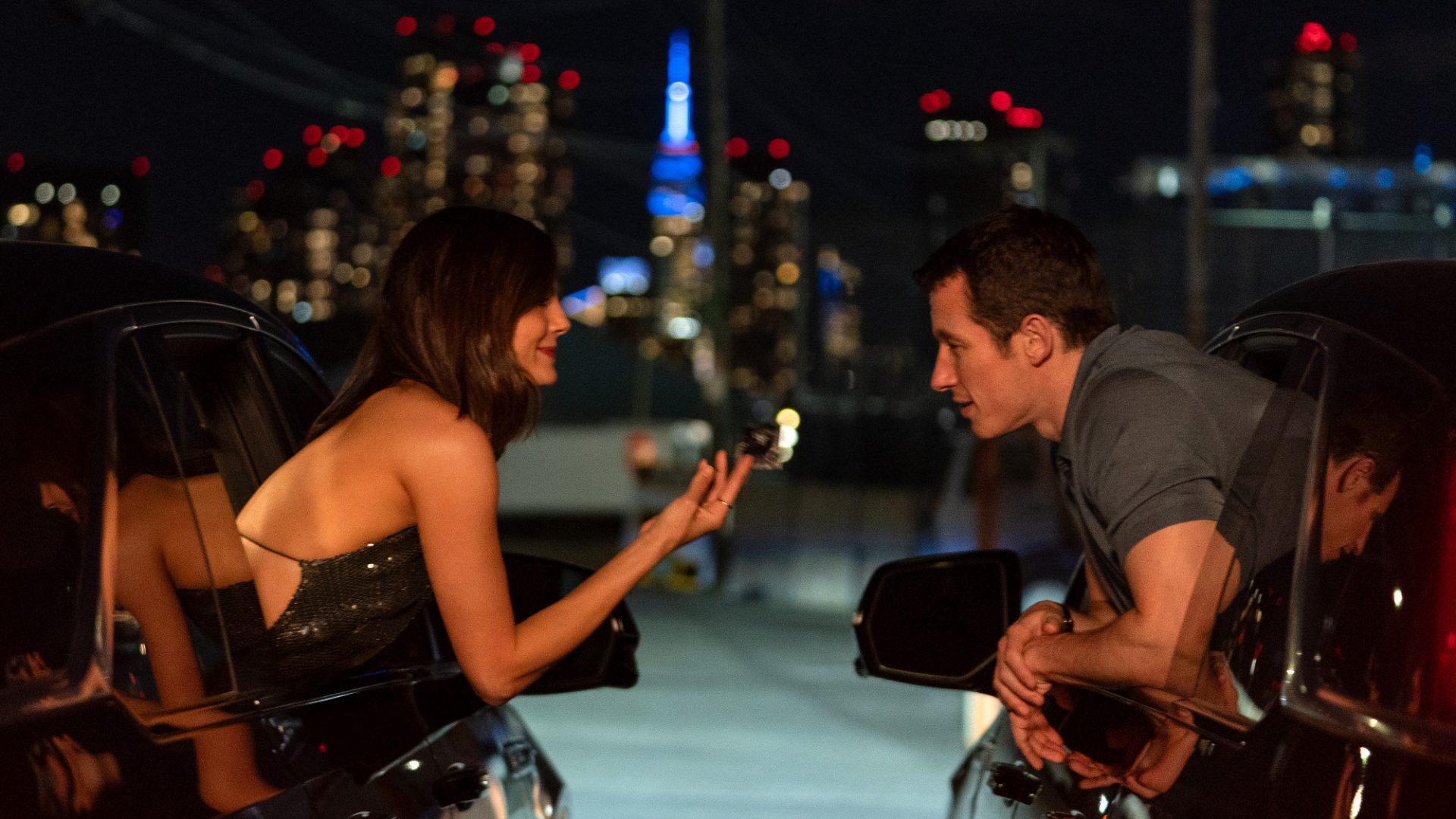
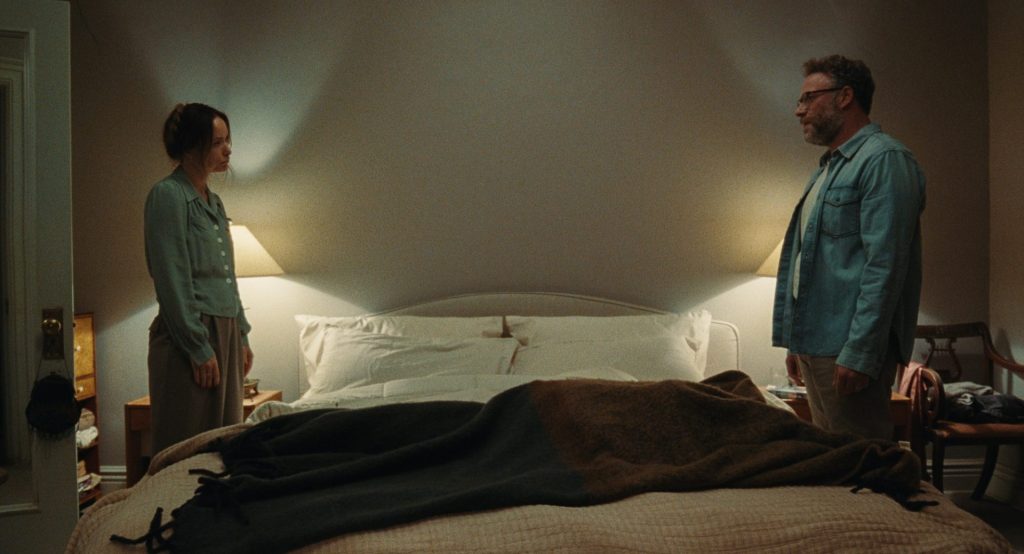
Go to the cinema this year and get ready to get your rocks off. You’ve got The Invite in which you’re offered the prospect of Olivia Wilde, Seth Rogen, Penélope Cruz and Edward Norton swinging in an excellent comedy à la Bob & Carol & Ted & Alice.
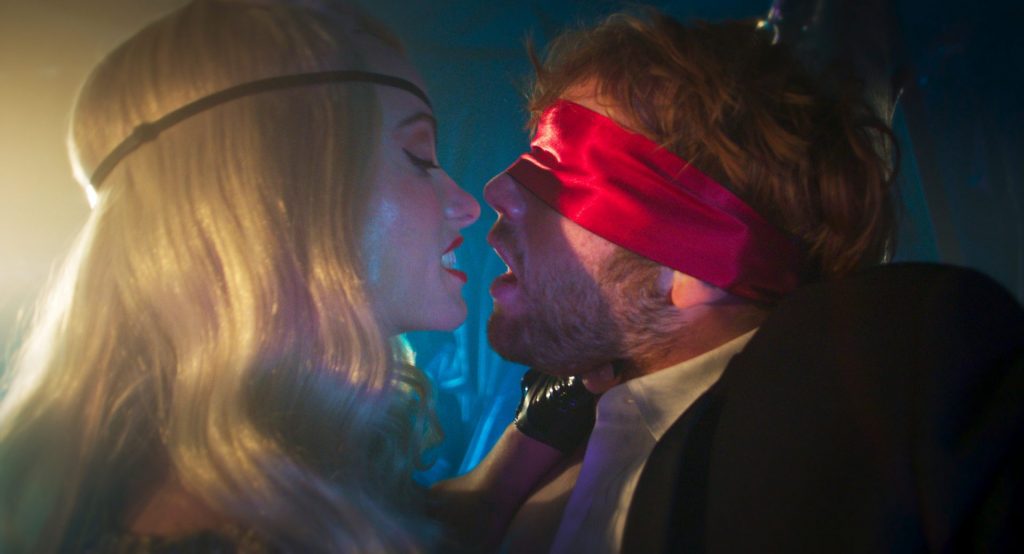
You’ve got Olivia Wilde – again – in Gregg Araki’s I Want Your Sex, a sub-dom romcom. And you’ve got One Night Only, The Purge meets Porky’s, a movie set in an America where premarital sex is allowed only once a year for a 12-hour period. How it wasn’t called The Splurge is beyond me.
Yet despite all the teasing, only one of the three pics features anything more than a pair of buttocks fleeing into the distance. One Night Only director Will Gluck (Easy A, Anyone But You) says he cut out “so much nudity” from his film after test screenings, feeling “it takes you out of the movie”.
This cinematus interruptus is no surprise. In the past two decades, there’s been a 40% drop in sex scenes in movies, with half of all films featuring no sex at all. Matt Damon takes 20 years to get home in The Odyssey with nary a knobbing, and the comic-book movies are puritanical.
Why have movies drooped or dried up when it comes to sex? Partly, it’s the fault of the audience.
“In films or TV, sex scenes are either always or mostly unnecessary and don’t add enjoyment or story enhancement.” Do you agree with this statement, from a survey conducted in 2024? The chances are almost half of you do, especially (and here’s the rub) if you’re younger. 43% of Americans do: even more if you’re Generation Z. Over one in four (27%) said sex and nudity now have “no place” in movies or television.
If you’re a woman, you are more likely to have turned off a movie in the middle of a sex scene. This could be for legitimate reasons. Sex scenes can be awkward, cringy, badly done, feature an uncomfortable power dynamic or you could be sitting with your parents, having for some reason decided to watch Blue Is the Warmest Colour one Sunday afternoon.
“I have long pages of empirical data about it,” Gluck told Variety. “I believe it’s been a societal shift from taking nudity in adult situations and putting them on your phones at home for everybody. Now it’s more of a private, intimate thing that people don’t want to see when they’re in a shared experience. Whenever people now see nudity or very adult situations in a big theatre, they get uncomfortable.”
What explains the generational difference? Why are young people in particular finding screen sex such a turn-off, to the extent that in 2023, 47.5% said that sex wasn’t necessary for the plot of most TV shows and movies, and 51.5% claimed to want content that put more emphasis on friendships and platonic relationships than romantic relationships involving sex.
When I was a kid, I used to mentally shout “yuck” whenever the hero kissed the girl. But – to paraphrase St Paul’s letter to the Corinthians – I grew the fuck up. By the time I was a teenager, raging hormones drove me to think the problem with movies was that they spent too much time on plot, which broke up the sex scenes. Before there was an internet, I had a Mr Skin site in my head, indexing sex scenes in films, what nudity there was, how long it lasted.
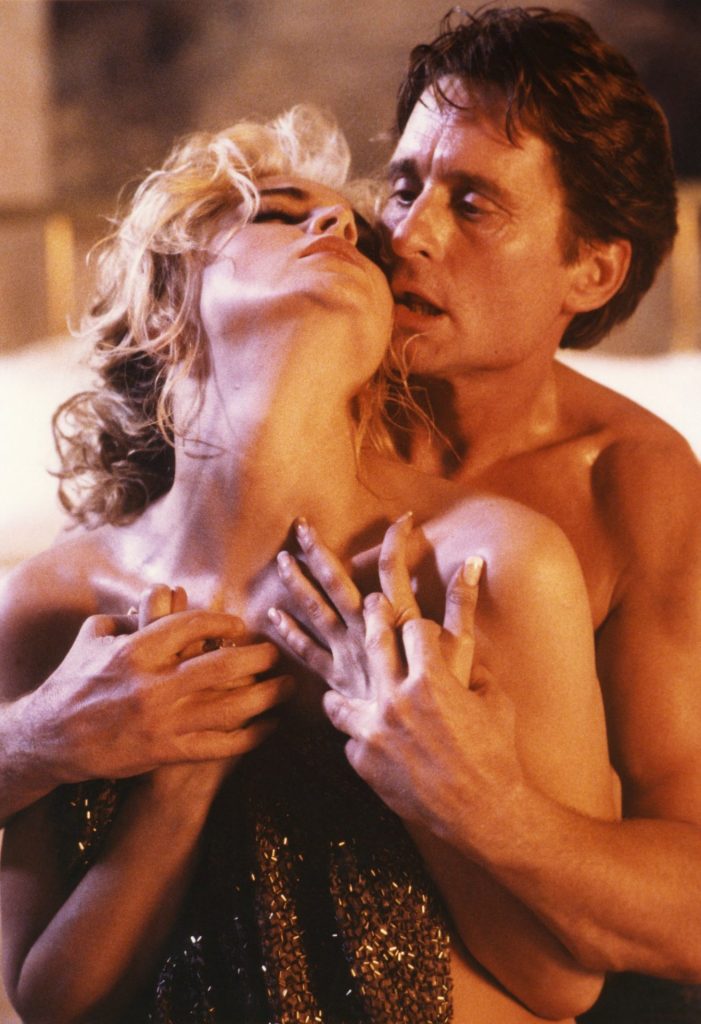
My interest in European cinema rose considerably after watching Le Mépris with Brigitte Bardot and Betty Blue with Béatrice Dalle. There were the infamous explicit scenes in Don’t Look Now and Angel Heart, and the erotic thriller trend of the 1980s and 90s, which gave us 9½ Weeks, Fatal Attraction and Basic Instinct. Often, these films were reactionary bullshit. But also… blimey.
I could toss off phrases like “the male gaze” and “the objectification of women” to keep in with the cool kids at the arthouse cinema, but cinema is about looking and desiring as well as thinking and arguing, and even then something seemed hypocritical and puritanical about criticising this sexy stuff. How could my newfound feminism feel so similar to my just-shucked-off Catholicism?
Film is visceral and erotic, and yet in films, men masturbating was often seen as creepy or sad – Kevin Spacey rubbing one out in the shower in American Beauty testifies to his status as a complete loser (boy, that Oscar-winning film has not aged well) – whereas for women it can be a moment of self-discovery and empowerment, as with Joan Allen’s character in Pleasantville.
In fact, it’s really hard to find sex-positive depictions of male lust, with the notable exception of queer cinema. A film like Pillion is much more comfortable about showing male sexuality than, say, Wuthering Heights (which actually borrows heavily from a camp OTT aesthetic).
Many of the recent sexually focused films tend to be told from a female perspective, or feature a woman of genuine lust, from Fifty Shades of Grey to Babygirl to Anora to Poor Things to I Want Your Sex. Issues of power and agency are on the bedside table: sex work is seen from a different angle. We might have our differences – I know many female friends who hated Poor Things – but at least we have adult films which aren’t just Adult Films.
Which brings us to the elephant in the room: porn. The decline in the visibility of sex in the movies has been inversely proportional to the availability of online porn. About 40% of women and 69% (fnarr) of men report using porn, though the actual level is probably higher in both cases.
No one admits to it. No one. But getting our jollies via internet filth means that we no longer need the cinema to stray into porn the way Emmanuelle or Last Tango in Paris tried in the 70s.
And that’s another thing: the production of sex scenes was and is problematic. Whether it’s Sylvia Kristel’s story of exploitation and addiction after starring in the former, or Maria Schneider’s horrific treatment by Bernardo Bertolucci and Marlon Brando in the shooting of the latter’s infamous butter scene. Interestingly, French actress Anamaria Vartolomei starred both in the 2024 remake of Emmanuelle and in the same year’s Being Maria, based on Schneider’s memoirs.
So film-makers don’t want to film it, audiences don’t want to see it, and actors are uncomfortable recreating it. So why am I insisting on the importance of sex in cinema? Am I just a perv?
As the young people used to say, let’s not yuck the yum. Fucking is too important to be left to porn, and saying something is problematic is not the end of every argument, but the start of a fruitful (and perhaps) fruity discussion. If our culture becomes involuntarily celibate, I doubt it’s going to lead to anything good.
Case in point: Gluck’s One Night Only.
This soggy biscuit of a film features Callum Turner (Mr Dua Lipa/future 007) and Monica Barbaro (Joan Baez in A Complete Unknown) as Owen and Allie, two singletons, trying to get it on their one legal night of the year. To the jaded eye, they are easy to dislike: Allie sings advertising jingles for medicines and Owen makes pizzas in the whitest pizzeria in town.
They’re both also incurable romantics. She wants her Cary Grant-Deborah Kerr moment on the top of the Empire State Building; he’s about to ask his girlfriend to marry him when she demands a hall pass.
“I don’t want sex to be an empty experience,” Allie says. Which reminds me of Woody Allen once saying, “Sex without love is an empty experience, but as far as empty experiences go, it’s one of the best.” Owen says his favourite part of sex is the bit afterwards, which, not to be a stickler, is not actually part of sex as such. It’s like saying my favourite part of eating is farting.
But absolutely nothing about this witless film really makes any sense. If everyone’s so randy, why don’t they just go to Canada? And why isn’t there any sign of revolt in New York City against the puritanical law? It’s not exactly famous for its conformity.
That such a Handmaid’s Tale law might happen is not unrealistic. After all, Roe v Wade has been repealed. Sex education, contraception provision and the rights of the trans community are being attacked on a daily basis. Meanwhile, the government is being run by tradwives, incels and rapists.
There’s a satire to be made on the hypocritical squelch between sex and politics in a country where the most popular search term on PornHub is “stepsister,” but this ain’t it. To begin with, satire demands humour and, aside from two well-placed pratfalls, this doesn’t really do it. It doesn’t help that Callum Turner looks like what a friend once termed “a silent fuck”.
Suggested Reading

Can films fight fascism? Mark Cousins thinks so
But the real problem with the film is that it doesn’t want to get its hands, or its other bits, dirty. Everyone in the film conforms to the government mandate. When a cop is asked where her conscience is, she replies: “with my pension”.
The film accepts that the government proscription is fascistic – it is explicitly called out as such by various characters – but the only “rebellious” character is shown to be a posing douchebag and the romantic leads of the film [SPOILER] ultimately agree with the system. “Maybe the fascists were right about this one” is an actual line spoken in this film. Sieg Heil in Seattle much? Owen’s pizzeria shares a name with right wing think tank the Claremont Institute, the “intellectual” home of little Marco Rubio.
One Night Only endorses the idea that sex and romance are at odds. Dirty sex, casual sex, kinky sex, one-night stands, gay sex – we get a gay flatmate (who doesn’t have sex) just like in the 90s – and yes, premarital sex are all essentially wrong. Lesser. Not valid.
The only sex that really counts, the only relationship, is the heterosexual couple who want to save it until it means something. Get a fucking room already.
One Night Only is in cinemas now