
Oh Jensen! While it’s been easy to mock the embattled Nvidia CEO for his extramarital affair with a suspected Chinese spy, the scandal has exposed a rather awkward truth about the technology companies shaping our future: an alarming number of them are founder cults with no obvious succession plan.
On the face of it, Jensen Huang’s fate looks precarious. The board has launched an independent investigation into the whole affair; Donald Trump says the FBI is looking into it; the company’s share price fell more than 6% on Monday, wiping $430bn off Nvidia’s value. Most companies would, at this point, dump the philanderer.
Nvidia, though, is not most companies, and Huang is not most CEOs. He co-founded Nvidia in 1993 and has run it ever since, overseeing its transformation from a maker of graphics cards for gamers into the principal supplier of the hardware underpinning the AI revolution.
He famously has more than 60 executives reporting directly to him, an organisational structure that might generously be described as “flat” and less generously as “dangerously weighted in favour of a man called Jensen Huang”. He’s repeatedly said that he doesn’t believe in succession planning – meanwhile, both his children work at the company and his son-in-law, a former professional skier, has been described as Huang’s “consigliere”.
There’s no publicly identified successor within the business, and nobody seems particularly confident that the company could continue as normal without him. Considering that Nvidia is worth several trillion dollars – more, in fact, than the UK’s entire GDP – and plays a fairly fundamental role in the global economy, this feels like a potential issue.
It isn’t a unique situation. Mark Zuckerberg owns roughly 13% of Meta but controls about 61% of the votes, thanks to shares that carry ten votes apiece. When a proposed California wealth tax threatened to make him sell stock, and so dilute that control, Meta simply invented a new class of non-voting shares to maintain the Zuckerbergian grip on power.
Meanwhile, Elon Musk – a man whose relationship with his company Tesla is so entwined that its board has repeatedly argued that retaining his services is essential to the company’s future – has spent this year taking his other business, SpaceX, public, on terms that leave him with around 85% of the voting power.
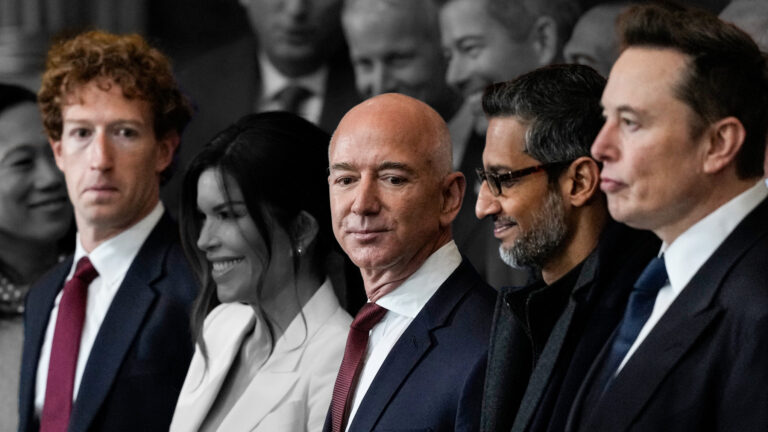

In practice, the only person who can remove Musk is Musk. Huang is Nvidia. Zuckerberg is Meta. Musk is Tesla and SpaceX and whatever awful thing happens to come next. One might term these “cults of personality”, were the term not so fundamentally unsuited to these sauceless men.
From all this, a major question emerges – why? Each of the named men here is rich beyond the dreams of Croesus; each has achieved, objectively, a degree of corporate success that will see their names etched into the annals of history, even if only the boring chapters on business and economics.
If you’ve earned more than you can ever dispose of, built one of the world’s biggest (ever) businesses, you don’t have the pressure from outside to succeed, no hungry successor waiting to snatch it all away, no prospect of being unseated… what’s the motivation?
Depressingly, it seems, it’s that nebulous idea of “legacy”. The Big Three tech leaders have grand visions of their place in the future. Huang wants to be the man whose chips power the Fully Automated Luxury Space Communism of an AI-enabled future. Zuckerberg wants to overhaul the way we interact and communicate as a species, whether via metaverse or nonce goggles
Musk wants to take humankind interplanetary via rockets, bot-generated grot pics and by paying vast sums of money to Rupert Lowe. Why would you let go of the reins of power when you’ve such lofty goals to fulfil: goals that no puny successor or pathetic “activist investor” group could ever hope to understand or deliver?
Suggested Reading
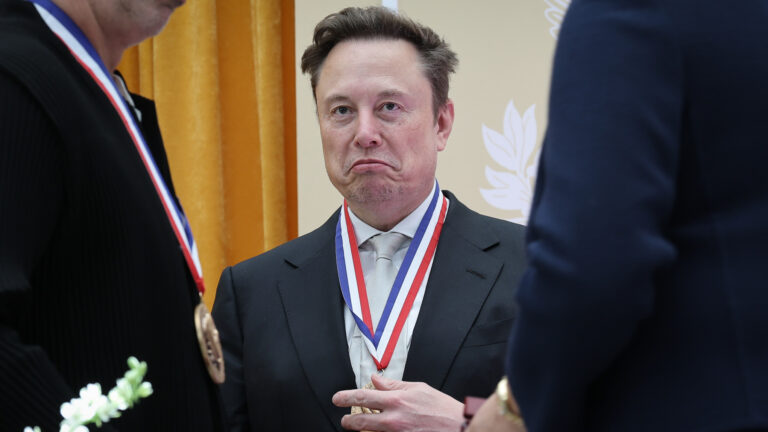

Has Elon Musk got Talarico Derangement Syndrome?
You might, of course, want to console yourself with the knowledge that while shareholders and the board might not be able to topple Huang et al, the ineluctable reaper that is “time” will one day come to claim them. Except, of course, that some of these men are young – Musk is 55, Zuckerberg is just 42, and even Huang at 63 could feasibly go on for years.
Couple this with the Silicon Valley trend towards the pursuit of extreme longevity via supplements and plasma transfusions, as embodied by glass-eyed petri-dish tragedy Bryan Johnson, and we could be stuck with these fuckers for a while yet.
That, of course, is without factoring in the genuinely-terrifying prospect of their personalities being cloned by AI and taking on the role of superintelligent forever-CEO – which, let’s be clear, is 100% being pitched to Elon by someone right now. The future, it seems, is Mark Zuckerberg’s watery gaze on Meta results day – forever.
 Most popular

The reckoning I thought Russell Brand would never face


The press’s shameless David Walliams amnesia

Why does everyone hate Laura Kuenssberg?

16 things that will definitely now happen on the British right