
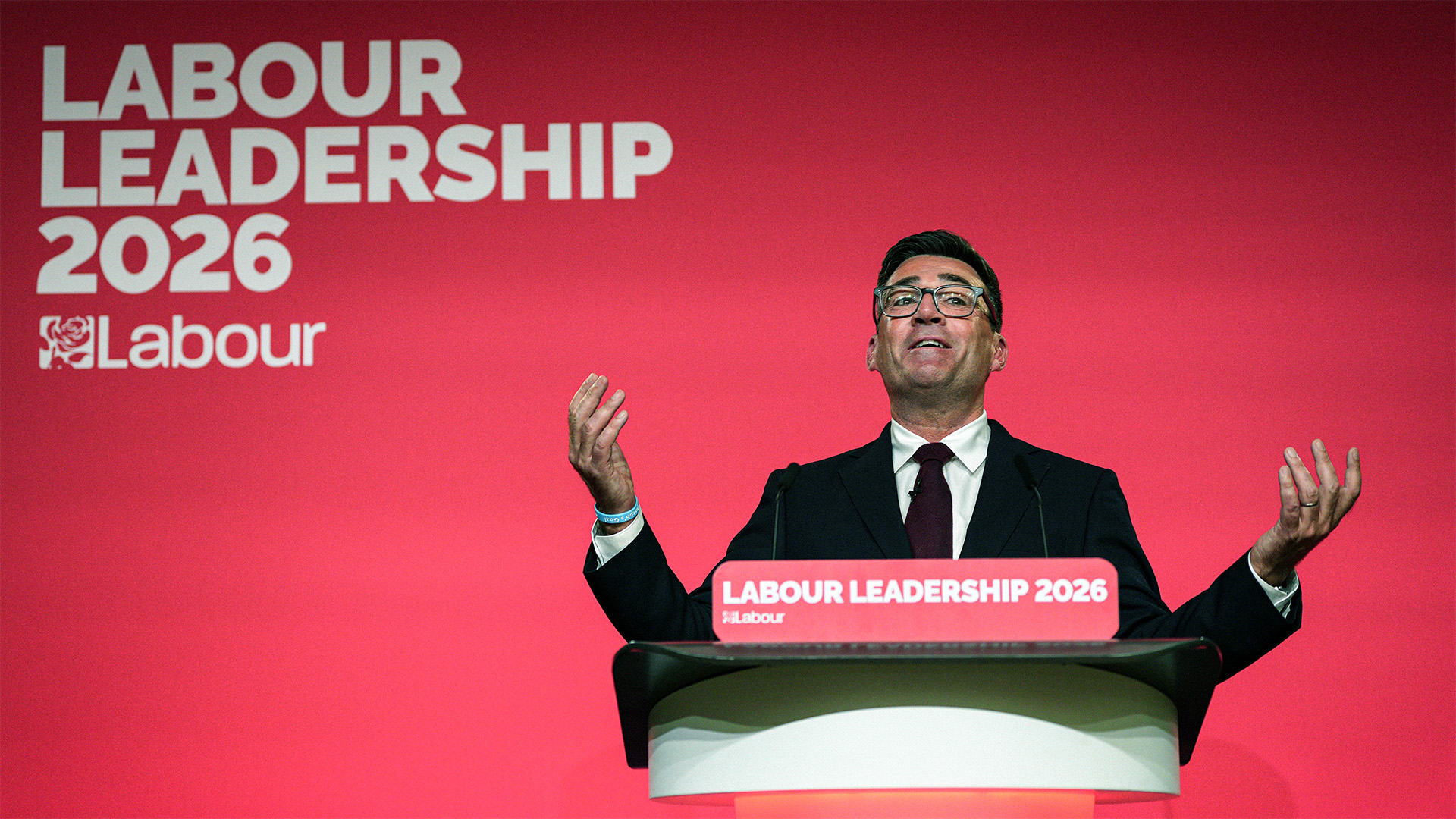
Not too cold, but certainly not too hot either. Andy Burnham’s first speech as Labour leader was… fine.
Held at the TUC headquarters, Congress House, it had the air of an end-of-term awards assembly at a primary school. Or maybe it was simply that, for once, Labour politicians seemed almost cheerful.
After what feels like six months of speeches beginning with some variation of “we know we’ve been disappointing and we hate ourselves for it”, hearing them sound optimistic again was a welcome change.
Lucy Powell and Shabana Mahmood both gave speeches to tee up the man who will soon be prime minister. As Mahmood pointed out, the contest was hardly a nail-biter. Burnham was elected to the leadership unopposed, having received 379 nominations to stalking horse Catherine West’s one. It was a coronation after the most bloodless of coups.
Perhaps because of that, it felt a little like rubbing salt into the wound that both Powell and Burnham spoke so warmly of the outgoing PM, Keir Starmer, and his legacy. Running through the list of his achievements, Burnham declared, “Today we thank Keir.”
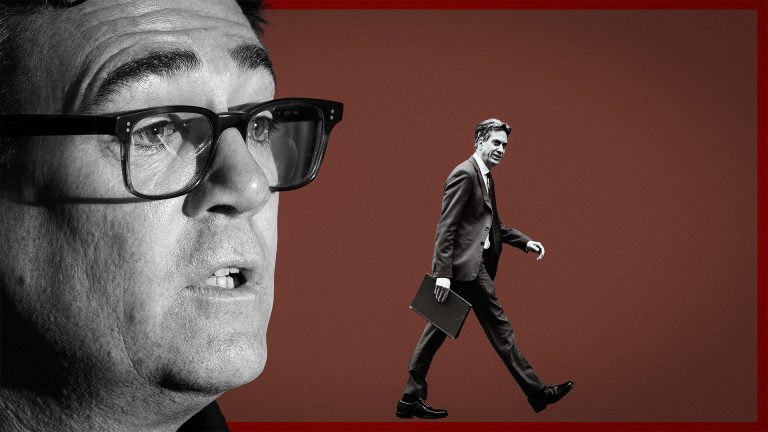

“What with, a big knife?” the cynic in me almost shouted.
But in truth, it was refreshing to see a party whose new leader wasn’t immediately tearing strips off the one before him. Later in the speech, Burnham promised to end factionalism and petty political point-scoring. This felt like starting as he meant to go on.
As expected, the rest of Burnham’s speech placed a huge emphasis on place. He pledged to lead “on behalf of forgotten places everywhere” and for “people and places waiting too long for politics to let them hope again.”
This was the strongest part of the speech. Burnham took the recently passed Hillsborough Law and used it to tell a much bigger story: not just about how Hillsborough shaped his own life and political career, but about what it revealed of Britain’s political settlement. The tragedy, and the decades-long fight for justice that followed, became emblematic of places and communities that had been ignored and actively failed by those in power.
As an actual Scouser myself, I have often taken issue with Burnham’s self-proclamation as one. He is, after all, a wool (someone who claims Scouse identity despite being born outside the city) and The New World’s Scouse editor-in-chief, Matt Kelly, will no doubt back me up on that.
But Burnham is beginning to earn a pass from me. This wasn’t another round of the “my father was a toolmaker” anecdote; he took something deeply personal to him and the city of his birth (technically) and turned it into actual political storytelling, without making it feel too Northern-centric.
Beyond that, the substance was largely familiar. His five “things” — so obviously not called pledges for entirely understandable reasons — contained little that hadn’t already been trailed. But two still stood out.
Suggested Reading

The EU’s Burnham question – is the new PM worth the risk?
The first being that he would not seek to suspend Labour members who have principled views that may differ to his, which will be crucial to welcoming left wing MPs back into the fold. Second, he emphasised that “we won’t try to out-Green the Greens, or out-Reform Reform”. Throughout the speech, Burnham repeatedly insisted he wanted Labour to become a party people recognised again.
He understands that rebuilding trust starts with rebuilding identity. And if Labour is serious about winning back the towns and cities that once formed its heartlands, that’s where the work begins.
Thrice Burnham declared, “I am ready”. Of course, only time will tell if that is the case.
His speech today was not his magnum opus. It could certainly have been shorter, and there was little in it that we hadn’t heard from him before.
But if his mission in these early days of his premiership is to inspire hope, then it succeeded. Simply making Labour start to sound like a party that believes in itself again. After the last few months, that is no small feat.
 Most popular
My truly deranged encounter with Trump apologist Kellyanne Conway

Suella Braverman’s book has sold only 106 copies. This is why
The moral depravity of Robert Jenrick

Hungary’s lesson to the world: Populism isn’t permanent