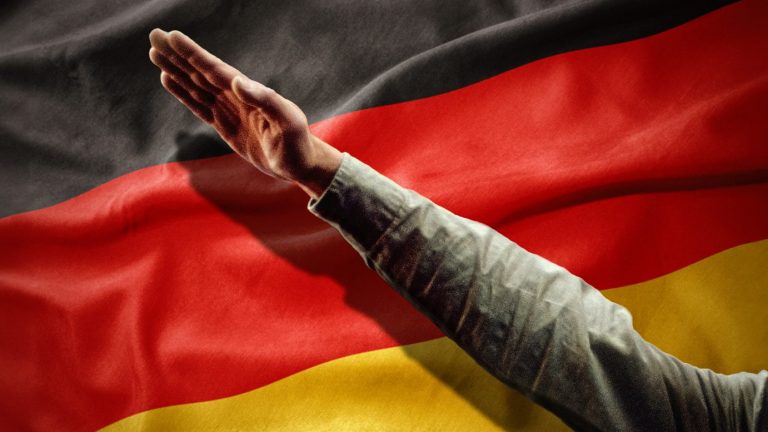
For the Kremlin, the ritual of Russia’s upcoming parliamentary elections sends a message: despite years of crushing sanctions and battlefield losses, business continues as usual.
The ruling United Russia party is expected to easily retake its place as the largest bloc in Russia’s lower house of parliament, the State Duma – the same position it’s held for more than two decades.
Yet as Ukrainian drones bombard Russia, Moscow’s carefully crafted image of normality is being pushed to breaking point. In a bid to cope, officials are revising expectations for the upcoming vote and resorting to their favoured tactic – repression.
Suggested Reading
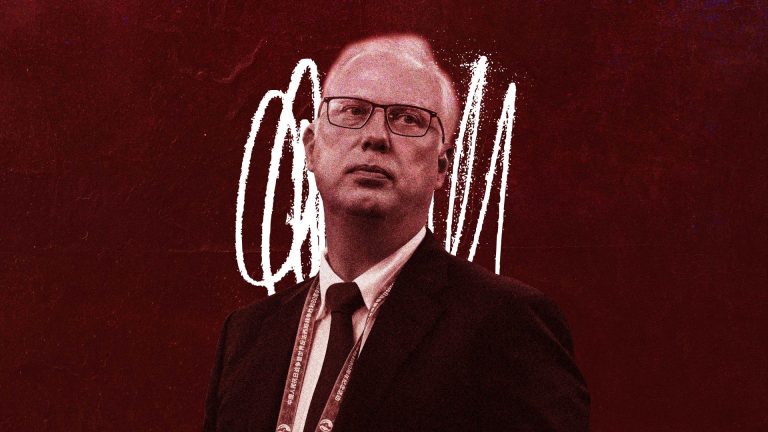
Kirill Dmitriev, the Russian playing the US from within
“The preliminary idea was to have these elections as quietly as possible,” says
Jussi Lassila, a senior research fellow at the Finnish Institute of International Affairs. “In that regard, I think the Kremlin has already lost.”
The Kremlin is already well-practiced in managing Russia’s ballot boxes. Voting in Russia’s parliamentary elections will take place over three days, from September 18-20. The extended period is a gift to groups of “carousel voters” who visit different polling stations to cast multiple ballots.
Officials are also relying on Russia’s electronic voting system, a method condemned by activists and election monitors as not being independent of state bodies. In Moscow, where United Russia traditionally faces strong opposition, electronic voting remains the default, even for those who go to voting stations in person.
But even these methods will struggle to hide Russia’s increasingly sour public mood. Moscow has poured considerable effort into insulating its citizens from the fallout of its invasion of Ukraine. But after more than four years of war, cracks are starting to show.
Hundreds of Ukrainian drones are shot down over Russia each night, grounding flights, pummelling warehouses, and setting oil refineries ablaze. The Russian summer has been one of empty petrol pumps and persistent internet blackouts.
The government has also been forced into making unpopular economic choices to maintain defence spending. In January, officials hiked VAT from 20% to 22%, while also slashing the level at which business must start paying the tax.
Discontent is growing and damaging Putin’s approval ratings. Russia’s state-backed pollster, the Public Opinion Research Centre (VTsIOM), found that the percentage of Russians who said they trusted Putin dipped to 70.8% in August. It looks high by Western standards, but it’s the lowest number since the start of his war.
Russia’s repressive political atmosphere makes it hard to gauge Putin’s popularity, says Mikhail Komin, a research fellow at the Centre for European Policy Analysis. But the wider trend is inescapable.
“More or less every pollster, even the state-backed one, demonstrates that there is a decrease in support of Vladimir Putin and the United Russia Party,” he says.
This shifting mood has forced Russian officials to rethink their planned goals for the election. In March, United Russia said that it was aiming to take 55% of votes. Multiple Russian media outlets have since reported that figure has been revised downwards twice by Russia’s presidential administration and now sits at 45%.
For United Russia, winning enough seats to ensure the country’s mostly toothless opposition toes the line is essential to its image of “business as usual”.
“The basic idea is that the United Russia needs to be the majority [in parliament], with at least half of the places,” says Lassila. “The rest can be controlled.”
To ensure that happens, there has also been more repression. Russia’s liberal Yabloko party – the only openly pro-peace party given clearance to run in the vote – was struck from the ballot in a last-minute ruling by Russia’s Supreme Court, as the party’s supporters flooded the streets outside.
Yabloko’s place on the ballot may have been a way for Russia’s presidential administration to manage disaffected voters, says Komin. But when its pro-peace message became too popular with young, online voters, its presence became a threat.
Suggested Reading

Putin’s greatest enemy? It’s laughter
“I think that unpredictability was used by the security services to show Putin that these parties pose risks,” Komin says.
As long as the Kremlin maintains its vice-like grip on Russia, it is unlikely to make any significant concessions to appease the war-fatigued public. But it is also running out of options – and if the public mood should worsen, further repression is increasingly the only answer.
“Typically, elections work in authoritarian regimes as a pool of information. It’s a moment when the regime can identify the sources of grievances,” says Lassila.
But the Kremlin now restricts all real discussion of its war in Ukraine, which is the source of many Russians’ woes, from inflation to internet blackouts. This means the old system of identifying grievances no longer functions.
“Now the elections don’t solve anything. They don’t release any pressure. This dissatisfaction is growing,” he says.
 Most popular
Emily Maitlis’s diary: As I was saying to George Clooney just the other day…

Slavoj Žižek is the perfect philosopher for the Trump, AI, climate catastrophe era – but he probably hates you
There’s only one reason Trump went to Ireland – it wasn’t to meet the Taoiseach
A new film about Elon Musk reveals him as so awful it’s almost tragic. Almost