The Trump administration has spent the past several weeks constructing a quarantine facility in Kenya for Americans exposed to Ebola. No exposed Americans will be allowed back into the US.
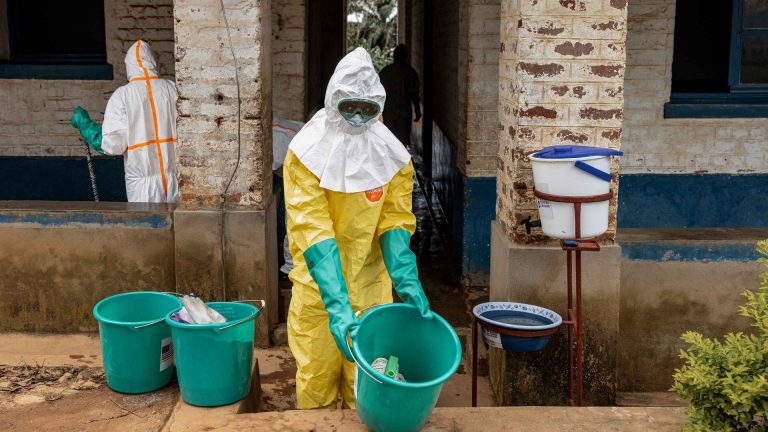
The facility is at Laikipia Air Base in Nanyuki, a town of 103,000 people at the foot of Mount Kenya, 120 miles from Nairobi and 1,500 miles from the outbreak in Congo. It has not yet received a single patient.
The one American who has actually contracted Ebola, Peter Stafford, a physician working in Congo, was flown to Germany. His wife and four children went to Germany. A medical colleague, Patrick LaRochelle, was monitored in the Czech Republic.
In a classic example of Trumpian logic, the facility built for Americans with Ebola has been built in a country that has not recorded a single confirmed case. In another Trumpian twist, it is operating in defiance of a Kenyan court order. This is America First doctrine applied to epidemiology.
Lawrence Gostin, director of the WHO Collaborating Centre on National and Global Health Law, says that the plan “is likely to cost American lives.” He argues that “it is impossible to give high-quality care to Ebola patients in Kenya, compared with our state-of-the-art facilities in the US.”
Suggested Reading

Ebola, USAID and how Musk’s spending cuts will kill millions
Kenya has screened thousands of people for Ebola exposure and recorded zero confirmed cases. This makes it the cleanest country in the region and, by the logic of the Trump administration, the obvious place to send potentially infected Americans. The Kenyan parliament was not told about the arrangement. The Kenyan public was also not consulted.
A senior Trump official announced that the Kenyan government had granted its approval. This was true in the sense that president William Ruto had agreed to it, but untrue in the sense that the Nairobi High Court, upon hearing about it, issued an immediate suspension of construction.
But the Kenyan government built it anyway. In Kenya, as in Washington, the courts are increasingly ignored.
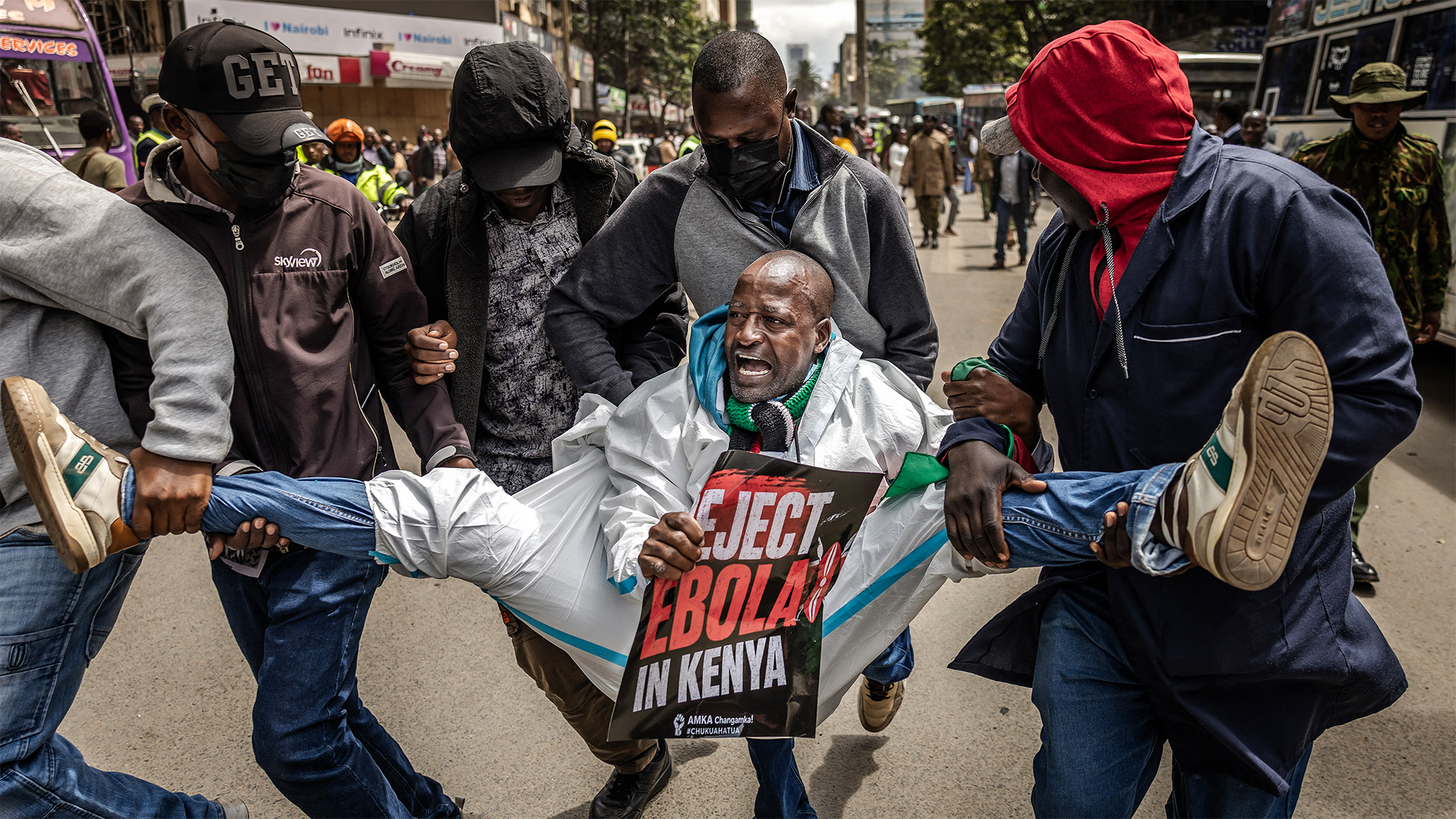
In Nanyuki, residents have been protesting, with hundreds of people taking to the streets and parading with a mock coffin, with signs pointing out that Kenya has no Ebola and would prefer to keep it that way. Kenyan police responded with water cannon and teargas. At least two people were shot dead by officers in riot gear, which means the facility designed to protect American lives has already cost Kenyan ones before admitting a single patient.
The Kenyan Medical Practitioners and Dentists Union asserted that Kenya is a sovereign republic, not a geopolitical isolation ward. The Katiba Institute, a civil society organisation, and the Kenya Law Society both challenged it in court on grounds of public exposure risk and the complete absence of democratic process.
“We cannot and will not allow any cases of Ebola to enter the United States,” secretary of state Marco Rubio told a cabinet meeting on 27 May. It seems remarkably ungracious, as the American citizens who caught the disease did so while working in an outbreak zone.
President Ruto defended the facility by citing America’s robust health aid support for Kenya, a form of gratitude that requires some contextualisation. The Trump administration has, since January 2025: terminated programmes in Kenya; pulled USAID health funding; cut US development assistance to Kenya by more than half; put Kenya’s Major non-NATO ally status under formal Senate review over its ties with Beijing; and suspended trade benefits, until a temporary restoration in February.
Suggested Reading
USAID looked like an act of generosity – but it wasn’t
The robust health aid support for which Ruto was thanking America is the support that existed before the current administration began removing it. He knows this. Ruto is a transactional politician making a transactional calculation that hosting the facility is cheaper than the consequences of refusing it, and the dead in Nanyuki are the cost of that calculation.
A group of US health experts and former officials wrote an open letter to Congress describing the plan as raising “profound clinical, ethical, operational and legal concerns.” Congress has not acted, and the administration has not replied. Dr Stafford, the American for whom the facility was theoretically built, is recovering in Germany, where the healthcare is also, it turns out, state-of-the-art, and where nobody was shot in a protest before he arrived.
The facility in Nanyuki is 1,500 miles from the outbreak, has no confirmed patients, has killed two Kenyan protesters, is operating in contempt of a court order, and was justified by an administration that flew its actual Ebola patient to Europe.
America First has produced a quarantine facility in Africa for Americans who do not yet have Ebola, in a country that does not have Ebola, built over the objections of Kenyan courts, Kenyan doctors, Kenyan residents and American public health experts alike. It is, by any measure, a remarkable achievement.
 Most popular


Emily Maitlis’s diary: As I was saying to George Clooney just the other day…

A new film about Elon Musk reveals him as so awful it’s almost tragic. Almost


Never again? Think again. The far right’s resurgence in Germany should terrify all Europeans
There’s only one reason Trump went to Ireland – it wasn’t to meet the Taoiseach