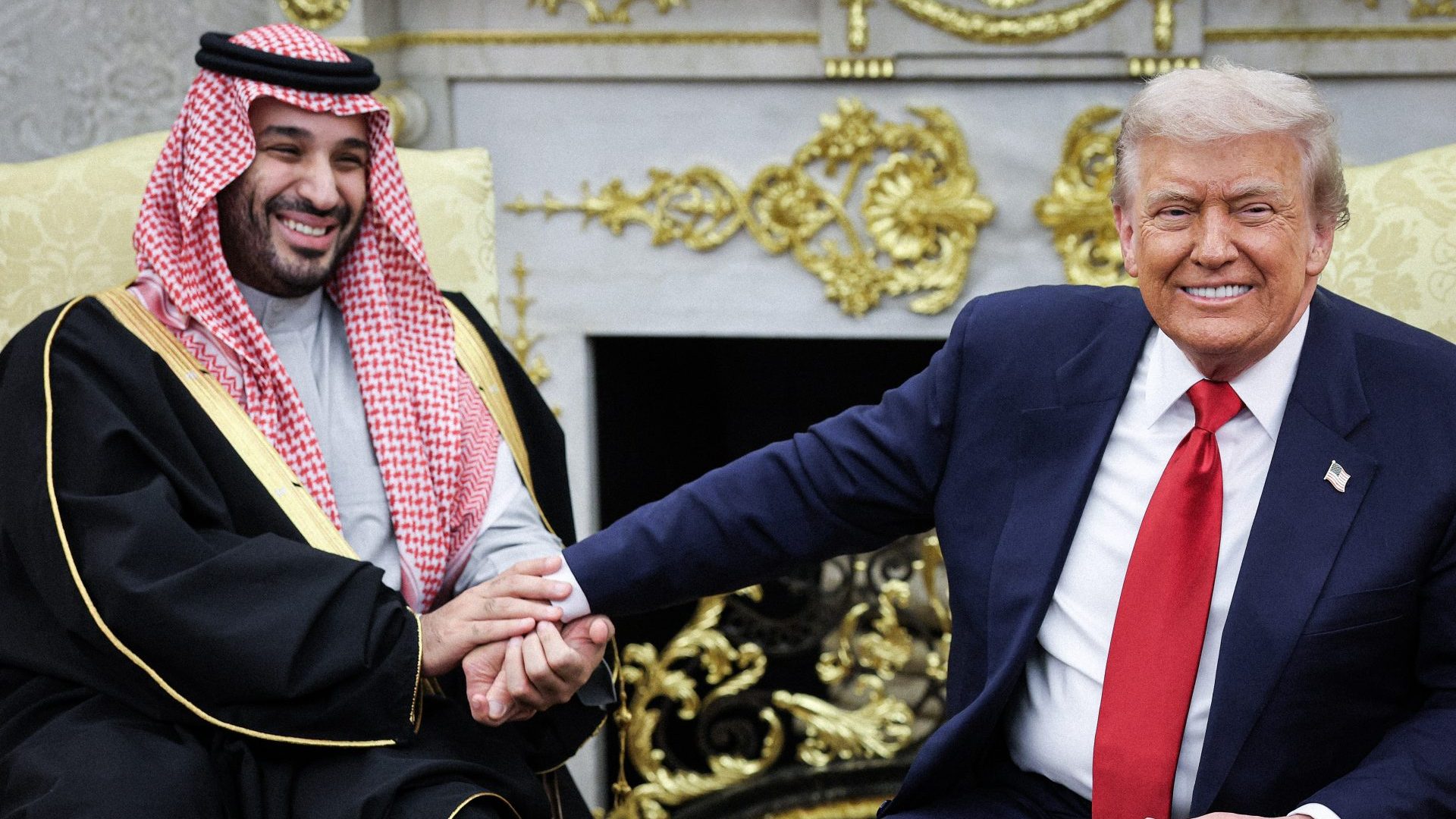
At the geopolitical level, Trump’s nuclear deal with Saudi Arabia is genius. He gives the Saudis the ability to enrich their own uranium and reprocess spent fuel, in return for shutting out Russia and China from the Saudi nuclear energy programme, and ensures the US corporation Westinghouse gets the work. He also gets a source of enriched uranium that is not Russia.
At the level of nuclear non-proliferation, it’s a disaster. The US is, right now, involved in the end stages of a war that was launched to deny Iran the right to do exactly what Saudi Arabia is now permitted to do. As a result, not only is Tehran up in arms, but also Tel Aviv.
Israeli politicians are warning of “an insane nuclear arms race” in the region – and they are right. Even Republicans in Congress are concerned.
Trump’s deal, the terms of which remain largely unpublished, omits the “gold standard” conditions the US has imposed on everyone else since 2009 for nuclear energy development: a legally binding commitment against enrichment and reprocessing. Nor does it require Riyadh to ratify the International Atomic Energy Agency (IAEA) Additional Protocol, which allows snap assessments of nuclear sites.
If enacted, the Trump deal is close to a carte blanche for the Saudi monarchy to gain not just a nuclear energy sector but, if minded, the base layer of nuclear weapons technology.
Though the IAEA has accepted that the deal lies outside its purview, it has offered to verify whatever is agreed. The Saudis, not the IAEA, will themselves verify what’s eventually allowed to be built.
Suggested Reading
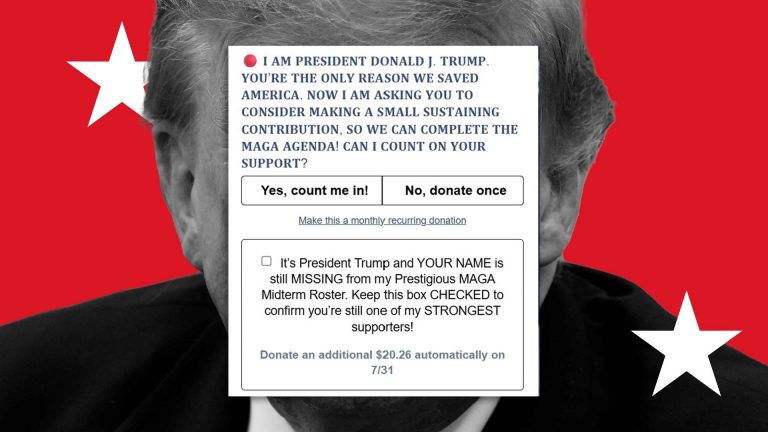
Help! Donald Trump keeps begging me for money!
Geopolitically, if Congress upholds this deal, it will be a landmark in the disintegration of systemic order. Under Joe Biden, Saudi requests to develop a nuclear programme were tied to normalisation of relations with Israel. This is not. It is a clear chess move to intimidate his friend – Israel – which is looking less and less like a compliant pawn as the weeks go by; and to intimidate his opponent – Iran.
If Saudi Arabia had no nuclear weapons ambitions, this would be less worrying. But Prince Mohammed bin Salman has pledged to build a nuclear bomb “as soon as possible” if Iran does. And if you can get enrichment permission from Washington in return for a couple of Westinghouse reactors, might Egypt and Turkey now feel they need to be in the game?
In 2009, when the UAE made a deal with America to begin its nuclear project, it made an explicit and binding deal: no enrichment or reprocessing, plus the IAEA would be allowed on site whenever necessary.
Trump’s bilateral deal cuts a crucial global regulator out of the picture – and it’s hard to interpret that as anything other than an “up yours” to the wider global system of nuclear regulation. Analysts believe such special treatment opens the door to a queue of US allies in the region to go nuclear. And not just in the Middle East. Could South Korea now go nuclear, or another major global south country prepared to buy some American reactors?
In one sense, these developments are inevitable. Rich countries in the global south need a mixture of renewable energy and nuclear to maintain energy security, meet their net zero obligations and develop their economies. The rules-based global order, if not dead, is resting, parrot-like, on the floor of its cage.
As countries head for the exits from rules-based governance, and the Iran war proves that “might is right”, few will be blamed for seeking to enter the nuclear game.
What it means for the UK, whose energy system came perilously close to blackout during the June 2026 heatwave, is that we need to double down on the small modular reactors the government has OK’d, and get Hinkley Point C up and running, whether its warm water output kills 12 more salmon than normally might die or not.
Nuclear power is an essential part of the post-carbon energy mix. Every responsible country that needs it should have a right to it. But if the US starts erecting a bilateral, favouritism regime with countries it likes – in place of the global, rigorous and impartial body that is the IAEA – there is only one way this is going to end.
The nightmare scenario is that the P5 countries of China, Russia, France, the UK and US, lose control of proliferation completely, both at the energy level and that of weapons.
Nuclear weapons proliferation across the global south would be a nightmare. Not for the most obvious reason, that it enhances the threat of nuclear war, but because of what nuclear deterrence does to conventional war.
Suggested Reading

What will Trump and Infantino try to ruin next?
Last year’s war between India and Pakistan, which was vicious at the rhetoric level, big at the conventional level and silent on nuclear escalation, shows how nuclear armed peers are compelled towards conventional warfare in a crisis. Because they cannot contemplate nukes, they substitute by making early recourse to full-scale conventional attacks.
There are many steps, and many blockages, between Saudi Arabia signing a nuclear deal with America, and Riyadh getting a nuclear reactor, or some nuclear weapons. But those intending to be alive in the back half of this century now know this will be a live issue, raising the spectre of nuclear brinkmanship between two highly undemocratic and ethno-nationalist regimes.
The best-case outcome for the UK is if the US Congress thwarts this deal, or that a future Democratic president reinstalls safeguards. Saudi is not getting a reactor this side of 2030 at least.
But this much is obvious. If Saudi Arabia gets a civilian nuclear reactor, that site becomes target number one for all Iran’s subsequent aggression. In addition, depending on who is the PM of Israel, Israel gets the incentive to take the facility out at the earliest opportunity.
In the UK, where we have a handful of reactors and close to 10 submarines powered by nuclear reactors, you scarcely register the presence of this once controversial industry. The Middle East that is being created by Trump, MBS, Mojtaba Khamenei and Benjamin Netanyahu has nuclear technology at its centre.
Anton Chekhov once wrote that, if a gun appears in Act One of a drama, then by Act Three somebody is going to get shot. Trump, for reasons we will struggle to fathom, just placed the gun on the table in the Middle East.
 Most popular

Deeply odd, deeply scary: My 48 hours with Truss, Farage and the new right
My night with the homeless showed me that Burnham must end rough sleeping

Do you care that Burnham is a Catholic? You should


The trouble with Diane Morgan’s Ann Droid