
As the outbreak of Ebola virus in the Democratic Republic of the Congo continues, with more than 100 deaths so far, footage is recirculating of Elon Musk speaking to Donald Trump’s cabinet in February 2025 as head of the Department of Government Efficiency (DOGE).
One of Musk’s prime targets in making funding cuts to allegedly improve governmental efficiency was USAID, the American agency responsible for supporting outbreak prevention and global health initiatives. This longstanding programme is now defunct.
“So with Ebola, one of the things we accidentally cancelled, very briefly, was Ebola [prevention]”, said Musk, following that comment with a little snicker. “We restored the Ebola prevention immediately, and there was no interruption,” he went on to claim (a statement some experts contest), before explaining that such little slips were inevitable because “we do need to move quickly if we’re to achieve a trillion-dollar deficit reduction.”
Right now the DOGE chainsaw has achieved only a tiny fraction of that. What the loss of USAID has achieved is hundreds of thousands of deaths worldwide so far, many of them children. A study in the Lancet estimated the figure could eventually reach 14 million by 2030. And a recent report in Science showed that cutting the programme has also increased violent conflict and unrest in areas it previously served because of the knock-on economic impact of the cuts.
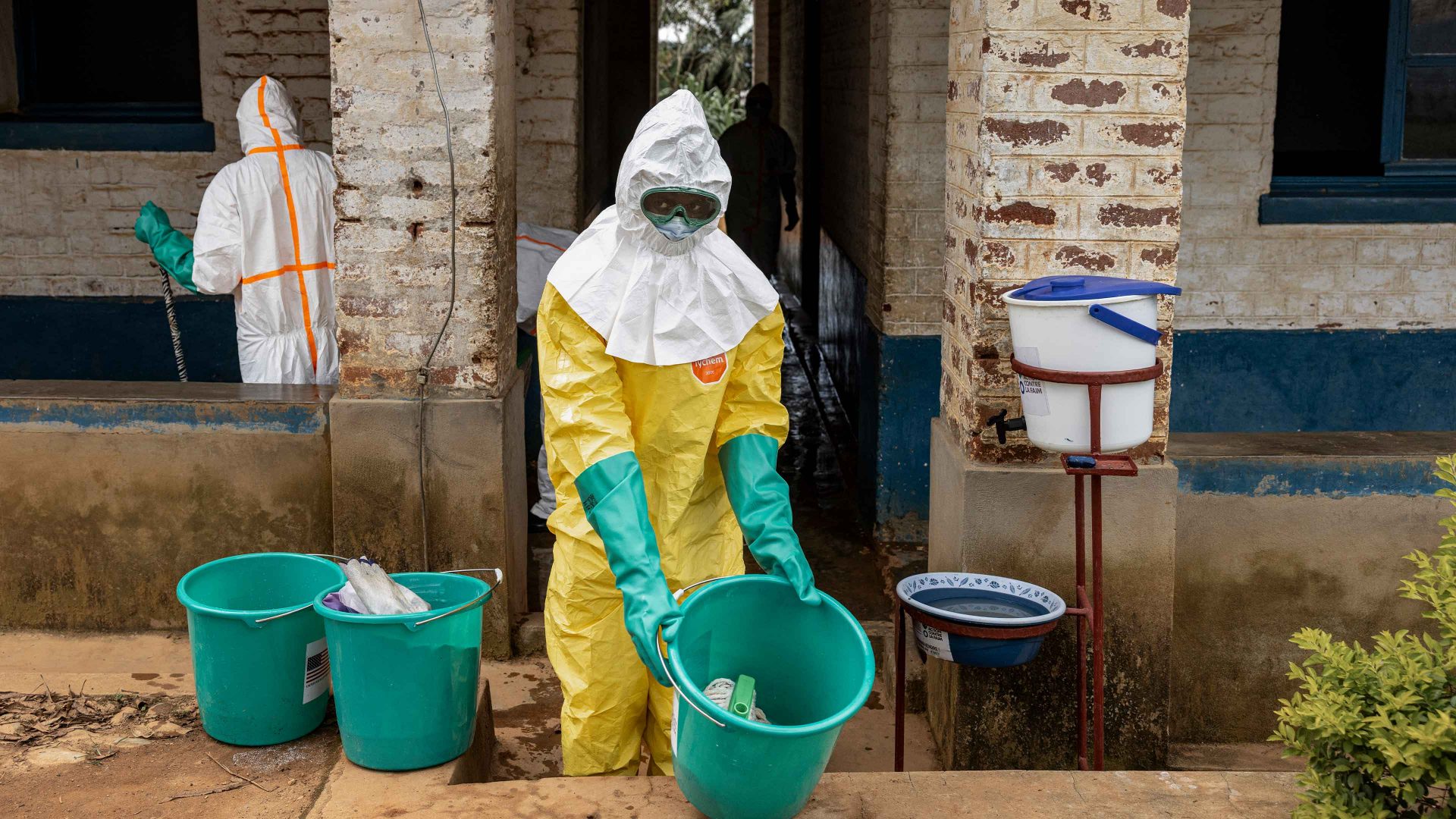
The Ebola outbreak, officially declared in mid-May, is in Ituri province in the north-east of the country, with 600 suspected cases in addition to the fatalities. (There are also two confirmed cases, including one death, in Kampala, Uganda.)
The World Health Organization has declared it a “public health emergency of international concern”. The situation is especially grave because the virus apparently responsible for the known cases is a rare strain called Bundibugyo virus, for which there are currently no licensed vaccines or therapeutic drugs. Ebola is not an airborne disease, however, being transmitted via bodily fluids or contaminated substances.
Suggested Reading


Robotaxis: a solution in search of a problem
Containment depends on good surveillance: identifying cases quickly, tracing contacts, and isolating people infected. Such measures have generally improved over the years in central African countries hit by Ebola, but Ituri is a particularly challenged region, with weak health infrastructure, a mobile population linked to the mining industry, and various ethnic tensions. During an earlier outbreak in Ituri in 2018-2020 (of a different, vaccine-treatable strain), both contact tracing and vaccination programmes proved hard to sustain.
Loss of USAID was, then, one problem among many here – but not insignificant. Two former officials with the department told CNN that many of the people with experience in such outbreaks and with connections to local health officials in the DRC were fired when USAID was axed. One source said that without the agency, local healthcare workers aren’t getting paid and can’t get the supplies they need.
An official from the US State Department denies that the dismantling of USAID had any effect on the crisis, while secretary of state Marco Rubio lays the blame on the slow response of the WHO and, euphemistically, on the DRC being such an awful place anyway.
The response has been hampered by other US decisions. Trump has withdrawn funding from the WHO itself and is reducing the total US health aid to the DRC and Uganda. His administration has severely reduced funding for and expertise in the US Centers for Disease Control and Prevention (CDC), the key agency for tackling infectious disease, not least by replacing its expert management and committees with unqualified political appointees.
“We are incredibly short-staffed across the board,” one CDC worker involved in the Ebola response told CNN. A lab in Maryland that studied treatments for Ebola, run by the National Institutes of Health, was abruptly closed by health secretary Robert F Kennedy Jr last year.
The International Rescue Committee (IRC), a humanitarian organisation currently headed by David Miliband, says: “Before 2025, US government funding supported IRC frontline health, surveillance, and outbreak preparedness activities across eastern DRC. Major funding cuts beginning in March 2025 led IRC to reduce programming from five to two areas of Ituri; the epicentre of the current outbreak.”
It adds that “weakened disease surveillance systems following [the cuts] are contributing to the rapid escalation of the latest Ebola outbreak.” The IRC’s Country Director for DRC, Heather Reoch Kerr, has said that “[US] funding cuts have left the region dangerously exposed.” But she adds that, as well as the recent cuts, the region has suffered from “years of underinvestment.”
This Ebola outbreak is not the next pandemic – but something like it could be, and we’re less prepared than ever.