
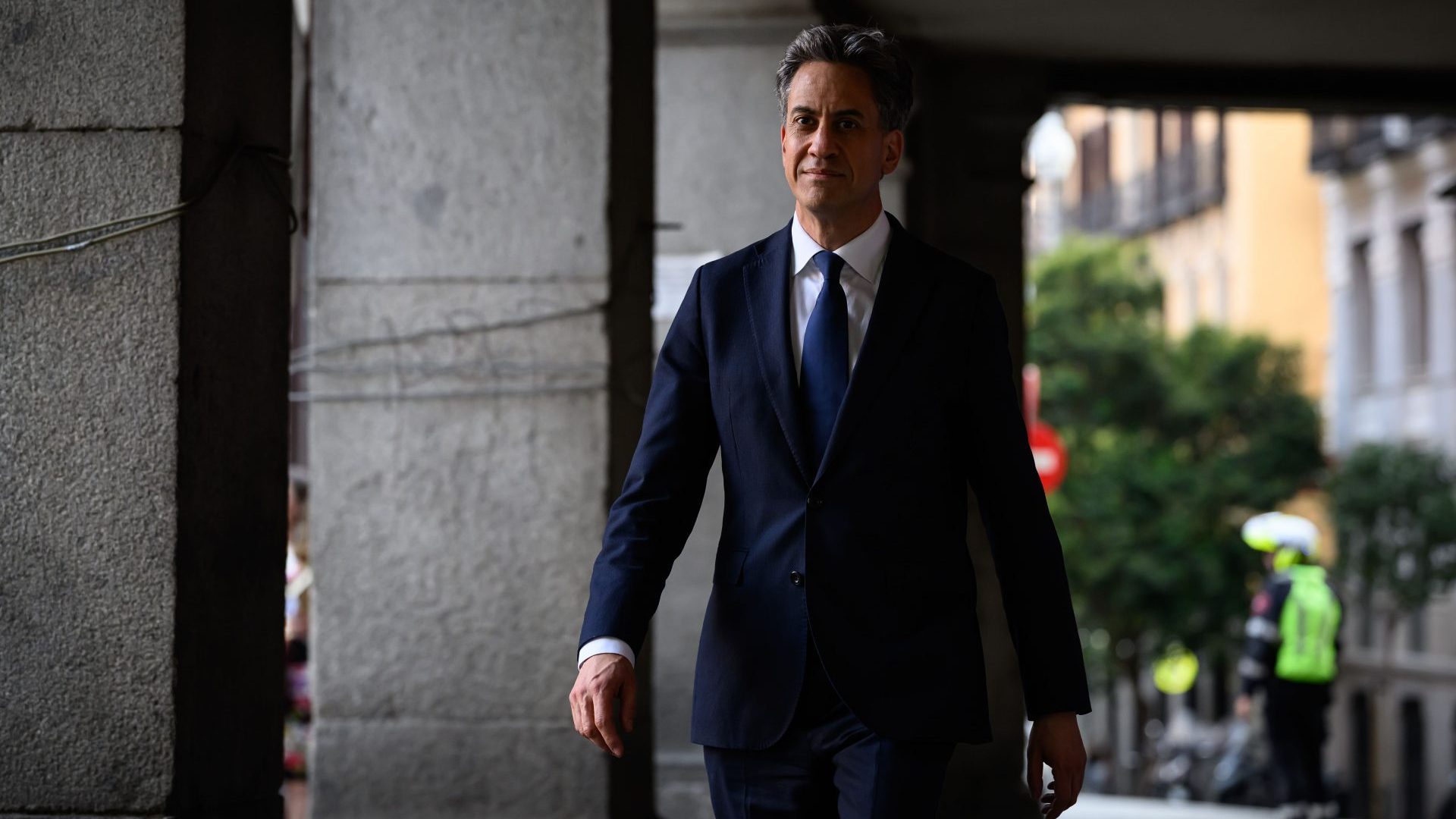
Ten days in, and still no word from Andy Burnham on his plans for Britain’s relationship with the European Union. That’s the complaint from the European Movement UK, the pro-EU group which didn’t wait until it was halfway through its Burnham advent calendar (“oh, it’s a bus again”) before issuing its first public complaint about the new PM.
“One major question remains unanswered: what is the government’s plan for Europe?” asks Nick Harvey, the former Liberal Democrat MP who is now CEO of the group, in a press release to mark Burnham achieving 20.4% of Liz Truss’s entire premiership in Downing Street.
“That silence matters,” he goes on. “Issues which are not established as priorities at the beginning of an administration can quickly become secondary. Budgets, crises and political pressures soon crowd out longer-term reform. Unless Europe is placed firmly within the government’s economic programme now, there is a danger it will once again be reduced to occasional summits, technical negotiations and modest adjustments.”
And while it will strike some as a little bit harsh to judge a man only just into double figures in days in the job, it is true that the European policy of the man who once wanted to see the UK back in the EU in his lifetime, but has since walked it back a little, remains a largely blank sheet of paper.
The movement poses some very specific questions about where Burnham stands, with the first the Inside Baseball question of who now speaks for Britain on Europe. “[European Commissioner for Trade] Maroš Šefčovič has spoken to Hamish Falconer, referred to Jonny Reynolds as his counterpart, and Ed Miliband is venturing to France and Spain to meet European leaders,” says its statement.


And it’s true that, with the sacking of Nick Thomas-Symonds (see last week’s Rejoinder) there is not yet anyone tasked with the ‘reset’ (if that is still the word used). But there are signs.
Falconer is Europe minister and will attend Cabinet, and at an event hosted by the IPPR think tank last week signalled he saw the task of European reconnection as linked closely to Burnham’s determination to bring big-picture policy changes closer to Britons and their day-to-day concerns: the so-called ‘Makerfield test’.
And according to the website Politico, his summer holiday reading is the historian Brendan Sims’s study of shifting geopolitics over more than five centuries Europe: The Struggle for Supremacy, 1453 to the Present, the perfect sunlounger page-turner (all 720 of them).
Jonathan Reynolds, the former and now once again business secretary who appears to have decided, at the age of 45, to become a Johnny, will lead on trade, which explains Šefčovič’s description of him as his counterpart.
Suggested Reading


While Putin probes and plots, Britain is sleepwalking into disaster
But it appears that, as Burnham clearly intends to be a domestic prime minister, it is foreign secretary Ed Miliband who will ultimately lead on Europe, apparently having made it clear the Foreign Office was wresting back ownership from the Cabinet Office, where it sat under Keir Starmer. He is said to have told colleagues: “I am a politician, not a chief diplomat”.
“Britain’s national economic and security interests are served by having a stronger relationship with our European allies,” Miliband has said. “As foreign secretary, I will drive this agenda into the heart of our foreign policy – because that is how we defend Britain’s interests and values.”
And while his trip to France and Spain, both ravaged by wildfires, are driven more by a determination to put climate front and centre of his role, he has accepted an invitation to attend the EU’s informal meeting of foreign affairs ministers in September.
There are many more questions about the new-ish government’s stance on Europe – its wider strategy, its diplomatic efforts and where exactly we stand in regard to the advanced talks that were due to be coming to a close – and the Rejoinder intends to look closely at each of these over August, when the EU traditionally shuts up shop and the Berlaymont building resembles a ghost town.
But in the interim: if you want to know where we’re going next, don’t look to Burnham. Watch Miliband.
 Most popular


Emily Maitlis’s diary: As I was saying to George Clooney just the other day…

Why Slavoj Žižek probably hates you

There’s only one reason Trump went to Ireland – it wasn’t to meet the Taoiseach

A new film about Elon Musk reveals him as so awful it’s almost tragic. Almost