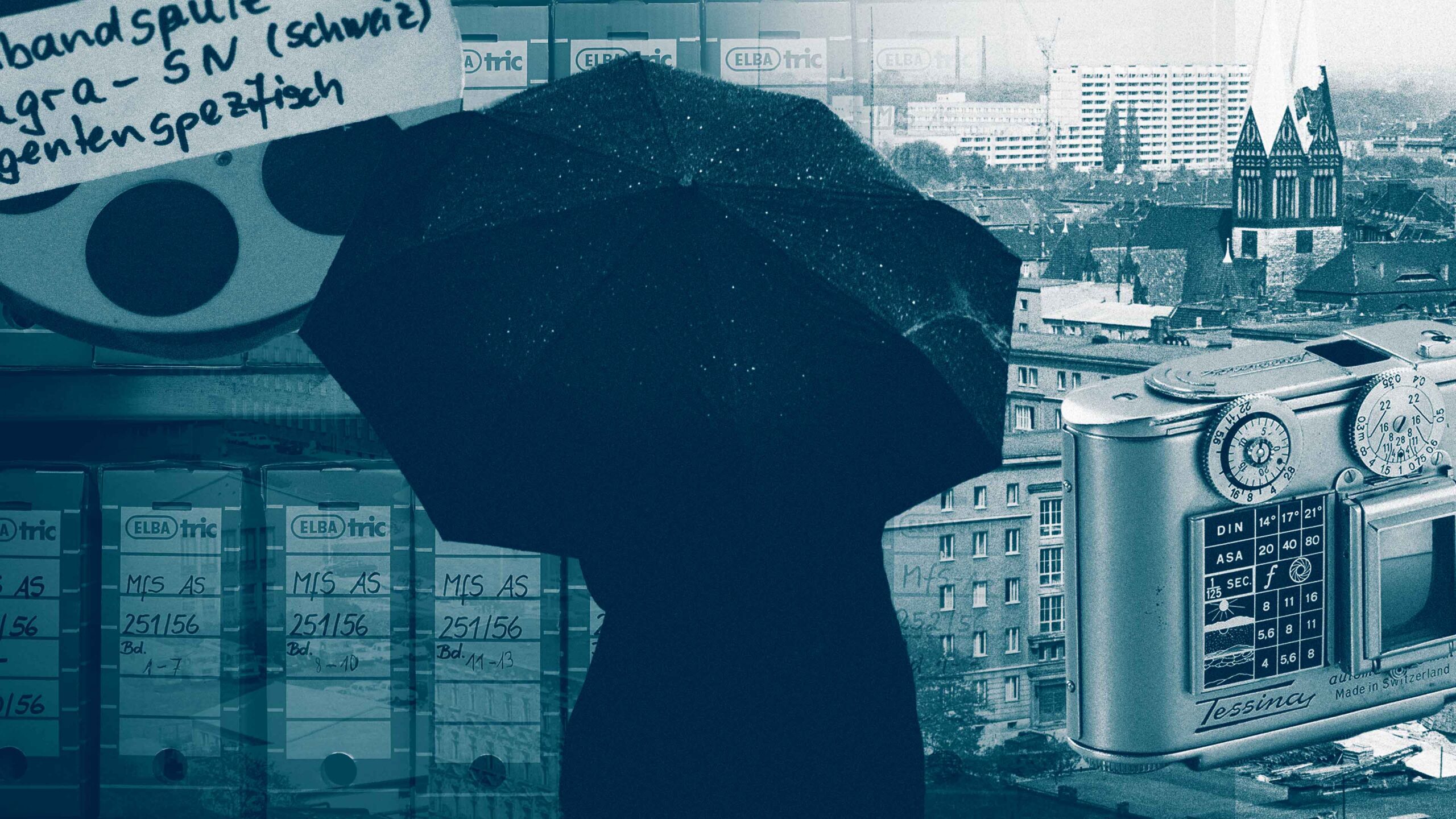
It was the shoes that gave it away. Clompy, grey. I asked myself if they were plastic as I looked down, trying to avoid contact with the man with the thin briefcase who was heading to a place that was out of bounds for the likes of me. We both mumbled a stunted version of “Guten Morgen!”, as we squashed up in the rickety lift each day.
He knew that I knew; I knew that he knew that I knew. He was heading for the top floor of my ugly tower block on Leipziger Strasse, one of East Berlin’s ugliest streets – and there was much competition for the title. He was there to listen in on my conversations, on those of a Yugoslav journalist nearby, and presumably on other neighbours too.
I used to go for an early walk to see, out of pure curiosity, if there was anything to buy in the Konsum supermarket opposite. Then I would return – always at the same time – for my ritual meet-and-greet with our Stasi protector. The men weren’t always the same, but they looked the same.
This was 1988. It was a year before the Wall came down, and yet everything was continuing as usual. I had just been appointed the Telegraph’s first and last correspondent to the German Democratic Republic. I had the great fortune of bearing witness to the pro-democracy movements, to the random events that led to the peaceful downfall of a moribund system in which everyone was somehow tainted.
I could have been an extra in The Lives of Others. So could 17 million citizens of the failed experiment on the frontline of communism.
In 2006, the film hit international screens. I remember enjoying it, which is a curious word to describe a film that focused on a famous playwright and his girlfriend being spied upon and harassed by the Stasi. Only a few weeks ago, as I pondered the impending London stage production, I watched it for a second time.
To my surprise, my response was completely different. I found little that was light-hearted or amusing. I was frustrated at the protagonist’s naivete in imagining that his status as a cultural icon of the GDR would protect him from surveillance or harm. I saw the film as unutterably dark.
Since then, I’ve tried to work out why. It’s not because I was surprised by the plot – thanks to my own experiences it was familiar territory. My gloom, I think, was a consequence of seeing the film through the lens of the politics of now. Back in 2006, even though 9/11 and Iraq had happened, and the financial crash was barely a year or two away, the notion of democratic backsliding had yet properly to take hold.
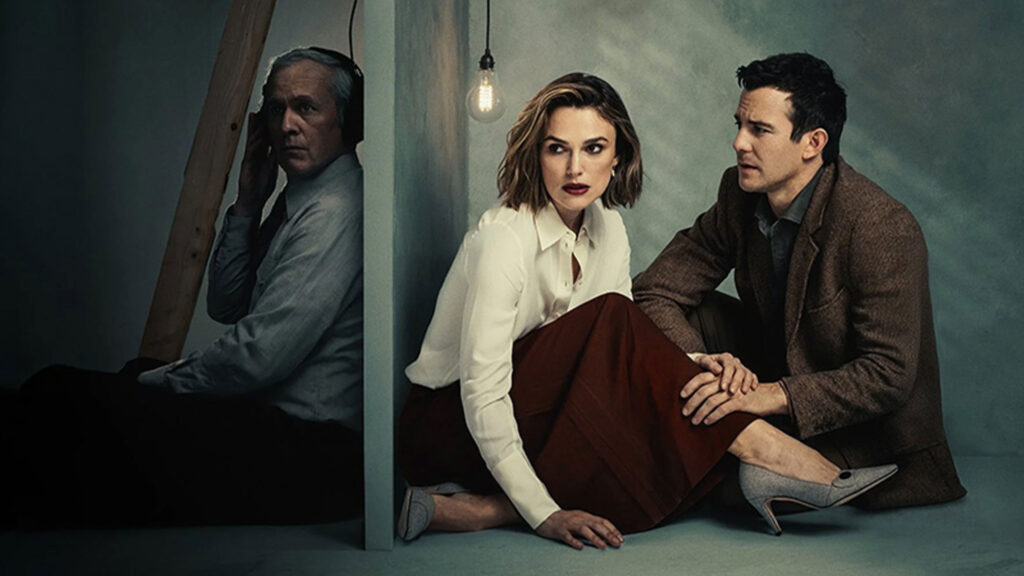
We could regard movies about dictatorship as time-capsules; a moment in time; we had convinced ourselves that we had moved on.
Of course, we hadn’t. Now, nearly 40 years on from reunification, the arguments continue to rage about the GDR. They are both vital and tedious.
The apologists/nostalgic proffer any of the following: at least people had jobs they could depend on and flats where you paid minimal rent. The surveillance wasn’t as bad as some make it out to be. Yes, it was a shame not being able to travel west, but the beaches on the Bulgarian Black Sea were nice enough. As for the sudden reunification process that followed, that was an arrogant takeover in which good jobs were sacrificed on the altar of zealous privatisation.
Sometimes someone nails it. In early September, a piece appeared in the weekly die Zeit that had me, and many others, transfixed. It looked at East German rage.
The author, Jana Simon, has a certain skin in the game. Her grandmother was Christa Wolf, whose legacy – brilliant writer and/or Stasi informer – continues to be debated. Her father was a renowned film director who found life after unification demeaning.
Simon, who was 17 when the wall came down, begins by making clear she didn’t want to produce yet another analysis of Germany’s national sport of complaining. In the end, she produces a masterwork, with 43 references to the words Wut or wütend – fury or furious – and what lies behind it.
Her answer (in short): it is a proxy for a society that, unlike the years and decades after the Third Reich was required to confront the past – was exhorted instead, after 1989-90, just to get on with it. The fury is a proxy for emotions that have not been processed.
Cue the AfD, the far-right receptacle for all that is raw.
Suggested Reading
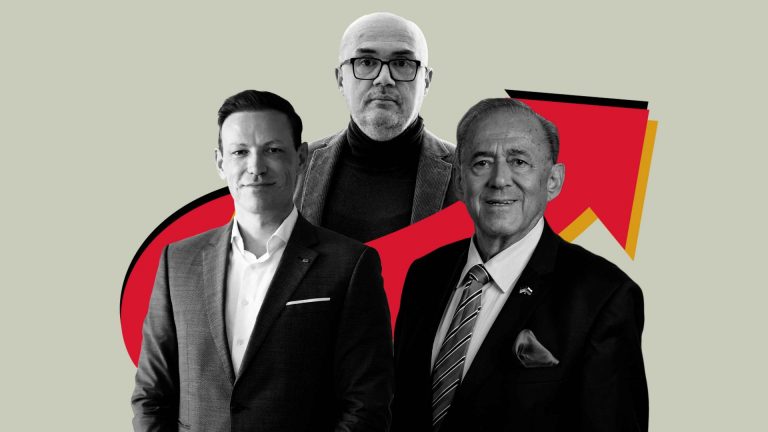
Pornstars, spies and Putin fanboys – meet the AfD
A few years ago, while recording a BBC radio series on Germany, I found myself in the city of Cottbus. It is not known for much: it has a creditable autumn festival of Eastern European cinema; it is also technically bilingual, a concession to the small Slavic minority of Sorbs. It’s best known as having had one of the GDR’s highest concentrations of IMs, informelle Mitarbeiter, Stasi informers.
I found myself talking to a local priest, who had just retired. He recounted his story, all of it, to a total stranger. Within weeks of the Wall coming down, he decided to locate his Stasi file. (Anyone prominent in the church was presumed to be potentially dangerous). He found out that his wife and father-in-law had each been snitching on him, once a week, for a long time.
He threw her out, refusing her access to their two newborn daughters for years. The infants of them had grown into thirty-something Berlin professionals, one in the media, the other in a start-up. They were angry with him for being so beastly and judgemental towards their mother.
I scratch my head. And I think of The Lives of Others, of Stasi Captain Gerd Wiesler, code name HGW XX/7, with his headphones, listening in on the famous playwright Georg Dreyman, only to try to help him out of his predicament and later to feel a certain remorse. I wonder what happened to the men listening in on me and countless more who played their part, and I ponder all the many unresolved issues of then that have resurfaced now.
John Kampfner is the author of Braver New World. The Lives of Others is at the Adelphi Theatre in London until January 9, 2027
 Most popular
I went looking for Trump’s America – this is what I found
18 things that will absolutely, definitely happen if Trump gets whopped in the midterms
Emily Maitlis’s diary: Why are we turning away the people who could make Britain richer?
‘The deep state stole my mini-budget’: An exclusive extract from Liz Truss’s new book