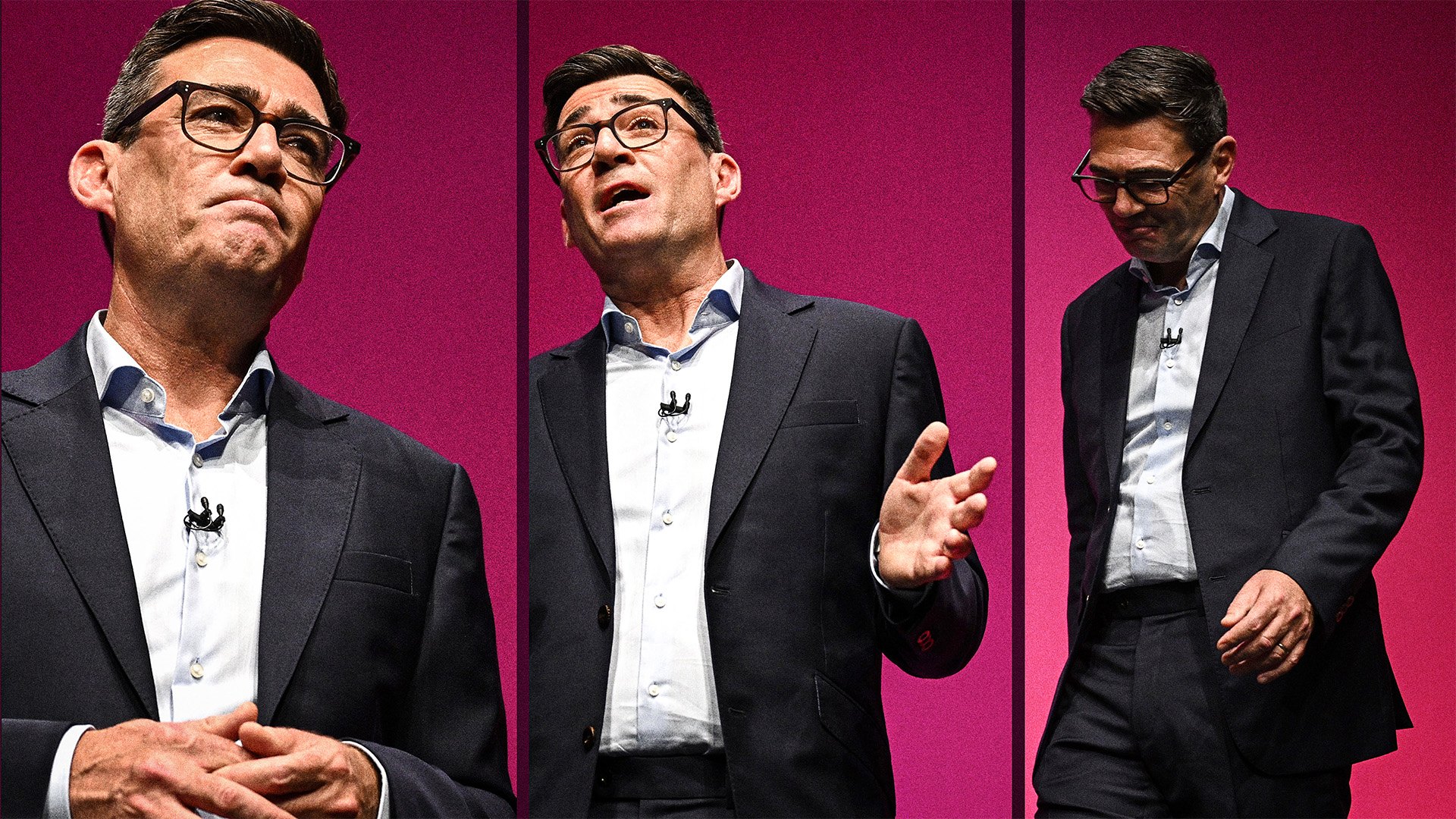
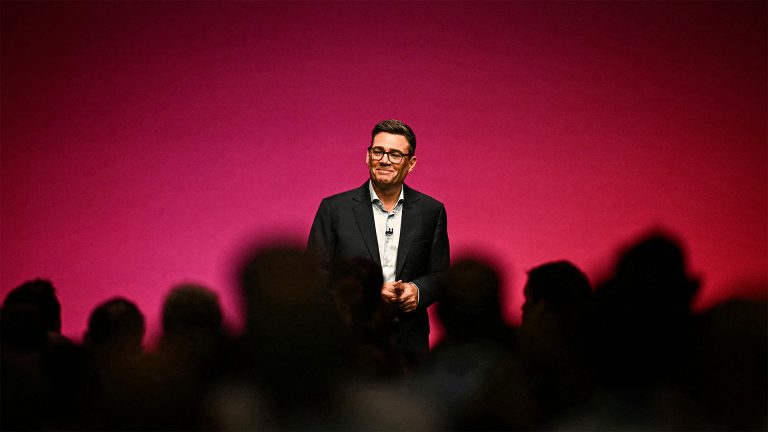
There was a moment, about 50 minutes into Andy Burnham’s first speech to the Labour Party Conference as its leader, when he simply stopped speaking.
At first, it seemed like it might be just another pause for effect – but as the silence was drawn out for longer, it became clear the prime minister was welling up, overcome. The next line of his speech mentioned his dad, who had died just two weeks earlier, and Burnham needed a few seconds to regain his composure and continue.
It was the kind of moment that might have derailed a mediocre conference speech, or even one that had been going well until that point. Instead, it only gave what already felt like a seismic speech more vigour, more passion, and more purpose.
Though the PM was visibly still grieving, you had the sense he felt he was doing something that would have made his father proud.
The headline policy of Burnham’s speech was surely the announcement of a National Care Service: “A landmark policy as significant as the creation of the NHS itself and utterly essential to securing its future,” as he described it.
He began to talk about it by referencing his father. “I watched closely the people who looked after my dad,” he said. “Caring for other people’s parents on poverty pay, but doing it with huge skill, humour and humanity. Holding a threadbare system somehow together.
Yet invisible to the political class of this country.
“I want to speak directly today to our care workers. You are not invisible to me. I see you. I thank you.”
This new service would be part of “a new social contract for the 21st century”, guaranteeing care free at the point of need to everyone who needs it in the UK, and with a promise to care workers and NHS workers alike that they would be “seen” and respected in the future.
It is an audacious and expensive promise: Burnham himself had previously suggested a scheme of this sort would cost up to £18 billion a year, while independent experts say it would likely be even higher.
The PM did not try to dodge that issue. Instead, he promised it would be “fully funded and not through borrowing”, and said part of the money would come from downgrading the triple lock on the state pension – guaranteeing it rises by average earnings growth, inflation, or 2.5%, whichever is highest – into a double lock, of sorts.
The triple lock is an immensely popular policy with the public, even if policy experts have long worried about its affordability. By openly saying he intends to end it, even if only from 2030, Andy Burnham is making a huge bet on the electorate listening to him, trusting him, and giving him the benefit of the doubt. Kemi Badenoch and Nigel Farage have already criticised the idea.
But it was this change of approach, even more than the ambition of any individual policy, that made Burnham’s speech so compelling. Though he politely paid tribute to his predecessor Keir Starmer for his 2024 election win, he largely lambasted recent generations of politicians for serial failure, and didn’t spare himself.
“What an indictment of a generation of politicians – myself included. Too cowardly to fix something as basic as how we care for each other,” he said. “Is it any wonder people lose faith in politics?”
The core pitch of this speech was honesty, of levelling with the public and trusting that they would reward him for grasping the nettles on tough decisions, instead of claiming they could be avoided. “Westminster prioritises point-scoring over problem-solving and that’s why so many things have gone unfixed for so long,” he said.
In material terms, that involved tackling two issues that Starmer avoided. Burnham promised a commission on electoral reform, which he said would feed into ensuring Labour’s next manifesto promises to “reform the electoral system so that everyone’s vote counts and everyone’s voice is heard” – something the Labour Party membership has wanted for several years, but its leadership has resisted.
Burnham also made “taking back control” a theme of his speech. “The British right talk about taking back control,” he noted. “Never forget that they are the ones that gave it away in the first place.”
Inevitably, that meant returning to the topic of Brexit, where Burnham recommitted to the reset talks begun by Starmer – but continued to say more was needed. “In the spirit of this speech, we have to be honest: Brexit hasn’t given us control,” he said.
“We will not give Britain the clear path we need into the rest of this century until we decide on a long-term relationship with what is still our largest market. I cannot say to you truthfully that where we are is good enough. Brexit has done more harm than good. We need to restore a higher level of growth and prosperity to Britain.”
For now, Burnham has promised to “lay out to you what I believe Britain’s options are”, rather than committing to rejoining, a fresh referendum, or single market membership – but even by going as far as he did, Burnham put the question of the UK’s relationship with the EU firmly back on the table.
Before this speech, the verdict on Burnham’s first ten weeks in office was guardedly optimistic: the polls were better, Labour finally had a prime minister who looked comfortable on camera, and seemed to enjoy the job. The question was what was he actually for, and what would Burnhamism look like?
This speech was not heavy on political theory or jargon, but it set out just that. Andy Burnham is taking a bet no other politician in recent British history has made: instead of platitudes or populism, he is trying to set out in plain terms a political offer, with trade-offs, and hope the public can be persuaded to back it. Even his critics must surely acknowledge it’s refreshing, if nothing else.
Suggested Reading

Memo to Burnham: this is how you beat the populists
There are, of course, endless details to work out. Burnham made it clear he regarded the 2024 manifesto to be binding: on the triple lock, on EU membership, and – earlier in the week – on its tax-and-spend promises.
That leaves him somewhat boxed in on his biggest commitments, which he promised to work on this term before putting to the electorate in Labour’s next manifesto. Given he says an early election is off the cards, at least for now, there’s a lot of governing to do between now and that moment. The work of selling these policies to the public begins with this speech, and will go on for months, if not years.
But for all that Burnham – like Labour ministers more generally – harked back to Labour’s achievements of the past, in “1945, 1964, 1997”, he also decisively broke from it. By embracing electoral reform, tackling the triple lock, and reopening the question of Brexit, Andy Burnham has embraced Labour’s new core vote – younger, economically insecure, liberal Brits, instead of holding on to an imagined voter of a bygone era.
The die is cast. Most conference speeches are soon forgotten. Leaders are lucky if even one is remembered after their time is up: Neil Kinnock had his speech attacking Militant. Blair had his Clause Four moment. David Cameron’s performance without notes is still remembered.
Andy Burnham’s political reset will plainly be a historic speech. His job now – as he told the conference – is to deliver on it.
“I now want to make a direct appeal to you,” he said in closing. “If you agree with enough of what I’ve said, get behind this plan and get behind each other. It’s time to draw a line, to get beyond a decade of drift and division… All together now. We can do it. We will believe again. We will hope again.”
 Most popular


My day out with Danny Tommo
I was at Eton with Charles Spencer – this is how it explains his battle with the royals

Emily Maitlis’s diary: Trump doesn’t fear the AI apocalypse – but he’s terrified about the midterms
Memo to Burnham: this is how you beat the populists