
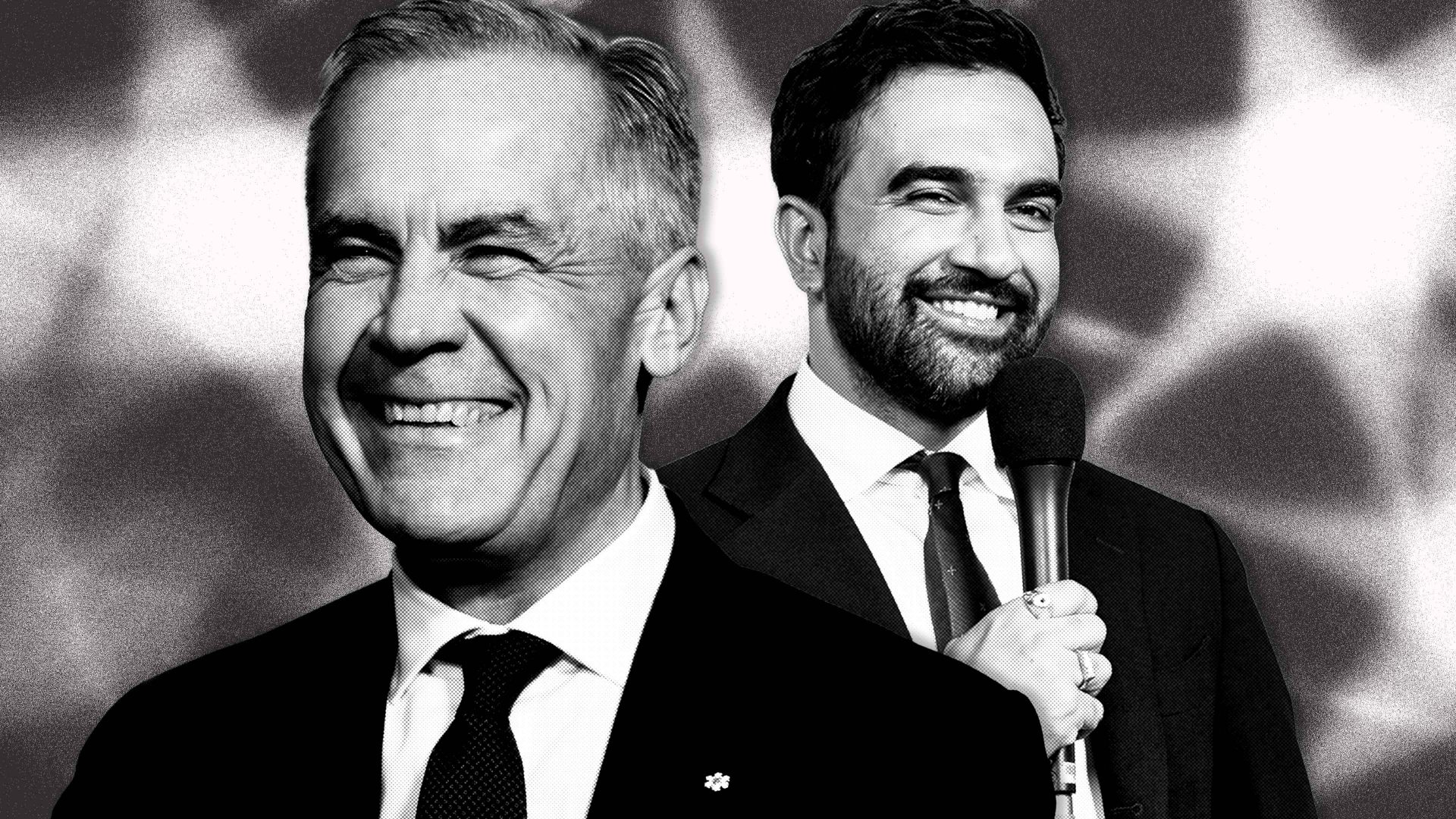
Some politicians worry about the arts. Liking theatre, classical music, or anything too pretentious might not test well with focus groups, they fret. Is it better just to find a TV show and claim you like that? What’s the right sports team to be a fan of?
And then there’s 34-year-old New York mayor Zohran Mamdani. “Never been to the opera before?” he asked via his social media channels. “Now’s your chance. We’re giving away 70,000 free tickets to the Met Opera at the iconic Lincoln Center… There’s not a bad seat in the house.”
On one level, the initiative is a small one: it’s hardly going to revolutionise New York politics, nor will it be what his re-election hangs upon. But on another, it’s indicative of his approach. It’s a simple, nice thing for New Yorkers – anyone living in the city, who hasn’t bought an opera ticket in the last seven years, is eligible to enter the ballot – and it’s one that other politicians might have shied away from, after focus-grouping it to death.
It also makes for a lovely contrast with Donald Trump. The made-for-TV president has shut down Washington DC’s Kennedy Center for the Performing Arts entirely, first having failed to attract performers or audiences towards it, and then fighting a huge legal case over trying to add his name to it.
Trump is shutting down the arts, Mamdani is opening them up. Anyone can see it.
Suggested Reading

In desperation, Donald Trump turns to communism
The initiative is more than a one-off. At the height of winter, Mamdani rushed through a programme that offered any New Yorker who showed up and picked up a shovel payment for helping to clear roads and payments – a bit of a gimmick, but one that showed he was working to fix a chronic problem that had long irritated his constituents.
There is substance behind Mamdani’s early tenure, too. Since he took office in January, Mamdani has managed to negotiate and pass a city budget that delivers on many of his priorities – while including many of the compromises that inevitably go with being in government.
Mamdani’s budget claims to close New York’s longstanding budget deficit, which it does in part by delaying payments into pension funds – but Mamdani can point to a new $500m-a-year tax on vacant properties valued over $5m as a sign he’s delivering on his promise to make the ultra-rich pay more.
His budget contains more money for discounted bus fares, though not (yet) the free fares he promised during his campaigns, more money for a social housing program to help low-income New Yorkers at risk of homelessness with rent, and other priorities. Mamdani can easily argue he is delivering on the issues he said he would, but he is governing as a pragmatist, not a radical. It is working for him: his popularity among New Yorkers stands at around 40%, slightly higher than when he was first elected.
It is tempting for those looking for an antidote to the rise of populist politicians across the world – Trump in the US, the AfD in Germany, Marine le Pen in France, and Reform and Restore in the UK – to look to someone like Mamdani for a blueprint. His victory in 2025 came when Trump still seemed to be at the peak of his powers, with universities and other liberal institutions capitulating to his demands, and the Democratic establishment at the time seemingly unable to find any coherent response to Trump 2.0.
There are limits to any strategy reliant upon imitating Mamdani, though. For one, he is clearly a generational political communicator – the best US politics has seen since Alexandria Ocasio-Cortez first emerged on the scene, and perhaps the best since Barack Obama himself.
Most politicians, even successful ones, simply don’t have his charisma, and would never be able to learn it. Even Trump himself isn’t immune: the president has been oddly friendly to a democratic socialist, Muslim politician who would usually be exactly the kind of person he would endlessly vilify.
More prosaically, most politicians won’t be as lucky in their adversaries as Mamdani. His predecessor, Eric Adams, ran an administration that was almost comically corrupt and incompetent, before cutting a deal with Donald Trump to escape prosecution in a blatant, failed attempt to stop Mamdani winning the mayoralty.
His other rival for the Democratic nomination, Andrew Cuomo, was almost a living avatar of everything wrong with the corporatist, old-school Democratic Party. Mamdani had his dream opponents in his election, and then his constituents had rock-bottom expectations of what a mayor could do in office.
Most would-be national leaders looking to fend off the far right will not be so lucky. But Mamdani is not the only one seeming to find his feet in effectively opposing populism, whether from the left or from the centre.
Georgia senator Jon Ossoff has been propelled into the national US spotlight thanks to his gift for getting under Donald Trump’s skin. Ossoff is campaigning for re-election to the Senate in a crucial battleground state that narrowly voted for Trump over Kamala Harris in 2024.
Ossoff is not trying to triangulate or appease Trump as he fights to win the election. Instead, he has become the Democrats’ most effective attack dog – most famously for his comment that Trump would rather “travel with Natalie” than do the job of being president.
Furious reaction from the White House, and from pro-Trump media, gave Ossoff’s attack a much wider audience than it ever would have received otherwise. It was exactly the kind of free media hit that Trump himself was once so good at exploiting. Ossoff has demonstrated that being a moderate needn’t mean being wet, or weedy.
Mainstream politicians in Europe looking to resist the rise of the right – such as new UK prime minister Andy Burnham – might have an even better example to study, however, in the form of Canadian prime minister Mark Carney.
On paper, Carney was exactly the kind of doomed technocrat that populists love to pummel. He had spent years overseas, in the wonkish role of governor of the Bank of England. His party had been in power for years, and was at historic lows in the polls.
Even if he could win an election, which was seen as a very distant prospect, the conventional wisdom said he would barely scrape a majority, and be unable to govern. Carney had no experience of elections, campaigning or any of the dirty business of frontline politics. On paper, he was the Canadian Keir Starmer.
Carney improved the Liberal vote by over 11% and was able to form what was at first a minority government, but when he came into power his position was worse than Starmer’s. No sooner did he take office than he was immediately and relentlessly pummelled by his belligerent southern neighbour, Donald Trump. The US is, by far, Canada’s biggest trading partner, making a US trade war an existential issue for Canadian industry.
Starmer floundered even with a parliamentary majority of more than 150, sinking to historic levels of unpopularity and being ousted after just two years in office. By contrast, Carney is riding high: 18 months after his election, his net favourability is still +30% – higher than any UK politician – and his government is seen as widely effective.
Outside Canada, most attention on Carney has focused on his robust response to Trump’s threats against his nation, and his wooing of the European Union as an alternative to the US in terms of trade. But this seems unlikely to be the real story of his political success.
Suggested Reading

Canada is now closer to Europe than Britain
Instead, domestic profiles focus on Carney’s ability to extend his governing coalition, to make deals with provincial leaders, and crucially to dispense with many of the niceties of centrist government. Instead of relentlessly putting proposals out to consultation, drafting and redrafting, Carney has pushed through measures quickly, especially when they’re focused on improving public services.
Instead of sending staff to brief why Carney couldn’t or shouldn’t fight with Donald Trump in public, Carney just fought with Trump in public. Instead of explaining why public services couldn’t be better, Carney pushed through the improvements he could deliver, and focused on talking about those.
It is this, more than anything else, that connects the success stories. Too often, centre-left governments force themselves into the role of defender of the status quo, taking the blame for failures that often aren’t even their fault, being the one to explain why things are bad, instead of being the people making them better.
Burnham’s rhetoric when he was campaigning for leader worked because it seemed to realise this – Labour’s prospective new leader talked about the need to tackle big problems, instead of ducking them. He promised to go further and faster. Unlike Starmer, he sounded like he got it.
The early signs of his government are a little more worrying. The promise of social care reform has turned into Louise Casey’s inquiry reporting earlier than it would before. The EU reset is delayed, not accelerated. October’s budget will be, we are told, steady-as-she-goes, not a big swing.
Burnham in government, so far, doesn’t sound like Burnham when he was campaigning for the job.
Looking at the muscular liberalism of Mamdani, of Ossoff, of Carney, there are reasons to hope the right wing populists can be pushed back. Some of that is about messaging, some of it is down to vibes.
But once you’re in government, there is something bigger than all of that: when you’re in power, you can just do things. So, be a Nike antipopulist – and just go and do them.
 Most popular
Emily Maitlis’s diary: Trump doesn’t fear the AI apocalypse – but he’s terrified about the midterms

A new film about Elon Musk reveals him as so awful it’s almost tragic. Almost

My day out with Danny Tommo

I was at Eton with Charles Spencer – this is how it explains his battle with the royals