
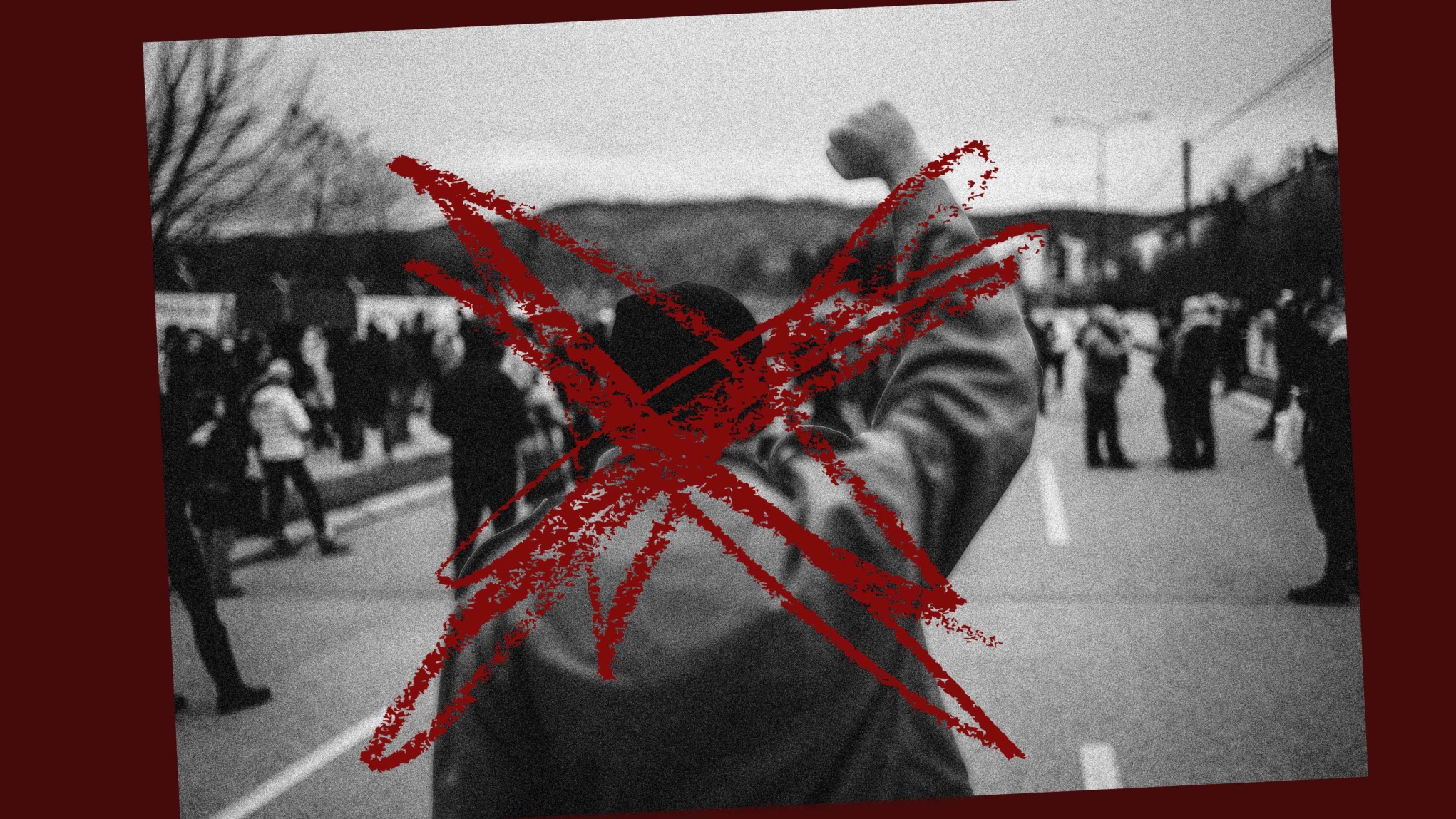
For the last two years, it has been a constant refrain: we need to talk about young men. We need to listen to young men. Young men have changed, and politics will need to change with them.
On both sides of the Atlantic, endless columns were written about the masculinity crisis, the death of empathy, how the internet was radicalising young men in a way that was unprecedented.
You could easily spend a full week listening to podcasts about the rightward shift of young men, switching to prestige documentaries about young men, to newspaper and magazine features about young men. Why aren’t we talking more about this, each of them would ask.
So: let’s talk about young men. In 2024’s presidential election, young men voted Republican over Democrat by 56% to 42% – favouring Donald Trump by less than older men, but reversing a decades-old trend in which young men had generally leaned left, though rarely quite as strongly as young women.
Suggested Reading


Is this the moment MeToo died?
People proposed endless solutions to winning young men back to the left: we would have to rediscover masculinity, and stop talking about social issues. We would have to accept the end of wokeness, and embrace the rough-talking and almost inevitably racist discourse of X.
Masculinity influencers online took their political victory and claimed it as a mandate for total cultural transformation: the feminisation of society had gone too far, they claimed, and men were rejecting it. Women should embrace subordinate roles, submit to their husbands, and give up on careers.
This revolution was always built on shaky foundations. Though it may shock American readers to learn this, the US was not the only country to hold elections in 2024. Here in the UK, we also had a general election – and young men strongly supported Labour and the Greens, more than almost any other major demographic group, except young women (who swung dramatically further left still). We have had a global conversation about masculinity based on a phenomenon that was largely confined to the US.
But the foundations of this seemingly never-ending “debate” have now been firmly washed away by the 2026 midterms – during which young men swung back to the Democrats with such force that the estimates of the size of the swing look like a mistake: one measure has it at 36 points, another at 38.
Depending which measure you believe, young American men backed the Democrats by either 59% to 37% – a +22 margin – or 61% to 37%, a margin of +24. Young men have not merely gently tipped back towards the Democrats, they support them by a larger margin than they ever backed the Republicans.
The Democrats might have de-emphasised some of the language of “woke one” that alienated some of its traditional voting base, but the party has notably not swung to the right – it is still broadly pro-trans rights, resolutely pro-a woman’s right to choose, and has largely swung leftwards on matters such as universal healthcare and tackling corporate power. In other words, Democrats did none of the things that were supposedly vital for winning back the support of young men, and won them back anyway.
Suggested Reading


The end of Trump’s empire of madness
All else being equal, we should now expect to see a parade of articles, documentaries, and podcast series on what the radical new expectations of young men mean for the future of right-wing politics and the Republican Party. Does the GOP need to embrace soft skills and radical empathy if it is going to survive? Do we need to profile straight men who knit or crochet to understand what motivates them? Can we expect Louis Theroux to do a deep dive on 20-something men who attend feminist book groups?
The chances of any of these happening feels remote, to say the least. And maybe thankfully so, as it’s not clear any of it would make good television. There is also not necessarily much need for it: the way young men voted in the 2026 midterms represents a return to normal, rather than something completely new. Young men voted Democrat by roughly similar margins in the 2018 and the 2022 midterms. This is them going back to their usual behaviour.
Except – if a one-off shift to the right by 30+ points is major news, then a similar leftward shift should be reported and discussed just as loudly, if only to repair the damage done by the false impression all the old coverage created.
Everyone – from the manosphere influencers themselves to those fighting to stop them – got the 2024 result wrong. Young men weren’t radicalised by culture war issues after all. They vote based on the economy, and in 2024 they believed a vote for Donald Trump was best for their wallets. By 2026, they were thoroughly disabused of that notion and went back to their usual patterns.
There will always be men on the fringes: those radicalised into violence, incels, and a racist far-right. But for much of the last two years, these freaks have been treated as if they were representative of their generation, or the direction in which young men were heading. That was never true, and now we have the evidence to show it.
By all means, shine a spotlight on those chuds if you must – if only to see them scuttle under their rocks. But when you see someone say that we need a conversation about young men, never forget: young men lean left, and anyone telling you otherwise should be treated with suspicion.
 Most popular
The reckoning I thought Russell Brand would never face

The Spectator’s brazen hypocrisy over Russell Brand

Why does everyone hate Laura Kuenssberg?


Slavoj Žižek: Beating Trump isn’t the wild triumph you all seem to think