As the 2026 World Cup drew to a close, there were signs that the highest power in international football has been spending too much time with an American president who knows as much about the beautiful game as he does… well, anything else, really.
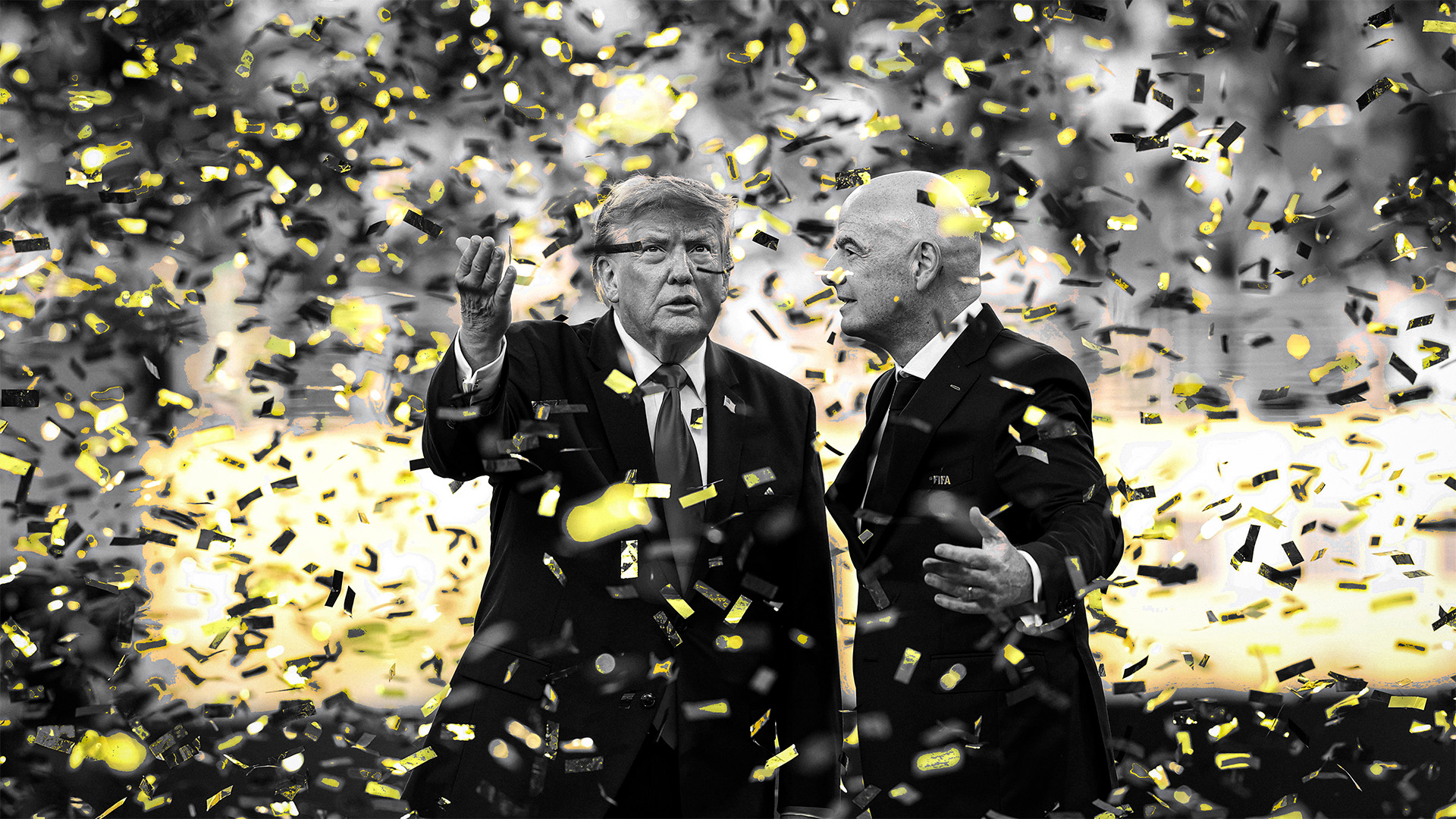
With Trumpian hyperbole, FIFA president Gianni Infantino described the tournament as “the most incredible event in human history. Not just the biggest World Cup, it has been the greatest sporting, social and cultural event in humanity. I think we have to invent some new words.”
Leaving aside that I can already think of a few words to describe Infantino, in a certain light, the quadrennial festival of football was but a subplot to the very public bromance between the FIFA capo and the Leader of the Free World. As if to confirm that character is indeed destiny, the two men got on like a code of ethics on fire.
So impressed was the president with Infantino’s stewardship of the World Cup that, seven months after taking receipt of the not-at-all-hooky FIFA Peace Prize – and then starting a war with Iran – Trump suggested his new best friend should take the reins as secretary-general of the United Nations. After witnessing Infantino’s capitulation in reinstating the banned American striker Folarin Balogun, perhaps our man in the White House anticipates an equivalent latitude should he decide to colonise Canada, Greenland and Cuba.
Others were less impressed by the Swiss supremo’s fingerprints on football’s showcase tournament. If FIFA believed they’d dodged a bullet with the Balogun fiasco, after the United States were subsequently thrashed and knocked out by Belgium, news arrived that Norway has logged a complaint with the organisation’s Ethics Committee. (Wait, hang on, there’s a FIFA Ethics Committee?)
As Lise Klaveness, the head of the Norwegian Football Federation, explained to the Times, “When you bypass a rule in this way, you embark on a dangerous path that jeopardises the entire game”.
Such chicanery also allows people with all the moral authority of a robber baron to clamber atop the highest horse. Speaking after the World Cup’s final game, in which Spain triumphed over Argentina, former FIFA president Sepp Blatter – a man who resigned his post in the wake of a corruption scandal so all-encompassing that it couldn’t be ignored even by this governing body – said, “It is up to the fans and national associations to reclaim football and bring it back to its roots under new leadership”.
Good luck with that – despite the Trump grovelling, scandalous ticket prices, phoney hydration breaks and the disgraceful treatment of Iran and Somali referee Omar Artan, more than 200 of FIFA’S 211 member associations are supporting Infantino for re-election next March, meaning he will almost certainly be in charge for the 2030 tournament, which he may choose to bloat up to 64 teams.
But if parts of the 2026 tournament were covered in murk, elsewhere, the tournament struck a blow for internationalism and the kind of low-key patriotism that allows rival supporters to sit together peaceably in the unsegregated stands of stadiums from Vancouver to Miami.
At a local level, these blows were conclusively emphatic. With Jude Bellingham bossing the England midfield and Bukayo Saka bagging a hat-trick in the bronze medal game against France, the idea – as espoused by ghouls such as the former academic Matt Goodwin – that to be English is to be white has been shown the red card by a talented multiethnic national team.
Equally, in Foxborough, the sight of Djed Spence refusing to shake the hand of the alleged multiple rapist Thomas Partney (who denies the charges) prior to England’s group game against Ghana showed the nation’s first Muslim player has a higher regard for the safety of half of the world’s population than Islamophobes who use women as human shields.
Which isn’t to say that the unifying power of international football is without limits. As has been noted by Guardian columnist Jonathan Liew, the World Cup triumph of the multiracial French team, on home soil in 1988, did nothing to prevent the country sending Jean-Marie Le Pen into the final round of the presidential election just four years later.
Okay, fine. But who’s to say that the victory of Les Bleus didn’t stop her from reaching the Élysée Palace?
Suggested Reading
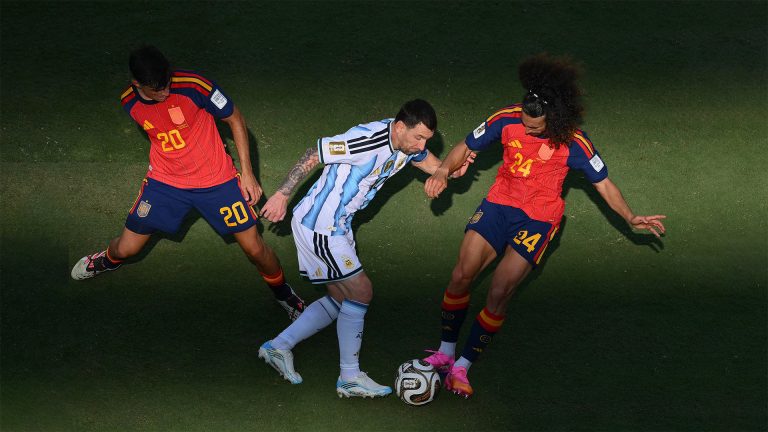

Why we’re addicted to the beautiful agony of the World Cup
And let’s not beat ourselves up, anyway. After all, fleeting victories are the very essence of football. Round my way, in Camden Town, the scores of past and present England shirts worn for five weeks by women and men from a kaleidoscopic array of ethnicities have been put away until the summer after next. Up in my hometown of Barnsley, my mum took down the flags of St George adorning her house the moment the national team were ejected from the tournament.
Of course, in an ideal world, nothing would have pleased me more than seeing the lot of ethnonationalists and nativists made harder still by an England team that had actually won the World Cup. Few things would have been more welcome than watching idiots and grouches prosecute the idea that race is a prerequisite for acceptance into the national family while the government passed legislation to put Mark Guehi’s face on a £20 note.
But I suppose (relative) failure has its benefits, too. In falling at the penultimate hurdle – again – the English have been reminded that emotional investments can go down as well as up. New and casual supporters will also have learned the bald truth that for the thumping majority the currency of football is frustration and disappointment. In this game, the only words that matter are: we go again.
Speaking of which, in all likelihood, England and its many millions of perennially crestfallen supporters will get to do it all again in four years’ time. As the World Cup moves to Spain, Portugal, and Morocco – and, um, Uruguay, Paraguay, and Argentina – the progress of our athletic envoys allows us to believe that this time, more than any other time, football is at last coming home.
As for this summer’s tournament, in what I like to think of as the settlement of a karmic debt, if nothing else, we can at least take comfort that in attending the final, Donald J Trump was forced to watch the worst match of the entire campaign. The way I see it, this was the least the football gods could do by way of sanction for a president who managed to unite the world against an American team who, in their uncommon national modesty, deserved better.
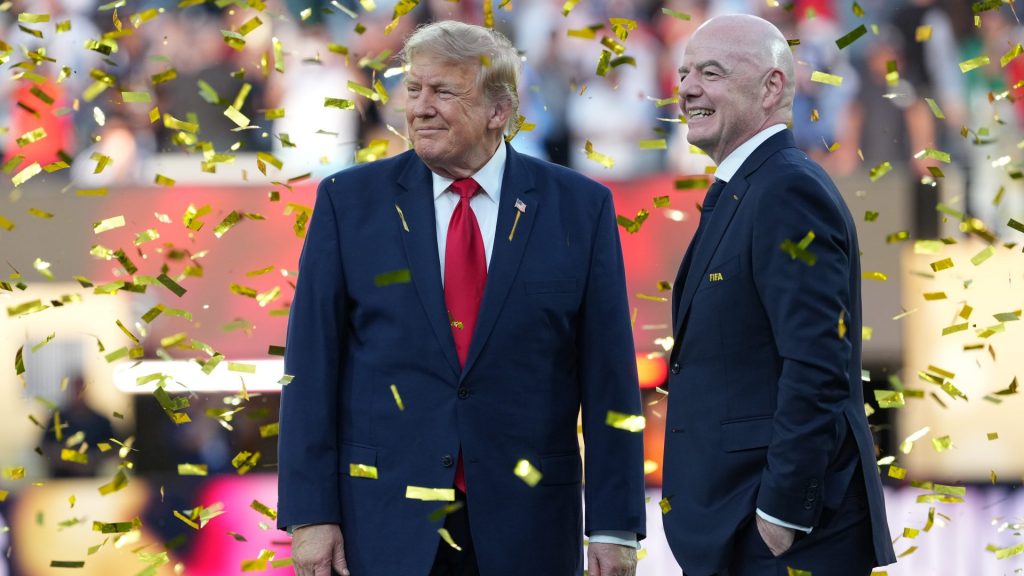
As for whether the guest of honour was given pause by an almost comically villainous team being beaten by opponents who were better in every sense of the word, we can only guess. What is for sure, though, is that in striding onto the field to present the winners’ trophy to Spain, the president heard the boos cascading from the stands of MetLife Stadium.
The latest score from the World Cup is in: football was the winner.
 Most popular

Farage’s speculation about Widdecombe’s murder could make it harder for justice to be done
Inside the notebooks that built Bruce Lee

Do you care that Burnham is a Catholic? You should

My night with the homeless showed me that Burnham must end rough sleeping