
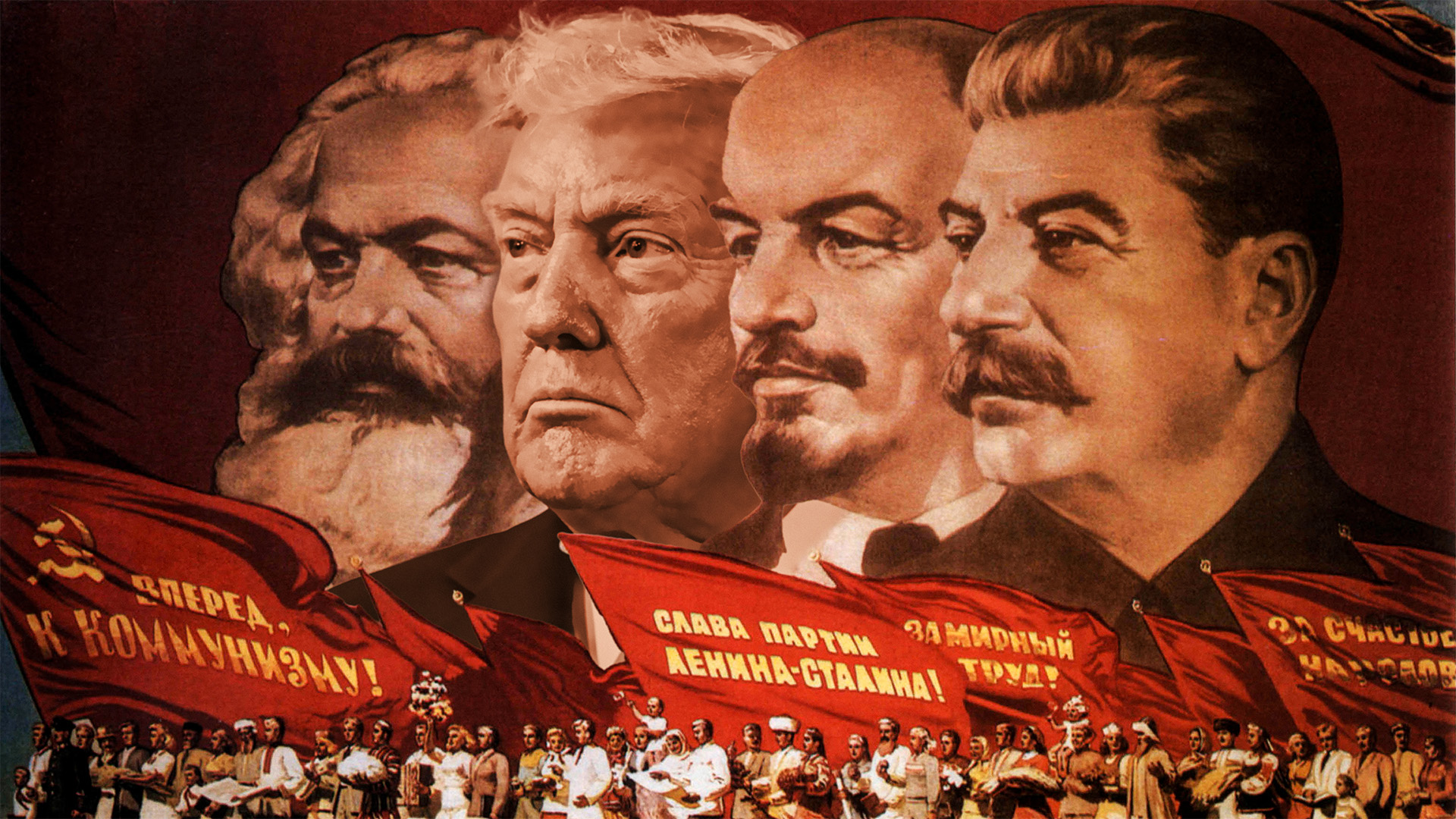
The Trump administration operates largely devoid of a sense of irony. This is a President who sprouts lies on Truth Social, promises to speak for the everyman from an office filled with gold, and rains bombs down on Iran after vowing no more foreign wars.
But even a few conservatives couldn’t help but notice the irony in Donald Trump’s speech at the GOP convention in Dallas last week. After angry Republicans took to the stage to rail against “crazy communists” and “socialists” in the Democratic Party, their own Great Leader followed up with the promise of an extraordinary redistribution of wealth.
If Republicans kept control of the House and Senate in November midterms, every American adult would be gifted $5,000, with the $1.2 trillion bill paid for by his tariffs, Trump said.
The sheer cost, logistical challenge and national debt implications aside, a few figures noticed the ideological mismatch. Former Republican representative turned conservative podcaster Bob Good took to X to slam the pledge as a “socialist vote-buying scheme”.
A similar draft policy floating around Washington is a $9,000 annual payment to married people who decide to stay at home to care for their children. While on the surface, it seems like another glorification of the 1950s nuclear family that the current administration idolizes, some saw more nefarious links to Democratic plots to install a dreaded welfare state.
“Paying people to not work steals away everything God gave them,” thundered Dan Bongino, former FBI deputy director and conservative podcaster. A Washington Examiner op-ed accused the current administration of inviting “a socialist idea into the Republican tent”.
While it’s quite delicious to imagine that Donald Trump – that very icon of American capitalism run riot – has made a dramatic swing to the left in the waning years of his presidency, these are more likely acts of last-minute desperation.
Suggested Reading


Is the future communist?
This is a President facing record low approval ratings, a war in Iran that he cannot end, a noisy breakaway faction of his Make America Great Again movement, and soaring energy and food costs that the Democrats are making hay with as the midterms approach.
That desperation was evident throughout Trump’s Dallas appearances, when he also warned Republicans that they would “go to hell” if they didn’t get out and vote in November.
But while Trump bandies increasingly ludicrous carrots and sticks, the wider Republican Party is adhering to their favoured attack line: accusing the current crop of Democratic candidates of being radical far left instigators intent on destroying the American way of life.
It’s the Red Scare, barely repackaged, with lashings of fear about economic collapse, the end of private ownership, a crime spree when police are abolished, and a radical movement of power away from the individual and to the state.
Treasury secretary Scott Bessent warned the crowd in Dallas that voting for the Democrats would usher in the “socialist hellscape of the last century”.
House Speaker Mike Johnson was more specific in an interview with CNN this week, when he alleged that the Democrats hoped to “elect enough Marxist, socialist, communists to take over the means of production [and] that means no more private property ownership”.
The jumping off point is the success of progressives and a handful of candidates backed by the Democratic Socialists of America (DSA) in the Democratic primary races.
Following on from DSA poster boy Zohran Mamdani’s New York mayoral win, DSA members fought off competition from mainstream Democrats to win their party’s nomination in House and Senate races in states including New York, Colorado and Florida.
As well as DSA members, other progressive candidates from the left wing of the Democratic Party have been selected to challenge key Senate seats in the mid-term elections, including Abdul El-Sayed in Michigan and Troy Jackson in Maine.
With the backing of progressive stalwarts Bernie Sanders and Alexandria Ocasio Cortez, these candidates have injected energy and sparked debate about the future direction of the Democratic Party, with messaging going to the heart of Americans’ key concerns.
But despite undeniable growth for the political movement, this isn’t quite the communist takeover that the Republicans are screaming about.
The DSA candidates have a chance of winning only around eight seats in a 435-seat House of Representatives. Candidates like El-Sayed and Jackson may be on the more progressive wing, but neither are suggesting the abandonment of the capitalist system.
Nevertheless, Republicans have seized upon this narrative, largely because they don’t have much else to offer the electorate. When they can’t claim victory on the one issue that consistently polls as the top concern for Americans – the rising cost of living – they fall back on fearmongering, in the hope of scaring people into voting for them.
But the spectre of communism is not something a broad swath of the American public worries about today. A recent Economist/YouGov poll found that only 1 in 10 Americans classified communism as a major threat to America today.
Suggested Reading
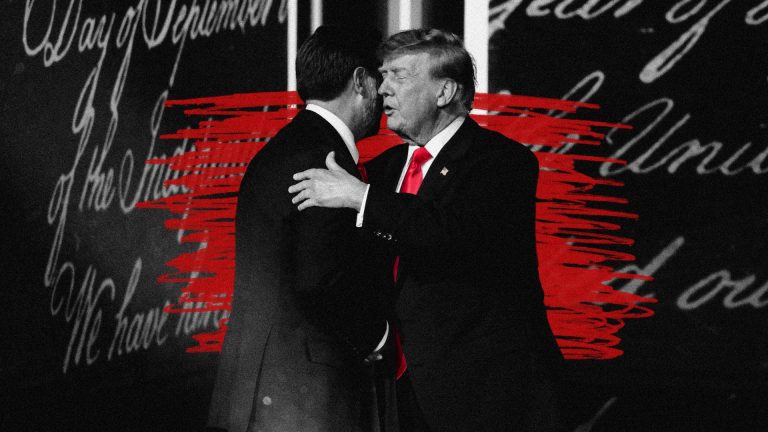
What does Trump think of Vance? Well – I asked him. Here’s what he said
Among young people, the Cold War is something their parents may talk about, or a lesson in a history textbook, rather than something so tangible that they would feel compelled to get out and vote against it. And a recent Washington Post-Ipsos poll found that nearly half of people under 30 would be open to backing a Democratic Socialist for President.
But while much of the Republican Party seems to think fire and brimstone is the best way to win their hearts and minds, another prominent figure is taking a more conciliatory tone.
Vice president JD Vance – who likes to think of himself as the voice of white, working-class America – seems to have realised that a steady stream of fear may not be the best way to connect to the youth voting bloc that helped propel Trump to electoral success.
“Don’t blame young people for being sympathetic to socialism,” he warned Republicans in a television interview last month. “We’ve got to blame ourselves.”
“You don’t stop socialism by throwing slogans at people about the free market,” he added. “As much as I love the free market, you stop socialism by making people’s lives better, and that’s what we’re trying to do every single day.”
While Trump’s surprise turn to wealth redistribution was pure opportunism, with Vance, it is a more calculated softening of a stance as he positions himself as a frontrunner for the 2028 Republican Presidential nomination.
But however they deliver the message, Republicans are not winning the affordability argument, and when people look at their ballot papers on election day, they are not going to be worried about going to hell, but whether or not they can afford to go to the grocery store.
 Most popular

Emily Maitlis’s diary: As I was saying to George Clooney just the other day…

A new film about Elon Musk reveals him as so awful it’s almost tragic. Almost


Never again? Think again. The far right’s resurgence in Germany should terrify all Europeans

There’s only one reason Trump went to Ireland – it wasn’t to meet the Taoiseach