Trump’s War has changed the world. It has rewired the globe and, with a few exceptions, not in a good way.
It will have long-term consequences for energy production, for world trade, for Nato and the Atlantic alliance. It will affect the climate change debate, fundamentally alter Iran’s strategic influence, and exert huge pressure on the Gulf States and world global lines.
China’s role in the world is also now much clearer and the complexion of the Ukraine War, along with the reputations of the United States and its client state Israel, are changed. Perhaps most significantly of all, the spectre of nuclear weapons – and their use – has returned.
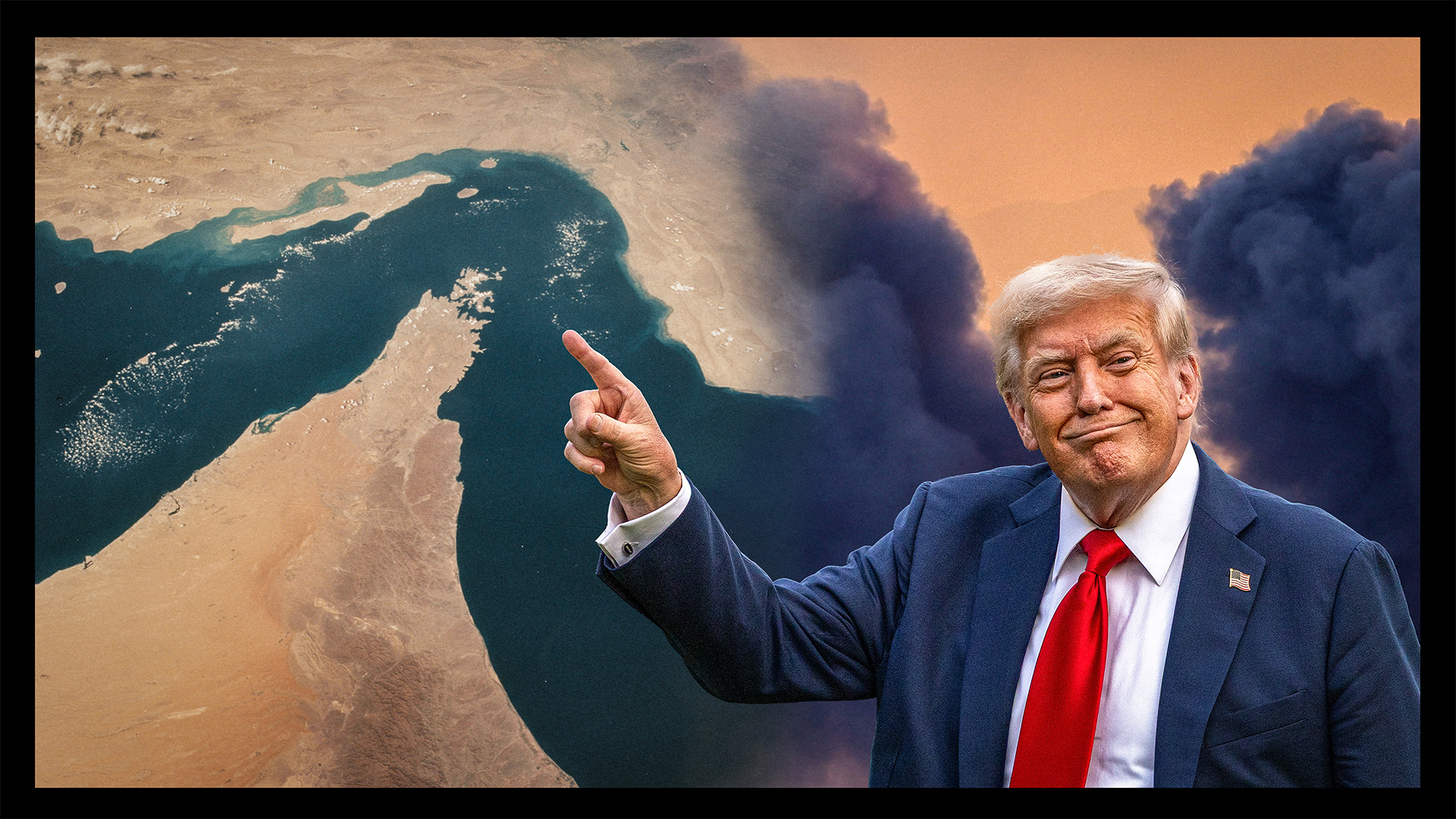
The Iranian threat to close the Strait of Hormuz has been around since before the fall of the Shah in 1979, but that threat has only been a hypothetical. Now it has become reality. The Islamic Revolutionary Guard is allowing passage to only a handful of the 200 oil tankers bottled up in the Persian Gulf, and they must be from “friendly” countries. The initial ceasefire agreement indicated that each vessel would pay a toll of $2 million to navigate the strait but, as with so much about the current situation, that arrangement is now in question.
Iran has discovered a new weapon and a lucrative revenue stream, and will fight to keep it. Traffic will eventually return to 100 tankers a day. But when it does, and if the toll charge remains in place, there will be an Iranian tax on each gallon at the pump. World trade will also have to deal with an uncomfortable reality: a revolutionary theocracy controls a vital maritime chokepoint.
They are also unlikely to abandon their nuclear enrichment programme. And Trump’s war has only confirmed the mullahs in their perceived need for a nuclear deterrent. It is also clear that neither Trump nor Netanyahu has succeeded in “obliterating” Tehran’s nuclear ambitions. The world will have to learn to live with, and diplomatically manage, a nuclear Iran as it has learned to live with North Korea.
This will not, however, appease Israel and the Gulf States. Israel does have a nuclear deterrent. The Gulf states do not, and their vulnerability is now all too apparent. Saudi Arabia has been explicit in stating its nuclear ambitions. In 2018 crown prince Mohammed bin Salman said: “If Iran developed a nuclear bomb, we would follow suit as soon as possible.”
Kuwait, Qatar and the United Arab Emirates opted to relinquish a possible nuclear bomb in return for American troops on their soil. But these have proven more of a magnet for attacks than a protection against them.
The Gulf States have also suffered a major PR setback. In recent decades they have successfully projected an image of sun, sea, sand, prosperity and stability. Dubai has become one of the world’s major tourism hubs with 25 million visitors last year alone. From 2020-25, the UAE’s GDp jumped 25%.
The success of the Gulf states is down to their ability to attract highly trained expat workers and their families. Expats comprise 85-90% of the workforce in Qatar, the UAE and Kuwait. They will now be less keen to live and work in the region.
There are winners in Trump’s war, foremost among them Russia. In December Brent crude slipped to $58 a barrel and Vladimir Putin was struggling to pay for his war in Ukraine. It is now double that figure and the Russian leader is awash with oil money to finance his war machine.
Suggested Reading

How to stop the next Trump
For China there are wins and losses. Anything that makes the United States look foolish and distracts it from the Indo-Pacific region is a plus. On the other hand, China is totally invested in the stability of the world economic order. Trump’s war has upended that. Fossil fuel from the Gulf is important to China but comprises only 18% of China’s energy requirements. More important to Beijing is the danger to world markets.
Chinese diplomats have been working behind the scenes to ease tensions. It is worth noting that Pakistan, which has emerged as chief mediator, is a close ally of Beijing. If, on the other hand China wanted to become involved militarily, it owns and operates the port of Gwadar near the Pakistan-Iranian border. Gwadar is part of China’s Belt and Road initiative – but like all ports it could be put to military use.
Climate change activists are also winners. Trump’s war has further reinforced the need to focus on renewable energy both for economic security and political independence. Europe is well positioned to push ahead with decarbonisation. Denmark, Austria, and Portugal, generate 80-90% of their energy from renewables. Spain generates 57% of its electricity from renewable sources and aims to increase that to 73% by 2030. Spain is ten points ahead of the European average but behind EU leaders The EU average is 47%.
Europe may be improving its energy security, but its military security remains dependent on the US. NATO’s transatlantic relations were already severely strained with Trump’s failure to fully back Ukraine, his support for far-right European political parties, repeated hints at withdrawal from the alliance and his proposed takeover of Greenland. Trump chose not to consult European allies before the war; attacked without them and then criticised the Europeans for not entering the war to help clean up the mess he created.
However, the two biggest losers in Trump’s war are Israel and the US. For decades Israel was able to project itself as the national embodiment of a race and religion struggling to rise from the nightmare of the Holocaust.
That image has been replaced by a vision of Israel as a rogue state, an aggressor nation that believes its political security can be achieved only through constant war. This is not just the view of Netanyahu. According to the latest opinion polls, 80% of all Israelis and 90% of all Jewish Israelis support the attacks on Iran and Hezbollah.
The biggest loser is America. According to Trump and Pete Hegseth, they won. In terms of body bags, they are right. But in reputational standing the US has suffered a disastrous defeat. Since its founding, the US has sought to project a benevolent foreign policy. It was at the forefront of the anti-colonial movement. It fought two world wars and opposed authoritarian communism in favour of representative democracies. Many in the Global South have accused the US of neo-Imperialism. But from the broad brush of history, the US has emerged as a generally benevolent power.
That has changed. The US is now a nation which seeks to impose its political aims and economic objectives through the barrel of a gun. And it has a mighty gun. The US possesses 5,200 nuclear warheads and a conventional military twice the size of the next ten countries combined. After Iran – and Venezuela – the world has reason to fear America.
 Most popular
My truly deranged encounter with Trump apologist Kellyanne Conway

Suella Braverman’s book has sold only 106 copies. This is why

The moral depravity of Robert Jenrick

Hungary’s lesson to the world: Populism isn’t permanent