
In a town of fewer than 4,000 people, a row is unfolding that tells you almost everything you need to know about modern Britain: the increasingly bitter stand-off between NIMBYs and YIMBYs.
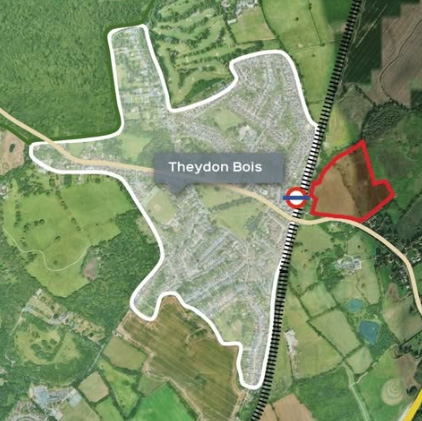
The village of Theydon Bois, in Essex, is currently in uproar. Proposals to build 150 new homes on a stretch of green belt land beside its tube station have drawn fierce opposition from the local MP, councillors, and multiple residents’ groups.
That backlash has, in turn, provoked its own online argument. Self-described anti-NIMBY campaigners have seized on the story in disbelief. If you were going to build new homes anywhere, they argue, surely an empty field next to a tube station is exactly the place to do it?
And so The New World travelled into the outermost reaches of the central line to investigate. In this leafy village – where homes can fetch around £1m – we spoke to a local action group, a district councillor, and several residents, all of whom opposed the plans.
It’s not hard to see why. Theydon Bois is picturesque and peaceful and the disputed patch of green belt is lush, well used, home to a public footpath, and no doubt plenty of wildlife. The urge to protect all that is understandable.
The phrase that came up again and again was: “we don’t want to become part of London.” That’s a reasonable sentiment if you are a country-dweller at heart, which I am not. But then you remember that Theydon Bois has a London Underground station that sits right beside the proposed development site. This village in the countryside is already connected to the capital.
I put this contradiction to several people who opposed the development. Of all the places to build new housing, I suggested, somewhere with existing transport links into London made obvious sense. It would avoid the need to carve up more countryside elsewhere, or spend billions on new infrastructure.
But no dice. I had to stop myself from asking whether they’d fancy swapping their station – with its direct line into Liverpool Street – with some of my friends in London who, thanks to rising rents, have been pushed into parts of the city with no tube stop. They would kill to be that well connected to the city centre.
When most outer-zone tube stations like Theydon Bois were originally built, they were created with exactly this kind of expansion in mind. The expectation was that housing would follow, spreading out into what were then the edges of Essex, Hertfordshire and Middlesex, to accommodate a growing commuter population.
Suggested Reading


A Green wave is ready to wash away Labour London – and this is why
For decades this kind of forward-thinking urban planning was regarded as desirable. So why was it deemed sensible and good in the mid-20th century, but an unacceptable intrusion today? When did the instinct begin for the people who own homes in these leafy suburbs to pull up the drawbridge?
People we spoke to fretted that more homes would bring existing house prices down, or suggested that young people could just “save up” to buy a house. But almost everyone I spoke to readily acknowledged that Britain is in the grip of a housing crisis. And something indeed did need to be done about it. And of course we should build more homes. Yet the conclusion was always the same: “…but not in Theydon Bois”.
It is human instinct to want to protect what is yours. But if everyone takes the view that “yes, this is a desperate problem and someone really must fix it”, only to clutch their pearls the moment that solution involves any trade-offs, then sooner or later something has to give.
This kind of thinking arises around a lot of Britain’s current problems. People want better public services, but shriek in horror at the prospect of tax rises. Many agree that too many youngsters are going to university, but would never consider that their own children might be deprived of a diploma – an observation made in these pages by Shuab Gamote.
But nowhere is this sentiment quite as infuriating as it is for younger people, who cannot see any realistic way of getting onto the property ladder, and instead find themselves forking out hundreds of pounds every month to landlords who take four weeks to fix a leak. And it has all turned into a rather vicious little catfight.
In my case, the social media algorithms have correctly clocked that I am young, renting, and politically engaged – in other words, probably a YIMBY. So most of the time I hear about anything to do with planning or housebuilding, it’s because a load of much more vocal YIMBYs are going slightly feral on social media about what an equally vocal group of NIMBYs are going slightly feral about.
Examples from the last few weeks alone include: opposition to a redevelopment of the Royal Marsden cancer hospital by local residents in west London because the buildings would be too tall; a Lib Dem policy announcement that all new housing developments should be built with accompanying GP surgeries; and the discovery that the reason new builds all have tiny windows is because of regulations that say windows should be low enough for a small elderly woman to dust.
But while online spaces skew in favour of new developments, in much of the traditional media you are far more likely to encounter concern for landlords, or anxious headlines about falling property values.
When younger people read these stories, their immediate instinct may be a flicker of schadenfreude: “good, perhaps prices might finally come down”, or more bluntly, “what exactly are you complaining about? At least you have a bloody house.”
Suggested Reading


Mandelson, McSweeney and the eternal truth about political failure
It is an inherently age-coded divide, and for many millennials and Gen Z-ers it encapsulates a broader frustration with modern British society: that younger generations have been sold down the river, while institutions continue to fawn over the votes and opinions of those who, from our perspective, have already won in life.
You can see how this plays out in miniature everywhere. Housing developments are blocked by mortgage-free suburbanites, who then wonder aloud at Christmas why there are no grandchildren. Spoiler: it’s because their children are spending two-thirds of their paycheque on a studio flat in London.
“Well, why don’t you just move somewhere cheaper?” they ask. Many would love to. And if we had high-speed rail properly connecting those cheaper cities to where the jobs are, that might actually work. Oh wait…
And perhaps renting wouldn’t feel quite so punishing if energy bills weren’t through the roof – if only we could manage to build more cheap, renewable energy. Oh wait again…
Many people in Theydon Bois saw the approval of these plans as an attack on them by the Labour government, a slightly odd conclusion, given the local council is Conservative run. And this is where the government is, arguably, getting something right. I’ve often written that Labour needs to show younger voters it is actually on their side – and this is exactly the kind of fight that does it.

The more the government is willing to say, in effect, “we were elected to do this, and we’re doing it”, the more it might cut through. Proof of concept was a Telegraph headline declaring “Ed Miliband overrules locals” which tore through Gen Z Twitter, where the YIMBY-in-chief was promptly rebranded “Milibased”.
But there is still room to go further. The people most likely to kick up a fuss about developments like this are, frankly, unlikely to be natural Labour supporters anyway. If the government takes anything from what I am now calling the “Whose Back Yard Civil War”, it should be this: stop trying to appease those who offer nothing but objections and no solutions.
Don’t just say you’re willing to take on the blockers – actually do it. Make the decisions that are unpopular in the short term but necessary in the long term. Because if the planners of suburban expansion in the 1930s, or the founders of the NHS in the 1940s, or even the waves of school rebuilding in the 2000s had waited for unanimous approval, very little would ever have been built at all.
Perhaps the NIMBYs of today might like to consider this, and ponder that many of the things they hold dear were built on an understanding of what was best not for the people of today, but for the children of tomorrow.
To pretentiously quote a Greek proverb: “A society grows great when old men plant trees in whose shade they shall never sit.”