
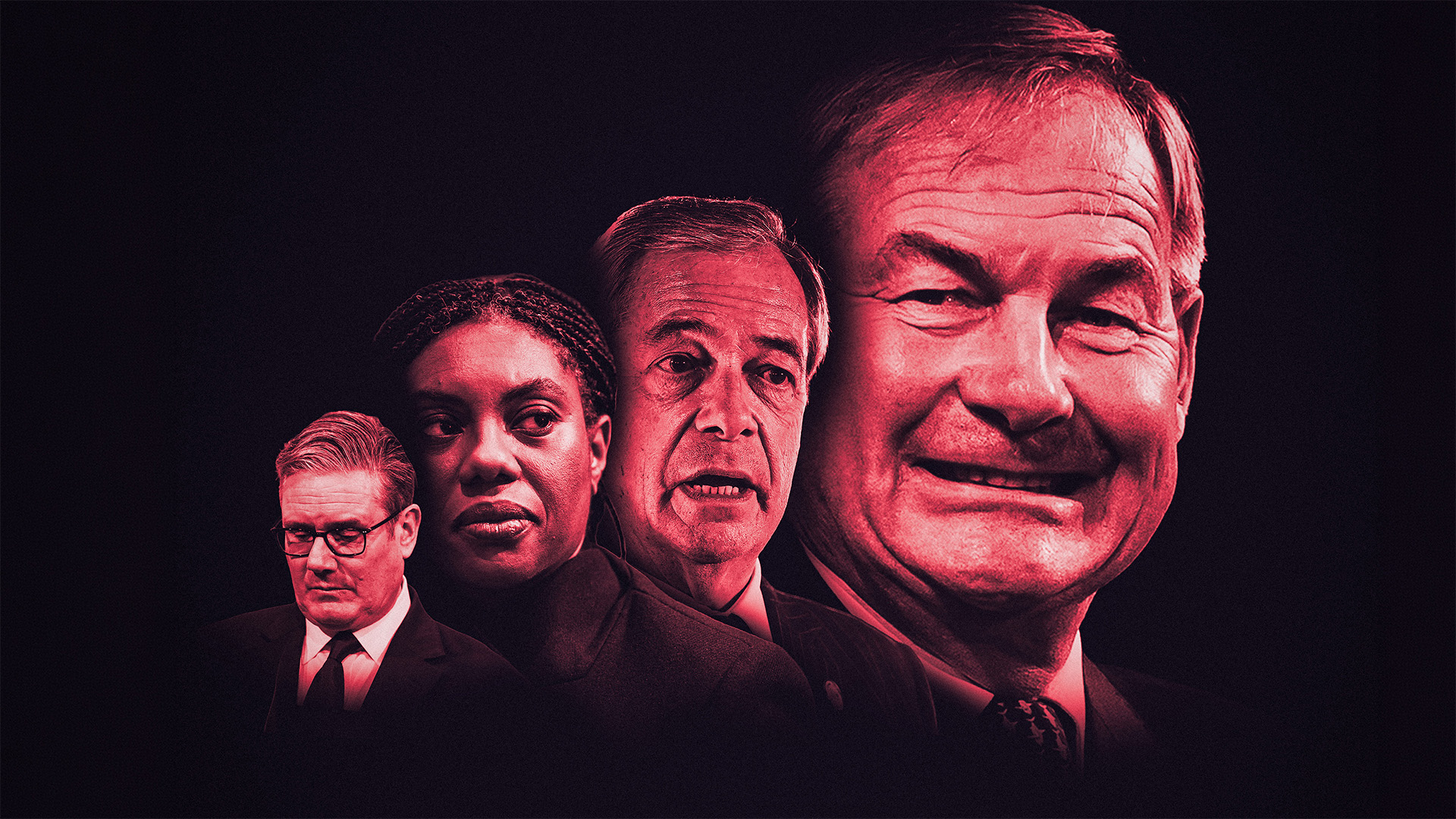
When the first real poll of the Makerfield by-election – a survey of 504 residents of the constituency conducted by Survation – dropped, discussion was dominated by the neck-and-neck race between Labour’s Andy Burnham, on 43%, and Reform’s depth-plumbing plumber Robert Kenyon, just three points behind on 40%.
Burnham will not be the next Labour leader, and so the next prime minister, if he doesn’t win Makerfield, and the Survation poll suggests victory is anything but guaranteed. The Labour pretender’s lead was well inside the margin of error. Makerfield’s voters right now probably have more influence over the future of Britain than most of the Cabinet.
All of which made a hidden detail in that poll all the more revealing once it was noticed: the party in a distant third place in Makerfield, with 7% of the vote, wasn’t the Conservatives, Greens, or even Liberal Democrats. It was a brand-new far right political party, Restore Britain, formed only in February by the ex-Reform MP Rupert Lowe after a spectacular falling-out with Nigel Farage.
The poll, which gave Reform and Restore a combined vote share of 47% – enough to beat Burnham – seemed to show that this new split on the UK’s right could save the King of the North and stall Reform’s momentum. It was enough to spark schadenfreude, and even a certain degree of delight, in some corners of social media.

So… could the rise of Restore be good news for British politics? Those who see its potential to split Reform’s vote might be cheering it on in Makerfield – but there are serious reasons to worry, too.
The birth of Restore Britain lies in the disintegration of the relationship between Reform leader Farage and Lowe, the former Southampton FC chairman and Brexit Party MEP who was elected as Reform’s MP for Great Yarmouth in the 2024 general election. Farage and Lowe soon started acting like two silverbacks in a Portakabin, their egos clearly unable or unwilling to accommodate the other.
Elon Musk exacerbated mounting tensions between the two. Farage has long sought to keep a visible divide between Reform (and its predecessors) and openly far right agitators like Stephen Yaxley-Lennon (better known as “Tommy Robinson”). In late 2024 and early 2025, Farage was trying to woo Musk to publicly support Reform, with media reports that a multi-million-pound donation might be in the works.
Musk, who has rarely seen an online far right agitator he doesn’t like, wanted Farage to embrace Robinson, which Farage refused to do. In January 2025, Musk ran out of patience with Farage, saying he “doesn’t have what it takes” to lead Reform into power, and said Lowe should be the party leader instead. Publicly, Lowe offered limp support for Farage’s continued leadership, but the die was cast.
Weeks later, in March 2025, Reform suspended the whip from Lowe, supposedly over bullying complaints by two staff members, and an alleged threat of violence against then-chairman Zia Yusuf made months before, which was even reported to police (who declared two months later they were taking no further action).
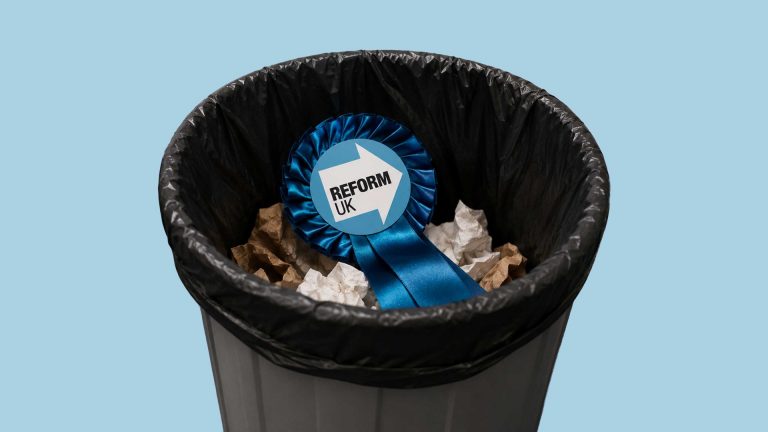

Reform tried to portray Lowe’s suspension as a normal matter of party discipline. Lowe portrayed it very differently – he claimed that Farage kicked him out because of his views. Lowe said Reform HQ had removed a call for “mass deportations” from a speech he was due to give, and said Reform had also disciplined him for comments about grooming gangs.
Lowe essentially seized the opportunity created by Musk to paint Farage as a centrist, unable and unwilling to tell the ‘truth’ on immigration and related issues, and put himself forward as the full-fat alternative. Throughout the row with Reform, he praised Musk and X as making it possible for Lowe to get his side of the story into the public, something he said would not have been possible otherwise – due to mainstream media bias and what he claimed were smears from Reform.
Lowe is huge on X: despite having around half the followers of Farage, his posts go viral more often, and he is retweeted by Musk on a fairly regular basis. X pays its power users based on how viral their posts go, and elected MPs have to declare these payments – giving an indication of their reach on the platform.
Since July 2024, Farage has earned a little over £20,000 in this way. By contrast, Lowe has earned more than £72,000. Lowe’s success has been so obvious on X that there has even been speculation that Musk had tailored the algorithm to boost him over Farage – though it may just be that Lowe’s far right content is better suited to the social network.
As a result, Lowe has been huge on X for most of the last 18 months, even as he has been largely unnoticed by the mainstream media. Lowe has been using the Restore Britain brand for much of that time, though it was only officially registered as a political party on February 13.
On social media, Restore’s content is often served up among clips of football matches or football analysis – not just on X, but also on Facebook. It has picked up a devoted online fanbase with virtually no scrutiny from major outlets.
Make no mistake, Restore is even more extreme than Reform UK. Farage fans were almost invisible at Robinson’s two major London rallies, but signs and merch for Lowe and Restore Britain were everywhere.
Its policies on mass deportations are even more extreme than Reform’s: the party claims it can deport all illegal immigrants within three years, through a hostile environment and 150,000 or more “enforced removals”. It calls for negative net migration, and stripping the right of non-citizens – including those with indefinite leave to remain – to access any public funds or housing.
Suggested Reading


The case against common sense
But in some ways, Restore’s policies are the least extreme things about it. As Sunder Katwala of the immigration and integration think tank British Future has catalogued, Restore has a stated policy that it will not ‘vet’ candidates from the right: while Reform expels candidates who express support for the Nazis, or who used to be British National Party members, Restore does not.
Miles Routledge, one of the party’s “Cromwell Club” members who donate a minimum £2,500 a year, has said “what brings me hope and joy in this world is that by 2039 we’ll have another Hitler to lead another great uprising”. He remains a Restore supporter in good standing. Restore’s central office recently intervened to reinstate a member kicked out by a local party after being pictured giving a Nazi salute.
The centre ground of British politics has been dragged dramatically to the right in the last two years, but even in this new normal, Restore Britain is something else entirely. It is materially more extreme than Reform UK – and stating this is certainly not to absolve Reform, or to say it’s not itself a far right party.
Restore is currently polling nationwide at less than 5%, but it has resources to play with. Because the party only officially registered in March 2026, we do not yet have much information on its donors – but records filed with the Electoral Commission show that it has £2.6 million in cash.
In the context of UK politics, that is serious money: it is more than either the Labour Party or the Conservatives received in donations last year, and we do not yet know where any of it has come from. Lowe now claims Restore has 123,000 members – more than the Tories and Lib Dems and virtually the same as the Greens.
Celebrating Restore as something that could split the Reform vote feels like it could age as badly as Democrats in 2016 celebrating the fact Donald Trump got the Republican nomination, because it would make it easier for Hillary Clinton to secure a landslide election victory. We all saw how that worked out.
The Conservative Party, worried by Reform on its right flank, shifted dramatically to the right on issues of immigration. Labour, having seen the Tories shift, largely followed suit – Shabana Mahmood’s Home Office is, in many ways, more hardline on immigration than it was under most of her Conservative predecessors.
Farage is, for the first time in his political career, facing serious competition on his own right flank – and he has been for more than a year, even if most media coverage largely didn’t notice. The effects on his own policy agenda have been dramatic.
In September 2024, Farage said it was “a political impossibility to deport hundreds of thousands of people” adding that “if I say I support mass deportations, that’s all anybody will talk about for the next twenty years”.
Less than a year later – and after Lowe’s expulsion – Farage stood up at a major press launch and announced his support for mass deportations. Reform’s “Operation Restoring Justice” would deport 600,000 migrants in its first term, if elected, he promised. Restore might not be winning at the polls, but it is getting to set the UK’s political agenda, especially on immigration.
The Tories’ ongoing denial about their own existential crisis is only exacerbating the issue. Where a mainstream party of power might be expected to try to restore red lines against Nazism in politics, or panic about the rise of the far right, the Tory willingness to buy into Kemi Badenoch’s bizarre narrative that the party is recovering by losing seats across the country is helping Reform and Restore alike.
For decades, the Conservatives came second in Makerfield – just as they came first or second in seats across the red wall. The Tories seem to have just accepted that Makerfield is a two-horse race between Reform and Labour, but they seem equally unconcerned that Restore is polling at 7% there while they sit on 2%.
Any of the institutions of the old right that might try to fight Restore seem unwilling to do so. If the Conservatives continue to go gentle into the night, the future of Britain’s right is a battle between Reform UK and Restore Britain – and that’s a terrifying prospect indeed.
Rupert Lowe is at the head of a well-funded, aggressive and influential movement, with a huge online reach and the ability to mainstream far right views in a way that hasn’t been seen in UK politics for decades. Even if it fails to break through in the polls, its influence on UK politics could be catastrophic. Its very presence as a supposedly legitimate political party in the UK is a threat to millions of Brits with the wrong skin colour, sexual orientation, or politics.
Restore Britain, and Lowe, need dragging into the light, and urgently. Their ugly brand of politics rarely survives in sunlight.