Trump has a well-established wrecking ball reputation for shifting diplomatic logjams. He tried it with North Korea in his first term. Venezuela has been dealt with. Iran is being dealt with. Gaza is a humanitarian disaster. Cuba is on his radar.
The biggest, most controversial and longest-lasting of America’s diplomatic logjams is Taiwan. It has bedevilled Sino-American relations since 1949 when Chiang Kai-shek fled to the island and left the Chinese communists in control of the mainland.
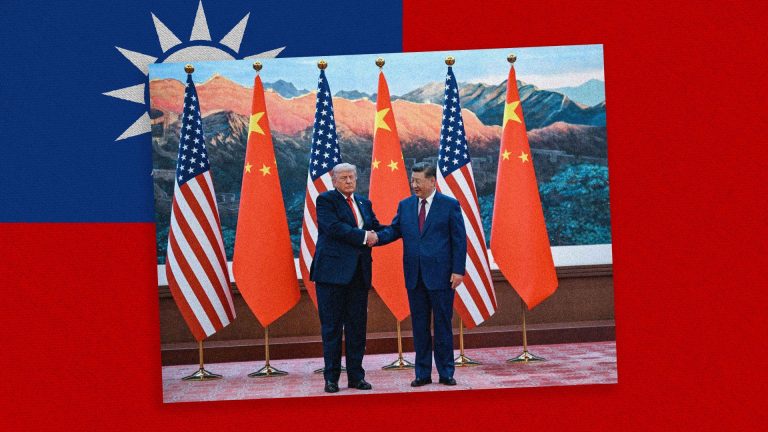
Xi Jinping, however, has made the absorption of Taiwan his “number one priority” and he recently reinforced that position when Donald Trump visited Beijing.
Trump has been a hawk on China. But, according to diplomatic sources, his latest trip to Beijing was a Damascene moment. The president appears to have come away convinced of what the rest of the world has known for some time. China cannot be bullied.
Threats of escalating tariffs and confrontation roll off the Chinese political back. Trump now accepts that China is as much of a superpower as the US. And, if he is going to avoid an Armageddon-like nuclear war, he has to learn to live on the same planet with Beijing instead of baiting and containing it.
The American president also told journalists on Air Force One that Xi Jinping is sincere when he says any American attempt to block a Chinese takeover of Taiwan could easily lead to Sino-American “clashes and even conflict.”
However, in true Trumpian fashion, the American president also sees deal-making opportunities. With whom – or how – is still unclear.
The first move has put Taiwan on the back foot. US Navy secretary Hung Cao told Congress last Friday that the US was “postponing” the sale of $14bn in weapons to Taiwan because the equipment was needed to fight Iran. This followed Xi’s threat to Trump that the sale was damaging to Sino-American relations and Trump’s comment to journalists that the arms sales were a “useful bargaining chip.”
Suggested Reading
Did Donald Trump just sell Taiwan out to China?
The move drew an immediate angry response from Taipei, Tokyo and Congress. President William Lai emphasised that the deal was essential for “regional peace and stability.” Japanese prime minister Sanae Takaichi has declared Taiwanese democracy “essential to Japanese survival.” The Tokyo press reported that the government was fearful that Trump was about to “recalibrate” relations with Beijing at Japan and Taiwan’s expense.
US speaker of the House Mike Johnson, usually a slavish follower of the Trump line, said: “China cannot just go take over land and we’re going to stand strong on that.” Republican senator Ted Cruz said it was wrong to postpone arms sales.
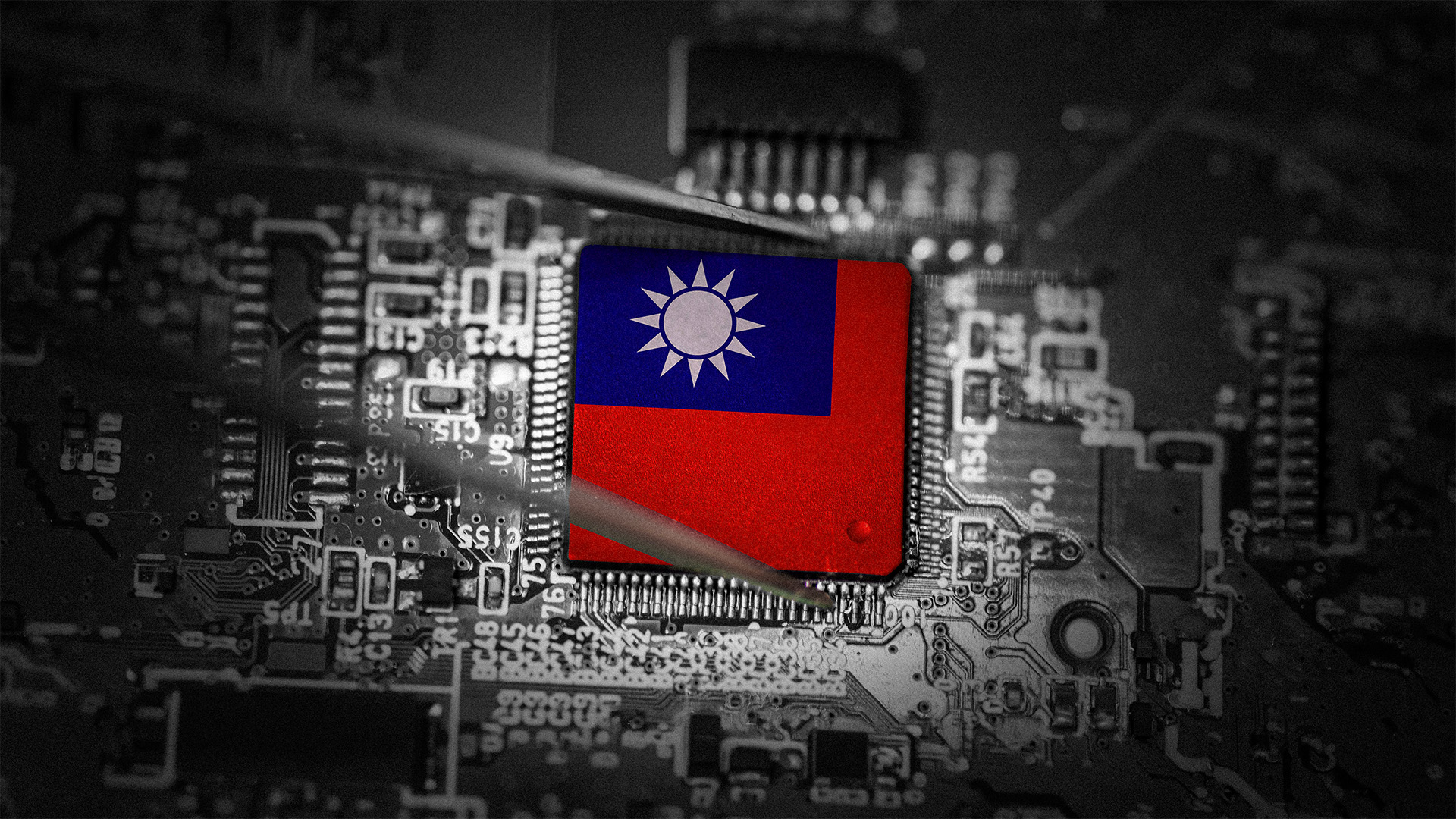
The Taiwanese also fear that Trump might tie the weapons deal to Taiwan’s computer chip industry. The Taiwan Semiconductor Manufacturing Company (TSMC) produces 70% of the world’s advanced computer chips and 20% of Taiwan’s GDP. Trump has repeatedly claimed that Taiwan stole the technology from the US and he wants it back.
So far, at Trump’s insistence, Taiwan has invested $162bn in a production plant in Phoenix, Arizona. Trump says he now wants the rest of the company in the US. Citing national security interests, he says it is too dangerous for such an important global industry to be based 100 miles from a potentially hostile China.
But if Taiwan moves more of its facilities to America it loses a big chunk of its GDP. In addition, one of the main arguments for defending the island is to protect TSMC. No chip production equals no need to protect Taiwan.
Trump has said that he intends to have a telephone chat with Taiwan’s president William Lai in the near future. Beijing has declared its public opposition to the talks, because any contact between the American and Taiwanese president implies US recognition of Taiwan.
Suggested Reading

Xi gave Trump nothing
Privately, however, Beijing must be delighted. If Trump, as expected, pressures Taiwan to move more of TSMC to America then it will make the Taiwanese start to question the value of their relationship with the US. The Chinese will simultaneously continue with a gentle wooing of the Taiwanese in the hopes that more of them will start to see their future as part of China. If that doesn’t work, then chances of a successful military option have improved.
Taiwan, however, is not a real estate deal or a tariff dispute. It sits at the intersection of nationalism, military prestige, technological supremacy and the credibility of American power in Asia. Any perception that Washington is quietly edging away from Taipei would reverberate far beyond the Taiwan Strait – from Tokyo and Seoul to Manila, Canberra and beyond – and would inevitably raise doubts about the reliability of American security guarantees.
For more than fifty years, America maintained peace through uncertainty. China was never sure America would fight; Taiwan was never sure America would not. Trump’s instinct is to replace ambiguity with deal-making and personal diplomacy.
But clarity may prove more dangerous than confusion. If all sides begin to believe the old balance is collapsing, then Trump’s wrecking ball could cause even more damage than usual.
 Most popular
My truly deranged encounter with Trump apologist Kellyanne Conway
The moral depravity of Robert Jenrick

Is this the real reason Trump keeps falling asleep in public?

Suella Braverman’s book has sold only 106 copies. This is why