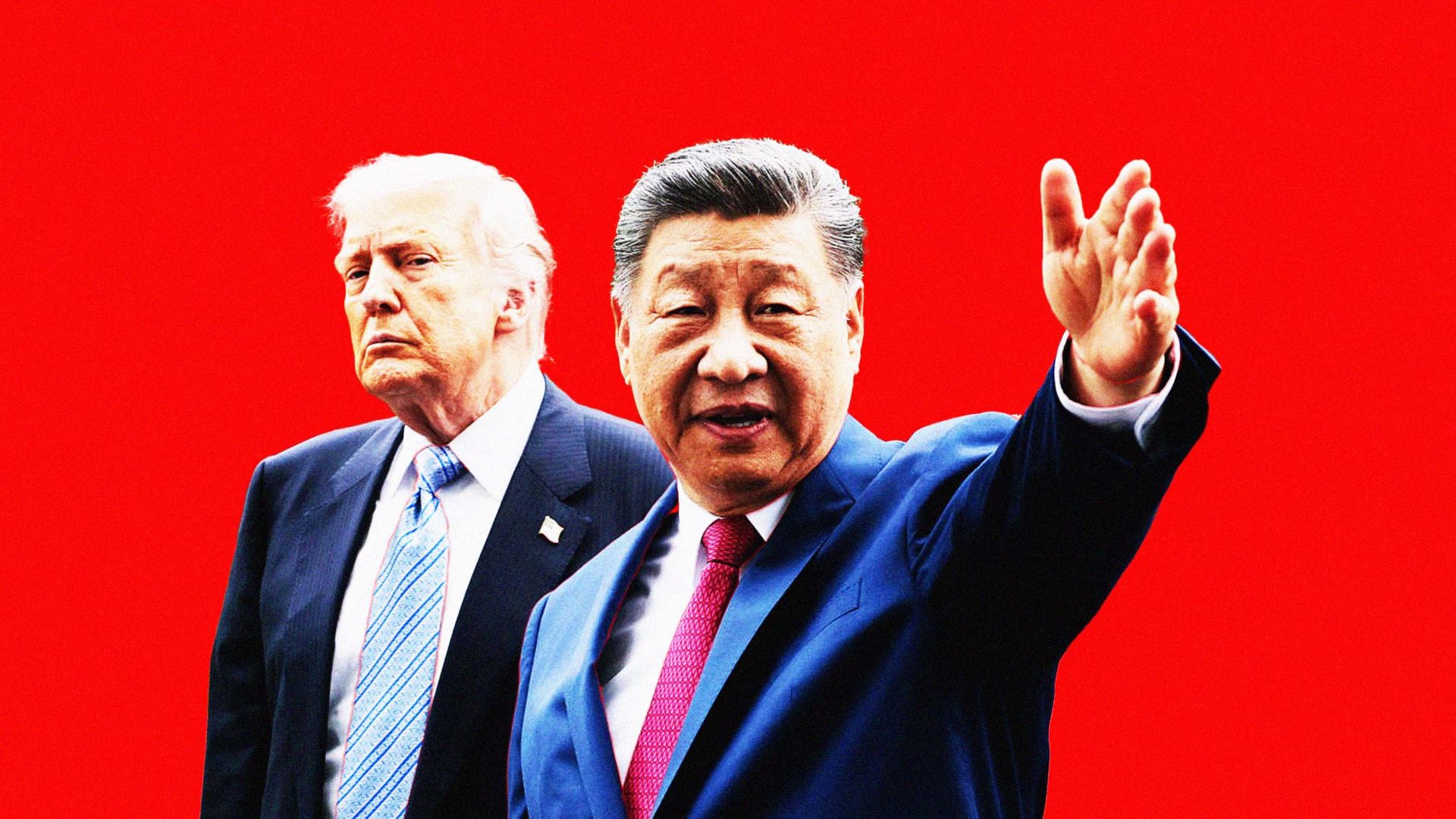
There were three central aims for last week’s meeting between Xi Jinping and Donald Trump in Beijing: meaningful progress on Iran and opening the Strait of Hormuz; to maintain the status quo on Taiwan; and to ensure China would not use its near-monopoly on rare-earth processing as leverage against other countries or for unrelated aims.
The summit, however, delivered none of these.
Despite the warm words and elaborate ceremony, the sharply different statements issued afterward are evidence that the two sides remain far apart on key interests. According to a seasoned former US official, when two sides describe the outcomes differently, it can be a signal of where friction will recur.
Chinese statements gave Taiwan prominent attention and barely mentioned Iran. The US account discussed Iran but did not mention Taiwan. While the White House claimed Beijing agreed Iran should never have a nuclear weapon, the Chinese account said only, “This conflict, which should never have happened, has no reason to continue,” before urging all sides to engage in negotiation towards an outcome that “accommodates the concerns of all parties.”
A casual reader could be forgiven for wondering whether they attended the same meeting.
It is not the first time accounts have diverged: after Trump and XI met in Busan in October 2025 the two sides described the outcomes on rare earth export licences differently. The White House quietly changed the statement on its website a week later.
In summits, as in business deals, success requires more than ceremony. It takes months of preparation and preparatory meetings to identify areas of agreement so leaders can publicly project goodwill and announce tangible results. By the time principals meet, most of the hard work should already be done.
In the past, these negotiations were managed by the US national security adviser and by China’s foreign minister and director of the Office of the Central Foreign Affairs Commission. Under Donald Trump, those channels no longer work. The meagre diplomatic and commercial results of last week’s meeting reflect, in part, that lack of preparation.
According to China Daily, Xi Jinping said on Friday that he and Trump had reached an important consensus on multiple issues, including maintaining stable Sino-US economic and trade relations. But when Xi described the relationship as important, he did not appear to be announcing any measurable progress.
Suggested Reading
Can the US hold together as a country?
Rather, he was underscoring that China is now a peer competitor to the United States – a milestone already evident when Trump and Xi met in Busan on 30 October last year. He was outlining how to manage a consequential but adversarial relationship that could still veer dangerously off course. The aim is not to resolve their differences, but to contain them.
As China has grown stronger, its diplomacy has come to resemble a modern version of the tribute system: the way successive Chinese empires managed so-called barbarian states for nearly 2,000 years. As the richest and most powerful empire, China historically used its economic strength and market access to shape the behaviour of smaller neighbours.
The emperor would welcome lesser powers with elaborate displays of hospitality that reinforced the emperor’s pre-eminence and reminded visitors of the cost of disobedience. Visitors would present gifts – native produce, perhaps a second-rate horse – which the emperor would graciously accept. In return for acknowledging China’s superior status, they received peace, protection, and trade privileges.
Last week’s meeting echoed that tribute system in striking ways. Xi, cast as the emperor, appeared calm and in control. Trump, despite arriving with a large delegation of business leaders, seemed diminished: seeking help with a war he could not manage, erratic, and overly eager to flatter his host. Xi stressed the importance of peace while warning that US missteps could easily lead to conflict.
As a rhetorical power move, Xi Jinping’s reference to the Thucydides trap – the risk of war between a rising power and a declining one – was unusually direct. The summit was overshadowed by the theory’s central idea: that when a once-dominant state is in decline, conflict is more likely than not. Trump may struggle to pronounce Thucydides and is unlikely to have read either History of the Peloponnesian War or Graham Allison’s Destined for War: Can America and China Escape Thucydides’s Trap? the book that popularised the theory and has been widely discussed in Beijing since its publication in 2017. But Xi Jinping’s message – and the confidence with which he delivered it – was unmistakable.
Democratic members of the Senate Foreign Relations Committee reacted scathingly. While acknowledging the need to maintain dialogue, they complained that, “President Trump failed to use his summit with Chinese President Xi Jinping to advance any objectives important to the American people – to counter China’s unfair trade practices and military aggression, preserve American technological and economic leadership, stand up for human rights or strengthen deterrence to prevent a conflict over Taiwan. “
For them, the failure was a direct result of Trump’s singular approach to foreign relations.
“Rather than coordinate a unified approach ahead of time with allies and partners, Trump instead demonstrated once again his willingness to go-it-alone and to sacrifice American national security for minimal and reversible ‘deals.’ The Trump Administration’s reckless policies have deeply undermined the foundations of our competitive edge against China and put the country in a position of weakness heading into this summit.”
Xi Jinping has many reasons to be grateful to Trump: Trump’s behaviour makes China look like a responsible and sober global actor in contrast, a view reflected in many recent opinion polls, and he has weakened the alliances that once underpinned US reach and power.
Suggested Reading


Will we all end up as Chinese AI death clones?
His war on Iran has given China valuable insight into US military capabilities and limitations, while depleting American stockpiles so severely that Trump has had to redeploy assets from the Asia-Pacific to the Gulf. To replenish those stocks, Trump will need Chinese-refined rare earths and magnets, which China’s export licensing regime currently bans from military use.
Beijing regards the Trump presidency as erratic and unpredictable, so is reluctant to make major concessions in case Trump reverses any agreement the following week. Xi calibrated China’s offer carefully, making small concessions while refusing to budge on key issues. He did not, for example, accede to Trump’s request to free the imprisoned Hong Kong former newspaper owner Jimmy Lai.
On money – one of Trump’s favourite subjects – he did no better. Though Trump’s plane was packed with top business figures, the commercial results of the visit were thin. Before the summit, the US side had floated two ambitions: a renewed Chinese pledge to buy agricultural products from Midwestern farmers whose exports to China have fallen by 50% as a result of Trump’s ill-conceived tariff wars, and a possible Chinese order for 500 Boeing aircraft.
Trump told Fox News that China had agreed to buy 200 aircraft, less than half the 500 the markets had expected and fewer than the 300 Airbus jets China is already buying from Europe. Boeing’s share price promptly fell. Neither China nor Boeing has confirmed the deal.
As for the promise to buy US soybeans, it is far from clear that this will prove more successful than the similar pledge China made during Trump’s first term. China never spent the promised $200bn on US agricultural products it had pledged in that deal. Equally insubstantial is the vague reference to greater market access for US companies in China. As in imperial times, Beijing plays that card carefully – and even when access is granted, it can be withdrawn.
Nor was there movement in the strange dispute over sales of advanced Nvidia AI chips to China, despite CEO Jensen Huang’s dramatic last-minute addition to the delegation, hopping aboard during a refuelling stop in Alaska. The US has issued export licences for 750,000 advanced Nvidia chips, but China has not approved the purchase, despite the fact that these chips would give China’s AI ambitions a serious boost.
For Xi, however, there are more important considerations. Since 2015, China’s policy has been to create dependencies in its trading partners while avoiding dependence itself. Because the US has intermittently restricted chip exports, Xi would now prefer not to buy, hoping shortages will spur domestic innovation and free China from any technological reliance on the US.
In its post summit statement the White House claimed that the two sides discussed “expanding market access for American businesses in China and increasing Chinese investment in our industries.” The Chinese statements mention no specific business or trade agreements.
Both sides said they discussed Iran, but they differ on what was agreed: the Chinese statement limited itself to noting the strain on the global economy, “which hurts the common interests of the international community.”
On the broader future of US-China relations, the Chinese Foreign Ministry claimed that: “The two presidents agreed on a new vision of building a constructive China-US relationship of strategic stability to provide strategic guidance for China-US relations over the next three years and beyond.”
The White House, by contrast, says nothing about a three-year timeline and barely mentions strategic stability.
Suggested Reading
India’s lessons for the world on defence, trade – and Trump
A key element for China in this vision of strategic stability is Taiwan, the recovery of which appears to be Xi’s best claim to political immortality. The US is committed by law to providing Taiwan with the means to defend itself while maintaining “strategic ambiguity” on the question of whether the US would come to Taiwan’s defence in the event of an attack by China. That uncertainty is seen as the key to deterring a China military assault and observing the conventions of the language used is critical for perceptions on all sides.
Taiwan’s current government, the DPP, has a long term ambition to secure recognition of Taiwan’s formal independence, but is unlikely to be rash enough to declare it, a move that would certainly trigger an armed response from Beijing.
Chinese officials and commentators had signalled heavily in advance of the summit that Taiwan was a top priority for Beijing, and it was clear China wanted the US to change its language to explicitly oppose Taiwanese independence.
There was a hint of menace in the Chinese statement: “President Xi stressed that the Taiwan question is the most important issue in China-US relations. If it is handled properly, the bilateral relationship will enjoy overall stability. Otherwise, the two countries will have clashes and even conflicts, putting the entire relationship in great jeopardy.”
In an interview with Fox News after the summit, Trump’s language on Taiwan was notably loose, and he said he had not “reached a determination” on the $11bn arms package that was announced in late 2025 and approved by Congress. Xi has made clear that progress on the issues Washington wants Beijing to address will depend on how Beijing judges the way the US handles Taiwan. With Xi now due to visit the US in September, Taiwan may have to wait for its weapons.
Despite Trump’s enthusiasm, he has returned home with little more than a packet of seeds and a hint from China that if he avoids displeasing Xi in future, they may grow into something more substantial.
Isabel Hilton is a journalist, broadcaster and author, and founder of China Dialogue, an independent newsroom focused on China and climate change