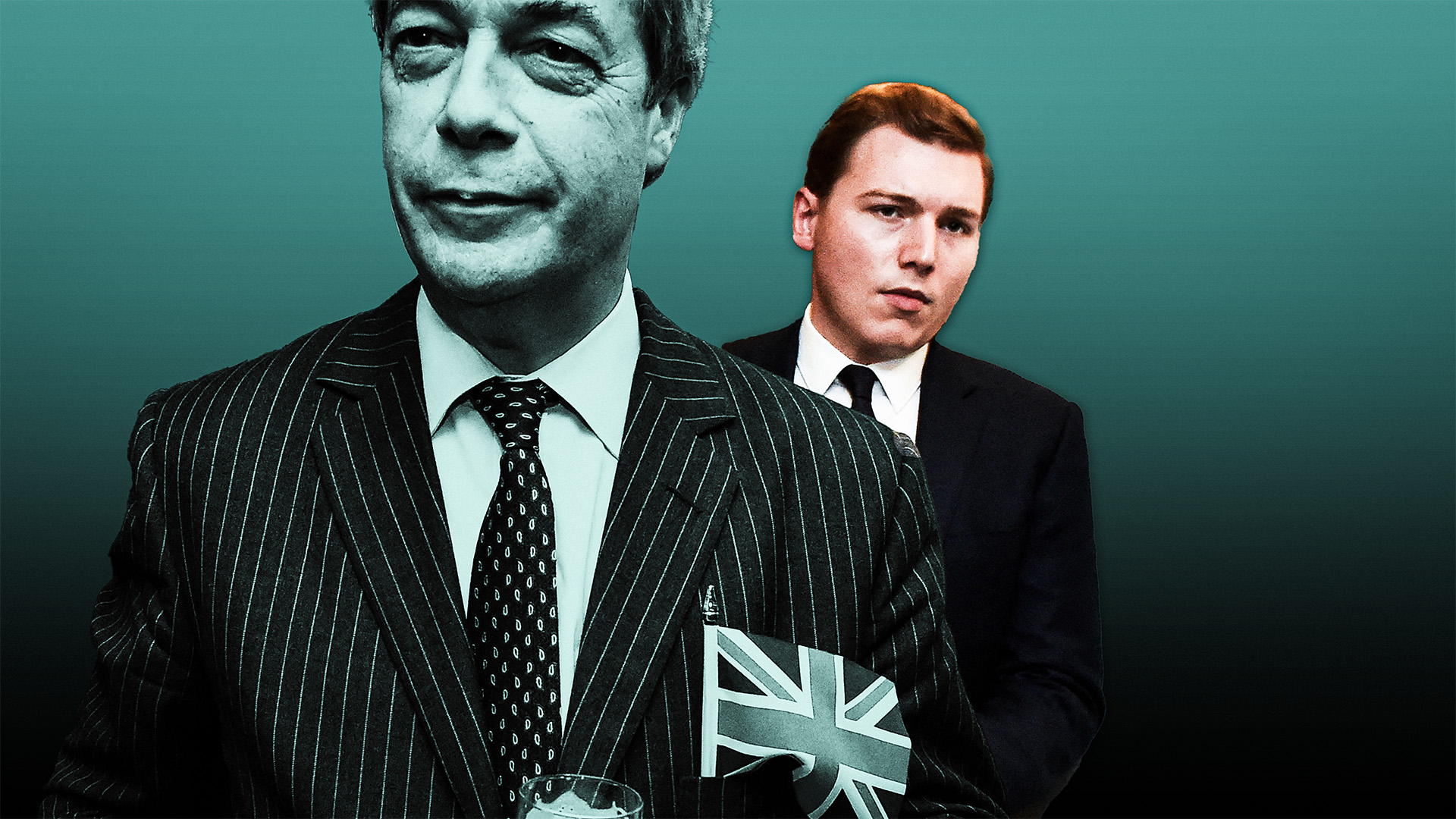
Why would you hire a convicted fraudster as your chief fundraiser and fixer? It’s simple, according to an anonymous source in Lord Ashcroft’s biography of Nigel Farage: “Nigel took [George Cottrell] on because he believes in the principle of Christian forgiveness.”
Of course, Jesus himself was somewhat hostile to the moneychangers in Jerusalem, claiming they had turned the temple into a “den of thieves”, but then he was not trying to raise funds for an insurgent far-right party. And on the face of it, George Cottrell – also known as “Posh George” – has undergone a Damascene conversion since his conviction for wire fraud following an FBI sting. (Twenty of the charges against him were dropped after he agreed to a plea deal.)
While in jail, Posh George became aware that he was addicted to gambling, though he does not appear to have been able to stop. On a single night in 2024, he reportedly lost £16m at a Montenegro casino.
Earlier this year, Posh George also co-wrote a book called How to Launder Money to help readers “understand what truly works in the fight against financial crime”. The book is not intended solely for the likes of the National Crime Agency and Transparency International.
It argues that current anti-money-laundering (AML) laws are both ineffectual and “significantly [increase] the regulatory burden on legitimate businesses and consumers”. Well, it takes a man who has fallen foul of AML laws to fully understand their limitations. Cottrell must have felt the book would do something to salvage his reputation – until it emerged this summer that he and his mother were under investigation over donations they had made to Reform.
Cottrell has never held a formal job in Reform. Yet the party’s financial arrangements, and those of Farage himself, are deeply enmeshed with his own. The younger man has been paying for some of Farage’s staff, security and travel, as well as accommodation at a property near Buckingham Palace. Cottrell also provided a loan of £80,000 to Richard Tice, deputy leader of Reform, which led to Tice being referred to the parliamentary standards commissioner. No further action was taken.
The Guardian recently reported that, in 2024, Cottrell transferred £2m to his mother, Fiona, in the days before she made a donation to the Reform party of £500,000. Later that same year, a betting account named “GCottrell93” received just under $9m, which was then used to bet on Donald Trump winning the US election. It is unclear where the money came from, or who received the $4.4m winnings from that bet.
The question of how and where Cottrell gets this money is inseparable from Reform’s finances. Uncovering the sources of Cottrell’s wealth will be difficult. And that is exactly how he wants it.
So, what can we say about George Cottrell, Nigel Farage’s right-hand moneyman? Brought up in Mustique, he enjoyed a highly privileged upbringing. Known as “Posh George”, reportedly because his mother was one of then-prince Charles’s girlfriends during the 1970s, he is the nephew of Lord Hesketh, who served in Margaret Thatcher’s government, and was heavily involved in Formula 1 and British Mediterranean Airways.
His family had been involved in horseracing, and Cottrell was expelled from Malvern College because of illegal gambling. He was introduced to Farage shortly afterwards – Hesketh had defected from the Conservatives to UKIP, and by 2014 was deputy treasurer of the party.
By all accounts, Posh George’s relationship with Farage is very close. He frequently accompanies him on trips and calls him “Daddy” (George reportedly fell out with his father, who died in 2023.)
Suggested Reading
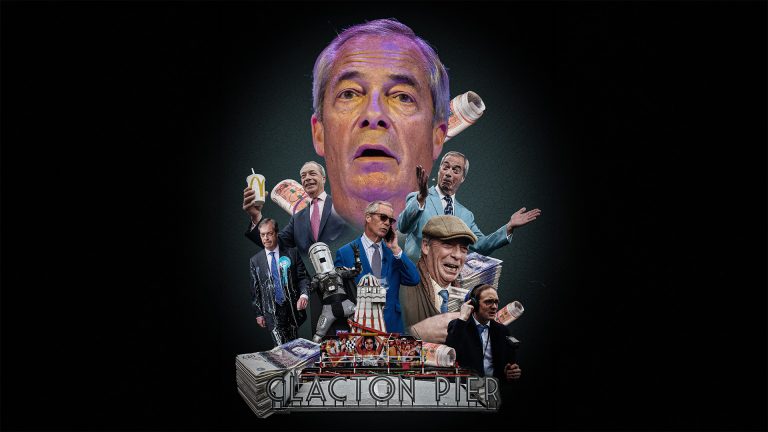

Farage The Movie: The world’s most persecuted man
He consorts with what Ashcroft calls “a string of beautiful girlfriends” who included the reality TV star Georgia Toffolo (now married to the founder of Brewdog and last seen on Instagram jumping into Lake Como) and a former Miss Montenegro, Andjela Vukadinovic. Toffolo negotiated the £1.5m fee for Farage’s appearance on I’m a Celebrity. Cottrell owns property and a company in Montenegro, where he spends some of his time.
That’s the lifestyle. But Posh George’s path to prison began when he flew out to Las Vegas in 2014 at the invitation of a couple of FBI agents posing as drug traffickers. Accounts of what he said during their dinner vary. Cottrell told the Telegraph he asked them: “Well, this is very interesting, what kind of margins are there on that?” He said that it was “very scary”.
Ashcroft says Cottrell “had no further contact with them… But he did not report the incident to any authority – a decision he later regretted.” When he was arrested in Chicago during a trip with Farage two years later, he says he had no idea why.
The court indictment is rather more detailed. Cottrell was in Las Vegas because his boss, identified only as “Banker”, had told the undercover FBI agents he could launder drug money for a fee. He referred them to Cottrell, who messaged that he would be willing to transfer their property to offshore accounts and arranged to meet in Nevada.
There, according to the court document, Cottrell told the agents to transfer $20,000 in property to an associate in Colorado who would send it to Cottrell so that he could return it, laundered, to the agents. Other charges – which were dropped after the plea deal – stated that two days later he “did knowingly conduct or attempt to conduct” the $20,000 transaction.
A week after the Las Vegas trip, the indictment says, Cottrell then tried to blackmail the agents, threatening to inform the authorities about the trafficking and demanding 130 bitcoin (about $80,000).
Cottrell’s later accounts of the meeting do not tally with the guilty plea he entered in 2016. “I falsely claimed that I would launder the criminal proceeds through my bank accounts for a fee,” he said. “Rather than launder any of the money, though, Banker and I intended to retain the money.” We must assume that Cottrell, far from wanting to enrich the drug traffickers he thought he was associating with, merely wanted to deprive them of their ill-gotten gains.
As the Telegraph puts it, “the evidence against Cottrell apparently didn’t add up”, and he only served eight months in jail. This proved to be a formative experience, although he says his time at the private boarding school Malvern College had helped prepare him for it. “I was the only white person there… It was truly humbling, and has undoubtedly made me stronger… I read a huge amount of history and political books and I assisted other inmates with legal and tax advice by hosting an informal legal surgery.”
Who was the self-employed “financier” working for in 2014? And who is “Banker”? This information has never emerged. It is also unclear why the Leave.EU campaigner Andy Wigmore sent a copy of Cottrell’s indictment and FBI documents to a contact at the Russian embassy with the note saying, “Have fun with this”, in an email seen by the Observer. Wigmore denies sending such an email.
As for his current financial interests, he is heavily involved in a crypto gambling site called Tether.bet, which is based in El Salvador and which enables clients to place huge bets. Just before Trump lost the 2020 election, it announced that it had accepted “the largest political wager in history” ($5m) on him winning it.
Tether is part-owned by Reform’s most generous donor, Christopher Harborne, who also has a registered business address in Montenegro. The firm has recently bought vast amounts of gold.
The great advantages of gambling and cryptocurrency are that they enable people to move large sums of money in a way that is largely unregulated. Before he was convicted, Cottrell had said he would take £50,000 in cash to the bookies in a Harvey Nichols bag. That was before crypto took off. When you help run a betting platform and your friends have a stake in the cryptocurrency it trades in, you can exert an unusual degree of control over financial transactions with very little interference from the authorities.
But from all this, there remain two troubling questions: how does a 20-year-old aristocrat end up chatting to FBI agents in Las Vegas about how to launder drug money, and who was the “Banker” who sent him? As so often with Posh George, there are no answers to those questions.
*This article was updated on 30.07.2026
 Most popular
My truly deranged encounter with Trump apologist Kellyanne Conway

Suella Braverman’s book has sold only 106 copies. This is why
The moral depravity of Robert Jenrick
Hungary’s lesson to the world: Populism isn’t permanent