When my son Stanley was five, he became obsessed with the David Walliams book Ratburger. Subsequently, he demanded I buy each new Walliams book, begging me to read them to him, before he eventually was old enough to devour Mr Stink, Slime and The Beast of Buckingham Palace himself.
Should I have encouraged him to read something better? Maybe, but I enjoyed the step up to actual storytelling. Before that, he was asking me to read the Pokemon catalogue.
Now Walliams is in the headlines, I find myself wondering about those books. In between the rightful outrage over allegations of sexual misconduct and grooming (which Walliams denies), there are endless mutters of “he didn’t write them, you know.”
But is there any truth to that? Nothing turns up in a search other than people repeating the same assertion endlessly to each other.
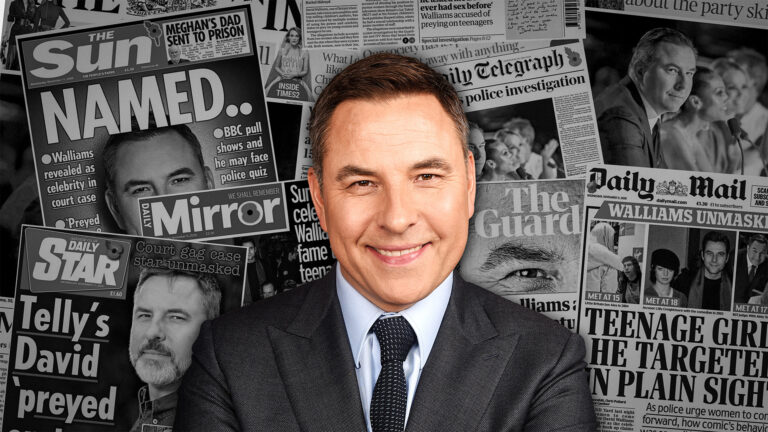
Obviously, David Walliams’ books are not the biggest issue about David Walliams at the moment. And yet, I’m drawn to them. He’s been dropped by his publisher, HarperCollins; some libraries are removing his children’s books from their shelves and a woman from Oxfordshire is buying every copy she can find in charity shops so they can be pulped.
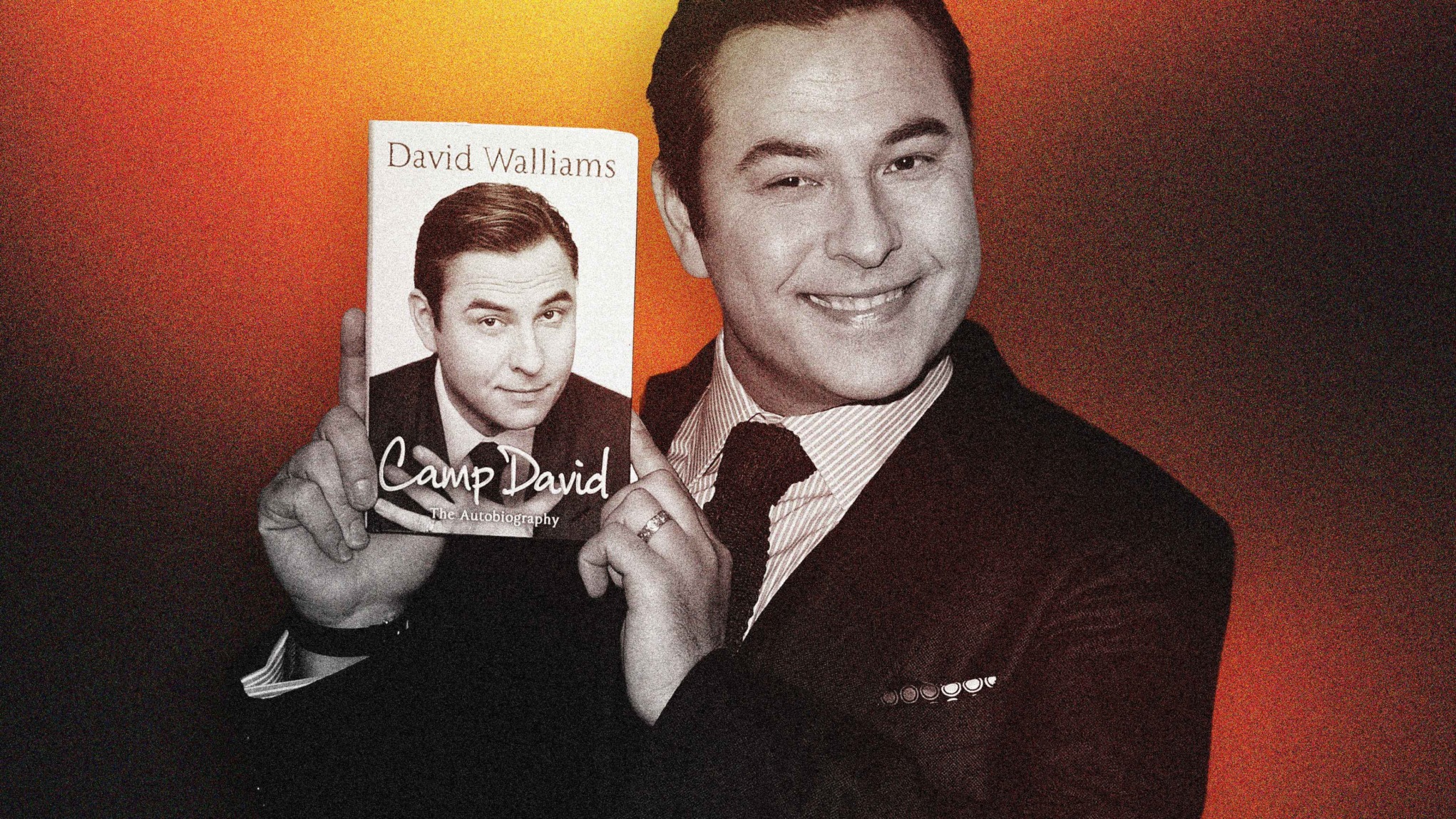
Now HarperCollins have pulled the plug, when you type David Walliams’ name into Amazon, it’s his autobiography that comes out on top. Camp David (2012), is still on sale because it was published by Penguin. And I was drawn to it like Jonathan Ross to a joke he’ll later regret.
There’s something fascinating about an autobiography from a disgraced star written before the fall. You get a wonderful bit of duality.
You get to savour dramatic irony on every page, because you, the reader, knows something that the author doesn’t know yet: you know the story ends badly. Books that were once trifles, and now are now gravied-over with beefy schadenfreude.
They should be read in private, shamefully, but I’ve bought a ten-inch Kindle Scribe, and due to timing issues I needed to read this book on the tube. I’m also short-sighted and need to whack the font size up to 20 points. I was in my own regrettable 1990s sketch where I’m on a train with a huge e-reader shouting, “I’m reading a problematic book. It’s for work, honest.”
Suggested Reading

The press’s shameless David Walliams amnesia
I turned to page one. You know if you fancy yourself a bit as a writer, you stick a quote at the front? Walliams picks Lewis Carroll’s Alice in Wonderland. There’s nothing suss about bigging up Victorian child-enthusiast Lewis Carroll, but when coupled with the current allegations it all felt a bit on the nose, David.
The next win was the Carroll quote itself: “When I used to read fairy-tales, I fancied that kind of thing never happened, and now here I am in the middle of one! There ought to be a book written about me, that there ought! And when I grow up, I’ll write one.”
To spell out the piquancy here, this is Walliams believing his own story to be a happy one, a fairytale, while we, the readers, know that some fairytales end horribly.
Chapter one proper opens with an anecdote about his parents being a bit racist when seeing a black man on the streets of Surrey in the 1970s. There is lots more grim stuff to come, so let’s reduce it all down to observations and a conclusion at the end so we can all get back to doomscrolling and betting on who the next disgraced British comedian will be.
1) Walliams throws people under the bus
There’s shocking stuff about Caroline Aherne, describing her phoning him while drunk to say “You’ve got no love in your heart – you’re incapable of it”, and then contrasting this with her gentle behaviour when sober. An incredible thing to document whilst she was still alive. Aherne died in 2016, and could easily have read this.
Others under the bus include Michael Barrymore (“What was most surprising was how unfunny he was”) and Richard Osman (“Matt [Lucas] is also an undeniable comic genius, something Richard is not”).
The cattiness makes it entertaining to read, but you can’t help but think of the common aphorism: be nice to people on your way up because you’ll meet them on your way down. This is a man who thought being up there was permanent.
2) This must be among the most indiscreet autobiographies ever written
James Corden is singled out for being heavy (“I thought his size must have made him insecure”) and weird, showing Walliams a photo of his girlfriend and wanting assurance she was attractive (“Shelley is really pretty, isn’t she? Isn’t she?”).
There’s bitchy detail on why the Red Dwarf writers fell out (“they were going to buy houses near each other to make their writing more convenient. One of them didn’t”) that I’ve not read elsewhere.
3) I am now convinced Walliams wrote his own kids’ books
This is the autobiography of a writer. Walliams tells you he’s a writer many times.
On the second series of Rock Profile: “I wrote the scripts on my own.” On his partnership with Matt Lucas: “Matt was a better performer than he was a writer. I was a better writer than I was a performer.”
Most of all, Walliams thinks like a writer. He makes notes of ideas and he tells you in great detail how a sketch that was never made was inspired and written.
Have you met any comedy writers? This is how they think: it’s the jokes that got away, that are their favs.
(To do this one justice, briefly. Lucas spotted Paul Darrow of Blake’s 7 fame advertising a mobility scooter on daytime TV, and later asked him about it. Darrow looked him dead in the eye and said, “Favour for a friend”. This became a personal catchphrase between Walliams and Lucas, and they wrote it up as a series of sketches of an actor in various humiliating scenarios explaining himself with “Favour for a friend”. Did you want this digression? No, but anyone who thinks like that, and writes like that, is a writer and would be humiliated at the very idea of palming off other people’s work as their own.)
Suggested Reading

The reckoning I thought Russell Brand would never face
4) Walliams got it right first time about Russell Brand and thought he was phoney
“I hated him. He talked and talked and never listened. Utter bollocks.” He changed his mind later, which Walliams attributes to Brand getting sober. Your first impression was right, David.
5) There’s a surprising amount about a feud with GamesMaster host Dominik Diamond after Diamond said he and Lucas weren’t funny
Walliams calls it “the worst insult imaginable” but admits “his statement was true”, and says they decided to “get our revenge by ruining Dominik’s show”. Guilt has clearly played on Walliams’s mind for years afterwards. Lucky escape for Diamond, although it might have taken him 30 years to realise it.
6) Walliams talks about a mental breakdown, suicide attempts and suicidal thoughts towards the end of the book, and it’s interesting what precipitated this
Specifically, he says he kept a diary and his girlfriend read it and dumped him, because, as he saw it, she’d seen the real him and learned of his unspecified sexual behaviour. “This girl had confirmed what I had always thought about myself: that I was a bad person.”
This brought about a crisis, and everything came crashing down. Draw your own parallels to recent days if you like.
7) And in conclusion…
If David Walliams has got a diary detailing his behaviour for all these years (he writes, “I had kept one since 1997”), he might want to share it with the authorities to support his denials.
That’s writers, you see: always writing things down…
 Most popular
The reckoning I thought Russell Brand would never face
The Spectator’s brazen hypocrisy over Russell Brand


Why does everyone hate Laura Kuenssberg?


Slavoj Žižek: Beating Trump isn’t the wild triumph you all seem to think