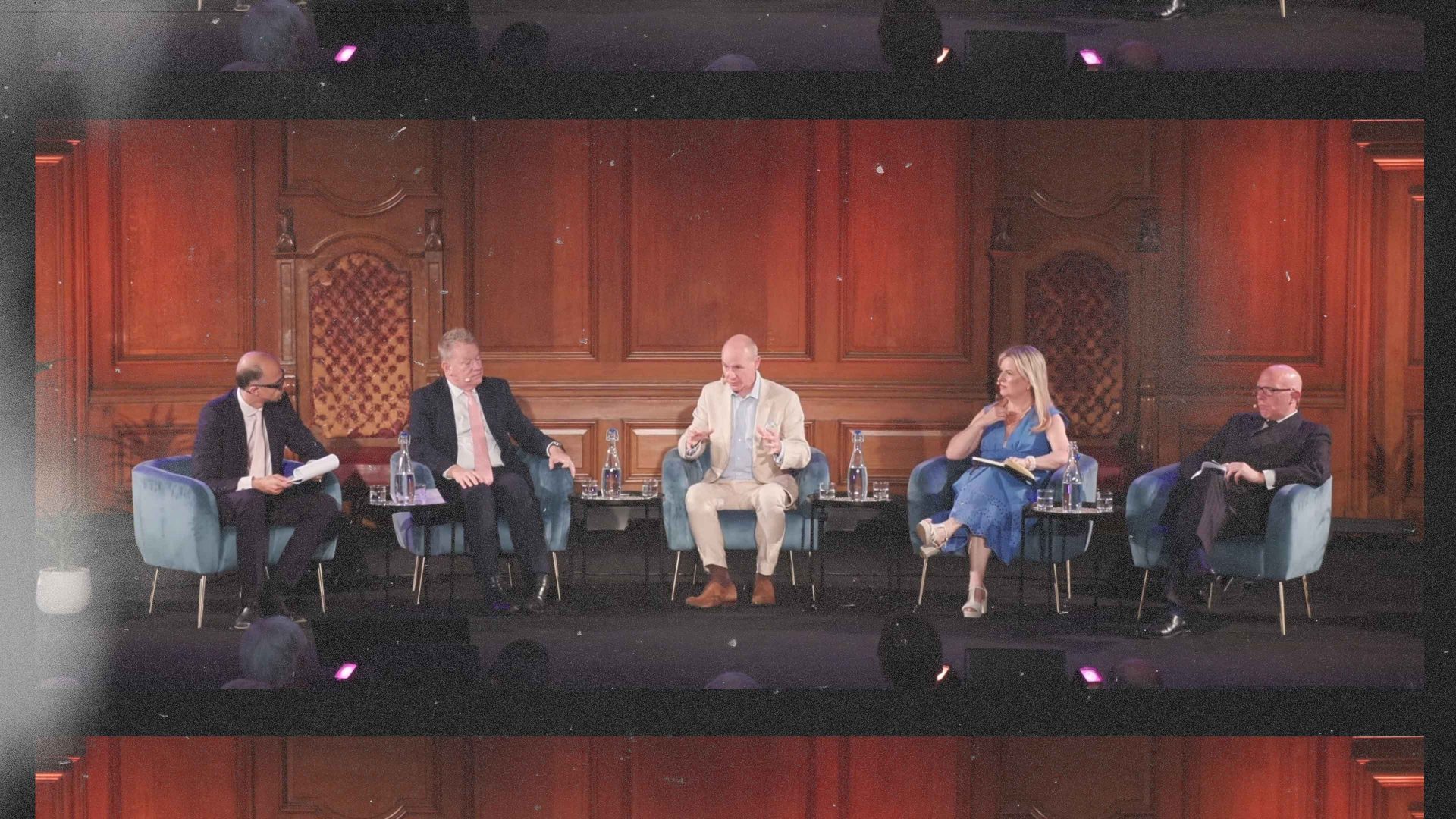
On Monday evening, the Daily Telegraph convened an expert panel – conveniently made up entirely of its own columnists – for “a big debate”. The topic at hand? “How to make Brexit a success”.
A cynic might have wondered if the question was being asked a decade or so too late, but that wasn’t enough to stop around 500 people flocking to an auditorium in Westminster to hear the answers. “Well, for 25 notes I hope we find out,” one chipper older man says to me conspiratorially as we wait to be admitted.
I say he doesn’t sound too convinced by the whole proposition, but he refuses to elaborate. “I’m undercover,” he adds. Another man nearby wonders loudly what the leafleting outside had all been about. When he’s told it’s a campaign against antisemitism, he dashes outside to grab one. “I’d assumed it would be some kind of lefty nonsense,” he says as he goes.
The night’s proceedings are being chaired by Sunday Telegraph editor Allister Heath. “A decade ago the British people voted for a radical reset,” he tells the crowd, but “tragically, many people are disappointed by what has occurred”.
Suggested Listening
The Two Matts Q&A: Burnham’s to-do list and the shameless Brexit villains
To ask why, we would be joined by “some of the architects, negotiators and champions of the movement”. These were Lord (David) Frost, Boris Johnson’s chief Brexit negotiator, former Conservative MEP Dan Hannan, Telegraph columnist Allison Pearson, and pollster and political strategist James Frayne. The “big debate” would, it seemed, be entirely made up of Brexiteers.
Still, there was plenty to rail against. Frayne kicked off proceedings by presenting opinion polling on the state of Brexit, telling the audience that “Leave voters tend to be the most irritated, the angriest about what has gone wrong so far” – which might come as news to readers of The New World.
When Frayne finally managed to get his numbers up on screen, after an awkward 10-second-plus pause owing to technical difficulties, they didn’t quite support his narrative. Sixty-seven per cent of Remain voters thought Brexit was going badly, versus only 10% who thought it was going well; 24% of Leave voters thought it was going well, versus 24% who said badly. The rest, it seemed, would rather not venture an opinion.
Frayne then proceeded to make things exceedingly awkward for one of his fellow panellists, presenting the top three reasons that voters thought Brexit had been handled poorly. Top of the list was “British politicians were ineffective during negotiations and failed to get a good deal”, followed closely by “many of the politicians in charge of the negotiations and delivering Brexit didn’t even believe in Brexit.”
Neither of these propositions – projected onto a giant screen above the speakers – can have made comfortable reading for Lord Frost, the chief negotiator of the UK’s exit deal, who managed to hold an impressively neutral expression throughout, and who was never invited to respond to the charge implicitly levelled at him. The “big debate” would not, it seemed, be entirely without friendly fire.
Frayne concluded that much of the problem was that the Leave camp hadn’t made much of a plan ahead of time. “No one was making an intellectual case to actually leave… We hadn’t done much of the intellectual heavy lifting beforehand,” he said, suggesting now would be a good time to set that out. The only problem would be who should do the work. “The Conservative Party is never ever going to do it, and the Reform Party is not that kind of organisation”
When the panel discussion began in earnest, it was clear that some of the panellists weren’t going to let trifling things like details, or even a basic grasp of the facts, slow them down. “I felt so proud of my country, because there had been an absolute bombardment of threats and negativity,” Allison Pearson said, explaining she’d “never” regretted her vote to leave.
Suggested Reading
The Brexit Kray Twins are back – and so are their lies
She said that Remain campaigners had run a campaign of fear, claiming 600,000 jobs would be lost, and “we’d all be £4,300 worse off”. Ten years on, study after study has shown that Brexit hit UK employment figures, and OBR research suggests the cost per household is almost exactly what Remain campaigners warned.
“Does anyone else feel as nostalgic as I do for Boris’s Australia-style points system we were supposedly going to get,” Pearson added soon afterwards, having apparently failed to notice that it was introduced, and instead led to a surge in immigration.
Shortly afterwards, she suggested that, now that we had left the EU, we could abolish VAT. “I don’t think it’s particularly a good tax,” she noted. VAT raises around £180bn a year, covering more than the cost of every state pension.
Pearson was not alone. Asked about the greatest benefits of Brexit, Dan Hannan had a simple answer. “Sovereignty,” he said. “No country ever gets poorer as a result of becoming more independent,” apparently unaware that the most sovereign state in the world – the one bound by the fewest international treaties – is North Korea.
“We have not taken advantage of the commercial and regulatory opportunities created by Brexit,” Hannan continued, to rapturous applause, before saying they could hold a “whole extra panel as to what they are”.
Neither he, nor anyone else on the panel, actually got around to listing any of those specifics in any detail. Instead, they spoke in general terms. Asked to detail these opportunities, Frost said “most obviously, net zero… if you want to get rid of this crazy dash towards solar and wind, you’ve got to be outside the EU,” he said, speaking just days after the UK broke its all-time June heat records on three days in a row.
All the panelists agreed the UK needed “labour market reform” or “a properly competitive labour market”, but declined to spell out that this meant a widespread revocation of workers’ rights – possibly knowing how unpopular this would be with the public.
“Radical” deregulation was called for, but moments later the argument was made for higher animal welfare standards. In a move that Sir Humphrey from Yes, Minister would have called “courageous”, Hannan suggested that the real Brexit benefits would require taking on the National Farmers’ Union, so the UK could import more cheap food from overseas.
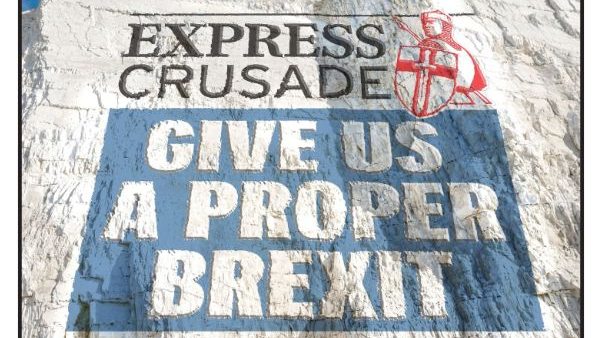

Brexit, apparently, could still mean whatever the speaker wanted it to mean. None of it had to make too much sense. Over the course of ninety minutes, the panel played their greatest hits, including that British schoolkids need to be taught to be proud of their history, that VAT on private schools is bad, and more. But there was no opportunity for questions directly from the floor.
That meant the panellists had no opportunity to reveal that they, at least, had enjoyed and would be enjoying closer ties with Europe. According to the Hungarian outlet Átlátszó, Lord Frost had received more than €40,000 for speeches and articles from thinktanks backed by Hungarian public money.
More was to come. The next day, the German media group Axel Springer – which owns Politico alongside multiple German papers and international outlets – announced that it had completed its purchase of the Telegraph, bringing the entire panel into a European media group. Perhaps Britain’s future does lie on the continent, after all.
It has become almost trite to say that true Brexit has become like true Communism – something its advocates insist would still work, if only it had actually been done properly. Handily, though, Allison Pearson actually made that argument from the stage.
“Brexit would be wonderful, if we actually had it,” she said, wistfully. Perhaps in another ten years’ time, eh?
 Most popular
My truly deranged encounter with Trump apologist Kellyanne Conway

The moral depravity of Robert Jenrick

Is this the real reason Trump keeps falling asleep in public?

Suella Braverman’s book has sold only 106 copies. This is why