“I’m not from London, you know!”: this legendary line from Withnail and I (1987), spoken by Paul McGann’s character as he pleads with the farmer’s mother in Cumbria for some food, is the political slogan of the moment.
There is much that is not yet clear about Andy Burnham’s plans and his true capacity to save Labour from electoral perdition. But we definitely know that the Aintree-born, Everton-supporting, former mayor of Greater Manchester, and newly elected MP for Makerfield is not from London.
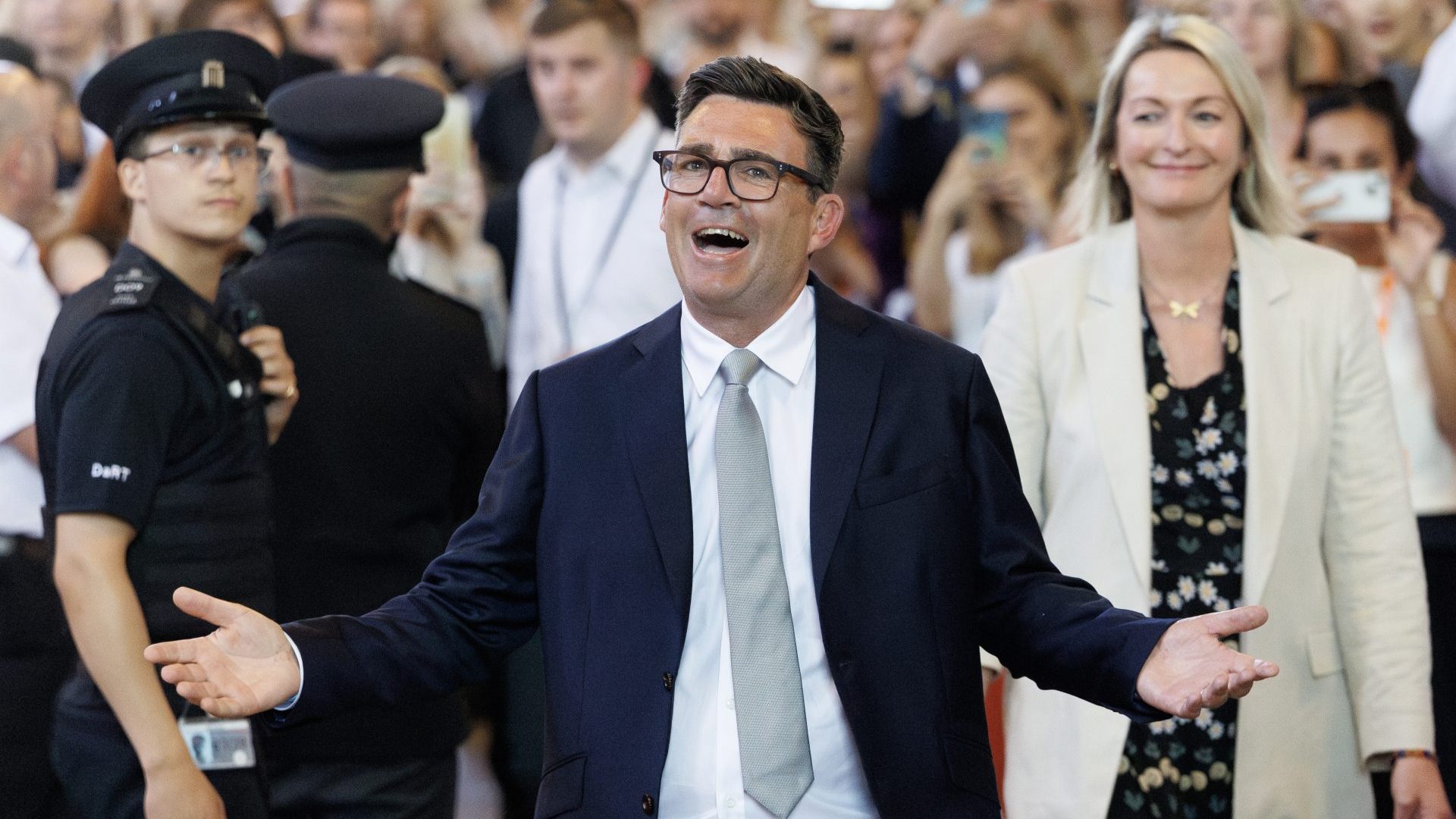
The sheer pageantry of his arrival in the capital last Monday on a delayed Avanti train to Euston was a swaggering act of political theatre: the choreography of medieval kingship upgraded for the digital age.
With the same political ruthlessness that much of the English ruling class transferred its allegiance from the last Lancastrian monarch, Henry VI, to the first Yorkist king, Edward IV, in 1461, around 200 Labour MPs (including the soon-to-be ex-chancellor Rachel Reeves) gathered in Westminster Hall for a selfie with the presumptive next prime minister, barely five hours after Keir Starmer’s emotional resignation speech. Truly, as Lyndon B Johnson used to say, “power is where power goes.”
And the location of power is precisely what lies at the heart of Burnham’s project. Assuming that he becomes Labour’s eighth prime minister on July 20, he will seek to shift plenty of it from London to the cities and regions where, he firmly believes, it will be better deployed. In a speech in Manchester on Monday, he promised “the biggest transfer of power out of Whitehall in modern times”, “good growth in every postcode”, and a ”stronger role” for mayors and councils in getting young people into work.
I have yet to meet a senior politician who has not claimed to be in favour of devolution, and all but a handful of them – Michael Heseltine, John Prescott, Paddy Ashdown – have simply been going through the motions. The words “devolution revolution” are spoken in haste, repented at leisure.
But there is a decent chance that Burnham is very serious indeed. At the Makerfield count in the early hours of June 19, he pledged that he would “always take a place-first rather than a party-first approach” and that, back in the House of Commons, he would seek to “make this country work” for his new constituency “and the many places, places like it across the country who have been neglected, who feel that the country works for other people in other places but not for them.”
The signs thus far are encouraging: a “No 10 in the North” that (as long as it is more than a tokenistic branch office) has the potential to symbolise meaningful change; a rebalancing of the economy based on solidarity between north and south, rather than the grudging subsidy by London and the south-east of everywhere else; and, above all, greater devolution of responsibility for health, education, infrastructure and (the big one) aspects of fiscal policy.
The endless attempts to define “Manchesterism” miss the point. This is not a plan to make everywhere like the region of which Burnham was mayor for nine years. It is – in theory at least – a full-frontal assault on the default position that all decisions that matter are taken in London, that the capital is where everyone who counts is to be found, and that anyone British who is not a citizen of this global city-state is, to a greater or lesser degree, numbered amongst its vassals.
To grasp the potential radicalism of what lies ahead, and how sharply different Burnham is from Starmer, imagine each man’s politics existing on the two axes of a graph. The outgoing prime minister located himself with reference to two lines: “Left-Right” and “Cautious-Reckless.”
In 2020, Starmer secured election as Jeremy Corbyn’s successor by cleaving to the left in order to win overwhelming support from Labour members. Then, to be absolutely sure of putting the Tories out of their misery in the general election 2024, he veered towards a beige centrism that was as ill-defined as it was unthreatening.
Suggested Reading

Burnham must run fearlessly into the future – and this is how
In office, under the beady eye of Morgan McSweeney, he shuffled nervously to the right, most conspicuously in his warning that Britain would become an “island of strangers.” But it was the other axis – stretching from caution to recklessness – that defined him.
More than any prime minister in living memory, Starmer was risk-averse to an almost pathological extent, too busy apologising to his own shadow and promising geese he would not say “boo”. On winter fuel payments, welfare reform, the two-child benefit cap, inheritance tax on farmers and much else, the tarmac of Whitehall was scorched by his U-turns.
The axes that – in principle, at least – will frame Burnham’s premiership are very different: “Future-Past” and “North-South”. The first should be mind-bendingly obvious. In the refreshing eclecticism of his team, he has already signalled an enthusiasm to put the needs of tomorrow ahead of the tedious doctrinal battles of Labour’s past.
As I predicted, most of the Westminster media is already desperate to subject the Burnham era, before it has even begun, to old Kremlinology: New Labour versus Corbynite, pro-Israel versus pro-Palestinian, woke versus Blue Labour.
So when it was announced that James Purnell, a former Cabinet minister who resigned in 2009 in a failed bid to topple Gordon Brown, would be Burnham’s chief of staff, it was instantly assumed that the new government was bound to be a Blairite tribute band, full of wicked acolytes of Sir Tony.
In fact, Purnell left politics in 2010 – for good, he assumed – and has since held senior roles at the BBC, been vice-chancellor of a university and CEO of a global advisory business. He is not returning to the fray as part of a cohort of New Labour entryists determined to privatise air and re-invade Iraq, but because he understands how existential the threat of the nationalist right truly is and the consequent urgency of the moment.
In precisely the same spirit: Miatta Fahnbulleh, the Labour (Co-op) MP for Peckham and former chief executive of anti-neoliberal New Economics Foundation, is already a key influence upon Burnham’s policy plans. Is she, as some Labour centrists fear, an embedded militant determined to turn us all into communists? Hardly.
The second axis – North-South – is the more important one in understanding the incoming prime minister’s coordinates. In the age of globalisation, what political scientists call “spatial polarisation” is at least as important as the ideological variety (indeed, the two are intimately connected).
Suggested Reading


The hidden dangers that could wreck Andy Burnham: The Movie
During and for some time after the Industrial Revolution, Britain was a genuinely polycentric nation: London was its capital, but Birmingham, Manchester, Liverpool, Leeds, Newcastle, Sheffield, Glasgow and other cities were also hubs of power with international reach within and beyond the Empire.
But post-war deindustrialisation, the stunning rise of London’s financial sector and the hollowing out of local government under Margaret Thatcher ended all that. By stages, but definitively, the dominance of London in every aspect of public life is now seriously corrosive to national cohesion and has become fertile terrain for the grievance culture that the populist right exploits.
It is striking that so many progressives have paid only lip service to the structural injustice of place in western societies – even as they expressed outrage about every other form of systemic disadvantage. There are, of course, honourable exceptions to this sin of omission. In his 2017 book Dream Hoarders, Richard V Reeves, Nick Clegg’s former director of strategy, showed how the American middle class was all but monopolising opportunity, not least by establishing new, if unofficial, zones and places of segregation.
The following year, Professor Andrés Rodríguez-Pose of the LSE warned of “the revenge of the places that don’t matter”. In books such as The Tyranny of Merit (2020) and Democracy’s Discontent (updated 2022), the communitarian Harvard philosopher Michael J Sandel has shown how interwoven is the false promise of meritocracy and the aggregation of power by elites in specific places, so that “we are unmoored, [and are losing] the sense of belonging that people aspire to and that democracy requires”; and need a liberalism that pays attention not only to economic data but to honour, dignity and respect.
The reality of London – my beloved home city – is complex, multi-cultural, the very definition of pluralist. As Peter Ackroyd writes in his magisterial 2000 biography of the metropolis, it “goes beyond any boundary or convention… It is illimitable. It is Infinite London.”
That history, as Ackroyd emphasises, includes much deprivation and suffering. According to a report by Trust for London last year, the city has the highest regional poverty rate in England; the levels of hardship among children in Tower Hamlets and Hackney are among the worst in the country; I doubt that the Grenfell campaigners, still fighting for justice nine years after 72 people died in the conflagration, would recognise themselves as members of a metropolitan elite.
No, it is the idea of London that is the problem. And it is a mighty and deeply rooted idea, too: what the philosopher of modernity, Charles Taylor, would call a “social imaginary”.
Under this dominant cultural system, London and the south-east represent the engine of the nation’s economy and the indispensable base of all its most important institutions and power centres. The London elite is porous but does not operate an exchange programme. The flow of talent is meant to be a one-way ticket.
As Nick Timothy, the shadow justice secretary and a son of Birmingham, has said, one of the most pernicious and ingrained assumptions in contemporary national life is that those born outside London should seek “escape” from their hometowns. Once here, they join an oligarchy that is liberal in sensibility but sensationally acquisitive in action.
At least 100,000 Londoners have second homes elsewhere in England and will do anything in their power to prevent a housing development blighting the idyllic view from the Queen Anne windows of their weekend retreats. For the London elite, the 24 Russell Group universities are finishing schools for their children and successors.
So: from the outset, it is imperative that we understand quite how fierce a dragon Burnham is taking on. In spite of partial devolution to Scotland, Wales and the 14 mayoralties, we are still governed by an essentially unitary state.
The Treasury hates devolution of any sort, precisely because it represents a loss of control. Less explicitly, the old left is suspicious of anything that offends the utopian principle of uniform delivery of services: axiomatically, a decentralised system will yield a map of variable standards of performance. And the liberal caste pretends to be in favour of devolution until it means anything consequential.
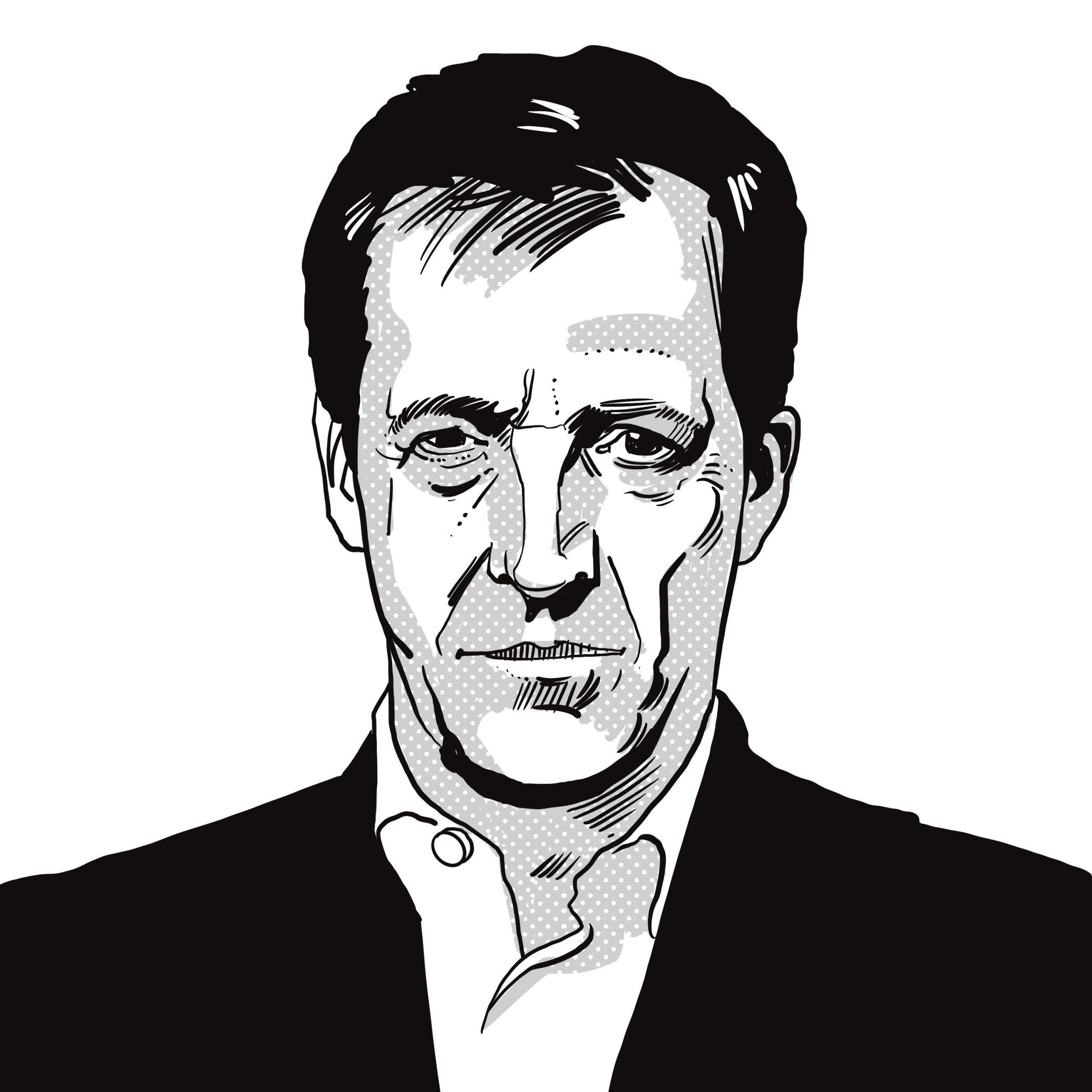
Indeed, I think many in this loose-knit network of powerbrokers and gatekeepers do not really know how to handle the sheer energy unleashed – however impermanently – by Burnham’s ascendancy. The story he is telling does not match either of the two standard-issue progressive narratives. First, that everything is really about economics (once the voters realise that immigration is necessary for the labour market, they will stop complaining about it); or, second, that everything is really about oppression and apologising performatively for it at the bar in the Riverside Studios. Whatever Burnhamism is, it isn’t either of those familiar tunes.
In an especially patrician editorial about the incoming PM last week, the Economist complained that “[a]t times, his theory of government amounts to a whinge about “the London set” who hold back the north” – though the self-styled “newspaper” magnanimously declared that “The Economist hopes Mr Burnham confounds our concerns”, which I am sure was a great relief to him. I also enjoyed the headline on one of its reports: “When will Andy Burnham peak?”
This is only one click away from asking: “How long is this irritating northern stuff going to last?” You can expect plenty more of that, too. Regional and class prejudice remains one of the few permissible bigotries: rarely overt, of course, but still well entrenched and ever present.
There is intrinsic merit in a premiership which confronts head-on this chauvinism-with-a-smiling-face. But there is also promise in a dynamic governmental philosophy that recognises that the populist right poses a mortal threat to progressive ideas and that a fresh start and a new lens are necessary, urgently so.
Burnham’s new politics of place offers a way of talking about belonging that does not involve the toxin of nativism; of addressing social cohesion without vilifying minorities; of marrying integration to pluralism, home with hospitality. This is, or should be, the holy grail of modern progressivism.
The odd thing, when you think about it, is that this strategy has taken so long to find a serious national champion. Well, better later than never. Charles de Gaulle famously declared his allegiance to “a certain idea of France.” Burnham now offers a certain idea of Britain.
Like all worthwhile plans, it is freighted with risk, menaced by mighty vested interests and brazen in the scale of its ambition.
Yet it might just work. It has to work.