When Donald Trump visits Mount Rushmore on Friday to kick off the weekend of America’s 250th birthday, it is not beyond the realms of possibility that he will start chiselling his own likeness into the rock alongside four of America’s great presidents.
It’s not like his ego will stop him. This is a man who has slapped his name on a renowned arts centre and a peace institute – despite questionable cultural tastes and a penchant for launching military strikes. And his face has already made it onto commemorative coins, National Park passes and banners on state buildings across Washington.
Wherever you turn in DC, there is the glowering face of Trump himself, or evidence of his unrelenting attempt to rewrite the rules of the presidency: National Guard troops patrolling the streets; ozone bubblers trying to keep algae at bay in his repainted Reflecting Pool; work crews polishing plinths for reinstalled statues of slave owners and Confederate generals.
And then there are the monuments of excess that you can’t yet see: the $600m White House ballroom that lies behind towering fences, or the promised “Arc de Trump”, just behind the Lincoln Memorial, which is still dealing with legal challenges before work can begin.
The events planned to mark the US semiquincentennial are equally Trumpian. The president huffily cancelled a birthday concert planned on the National Mall after some artists pulled out, and now he will hold what is essentially a political rally on the site on July 4.
With this abundance of vanity projects, it doesn’t feel much like America’s birthday – more like an orgy of self-indulgence for a president oblivious to the fact that he is facing nosediving approval ratings and a bipartisan revolt over his war with Iran.
Suggested Reading

The Democrats have a big, Nazi-tattooed problem
Rather than coming together to celebrate 250 years of progress for a revolutionary nation that overcame adversity, war and division to emerge as the most powerful country on earth, many Americans are fretting about what lies ahead in Donald Trump’s America.
“It’s hard to digest, honestly,” said one visitor at the Reflecting Pool by the Washington Monument, which received a $14m paint job by a contractor from one of Trump’s golf courses. The surface of the pool peeled off and dead ducklings now float past horrified tourists.
“It’s reflecting a troubling time for America, so we can all remain hopeful that we can pull through this over the next few years, but that’s what I see,” said the dejected bystander, who was visiting the capital from Massachusetts for the annual Pride Parade.
His pessimism is shared by many Americans. A Pew Research poll released earlier this month found that 59% of people feel like the country’s best years are in the past, with just 29% saying that they were satisfied by the way things were going.
More than half of adults said that, by 2050, they think the economy will be weaker, the US less important in the world, and the country more politically divided.
The lofty founding goals of liberty, equality, and the pursuit of happiness seem very far from people’s minds, as they struggle to put food on the table or gas in the tank, after Trump’s tariff regime and war with Iran pushed up the cost of living across the board.
But Trump insists he is ready to party. An obvious presidential stop would have been Philadelphia, the birthplace of modern America where the Declaration of Independence was adopted on July 4, 1776 and the Constitution was signed in 1787. But there is not much expectation that Trump will be paying them a visit.
The Democratic-run city is instead engaged in a lawsuit trying to prevent Trump’s Department of the Interior from dismantling an exhibition about slavery and the lives of the enslaved people owned by George Washington at his Philadelphia mansion.
Suggested Reading
A whole lot of Americans still support Donald Trump – why?
“I don’t see much attention being paid by Washington to celebrating Philadelphia’s role in the formation of this country,” said Paul Steinke, the executive director of the Preservation Alliance for Great Philadelphia.
Trump will however be at Mount Rushmore in the Republican-governed state of South Dakota. The White House insists there is “no more fitting place to honor how far we’ve come” than an underwhelming monument carved into the rock on native land in the 1930s against the wishes of the Lakota Sioux by a man with ties to the Ku Klux Klan.
There, underneath the faces of George Washington, Thomas Jefferson, Abraham Lincoln, and Theodore Roosevelt, Trump will give a speech on July 3 “charting a course for America’s next chapter” before a fireworks display “choreographed to patriotic music”.
There is an irony in the fact that Trump will appear under the likenesses of some of America’s great wartime leaders at a time when his own military exploits are dragging down his approval ratings, threatening the global economy, and destabilising an entire region.
Since the first bombs fell on Iran on February 28 this year, military spending on the Iran campaign is estimated to be at least $100bn. The cost to the global economy of the closure of the Strait of Hormuz has also been immense – the World Bank has downgraded its global forecast for this year to 2.5%, the lowest since Covid. Moody’s calculated that the war had cost US households $1,000 in extra expenditure – and then of course there are the thousands of dead Iranians and 13 dead US soldiers.
Now, a ceasefire is in place, backed up by a Memorandum of Understanding, signed on June 17. But it’s not working. Only this weekend Iran struck a cargo ship off its coast and the US responded by attacking Iranian drone and missile positions as well as a coastal radar station.
Many Republican Senators have been scathing, with Louisiana’s Bill Cassidy saying on X that “Reagan is rolling over in his grave” given the lack of clarity on Iran’s nuclear ambitions, and Texas Senator Ted Cruz doesn’t like the reconstruction fund included in the deal. “History teaches that giving billions of dollars to theocratic lunatics who want to murder us is not a good idea,” Cruz told The Hill.
Suggested Reading
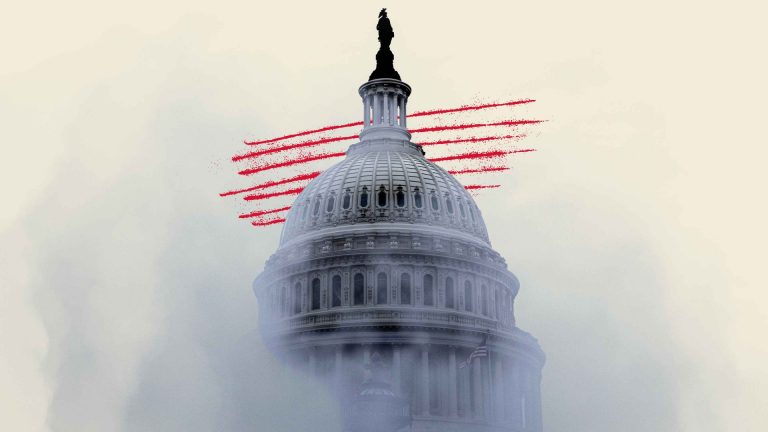

How to stop the next Trump
It looks as if Trump spent billions on an unpopular war only to make America’s longest-standing opponent stronger – hardly a great prospect for future US peace and security.
“The more Trump wants a deal, the more he emboldens the Iranians who realise, ‘we have the leverage now, so we’re going to dig in’,” said Thomas Whalen, a professor at Boston University and an expert in presidential leadership.
“The United States has basically made Iran from a regional power to a global power, because Iran now realises it can shut down the global economy.”
And Americans are not happy about it. Polls show only a quarter of Americans think the war was worth the cost. More worrying to Trump will be a poll showing that even the MAGA faithful are unconvinced, with less than half saying the deal is in the best interests of the US. Even Trump’s base is starting to sour.
Whatever their views on the current leadership, however, Americans are a patriotic lot, so there will be July 4 celebrations full of goodwill and community spirit in neighbourhoods across the country.
But when Trump takes to the stage at his partisan events to pump his fist, dance to YMCA, and proclaim how America is greater than ever before, there won’t be that many people in the mood to party alongside him.