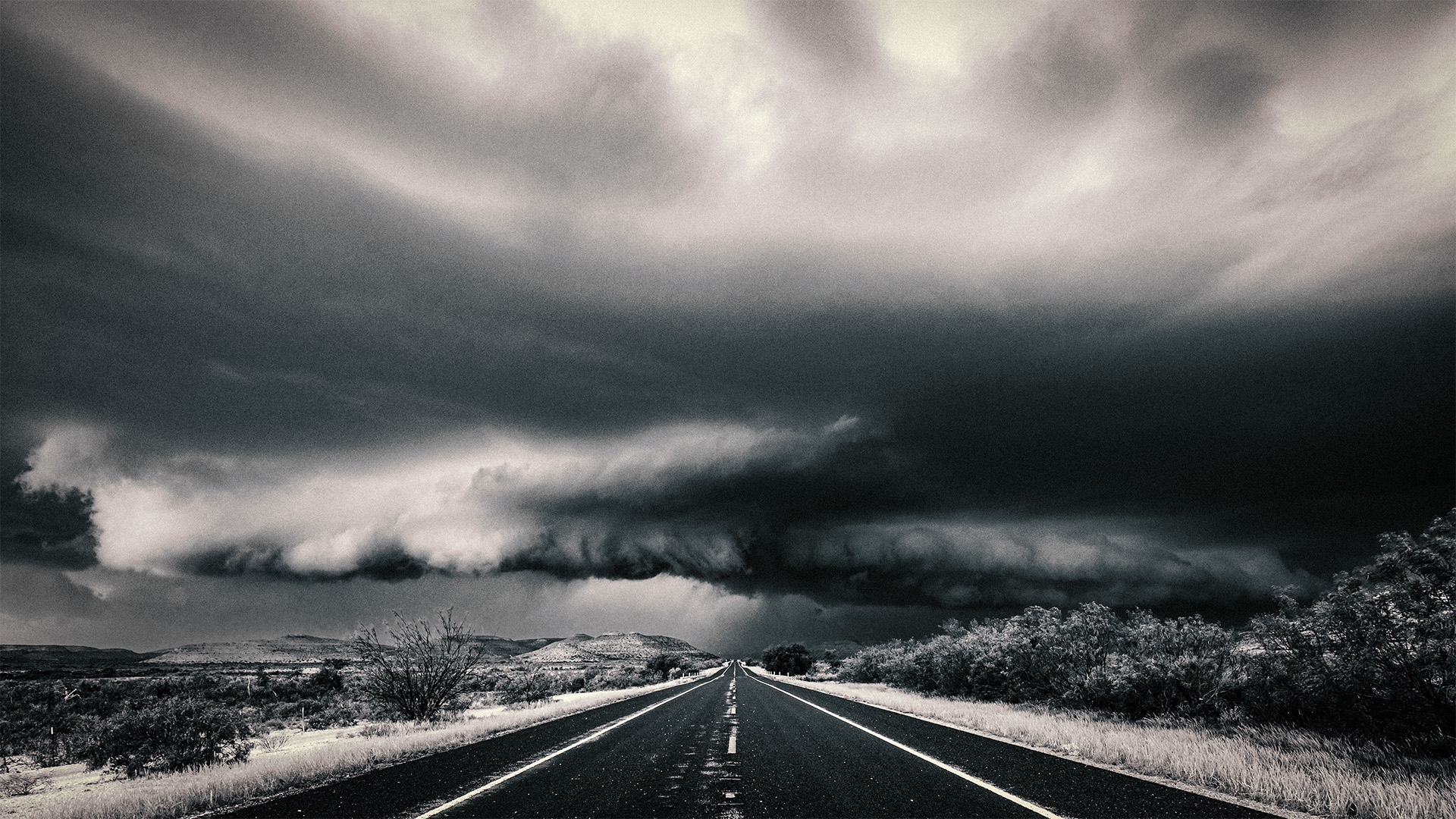
Some writers look more like writers than other writers, and Patrick deWitt looks more writerly than most. Sat in front of his laptop in a button-down shirt whose sleeves are riding high enough up each arm to reveal multiple fading tattoos, he runs a hand through his artfully dishevelled straw-blonde hair, and adjusts the heavy frame of his glasses. His cheekbones could slice open envelopes.
DeWitt will himself concede that he does indeed have – and perhaps has even cultivated – this very particular look. Which can be problematic in modern America.
“When you drive across the country, as I have done recently, you’re struck by just how different it is, from east to west, north to south. It’s a complicated place, and there is much darkness in it at the moment.
“And so when I set out on my drive, I expected some awkward interactions – particularly in the middle parts – because of, well, because of the way I look.”
Which is? “Well, sort of like coastal, perhaps? And clearly an urban person.” A writer? He smiles. “Maybe yes, that too. I was worried because I had these New York licence plates. And, because we keep being told that America is so divided, I went expecting this hostile resistance. But time after time all I met were sweet, curious, lovely people.
“And so that story we are currently being told about the US?” he ponders. “It’s not the whole story.”
Suggested Reading


The fiery feminist book I can’t stop thinking about
During these particular times when one can – with eminently justifiable reasons – lose all faith with the US, it’s a mercy that we can at least turn to its novelists for relief. Patrick deWitt, most famous for his 2011 Booker-nominated novel The Sisters Brothers, is one of them.
You can file him alongside Ben Lerner, Gary Shteyngart, Lorrie Moore and Jenny Offill, each in a collective pursuit of skewering their country – in deWitt’s case, adopted; he’s Canadian – with dark humour and an arched eyebrow. He writes the kind of books over which you imagine the Coen Brothers and Wes Anderson squabbling to nab the screen rights.
DeWitt’s new novel Dodge City was the reason for his recent road trip, conducting his literary research over thousands of miles. Set in 1967, it concerns a 23-year-old man who loves his girl but is confused about the future, and increasingly appalled over his country’s involvement in the Vietnam War.
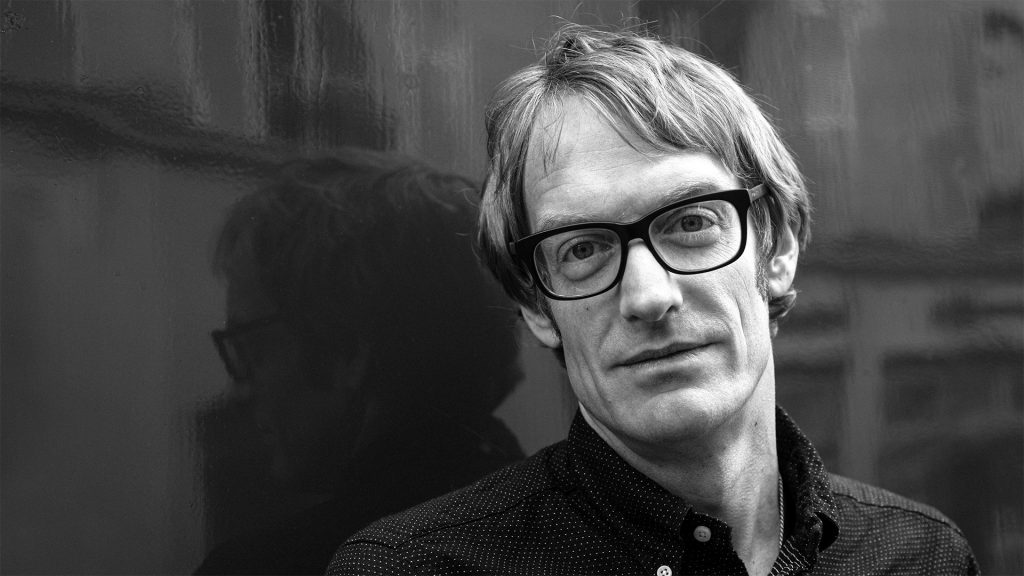
When he’s called up, he flees, taking to the highways behind the wheel of a car. En route, he plans to visit his mother, his sister and father, each of them scattered across various states for their own complicated reasons. But his ultimate aim is that, by journey’s end, he might just find himself in the way that sometimes people do.
“I think that, perhaps clumsily, I was trying to write something grand here, a big question/big answer type of book,” he tells me from his home in Portland, Oregon, “but then I ended up doing what I normally do, and focusing on something much more modest. It’s about family, really, and how we connect with one another.”
But big questions do nevertheless creep in. What is it to love your country, and to love it enough to be willing to die for it? Are we really such pliable beings so absent of independent thought that we’ll do whatever our careless governments bid?
“I am aware,” he says carefully, “that these themes could be seen through a contemporary lens, yes, but I don’t have very much to say about this contemporary moment.” I ask him why. As a Canadian living in America, he might have an interesting objective take. “Oh, because – well, because how do you make sense of it?”
Suggested Reading

The terrifying evolution of fascism
He thinks for a moment in contemplative silence. Then he says: “Yesterday, I left some food out, and when I came down this morning, the kitchen was swarmed with ants. I just sort of stared at them.”
He pauses here, for effect. “I don’t have much to say about that, either. It’s just something that happened, you know?”
Patrick deWitt, 51, was born on Vancouver Island, and moved as a child to Southern California with his family. He left high school early, intent on becoming a writer, and found work at a bar in Los Angeles to make ends meet.
This was meant to be a temporary gig. “I ended up staying six years.” Here, he learnt how to become a night owl – with all that implies – in the way that barflies tend to, themes he would later explore in his gin-soaked debut novel, The Ablutions.
“I’d always loved stories, and always wanted to write,” he says. “My parents were bookish people. I remember being young and wanting my father’s attention, and looking at his bookshelves. He told me I could read whatever I wanted, as long as I took care of them. I tried Nietzsche at the age of 12 – start at the top, right? – but it made no sense to me. But then I gravitated towards writers like Richard Brautigan, Charles Portis and John Steinbeck…”
The Ablutions was published in 2009 to strong reviews, but modest sales. “I didn’t much want to add to the literature of addiction and depravity,” he says, scratching at a tattoo on the palm of his hand that reads THANK YOU, “but that was what was on offer to me at the time.”
He would broaden his horizons considerably for his next novel. The Sisters Brothers is set during the gold rush era, its spare narrative punctuated by his increasingly signature droll style.
This sense of deadpan would fuel subsequent novels – Undermajordomo Minor (2015) and French Exit (2018) – and he would inject a winning pathos into his next book, The Librarianist (2023), a tender tale about an old man who finds joy in literature.
But it was The Sisters Brothers – which was made into a film in 2018 by neither the Coen Brothers nor Wes Anderson but rather Jacques Audiard, and starred John C Reilly and Joaquin Phoenix – that would cast the longest shadow. Its success discombobulated him.
Suggested Reading

The chilling banality of Putin’s kingdom of fear
“It was complicated, and it led to some extreme destructiveness,” he says. How so? “Well, drinking, and things like that. I’ve always been retiring, and not really desirous of attention. I wanted my work to be read widely, but I didn’t really understand what would come with that. It made me very uncomfortable.” His marriage ended, and he moved, alone, to Portland, in pursuit of a “calm and sedate” life.
And has he found that now? Dodge City, I tell him, seems like his warmest, most reflective novel to date.
“I think so, yes. I mean, I’ve had a fair bit of friction, hopefully no more than the norm, but I do think I do my best work when I’m living sanely, and sleeping properly.”
Unfortunately, he hasn’t been sleeping well for some time now. “I’m working on a new book at the moment, and it’s quite large, and there’s many characters in it, and it’s a noir, and damaged, and very violent, and quite ugly…”
He trails off, and for a moment looks helpless, the writer at war with his own creativity. “It’s giving me nightmares,” he says.
Dodge City is published by 4th Estate
 Most popular

Churchill, the Beatles, St George: All the English heroes who aren’t actually English
The New World at 500: Independence isn’t our marketing slogan. It’s our business model

The problem is they just don’t care about us any more
Sorry Nigel, but the polls show you’ve had it