
On a work trip to Los Angeles in 2002, I met a young woman who had been flown into town to appear on the reality TV programme Judge Judy. Sharing her story while smoking a cigarette at the entrance to the tastefully upholstered Grafton Hotel on Sunset Boulevard, she spoke with excitement at the prospect of earning $5000 should the show’s titular arbitrator rule in her favour under the studio lights the following day.
Speaking in the kind of accent that first became a prompt for mockery on American telly with The Beverly Hillbillies in 1962, my presentable new friend told me that this was her first visit to California. Heck, she said, she’d hardly ever left her home state of Arkansas.
Given that recent events have forced us to reconsider the nature of popular culture at the turn of the century, not for the first time, I’ve found myself reflecting on this fleeting encounter. Our visitor from the Natural State might have fared just fine on the box; she may even have had the time of her life. But she might have been unsafe, too. As is known, there were some right bastards at play in what we call the – gags reflexively – noughties.
Of course, she wouldn’t have been in LA at all had there not been a market for her services.. In Britain, The Sun wouldn’t have anointed Russell Brand “Shagger of the Year” on three occasions had the paper’s readers not enjoyed the celebration. The media is not a vacuum; this stuff would have died in an instant had the public not proved themselves – ourselves – willing accomplices. If this is indeed the final reckoning, then let’s have it right: this is on us, too.
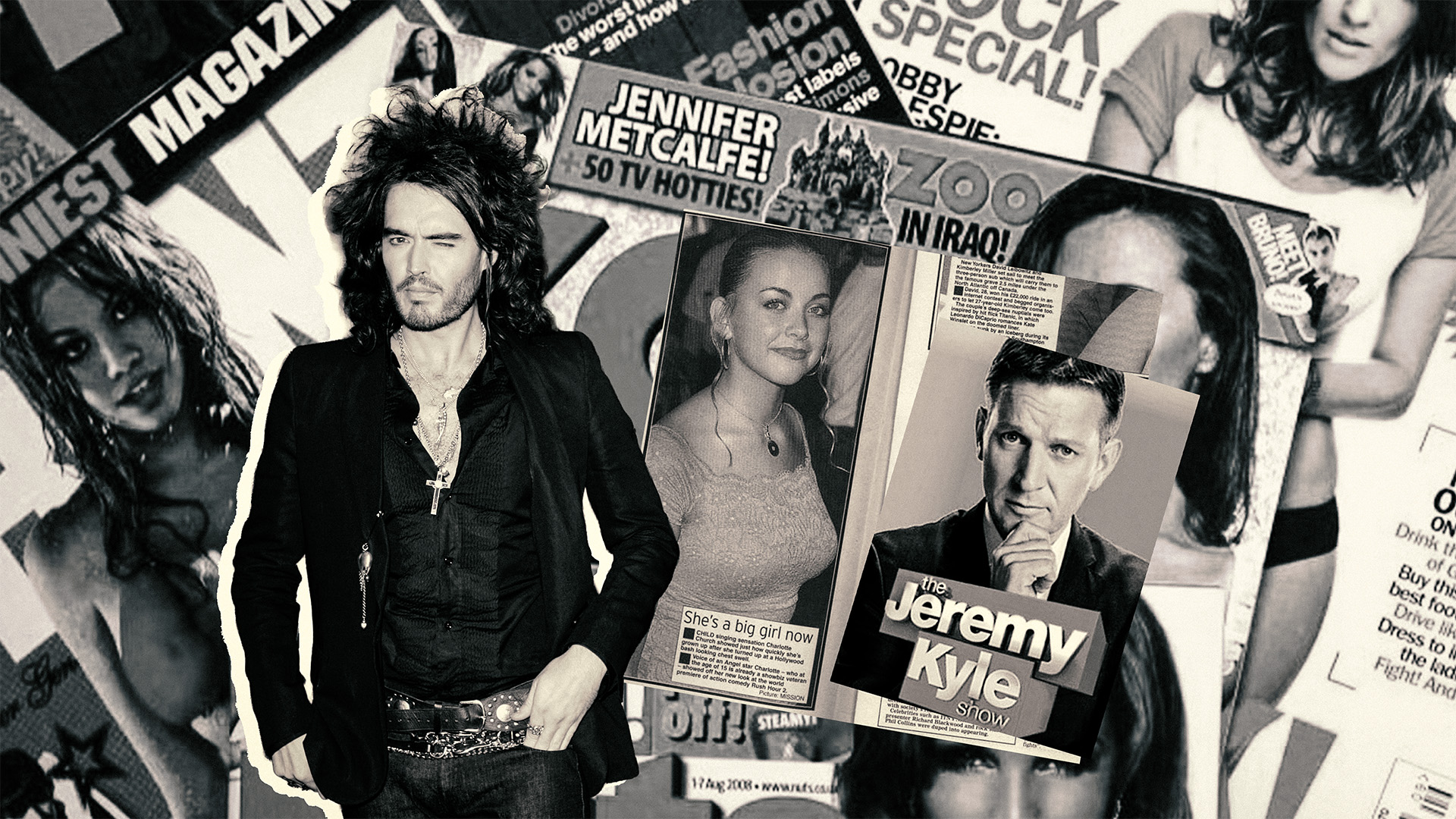
In the jaundiced light of a new century, some aspects of the cultural scene were grindingly familiar. While technology may have narrowed the divide between pornography and the mainstream, the sight of objectifiable flesh in magazines such as Nuts and Zoo had precedent with page three girls and the soft porn bonanza of Daily Sport.
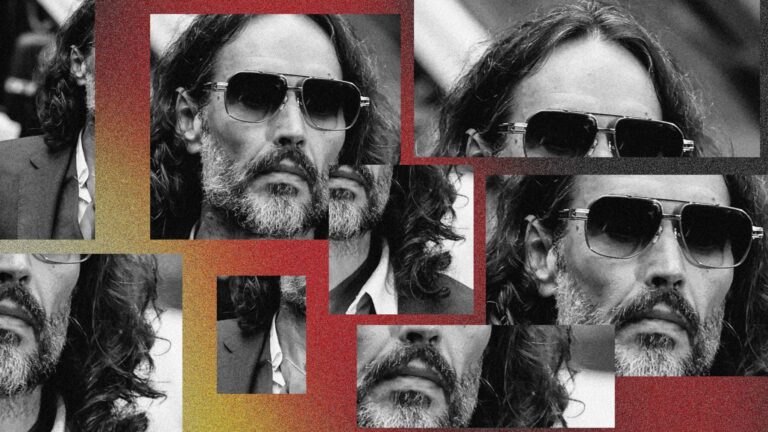
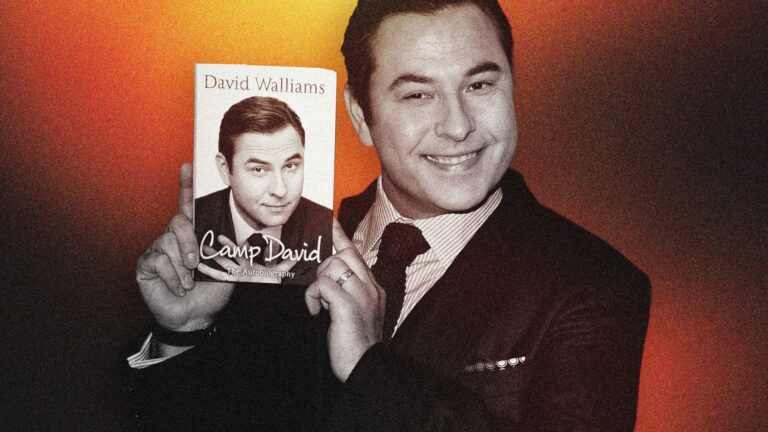
As for the presence of powerful and pampered creeps in the orbit of women and girls deemed to be “assailable”, well, there was hardly anything new about that. Russell Brand anally raped a woman he had met at one of his comedy gigs at the Hammersmith Apollo, for which more than 3,500 people bought tickets. David Walliams is alleged to have groomed a 15-year-old by duping her into believing he could help her achieve her dream of becoming a comedy writer (Walliams denies the allegations). That he met the girl at a Virgin Megastore sounds like the kind of joke that would have brought down the house in 2004.
Suggested Reading

The reckoning I thought Russell Brand would never face
With the proliferation of television channels and the internet, in the infancy of our century, the border between the celebrity and the civilian appeared bridgeable in ways that were unthinkable even a decade earlier. In truth, though, the distance hadn’t narrowed at all; in this grave new world, the power of the gatekeeper simply exerted itself in increasingly aggressive ways. Along with the dangers of grooming and sexualisation, for unsanctioned outsiders, the price of entry was debasement and cruelty.
You could see it everywhere. Wildly talented and gravely unwell, clicking shutters and distasteful jokes followed Amy Winehouse all the way to her grave.
Sniggering from beneath the cloak of plausible deniability, in 2002, The Sun gleefully reported on an internet-led countdown to the 16th birthday of Charlotte Church. At age 28, the DJ Chris Moyles offered to deprive the singer of her virginity while leading her through “the forest of sexuality”.
In the corridors of creative power, in Britain in particular, there was something grimy and sly at work. While in the US the superabundant colours and constant havoc of The Jerry Springer Show had more in common with professional wrestling than anything pretending to be a morality play, on this side of the water, conflict television resembled a Soviet show trial directed by Ken Loach.
Certainly, there was nothing knowing or exuberant about the cheap and cheerless Jeremy Kyle Show. In this harshly lit bearpit, each weekday morning, marginalised and impoverished people were goaded into squabbling and scrapping by a host who dealt in public humiliation. As well as encouraging drinking and drugging, according to an investigation by the Channel 4 documentary series Dispatches, producers sometimes smoked cannabis with guests to “keep them happy” prior to taping.
In other words, like goons in the employ of higher powers, television made examples of an underclass that could be relied upon to both titillate and appal decent people. For Britain’s favoured few, and their media ambassadors, a dehumanised cohort is a handy thing to have.
As The New World’s Mic Wright recently pointed out on his Substack, Conquest Of The Useless, the sight of Kyle on right wing TV demanding to know why the BBC continued to give airtime to Russell Brand invites the question as to why Kyle himself remains on the air.
Six years after ITV canned his show, following the suicide of one of its guests, the 61-year-old can currently be seen beating up straw men and women as the host of The Breakfast Show on Talk.
Suggested Reading
Did fame warp Russell Brand – or was he a predator all along?
I tuned in for a bit to see what his shtick is these days. Turns out that after spending an astounding 14 years bullying and belittling the “indigenous population” of Great Britain, Kyle is suddenly worried half to death about their wellbeing. “We should be protecting our own,” he said in response to the news that asylum seekers will be housed near the Oxfordshire village of Piddington.
That Kyle’s leering face is now alarming viewers online rather than on ITV is, I suppose, progress of sorts. The Leveson Inquiry into press intrusion, and Operation Yewtree’s investigations into predatory media personalities, also dealt a blow to the notion that the noughties were no more than harmless fun and games.
Elsewhere, though, things seem darker than before. Unregulated and unrestrained, expressions of raw hatred and sexual objectification have found a new home in the badlands of social media. Never mind the constraints of television, by purchasing Twitter, Elon Musk was able to bring unhappiness to the entire world.
But while nastiness and contempt continue to do rather well for themselves, today, there are at least signs that the tide is turning. As Russell Brand and Andrew Tate, indulged and promoted by media old and new, eat their meals behind bars, I’m reminded of a line from a 2009 film that bucked the trend of the times by telling a story of friendship and communality in a world that seems to be headed for hell.
As they say in Zombieland: enjoy the small things.
 Most popular

Emily Maitlis’s diary: The con trick that let Russell Brand get away with it for so long
I read David Walliams’s autobiography – and one revelation in it could spell trouble

You Can See Everything is the most elaborate con since Elizabeth Holmes herself

Net migration is over. Now what?