When Andrey Medvedev’s father was in a good mood, he would take his son fishing. But if Andrey forgot to gather kindling after school, Aleksey would thrash him so badly he needed stitches.
The little boy tried to protect his mother, Alfia, from Aleksey’s vodka-fuelled rages but was never able to stop the beatings or prevent her head from being “slammed against the wall, hit against the stove, smashed against the kitchen counter”. The traumatised child wet his bed most nights. Then, one night, Alfia was run over and killed by a drunken tractor driver.
Inescapable violence defines Andrey Medvedev’s childhood in the Siberian provinces. After his mother dies in the accident, he is shuttled between children’s homes and, later, prisons. By 18, in 2014-15, that upbringing has taken him to the battlefields of the Donbas in eastern Ukraine.
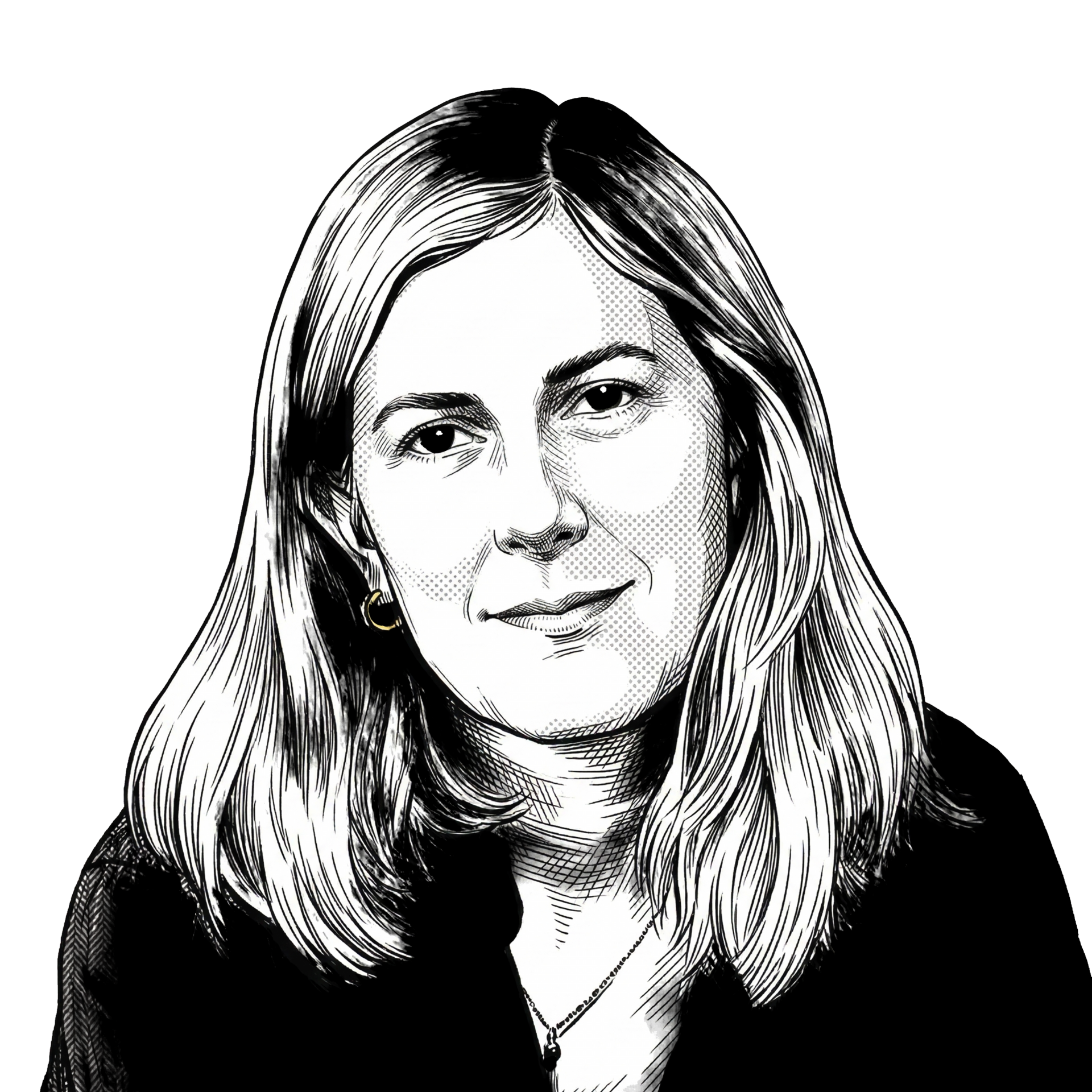
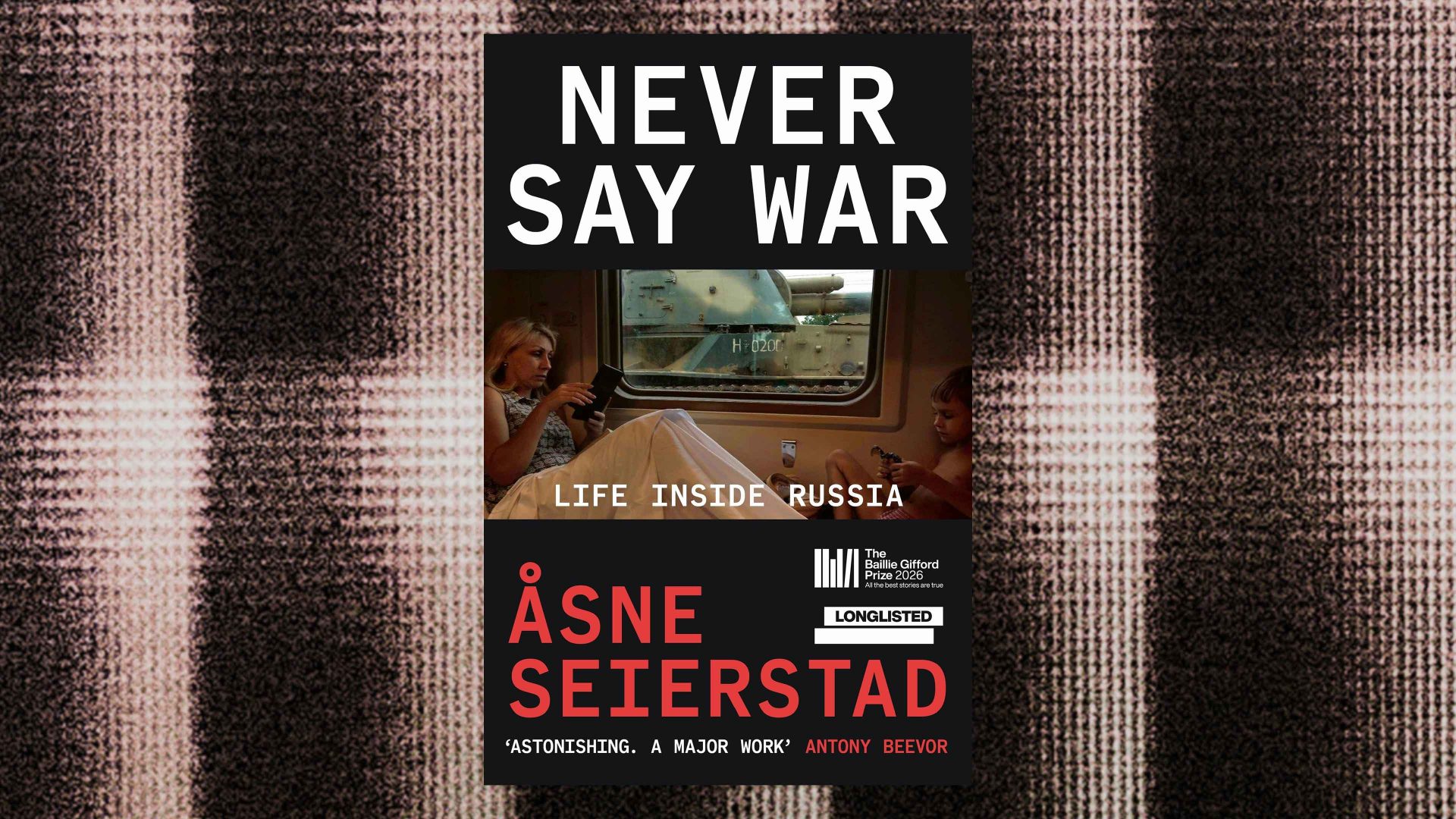
In her chilling, masterful portrait of modern-day Russia, Never Say War, Norwegian writer Åsne Seierstad makes Andrey her antihero. She reconstructs his life in the style of a documentary novel, following his descent from a troubled childhood into petty crime, state-sponsored thuggery and ultimately Wagner, Russia’s notorious mercenary force.
When Vladimir Putin invaded Ukraine in February 2022, Seierstad sought to find out how ordinary Russians viewed the war. She had already written an undercover book about torture and honour killings in Russia’s once-rebellious republic of Chechnya, called The Angel of Grozny. That book proved an invaluable guide when I made a film about Chechen bride stealing.
But this time, nearly two decades later with increasing repression and censorship, Seierstad was not sure how to proceed. The title of her book, Never Say War, refers to Russia’s criminal code article 207.3, under which people can be prosecuted and jailed for using the word “war” instead of “special military operation”.
Then, in January 2023, she saw a TV report about a fugitive Russian soldier. Andrey Medvedev was the first Wagner Group mercenary to defect to the West. Somehow the 26-year-old fled the killing fields of Ukraine, travelled hundreds of miles to the north, scaled barbed wire fences and crossed a frozen river, evading searchlights and attack dogs, before reaching safety in Norway where he asked for asylum.
With the help of a lawyer friend, Seierstad got in touch with Medvedev. After initially ignoring her messages, he eventually replied and said he would wait for her outside a McDonald’s in Oslo. She noticed his “muscles looked tense under his clothes” which were “hopelessly thin” for the winter and that there was “something untamed about him”.
During their first meeting, he spent hours recounting his escape in vivid detail. He agreed that she could tell his story, but with one proviso: it should combine the prison breakout drama of the French novel Papillon with the grittiness of Shantaram, the bestseller about a heroin-addicted bank robber on the run. And, he added, with a typically Russian flourish, the reader should feel as though they were reading Dostoevsky.
Suggested Reading
Russian voters are tired of Putin – and he is running out of options
Given Medvedev’s background, this suggestion calls to mind the treatment of children in The Brothers Karamazov – including the eight-year-old serf boy who is torn to pieces by hunting dogs.
Medvedev’s coming of age in Putin’s Russia takes up the first 100 pages. Initially deployed as a provocateur in peaceful demonstrations, in 2014 he is sent to the Donbas. This was at a time when the Russian military constantly denied it had soldiers in Ukraine.
“They had to recruit with care”, observes Seierstad, because “they needed ‘ghost soldiers’ who didn’t really exist. The best soldier was one nobody would miss.”
Medvedev fitted the bill perfectly. He later joined the Wagner Group and was sent to Bakhmut, where he witnessed the brutal meat grinder tactics that treated soldiers as expendable. Of his 30-man squad, only three survived one attack. When Medvedev’s contract ended, Wagner tried to force him to stay but he escaped with the help of fellow fighters.
To better understand her protagonist, Seierstad travels to the Siberian taiga where she seeks out his relatives and former teachers. Medvedev’s no-nonsense aunt Alya emerges as a sympathetic figure: generous with her opinions and what food she has. Recently divorced from a useless husband, she seems genuinely pleased to host the author in her sauna and receive help with chores and milking the cow.
Many of the villagers Seierstad meets are hospitable, but their warmth belies an inner iciness. Medvedev’s former gym teacher, who proudly shows off his garden filled with carved wooden animals from fairy stories, insists Russia should go nuclear. “Bomb Kyiv,” he says, leaning close. “Then the war will be over, just like that.”
Through Seierstad’s skill at engaging with people and listening closely, we see how the war is reshaping life in the Glubinka – deep in Russia’s heartland, hundreds of miles from the frontline. She describes villages left without police or firefighters because they have been drawn into lucrative military contracts to fight. Everywhere, resources—human and otherwise—are being siphoned into the war.
Although Medvedev remains the central thread, Seierstad’s panorama goes beyond his story. She visits Moscow, St Petersburg and Pskov to meet members of the elite who support the system and some of the country’s last remaining dissidents.
Is this Putin’s war or the Russians’ war? This question reverberates naggingly throughout the book.
When Putin first came to power in 2000, the political scientist and journalist Andrey Kolesnikov compared the new president with the father of fascism, Benito Mussolini. Even though he’s been labelled a foreign agent, Kolesnikov is still based in Moscow and sorrowful about what has happened to his society, which he compares to “a huge mass of hardened lava.”
Censorship imposed by the authorities is one thing, he tells Seierstad. “What’s more important is the conscious self-censorship and disciplined indifference… the autocratic tango is danced by two – the leader and the masses.”
Many have observed how eerily normal everything seems in Moscow. Cafes and bars are packed, theatres thriving and streets filled with shoppers – the occasional Ukrainian attack on a warehouse or an oil terminal notwithstanding. Seierstad powerfully captures the disconnect.
At one point she is in a restaurant with a woman called Maria Andreyeva whose conscripted husband, a trained nurse, is forced to identify the contents of body bags sent by the lorryload from the front. Sometimes, the soldiers have bullet wounds, others are “burnt to a crisp”, she says, or worse still have been reduced to “gore soup”.
Right on cue, a waiter appears: “Can I interest you in dessert? Something sweet?’ The server stood looking at us and our empty cups. ‘Or more tea?’ We shook our heads.”
Andreyeva’s husband is later admitted to a psychiatric ward after suffering a breakdown. She was the unofficial leader of Put’ Domoi, The Way Home, a grassroots Russian movement formed by the wives, mothers and girlfriends of conscripted soldiers.
Suggested Reading

Putin’s greatest enemy? It’s laughter
They are not anti-war as such but staged weekly silent protests wearing white headscarves and laying flowers at war memorials, such as the Tomb of the Unknown Soldier. All they demanded was the promised troop rotations and the demobilisation of their loved ones.
Andreyeva was denounced by internet trolls, mocked by television propagandists, followed and threatened by police and classified as a “foreign agent” in May 2024. As a result, she lost her job as a paediatrician.
People like Andreyeva struggle in a society in which only the most cynical or brutal can survive. Earlier this month, Lida Moniava, the director of a hospice for terminally ill children, was detained on charges of spreading “fake news” about the military. The criminal case was prompted by a post on her Telegram channel published in February 2023, on the first anniversary of the full-scale invasion.
The post read: “For a year now, my country has been sending missiles, tanks, and soldiers to Ukraine. For a year now, innocent people have been dying because of it.” For that, she is now facing a ten-year prison sentence.
Some have described Moniava as a modern-day saint. Her supporters had often urged her to leave the country for her safety, but she refused.
If Medvedev is emblematic of the moral void in Putin’s Russia, the reader might wonder if he redeems himself once in the West. But he is not granted asylum and ends up in prison for hitting a woman. He serves a short sentence and is required to wear an ankle tag on release. He snaps it off and crosses the border into Sweden.
Never Say War: Life Inside Russia by Åsne Seierstad (translated by Siân Mackie) is published by Virago. Lucy Ash is the author of The Baton and The Cross, Russia’s Church From Pagans to Putin, published by Icon
 Most popular

Emily Maitlis’s diary: Trump doesn’t fear the AI apocalypse – but he’s terrified about the midterms
A new film about Elon Musk reveals him as so awful it’s almost tragic. Almost
My day out with Danny Tommo
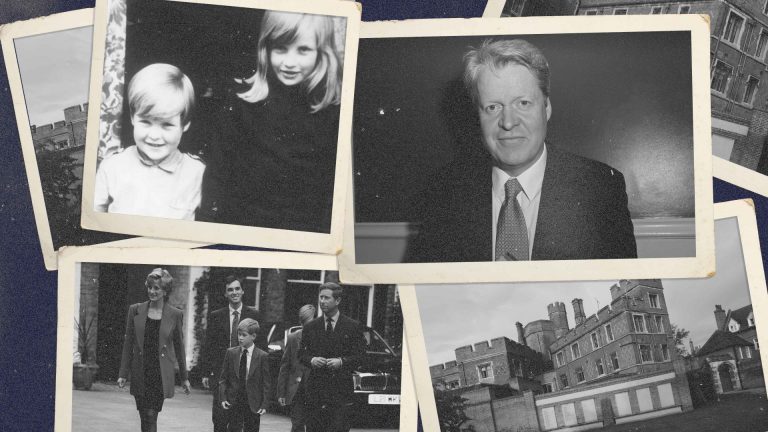
I was at Eton with Charles Spencer – this is how it explains his battle with the royals