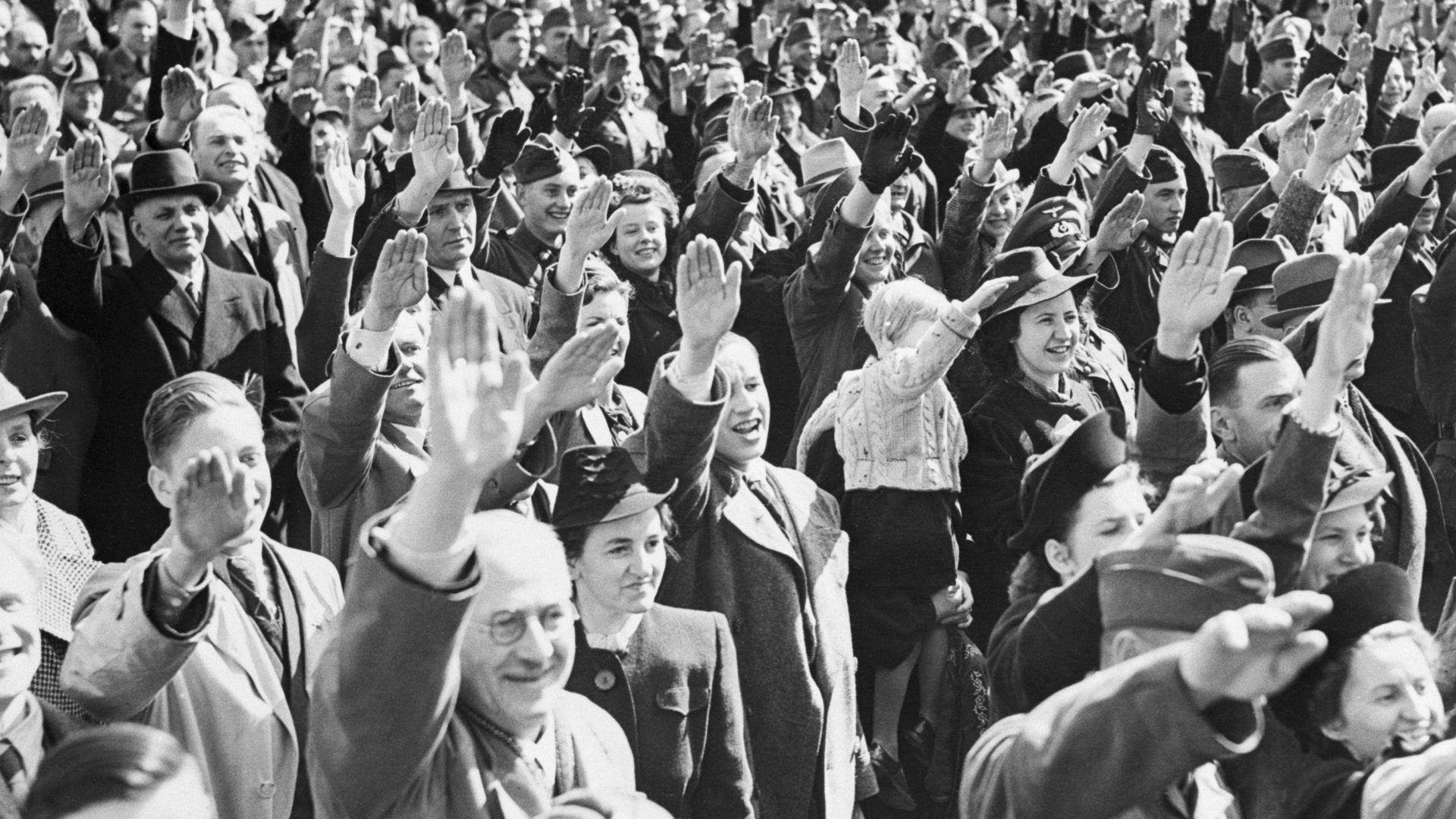
In Europe and North America, the initial outbreak of fascism is usually treated as a rupture or aberration that interrupted an otherwise progressive civilisational project based on liberal democracy and free markets.
Due to a variety of extraordinary circumstances – among them, the carnage of the first world war and perceived national humiliation in its wake, as well as social turmoil and poverty deepened by the financial crash of 1929 – large parts of Europe abandoned their prior commitments to enlightened progress and began devouring their own people and institutions.
In the most common story, the Nazis’ monstrous crimes, especially the industrialised slaughter of six million Jews, emerged from this historical circumstance but are also lifted out of all context. To this day, the Nazi Holocaust is frequently regarded as unique and so far beyond the horrors that humans had inflicted before or since that the mere act of drawing historical comparisons is treated as a kind of transgression, perhaps even an insult to the dead.
In this telling, the standard one in North American schools, fascism is fixed and static, something that was done by one group of people in Europe to another group of people in Europe. But because it happened once, we are also told that it could happen again. So we should stay vigilant for any telltale signs of the goose-stepping monster’s return.
That was never the only understanding of what fascism was, however. From the start, there were voices who rejected the idea of a rupture, and instead placed Nazism firmly inside the history of the 19th and 20th centuries, and pointed out that fascism had clear precedents. This perspective came mainly from people in countries living under the boot of European colonial control, and from Black and Indigenous peoples living in countries that were founded as settler colonies and plantation economies.
One of the earliest figures making this point was Jawaharlal Nehru, future prime minister of India. In 1938, he travelled to Europe and witnessed fascism’s rise for himself. Speaking to students at Allahabad University on his return, he observed: “Fascism is only employing in Europe the methods employed by imperialism in other continents. Fascism is a mirror to the past, and to a certain extent the present, of imperialism.”
Suggested Reading

Apocalypse wow: The American right wingers rooting for doomsday
Politicians and intellectuals in the Global South, as well as in Black liberation movements in the United States, would draw similar parallels. They traced Hitler’s race science, fetish for force, and vicious methods of ghettoisation and extermination to the Jim Crow race laws, colonial concentration camps, and the brutal Indian reservation system for Indigenous peoples across the Americas.
As the US intellectual and civil rights leader WEB Du Bois wrote in The World and Africa, published at the close of the second world war, “There was no Nazi atrocity – concentration camps, wholesale maiming and murder, defilement of women or ghastly blasphemy of childhood – which Christian civilisation of Europe had not long been practising against coloured folk in all parts of the world in the name of and for the defence of a Superior Race born to rule the world.”
Yes, the Nazis sped up the genocide process, applying modern technologies to the business of mass slaughter, but the impulse to exterminate long pre-dated them, even if it didn’t call itself fascism. In this telling, fascism was not an event, fixed in time and place. Rather, it was a throughline in the history of modern capitalism: a set of brutal methods and strategies that moved through space and time, rising to the surface when the powerful felt injured, and when the interests of wealth and capital were under great threat from below.
In this analysis, a country could be ruthlessly fascistic in its colonies, but liberal and democratic at home; it could be fascist against one group, but not others; and it could be fascist in some parts, but not every part. In short, fascism is not all or nothing. It can be uneven – partial, incipient, not always dominant or totalising.
‘Today’s fascism carries the wreckage of the past into the present, dispensing with previous elements while picking up new tricks, adapting and shape-shifting as the world changes’
A few Europeans were able to see these continuities, even when they were trapped in fascism’s tightening vice. Among them was the great German Jewish writer Walter Benjamin. In his final work, “On the Concept of History,” he described the horrors inflicted by modern nations in the name of “progress” not as “a chain of events” – separate and unconnected – but rather as “one single catastrophe which keeps piling wreckage upon wreckage.” Benjamin wrote the essay in 1940, shortly before taking his own life, fearing capture by the Gestapo.
None of these writers were saying that Nazism was an exact repetition of earlier colonial and imperial crimes. History isn’t linear, but it also doesn’t repeat on a loop, circling back to the same place over and over again. Rather, it moves in more of a spiral, pushing to places that feel familiar but are fundamentally different. The accumulated weight of what came before collides with new, unpredictable developments.
If we think of the history of fascism as a downward spiral – like a tornado or a whirlpool – it means that every go-round pulls us in new perilous directions, each spin leading us further into a novel vortex. Today’s fascism carries the wreckage of the past into the present, dispensing with previous elements while picking up new tricks, adapting and shape-shifting as the world changes.
Conceiving of fascism in this way helps explain why so many of us missed the early signs: we were looking for a rerun, but what we got was a sequel. That means we cannot understand today’s version of fascism exclusively through the rearview mirror, because it has changed as we have changed. For example, the people advancing fascist goals today are far more individualistically entrepreneurial than their predecessors.
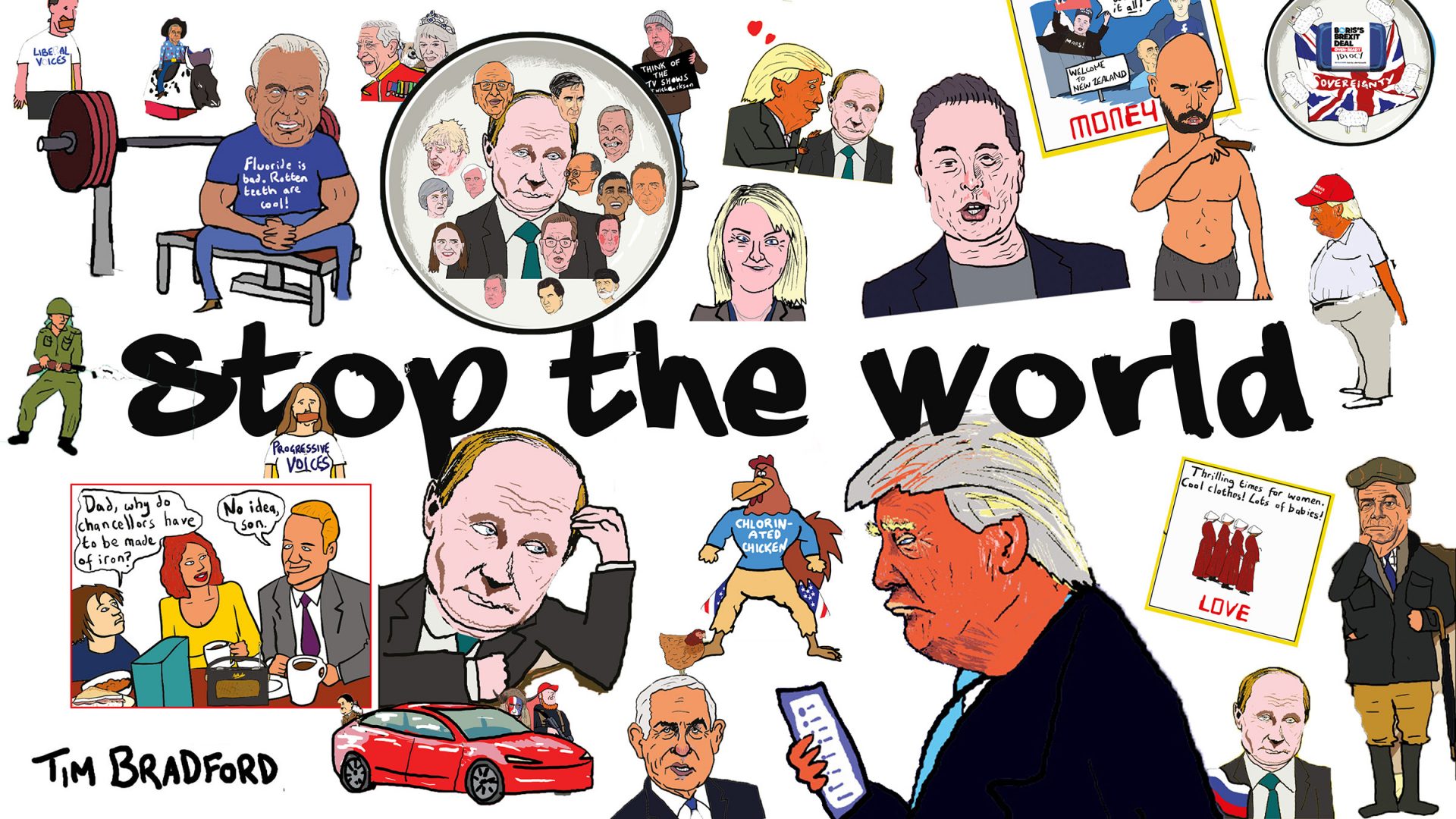
The supremacy many fascists believe in most is the superiority of extreme wealth, a eugenics of markets. Some are billionaires with cult followings whose Lebensraum is in space and beneath Greenland’s melting permafrost; they are online influencers trying to sell us crypto and energy drinks; and they are politicians who are masters of meme warfare.
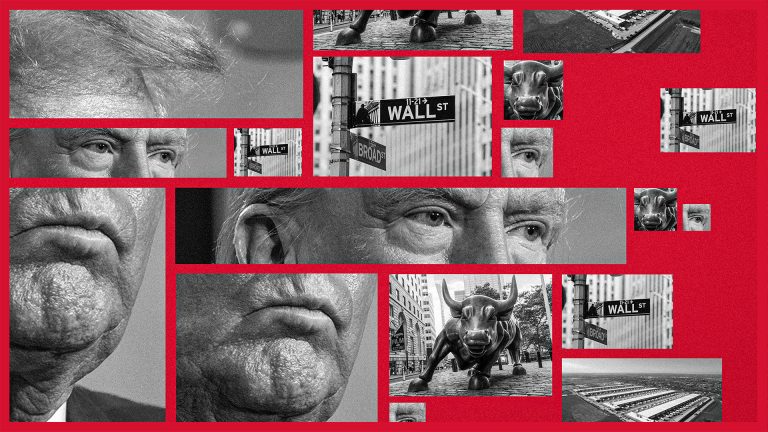
Fascists today lack all discipline: they go to war with one another to chase clicks, then come back together for much-hyped collabs to double their reach. If we expect them to make the trains run on time, we’ll miss that they care neither about chaotic trains nor chaotic airports – after all, today’s fascist leaders fly private.
In short, contemporary fascism doesn’t look like the ordered and industrial past. It looks like the frenetic, always online, never-stop-monetising, bot-infested present. If we are waiting for soldiers goose-stepping in formation, we’ll miss the venture capitalists and their autonomous weapons. If we are looking for yellow stars, we’ll miss the facial-recognition databases and the algorithmic threat ratings. If we expect only white Christians, we’ll miss the way historical trauma can jump from host to host, with fascism’s past victims mimicking their victimizers and calling it freedom, or justice, or just their turn.
Last century’s tyrants sought to fuse with the nation-states they controlled, using state power to exert total dominance over their people, laws, and industries. End-times fascists are also obsessed with grabbing state power, but that is not their only goal. Whether religious fanatics or tech oligarchs or white nationalists, seizing the state is often a stepping stone toward something more ambitious and more final.
In different ways, they are all chasing an intoxicating messianic fantasy: an exit to a parallel gated city, a fortressed Zion, whether in the sky or here on Earth. They are plotting their escape from our shared world, contemptuous of those who aren’t among the chosen.
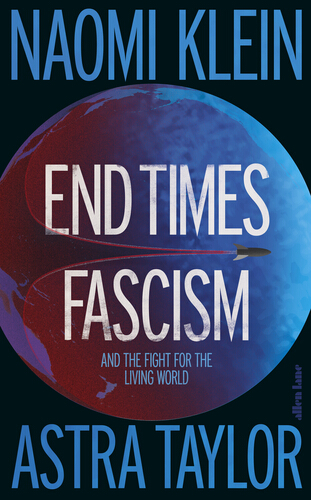
This is an extract from End Times Fascism, by Naomi Klein and Astra Taylor, published by Allen Lane