Zack Polanski, elected as Green Party leader just seven months ago, has had the kind of start most political leaders could only dream of. But now, just as he should be celebrating taking his party to new heights, his fitness to lead – and, potentially, to be Britain’s next prime minister – is being questioned like never before.
Polanski rails against a “right wing propaganda machine” – a few days before the local elections he was upbraiding Sky News’s Trevor Phillips for “smirking” during their interview – and against what he calls scare stories promulgated by political rivals. Yet despite his personal strengths, ones that will have convinced many New World readers to vote Green on May 7, there are legitimate questions for him to answer.
His early media career throws up some highly embarrassing episodes, and his political journey has passed through ideological terrain that many new Green voters would find abhorrent. Some of this is brushed aside as youthful indiscretion, but his current social media activity is harder to dismiss and raises serious questions about Polanski’s attitudes in the present day.
The Golders Green stabbings have plunged Polanski, who is Jewish, into the most contentious and damaging issue of all – antisemitism. His supporters say that the issue is being weaponised against him.
That was also said of Jeremy Corbyn, another leader who energised leftists disillusioned with the same old politics. Just like Corbynism before it, the Polanski project now has all the necessary ingredients required to destroy itself from the inside.
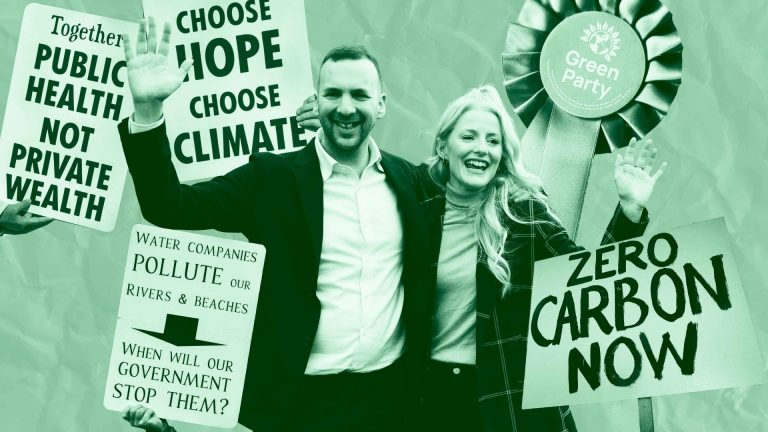
When the combative, charismatic Polanski took over last September, the Greens were polling at around 10% and had 68,000 members. Just six months later, the party was averaging 17% and its membership had more than tripled, hitting 226,000. In February, it won the Gorton & Denton by-election, previously one of Labour’s safest seats, and is set to make huge gains in the local elections.
Where Corbyn was sometimes uneasy – at least at first – about his newfound popularity, Polanski embraces it enthusiastically and energetically. A former actor, he visibly lights up in front of a crowd, and delights in the positive reception from fans and supporters.
His team are well aware of their new boss’s strengths: Polanski recently appeared at a house music night in Leeds, and his press aides are looking for a moment at a UK festival this summer to mirror Corbyn’s enthusiastic greeting at Glastonbury in 2017. Were that festival not fallow this year, he might have followed in Corbyn’s footsteps on the Pyramid Stage. Now, organisers of big events have been alerted that Polanski will show up to the main stage only, with a big name needed to introduce him. He is ready for primetime.
The biggest opportunity lies ahead. With seven parties now viable contenders, a Green Party polling at 20% or a little below would probably pick up fewer than 20 seats. But at 25%, they could take a few dozen. Get to 30% or above and they could even form the next government.
So far, the self-styled “eco-populist” – a moniker that Polanski’s critics suggest must indicate that he has not looked up the actual meaning of the word “populist” – has largely won over voters from the hard left. The botched launch of Corbyn’s Your Party, coupled with Labour’s almost open hostility towards its own left wing supporters, has left the Greens as the only show in town.
Now he must target soft left or centre left voters, beyond the party’s traditional base – and this is why the questions forming about Polanski’s honesty around his old positions and his stance on left wing antisemitism are a concern within Green ranks.
One group watching Polanski’s meteoric rise in UK politics with some degree of bemusement are the Liberal Democrats, not least because his political career began with them. Polanski became active in Lib Dem online communities early in 2015, and first stood as a candidate for the party in a council by-election in March that year.
At the time, the Lib Dems were part of David Cameron’s austerity coalition government. Polanski now says – correctly – that many of Britain’s problems currently blamed on migration in fact result from the effects of austerity. But he did not leave the party over this – insiders believe Polanski’s disillusionment with their party stemmed from his failure in 2016 to secure selection as a parliamentary candidate for the Richmond Park by-election.
Polanski wrote a lengthy blog post about being “refused from even being shortlisted to represent the party I’ve poured heart and soul into”, decrying “a local party in deciding I was not a ‘credible candidate’ for their area simply because I do not live there”. He encouraged readers to email a party official to request “a full independent review”.
Suggested Reading
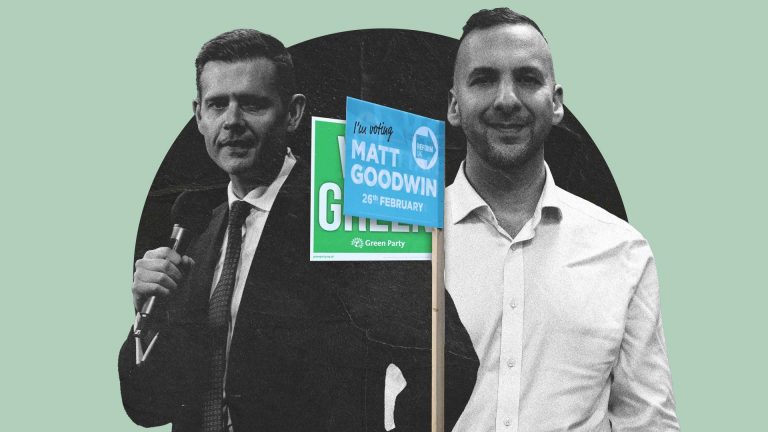
Matt Goodwin, Zack Polanski and Lucifer: the fight for Gorton and Denton
Polanski has never offered a public explanation for why he attempted to become a candidate for a pro-austerity party on multiple occasions, given that he has become such a vocal critic of the policy in the years since. When asked by the New Statesman about his time in the Lib Dems, he said he was interested in reforming the voting system, and only realised later that the Lib Dems weren’t the only party pushing for that.
There is an aspect of Polanski’s past that he and his supporters enjoy talking about even less than his time in the Liberal Democrats, though, and that’s what has come to be known as the “hypnotits” incident. Alongside work as an actor and children’s entertainer, Polanski advertised his services as a hypnotherapist, working from a Harley Street address, for more than a decade.
In 2013, he was featured in a lengthy article in the Sun, under the headline “Can you really THINK your boobs bigger? HYPNOTHERAPIST SAYS HE’LL BOOST YOUR BUST”. The article quotes Polanski as saying the process is “so safe and a lot cheaper than a boob job”, and the article advertises his website and his pricing – £220 for a 90-minute session.
Polanski’s supporters treat any mention of this article as deeply unfair and a sign of media bias. Some claim the article was a hit job, or an undercover sting. Others say Polanski was very young when it took place, or that it is ancient history.
But none of these excuses quite hold up: Polanski voluntarily cooperated with the Sun, and was not a politician when it was published, making the “hit job” argument ridiculous. The story ran only 13 years ago, he was in his 30s at the time, and he first stood for elected office less than two years later.
Some find Polanski’s willingness to participate in a breast-enlargement gimmick itself telling about his character, but others suggest the honesty or otherwise of his response to it is more revealing. He now has a clear story to tell about what happened. “I should have said no. I went out to clarify that on the radio the very next day,” he wrote in the Guardian last November. “I don’t think there are many TV shows now where I haven’t explained that I was misrepresented in the article.”
Yet this explanation doesn’t tally with the record. Polanski did give a local radio interview to the BBC shortly after the appearance of the article, but rather than apologising or complaining about it, he instead doubled down on his claim that breasts could be made bigger through hypnosis, claiming “as I work with people, there’s starting to become anecdotal evidence, at least, of a growth in breast size”.
Polanski referred positively to the article in the Sun on his now-defunct blog two months after its publication, noting that it had been “a busy year so far, with a couple of BBC Radio interviews and a feature in the Sun”, and again a year later: “Since the Sun article last year, I’ve worked a lot with people on phobias, building confidence and self-esteem and helping reduce anxiety and depression”.
Even in 2019, Polanski – then about to stand as a Green – noted in a post, “I stand by the intention of the article” and “none of this is to say that the journalist did a bad job or misrepresented me”. His claims of being misrepresented, or having immediately apologised, only appeared years later. Polanski and his supporters claim the hypnosis issue is a trivial one – but raises an obvious question: why not just tell the truth about it, then?
Now, these dual questions of honesty and consistency are dogging Polanski on a far more serious issue. Like many in minoritised communities, he specifically chose to embrace his Jewish identity as an adult, changing his name from David Paulden to Zack Polanski.
He criticised Labour over its handling of antisemitism under Corbyn’s leadership, and in 2018, while serving as treasurer of the Jewish Greens, he said he was “deeply disappointed that the party have not yet adopted the [International Holocaust Remembrance Alliance] definition on antisemitism”, adding that “the party really had an opportunity to send a message to the Jewish community. Sending a message both to those who vote Green or otherwise that says ‘You’re all welcome here. We take antisemitism seriously and we have your back’.”
Suggested Reading
Have the Greens really forgotten about the environment?
But last month, he provoked fury from many British Jews after saying he had apologised to Corbyn for criticising his handling of antisemitism while Labour leader. He also suggested Labour were weaponising the issue of antisemitism against his party, and then questioned whether British Jews were faced more with “a perception of unsafety” than “actual unsafety”.
Polanski spoke at a time when multiple UK synagogues had faced arson attempts, while a Jewish ambulance service had seen several of its vehicles torched. Less than a week after he made the remarks, two Jewish men were stabbed in an apparently antisemitically motivated terror attack in Golders Green, north London.
Polanski botched his response, retweeting to his 180,000 followers a post criticising the behaviour of the police who arrested the attacker. It accused officers of “relentlessly and violently kicking a mentally ill man in the head”. He was publicly rebuked by Met Police commissioner Mark Rowley, who wrote “it is this kind of inaccurate and misinformed commentary… that is contributing to the rising tensions we are seeing in society, and undermines officer confidence to act”.
Polanski apologised, before criticising Rowley for speaking out duiring an election campaign. But the incident has again raised questions about antisemitism within the Greens. One common rebuttal to these is to ask how a party with issues around antisemitism could ever elect a Jewish leader, but Daniel Sugarman, deputy editor of Jewish News, gives the defence short shrift.
“Imagine asking ‘how can the Conservatives exhibit anti-black racism, because they’re led by a black woman?’, or ‘how can Reform UK be exhibiting Islamophobia when its chair and its London mayoral candidates are Muslim?’,” he says. “Anyone making those sorts of comments to Green Party members would be laughed out of the room. So for Green Party members to turn around and try the exact same thing when it comes to antisemitism and Zack Polanski is laughable.”
Polanski has said the idea that some Green Party members are antisemitic “does not pass the sniff test”. But in the wake of the Golders Green attack, two Green council candidates in Lambeth were arrested on suspicion of stirring up racial hatred online. One had posted a meme showing Donald Trump as Uncle Sam, saying “I want you to die for Israel because Im [sic] owned by Jews”, and also claimed the British government was “overrepresented with Zionist Jews”.
Another Green candidate in Newcastle said: “Israel must be eradicated. Even if it means killing every single Zionist”. Meanwhile, the Greens have still not fully adopted the IHRA definition of antisemitism, instead treating it as a guidance document only, alongside multiple other definitions.
Polanski also faces mounting concerns around his own social media use. The Economist recently conducted an analysis of his activity on Bluesky, where his account has liked more than 35,000 posts over the last few years. Likes on Bluesky, unlike those on X, are public by default.
The Economist noted that Polanski’s account had liked posts critical of journalists, including one calling the Guardian’s Marina Hyde “a total twat”, another labelling one of her sports desk colleagues “a smug, sanctimonious cunt” and another calling Sky News’s Sophy Ridge “a sneering dickhead”. In response, the Green Party confirmed that “Zack manages his own social media”, but said “he is sorry for any mistakes made when working fast”.
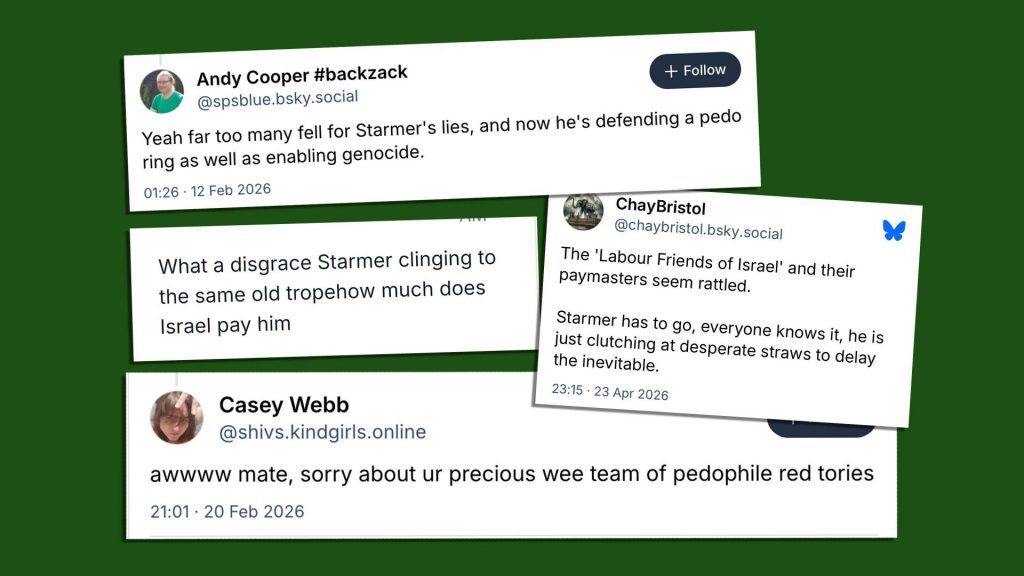
The New World has unearthed dozens of posts liked by Polanski that make extreme claims about Keir Starmer, the Labour Party, or about antisemitism allegations. Posts liked by Polanski include one asking “how much does Israel pay him” of Starmer, and another claiming “Labour has been bought by and happily promotes an apartheid genocidal state”. He liked a post saying that “a deluge of Zionist lies, hatred, scaremongering and victimhood” was heading towards him, and one saying “Zionists have literally made antisemitism worthless”.
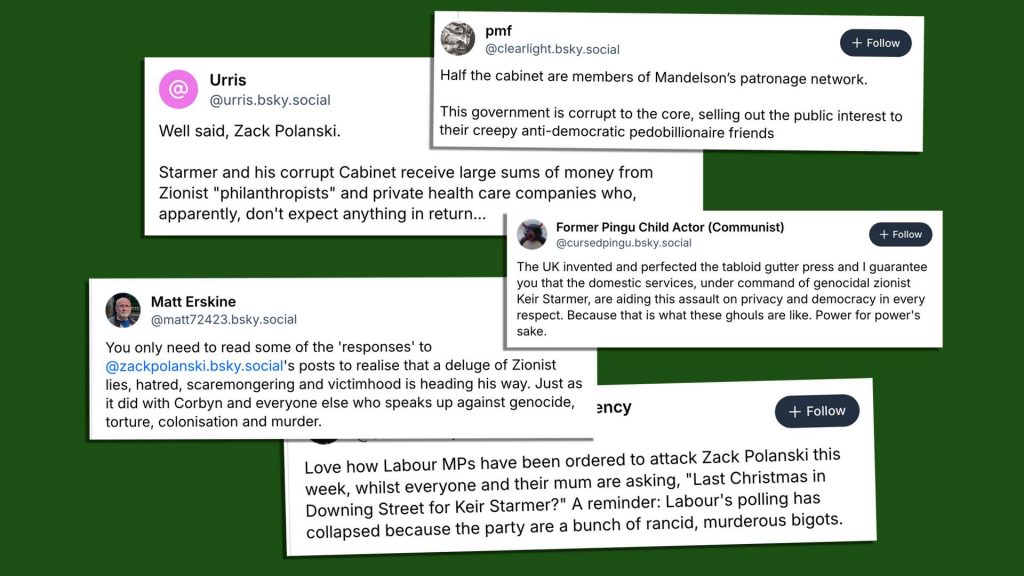
Polanski has also liked posts accusing Starmer of “defending a paedo ring as well as enabling genocide”, another saying “Starmer and his corrupt cabinet receive large sums of money from Zionist ‘philanthropists’”, one calling Labour “a bunch of rancid, murderous bigots”, another calling Starmer a “genocidal Zionist” and numerous posts labelling Starmer a paedophile apologist or enabler.
The posts quoted here are just a small selection out of dozens, if not hundreds, liked by Polanski. That’s an awful lot of “mistakes”.
A Labour Party spokesperson told The New World: “Zack Polanski has spent weeks defending the indefensible. The Greens have offered their full-throated backing to a string of antisemitic candidates. Now Polanski is endorsing these grim conspiracy theories online. He should be utterly ashamed. It shows he is simply not fit for high office.”
Though many will have already voted Green by post, Luke Tryl from pollsters More In Common says the past few days have been deeply damaging for Polanski’s personal popularity. On May 5, he wrote: “Zack Polanski’s net approval rating has fallen by a fairly chunky 14 points over the last week. Still far ahead of Starmer but also puts him now well below the top three of Badenoch, Davey and Farage.”
Sadly, we were denied a chance to ask Polanski about these and other issues directly, despite asking for an interview in the run-up to the local elections. Over the course of a month, requests were put to various press officers and to Polanski directly. The New World had interviewed him, and other Green leaders, before. But after several weeks, the party press team told us: “I’m afraid Zack’s schedule is rammed and he won’t be available for an interview before the local elections.”
There have been suggestions that Polanski’s team is now seeking to head off any potentially adversarial scrutiny after a disastrous appearance on The Rest Is Politics in February. In the course of the podcast, Rory Stewart pressed him on Modern Monetary Theory, an economic theory Polanski claimed to espouse, but on which he struggled to give even relatively simple details.
This feeds into a general sense of Polanski as a man who wears his policy lightly. His flagship proposal as leader has been the introduction of a wealth tax on the ultra-rich, starting at 1% on assets over £10m and 2% on assets worth over £1bn. Alongside a few other measures, the Greens claim these could raise £50-70bn a year in extra revenue and fund a range of new public spending policies. Most recently, he called for a new energy bailout in the wake of the Iran crisis, and a fuel price cap similar to the one introduced by Liz Truss in 2022.
This policy polls well in a cost-of-living crisis. But some environmentalists think it bizarre to see a Green leader suggest subsidising fossil-fuel consumption, rather than giving cash subsidies to poorer households, or using the crisis to accelerate the rollout of heat pumps and solar panels. Subsidising fossil-fuel use in the UK, they note, will only exacerbate shortages in poorer countries across the world. A fuel price cap is good politics, they argue, but bad policy.
Suggested Reading
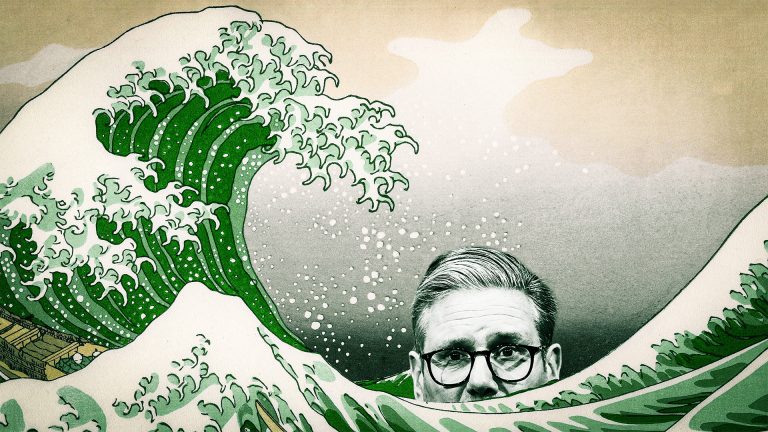

A Green wave is ready to wash away Labour London – and this is why
Policy wonks are similarly sceptical of the effectiveness of a wealth tax that only hits the very richest. Most high earners can do little to avoid new taxes in practice, but the richest 0.1% can afford tax advisers, and are much more able to move their money, or themselves, from one tax jurisdiction to another. Most attempts at introducing wealth taxes elsewhere in the world have raised modest amounts of revenue. Several have been repealed.
Nonetheless, there is a growing enthusiasm within Labour’s soft left – especially among those who would prefer to see the party compete with the Greens for voters, rather than with Reform – to introduce a wealth tax anyway. They say it would mute the idea that criticism of Polanski on other issues was actually motivated by stopping his left wing agenda.
The wealth tax might work as he suggested, and Labour could spend that money itself. Even if it only raised a small sum, the Greens would need a new explanation for how they would spend more.
In reality, few within Labour think Starmer has either the inclination or political courage to take the fight to the Greens in such an open way – though many expect the results of the May elections will spell out the need to do so. At present, many within Labour – especially on its right – are still hoping that if they ignore Polanski and the Greens, they will fizzle out of their own accord. Labour insiders are still confident that the public will like Polanski less if they hear more about him.
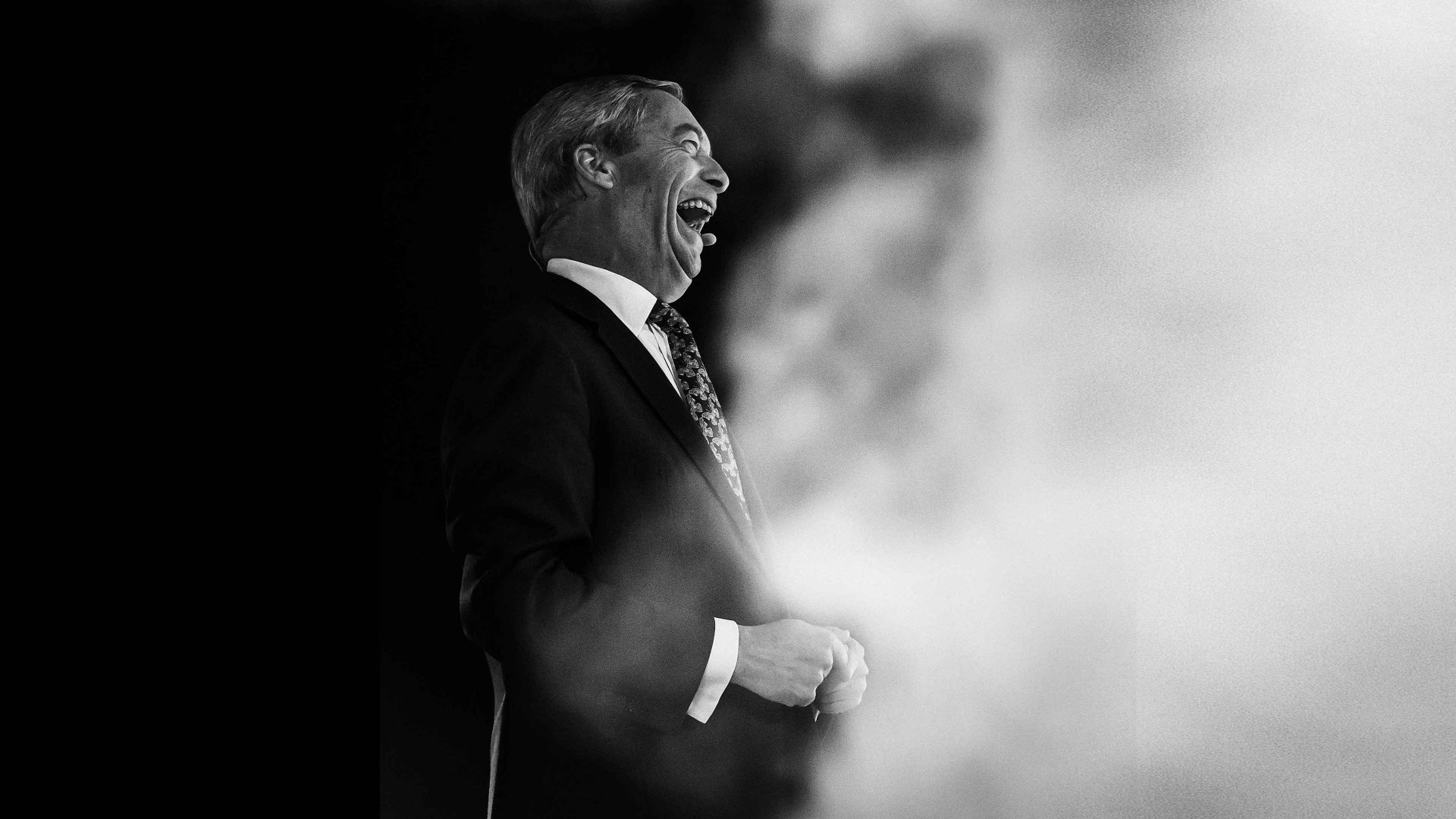
Perhaps they are right, but there is a warning to be found on the other side of politics. Nigel Farage is shallow and glib, has changed political parties, been plagued with honesty scandals, and flits from one policy to another. He is also arguably the most successful politician of the last decade, having won the Brexit referendum and gone on to lead the polls with Reform.
Farage is arguably not successful in spite of his loose relationship with the truth, but because of it. In Polanski, the British left has a leader who is happy to openly embrace the label of populist, happy to shift parties, play fast and loose on policy, and apparently willing to shrug off credible accusations of racism within his ranks.
That combination has helped Farage take the Conservative Party to the brink of extinction. Might it, in time, help Zack Polanski do the same to Labour?