PICK OF THE WEEK
Furious (Disney+)
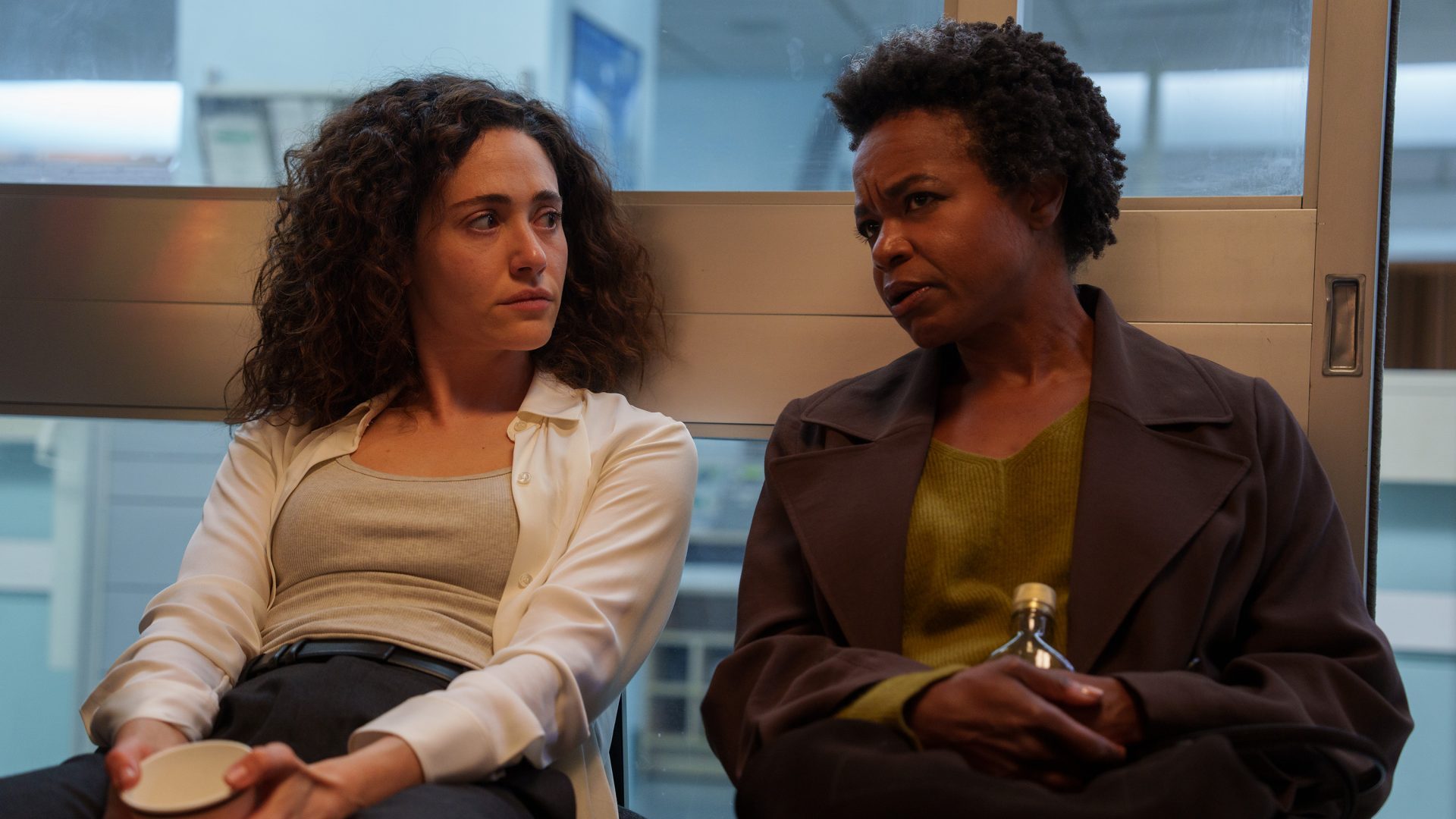
Loosely inspired by Bob Rafaelson’s psychological thriller Black Widow (1987), Elizabeth Meriwether’s eight-part series is vastly superior to its notional source material. Alice Black (Emmy Rossum) is a former NYPD homicide detective who – escaping an abusive relationship with fellow cop Marshall Connelly (Jake Lacy) – has transferred to the FBI, where, as a junior agent, she is assigned to the call centre.
Much to the irritation of her boss, ASAC Ed George (Danny McCarthy), she is called back by her friend and former colleague Danny Kelly (Scoot McNairy) to assist with a homicide case: the murder by fentanyl overdose of Caleb Easton (Clark Moore), an ex-judge whose father Jay (Peter McRobbie) is a hedge fund tycoon with powerful friends.
As we already know from the opening scenes of the first episode, the killer is a petite woman in a Hallowe’en costume, who later calls herself Catherine (Lola Petticrew, as good as they were in Say Nothing), and taunted Caleb in his final moments: “I don’t like the sounds you’re making. But I love your smile.”
Seeking out special agent Nora Washington (Quincy Tyler Bernstine), whose sex crimes squad in the FBI basement she hopes to join, Alice is increasingly confident that a female serial killer is at large. Nora is an irritable sage who quotes Balzac, Waiting for Godot and Greek myth, and pours neat booze into the coffee maker.
She also warns Alice that she is up against a rigged system that grants impunity to brutal men: “Anything you do, the ones who are really to blame don’t get caught. Never. Never. You think you’re ever going to catch anyone who matters?”
Though framed as a cat-and-mouse cop show, Furious is something much deeper and more unsettling. On opposite sides of the law, FBI agent and killer are nonetheless connected by their respective experience of male violence: Catherine is, as Nora puts it, an “avenging angel”, a survivor of child trafficking patiently tracking down the members of an elite rape gang.
Alice, on the other hand, suffers from PTSD, unable to shower because the drunken Connelly used to beat her in the bathroom. She seeks masochistic one-night stands on dating apps. And, as Catherine intuits, she has older, terrible secrets.
Yet, to Meriwether’s credit, these symmetries are not pat or clichéd. Yes, Alice and Catherine are both victims of a violent patriarchy in which bad men issue terrible threats (“You have no idea who you’re dealing with. And you are going to end up dead”). But their experiences are not identical, and their unspoken bond is nuanced.
Furious is both disturbingly topical – the echoes of the Epstein conspiracy and the horrors experienced by Gisèle Pelicot are unmistakable – and timeless in its themes. Aesthetically, its dark interiors, scenes of pelting rain and portrayal of the city as a Hadean labyrinth recall David Fincher’s Seven (1995). But its moral scheme reminded me powerfully of Andrea Dworkin’s great novel Mercy (1990).
Though its narrative arc is compelling, the series has the integrity to forgo easy consolation. As Alice tells Danny: “I don’t need you to keep telling me I’m amazing… I don’t want you to fucking save me.” Prestige television of the highest quality.
Suggested Reading

Apocalyptic heatwave thriller The Rapture will sweep you away
FILM
Wham! 10 Days in China (selected cinemas; then BBC Two and iPlayer)
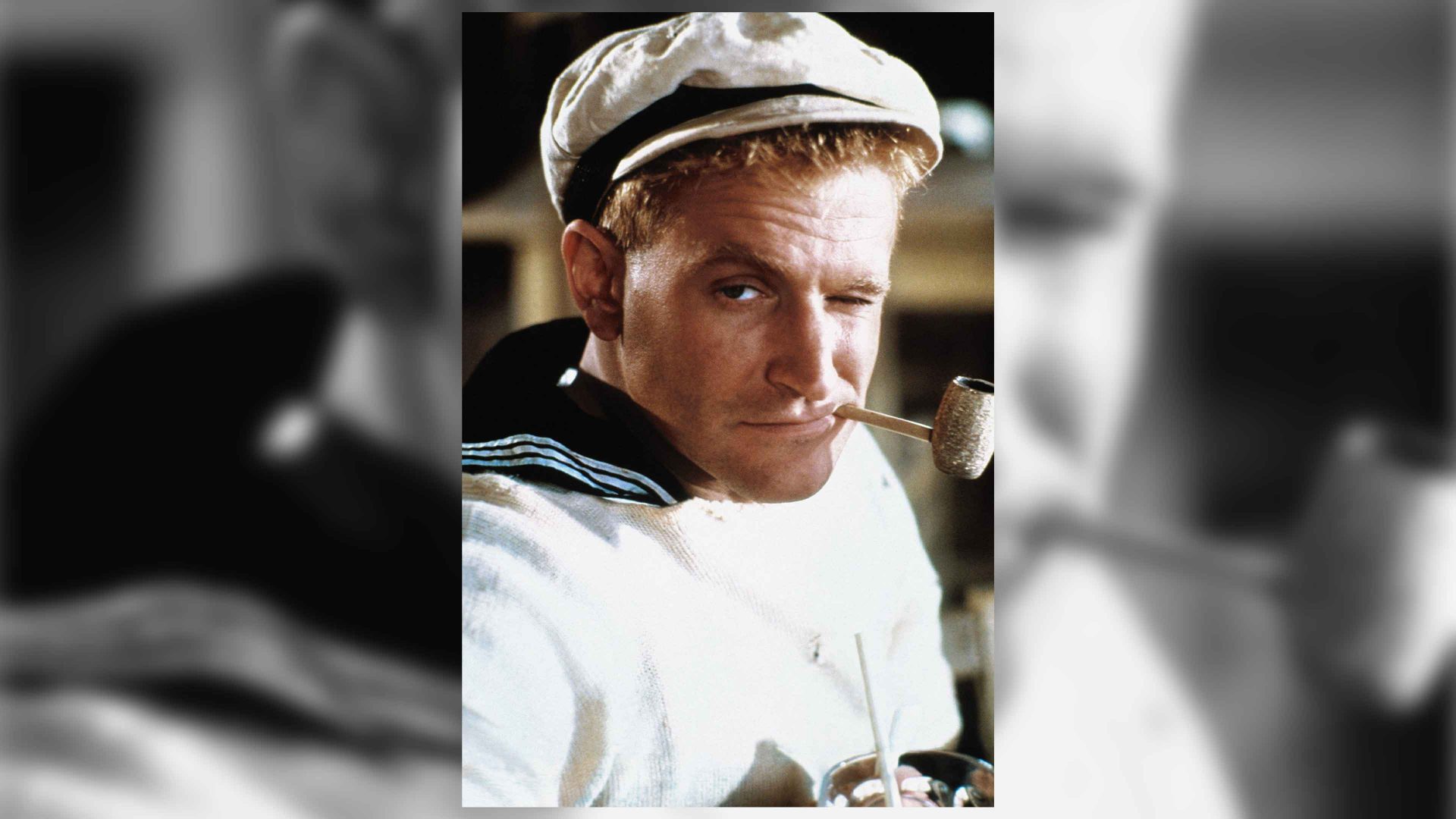
Of all the strange moments of convergence in pop music legend, few can match the recruitment of Lindsay Anderson, Free Cinema auteur and director of This Sporting Life (1963), If…. (1968) and O Lucky Man! (1973), to make a film about Wham!’s whistle-stop tour of China in April 1985.
After the release of their second album Make It Big the previous October, the duo were at the peak of their chart-topping fame but had yet to break America. The catch: George Michael was suffering from undiagnosed polyps on his vocal cords so the singer-songwriter, already planning his solo career, was reluctant to risk disaster with a gruelling run of shows at medium-sized US venues.
To bypass all this, manager Simon Napier-Bell came up with an idea of madcap genius: if Wham! could become the first major western act to tour China, the trip would be rewarded with wall-to-wall coverage in America. To which end, he made 13 visits to the far East to seal the deal – which led, in due course, to a smash-hit stadium tour of the US.
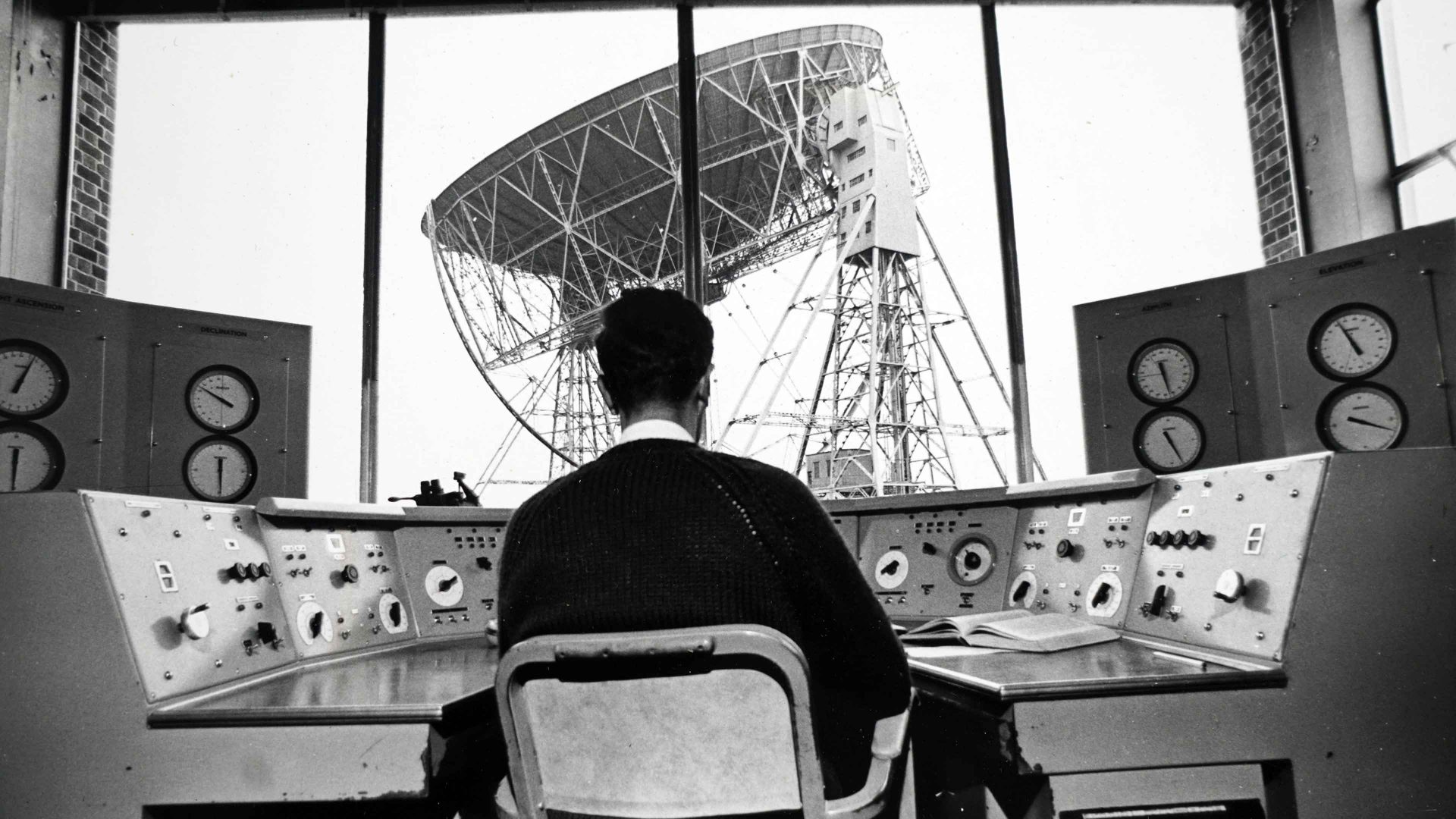
Anderson’s film, on the other hand, was a disaster. After tearing a ligament at the Great Wall, the 61-year-old director – who had taken the job only because he needed the money – barely bothered, from his wheelchair, to conceal his lack of interest in Michael, Andrew Ridgeley and their concerts in Beijing and Guangzhou.
No surprise, then, that they loathed his cut, entitled If You Were There, which is now in the archive of Stirling University and has only twice been publicly screened (at the British Film Institute in 2024). A new version – Wham! In China: Foreign Skies was shown to more than 70,000 fans at the group’s farewell concert at Wembley Stadium in June 1986 and is now a DVD rarity (yes, I have a copy).
So three cheers for director Mike Christie who, with the cooperation of Ridgeley and Michael’s estate, has taken the original footage, added in a host of new interviews, and delivered a first-class pop documentary.
How long ago it all was. Aged only 21 and 22 respectively, Michael and Ridgeley found themselves elevated to cultural ambassadors, at a point in Deng Xiaoping’s leadership when it seemed at least conceivable that China might start to liberalise (a dream that was crushed four years later in the carnage of Tiananmen Square).
Their packed schedule included press conferences, contrived scenes to be filmed, and surreal engagements such as a reception at the British Ambassador’s residence. “A bit of 1930s Blighty,” as Ridgeley, now 63, recalls.
You can see, though, that it is Michael who is taking everything to heart. After the audience at the first concert reacts uncertainly – they “didn’t know how to move,” recalls Chinese singing star Cheng Fangyuan – the frontman turns to the band and declares it “fucking horrible”.
Especially with the benefit of hindsight, we detect the pressure, strain and doubt already building behind the gleaming perma-grin. “He constructed ‘George Michael’, and George Michael concealed Yog [as he was known to friends and family] to a degree,” says Ridgeley, “but it also caused a lot of trial and tribulation.”
The second concert was more successful, and Michael was able to relax (a bit). Anderson, reluctantly on camera, says that the whole experience had shown “how China has been seduced from the path of progress by people like ourselves” – a ridiculous and self-indulgent remark, especially in light of the terrible repression to come.
Four decades later but all the more welcome for that, Christie’s movie shows, to poignant effect, what a fantastic group Wham! truly were, contributing, in less than five years, a series of all-time classics to the eternal jukebox of perfect pop.
On Christmas Day, it will have been ten years since Michael died. How awful a year was 2016? But the music has the last word. If you were there, you’d know.
Suggested Reading
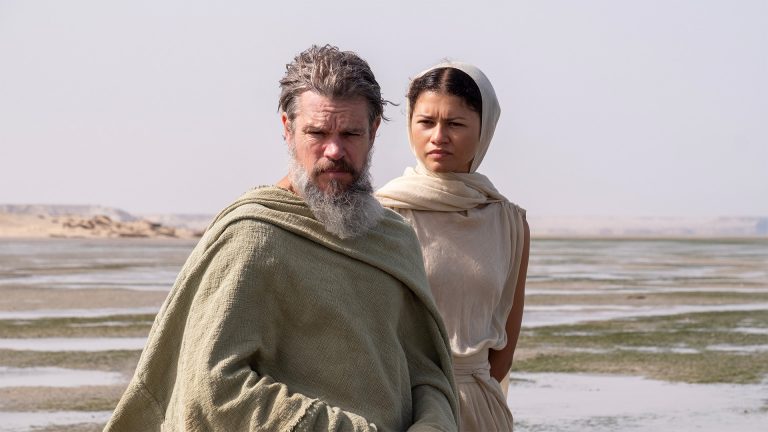
The Odyssey is a masterwork that reinvents the epic
BOOK
The Small Stuff: The Sensory Enchantment of Everyday Life by Ian Bogost (Allen Lane)
In this audaciously counter-intuitive gem of practical philosophy, the scholar, games designer and Atlantic writer Ian Bogost argues that we are denying ourselves a host of simple pleasures – a “payload of gratification” – precisely when we need them most.
Technological change, the “increased emphasis on automation and efficiency” and the revolution in working practices have conspired in a process of “involuntary dematerialization”, ensuring that our “sense of control and mastery over the world” is radically diminished; “[a]nywhere has become as good as anywhere else”; and “[a] place is less often a site you occupy, and more frequently one you consume on a screen.”
Not surprisingly, this has encouraged an often-panicked quest for the ballast of deeper meaning, as we go “in search of bigger and supposedly more important things.” Though a thinker of deep sophistication and erudition himself, Bogost urges us to pause and relish what is already available to us: the “weird, wonderful gifts that ordinary life constantly offers.”
This might be the satisfying “shwak-chlupf, shwak-chlupf” sound that the right kind of masonry paint makes when applied to a basement wall; or talking with a friend about the perfect way to enjoy a Diet Coke; or (in the author’s case) his love of making ice cream and dreams of becoming “an artisanal gelatier”; or knitting a sweater; or keeping ticket stubs.
It is, he writes, an error to dismiss such experiences as trivial, or a waste of time: “ordinary life is a carnival” and we impoverish our time on earth if we value everything only by its nominal rate of future return – what Bogost calls “big-stuff incrementalism”.
I loved his insistence that we need to “set aside the embarrassment of wonder” and reclaim it from the material world with which we have lost touch: “Anything can become the hero of the stories you tell about sensory enchantment – feel free to herald them.”
EXHIBITION
Portrait of a City – A Century of American Photography (Dulwich Picture Gallery, until October 4)
One of the many captivating features of this exhibition is its juxtaposition of awe-inspiring magnificence – Edward Steichen’s 1932 double-exposure photograph taken from the ground, The Maypole (The Empire State Building) New York, of what was then the world’s tallest structure – with the absolute specificity of human moments captured in a single frame.
In the latter category, there is Lewis Hine’s Riding the Ball High up on Empire State (1930) which documents the sheer risks taken by the individuals who constructed the same building in its image of Victor “Frenchy” Gosselin, a French-Canadian high-steel iron worker, without a harness, 800 feet above the ground; or 42nd Street and Sixth Avenue, New York (1929), by Walker Evans, a picture of a Black woman, regal in her cloche and grand fur stole, looking directly into the lens; or Dorothea Lange’s extraordinary White Angel Breadline, San Francisco (1933), which shows a lone figure waiting for food, solitary and turned away from the other men in the line.
Curated by Alexander Moore, Portrait of a City plots the prodigious urbanisation of America during the 20th century in parallel with the rise of photography as a distinctive discipline: from the “Pictorialism” of Alfred Stieglitz’s early work, which set the fledgling form firmly within the tradition of figurative fine art; via the unflinching photojournalism of Weegee and the innovative street photography of Garry Winogrand; to Bruce Davidson’s remarkable Leica shots of the New York subway in the 1980s and Ed Ruscha’s Los Angeles roof top views in 2012.
To its benefit, the exhibition sometimes strays outside the big cities: Lange’s Migrant Mother, Niporno, California (1936) is one of the most iconic images of the Great Depression, while John Gutmann’s Okies on Their Way West, Laramie, Wyoming (1936) immediately evokes the journey of the Joads in Steinbeck’s The Grapes of Wrath, published three years later. Not to be missed.