Truly, we have reached the peak of victimhood culture: as Keir Starmer edges ever closer to the farewell lectern in Downing Street, we are suddenly invited to feel sorry for prime ministers, on the basis that Britain has already had six in the past 10 years, and that the task of running the country is now impossible.
This ridiculous claim – a non sequitur, for starters – has been gaining traction since the local, Scottish and Welsh elections delivered their hammer blow to the PM. On polling day itself, The i Paper declared: “Britain is ungovernable – these numbers prove it.”
Last Friday, a Bloomberg newsletter led with the headline: “UK Shows Few Leaders Last in Ungovernable Era”. The following day, CNN asked on its website: “Is Britain ungovernable?” Also on Saturday, the Financial Times ran an essay by the distinguished political historian Sir Anthony Seldon headed: “Is being prime minister now an impossible job?” On Sunday, it was the turn of the Guardian to pose the question: “The ungovernable country? Why Britain keeps losing prime ministers.”
All of which begs the question: who is to blame for this alleged structural oppression of well-meaning, horribly persecuted heads of government?
In a Times column last week, the normally excellent Emma Duncan identified the alleged culprit, or, more precisely, 48 million culprits (those registered to cast a ballot in parliamentary elections).
“The problem is us,” Duncan wrote. “We, the voters, are deluding ourselves. We are living beyond our means and don’t want to stop, so we keep electing politicians who make unrealistic promises and getting rid of them when they fail to deliver.”
Let’s say, for the sake of argument, that this assessment of the nation’s collective psychology is correct, and that we are living in an era of Deliveroo democracy in which the electorate expects government to perform with the speed and cost-effectiveness of a retail app on a smartphone. Let’s grant that this is an age of instant gratification, in which civic responsibility has been eclipsed by algorithmic insanity and dopamine addiction.
To which my response is: so what? As John F Kennedy said in his great commencement address at the American University in June 1963: “We must deal with the world as it is, and not as it might have been.” There is no point in aspiring to lead the country, if the country you want to lead no longer exists. This, in essence, has been Starmer’s problem all along.
In any case, the whole idea that Britain is “ungovernable” is not only morally pusillanimous but also historically illiterate. Yes, the churn in occupants of No 10 has been high. But it is less aberrant than all the media jeremiads might lead you to imagine.
Recency bias undoubtedly plays a part in the present panic about “ungovernability”. Very unusually, two prime ministers in the past 47 years have lasted for more than 10 years: Margaret Thatcher (11 years, 208 days) and Tony Blair (10 years, 56 days). If we narrow the frame to continuous terms in office, to find a comparable tenure you have to go all the way back to HH Asquith, who served eight years and 244 days between 1908 and 1916.
Across three centuries and 58 premierships, only five others have, like Thatcher and Blair, passed the milestone of an uninterrupted decade in office: Sir Robert Walpole (1721-42); Henry Pelham (1743-54); William Pitt the Younger (1783-1801); Lord North (1770-1782); and Lord Liverpool (1812-27).
To which it might be objected that Walpole and Pitt didn’t have to deal with the brutalities of the modern party system, the growth of public services and welfare or the merciless scrutiny of the postwar media. So, in deference to that point, let’s limit ourselves to precedents since 1945.
In the supposedly staid and conventional 1950s, there were four prime ministers: Clement Attlee, Winston Churchill, Anthony Eden and Harold Macmillan.
As for 1970 to 1980: first, Harold Wilson lost power unexpectedly to Edward Heath; there were then two elections in 1974, in the second of which Wilson squeaked home with a majority of three. In 1976, he was replaced by Jim Callaghan, who was defeated three years later by Thatcher. Hardly a decade of stability.
More to the point: when we speak of the nation in 2026 being “ungovernable” we betray a lazy collective amnesia about the true meaning of that word. We confuse hypermodern pathologies with genuine instability.
In his definitive Seasons in the Sun: The Battle for Britain, 1974-79 (2012), Dominic Sandbrook provides a much-needed corrective. In August 1974, 220 arrests were made and 116 injured in clashes with the police at an illegal free festival at Windsor Great Park – a symbolic moment of national turbulence.
“[S]ince the election of Edward Heath in 1970,” Sandbrook writes, “the United Kingdom had suffered the most traumatic period in its modern political history, with five states of emergency, two successful miners’ strikes, countless industrial stoppages, the collapse of the government’s authority and the eruption of brutal sectarian anarchy in Northern Ireland.”
Suggested Reading

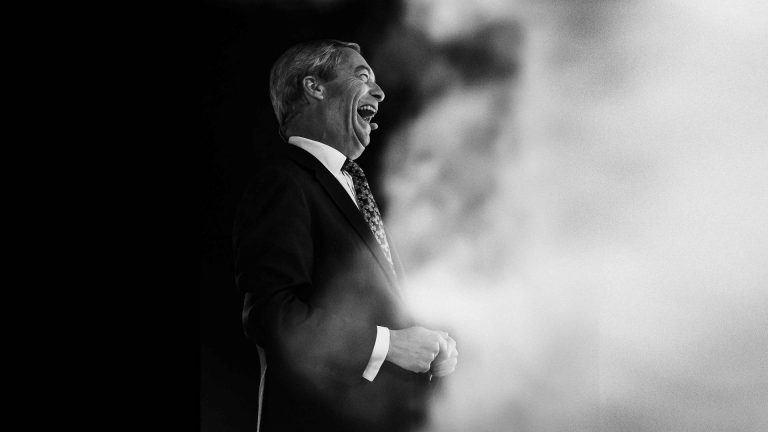
How to beat Farage
He adds: “To many observers, what was distinctive about Britain was the fact that the state had manifestly lost its authority. For a decade, politicians of both parties had been victims of events, buffeted to and fro by the winds of economic change and national decline, powerless to implement their manifesto promises, powerless to steer the ship towards calmer waters.”
In February 1974, battered by union power, Heath had sought a fresh mandate with the slogan “Who governs Britain?” To which the voters replied: “Not you, matey.”
In August of that year, the former lord chancellor Lord Hailsham warned that “at this rate of inflation, democracy cannot survive”. There was lurid talk of military juntas, possibly headed by Prince Philip. In February 1976, the political scientist Anthony King hosted a three-part BBC series entitled: “Why is Britain becoming harder to govern?” Between November 1978 and March 1979, the “Winter of Discontent” unleashed the largest wave of industrial stoppages since the General Strike of 1926.
And that was arguably only a warm-up for the Miners’ Strike of 1984-85. Cabinet papers released in 2014 revealed that Thatcher had actively explored the possibility of deploying troops and declaring a state of emergency. In her memoirs, she was explicit about what she considered to be at stake in the year-long confrontation with the National Union of Mineworkers: “What the strike’s defeat established was that Britain could not be made ungovernable by the Fascist Left.”
Do not forget, either, that the poll-tax riots of March 1990 were a determining factor in her fall eight months later. In his diary, Alan Clark wrote: “Civil Disorder. Could cut either way, but I fear will scare people into wanting a compromise… In the corridors and the tea room people are now talking openly of ditching the Lady to save their skins.” John Major later described the disorder as “the turning point” for his predecessor.
Indeed, as recently as 2011, David Cameron’s coalition government faced a wave of riots, mobilised by the BlackBerry Messenger platform, that spread rapidly from London to Birmingham, Nottingham, Salford and Gloucester and imperilled the UK’s global image as a fit host for the Olympics the following year.
At the time, it was impossible to know how far the viral anarchy might spread. When it subsided, five people were dead, 299 police officers injured, 2,500 businesses looted and £300m racked up in insurance costs. Though the disorder is largely forgotten now, Cameron described it, without exaggeration, as “a huge event in the life of the nation.”
‘The idea that Britain is “ungovernable” is not only morally pusillanimous but historically illiterate. Yes, the churn in occupants of No 10 has been high. But it is less aberrant than all the media jeremiads might lead you to imagine’
It is important to remember all this, if only to lend perspective to all the hyperbole about Britain in 2026 being “ungovernable”. There is a cultural inclination today to treat history as no more than a piñata to be beaten, an inventory of crimes to be deplored, and a big fat reason for everyone to feel smug about how enlightened and progressive we all are today. Sorry to be so blunt, but someone who doesn’t know about the past of their own country is not a groovy futurist. They’re an ignoramus. In a book published in 2021, I described the growing demographic of the proudly ignorant as “not Flat Earthers but Thin Earthers; they have very limited awareness of the true nature of the ground beneath their feet, or the multiple, roiling, groaning layers of historic magma that lie below, and the tectonic, centuries-old forces that… have shaped everything around them.” You can imagine how that went down.
Another reason we are constantly invited to feel sorry for prime ministers concerns the alleged intractability and inertia of the civil service: what Dominic Cummings called “the Blob”. Having written about Whitehall for a few years, I am the first to acknowledge that it needs reform: but then again, which institution doesn’t?
Suggested Reading
The case for a British post-populist right
The notion that a series of buccaneering premiers have been systematically thwarted by wicked mandarins is a caricature born of Yes, Minister rather than the reality of day-to-day government. Put it this way: in the years when the political class was having a collective nervous breakdown over Brexit, who do you think was keeping the machinery of state going? When you recall the ocean-going fiasco of Boris Johnson’s premiership, do you ever pause to wonder how any elements of the government’s Covid strategy worked?
It is now routinely reported that, behind the scenes, Ed Miliband is the most powerful figure in this moribund government. That may be true politically speaking. But the person who is keeping the show on the road, as best she can, is Dame Antonia Romeo, one of the most talented cabinet secretaries in living memory.
When Starmer summarily sacked Olly Robbins as Foreign Office permanent secretary on April 16 over the Peter Mandelson scandal, he revealed, once and for all, his true character. Here was a politician who was more than willing to throw an official under a bus to save his own skin (for a while, anyway).
Which, in this surge of perplexing sympathy for the PM and his predecessors, leaves only the evil electorate to blame. In the past few weeks of rampant self-pity in Westminster, I have been reminded of Bertolt Brecht’s much quoted lines from the poem Die Lösung (The Solution, 1953): “Would it not be easier/ In that case for the government/ To dissolve the people/ And elect another?”
Ironically, given Starmer’s purging of the Labour Left, there is also an echo of the statement attributed to “Red” Ted Knight, leader of Lambeth Council, after the party’s destruction at the polls in 1983: “There can be no compromise with the electorate.” And on the other side of the ideological fence, we have senior Tory Peter Mannion (Roger Allam) in The Thick of It: “This is the trouble with the public – they’re fucking horrible.”
Look, politicians are human beings. I am sure such thoughts cross their minds often enough. It would be odd if it were otherwise. But nobody is forced to seek power as a lawmaker or a minister. I quite understand those who find the prospect unappetising and decide against hurling themselves into the bearpit.
But to those who do make the leap: what did you expect? That your chosen line of work would be the only one to escape the pulverising disruptions and upheavals of our times? That it was a job like any other?
Fatalism and complacency are two sides of the same coin. It is as feeble to pretend that the role of PM is now beyond human capacity as it is to suggest that it is all going swimmingly, in spite of every appearance to the contrary.
Suggested Reading
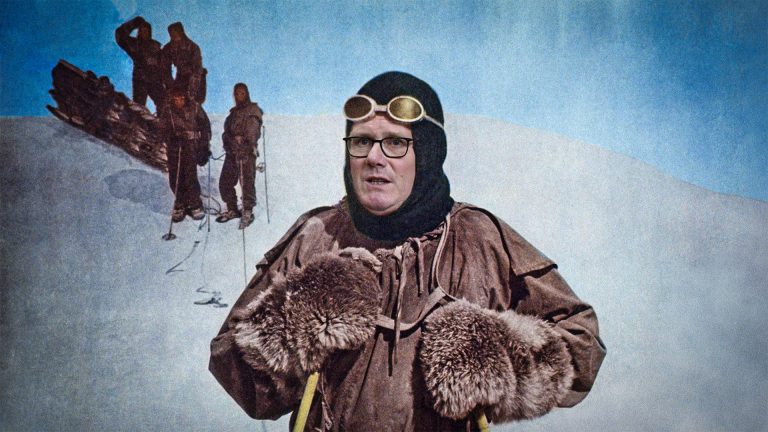

Keir Starmer’s diary: his final, doomed expedition
The structural problem that afflicts our political class is of its own making and has at its heart a collective disinclination to confront, without fear or favour, the profound implications of the 2008 financial crash; the clear and present crisis of intergenerational injustice; the deepest consequences of the technological revolution; and, of course, the disaster of Brexit.
On the final question, there were tentative signs over the weekend that the prospective contenders in the prospective Labour leadership race are, at last, willing to speak more candidly. On everything else: we await clarity with bated breath.
In the meantime, let’s draw a line under this nonsense about the job of the prime minister being impossible and the country being a dystopian wasteland beyond the powers of reasonable statecraft. Indeed, this would be the perfect moment for our politicians to heed Nassim Nicholas Taleb and learn afresh (or for the first time) the skill of being “anti-fragile”.
In fact, this feels like a good time for all those who seek to lead us, to take Britain into the 2030s, to get this country back on track, to remember what they signed up for, what a privilege it is, what an opportunity.
Remember David Steel’s instructions to the Liberals in 1981: “Go back to your constituencies and prepare for government”? That, except for real – and addressed to the lot of them. Time to get busy.