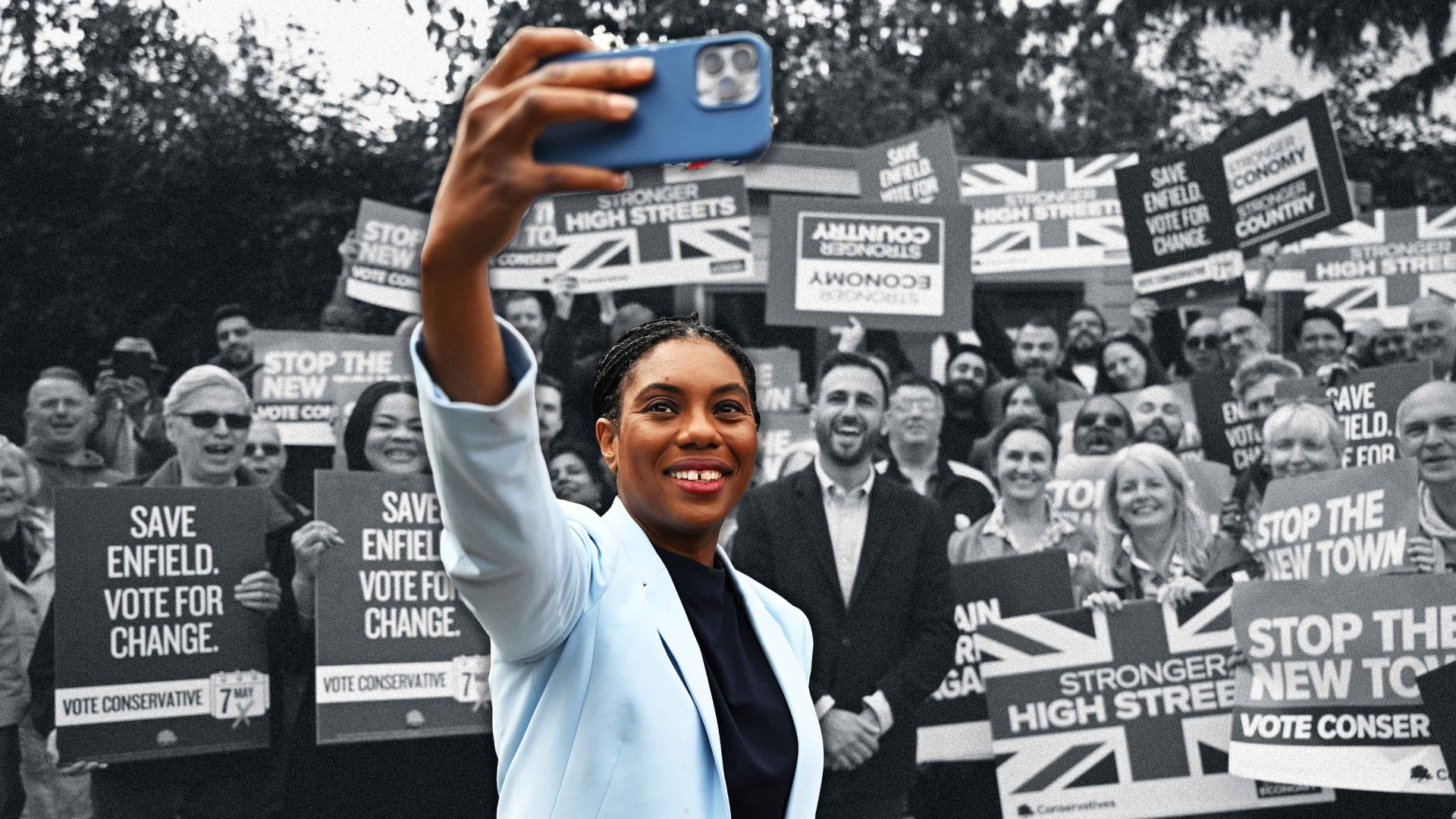
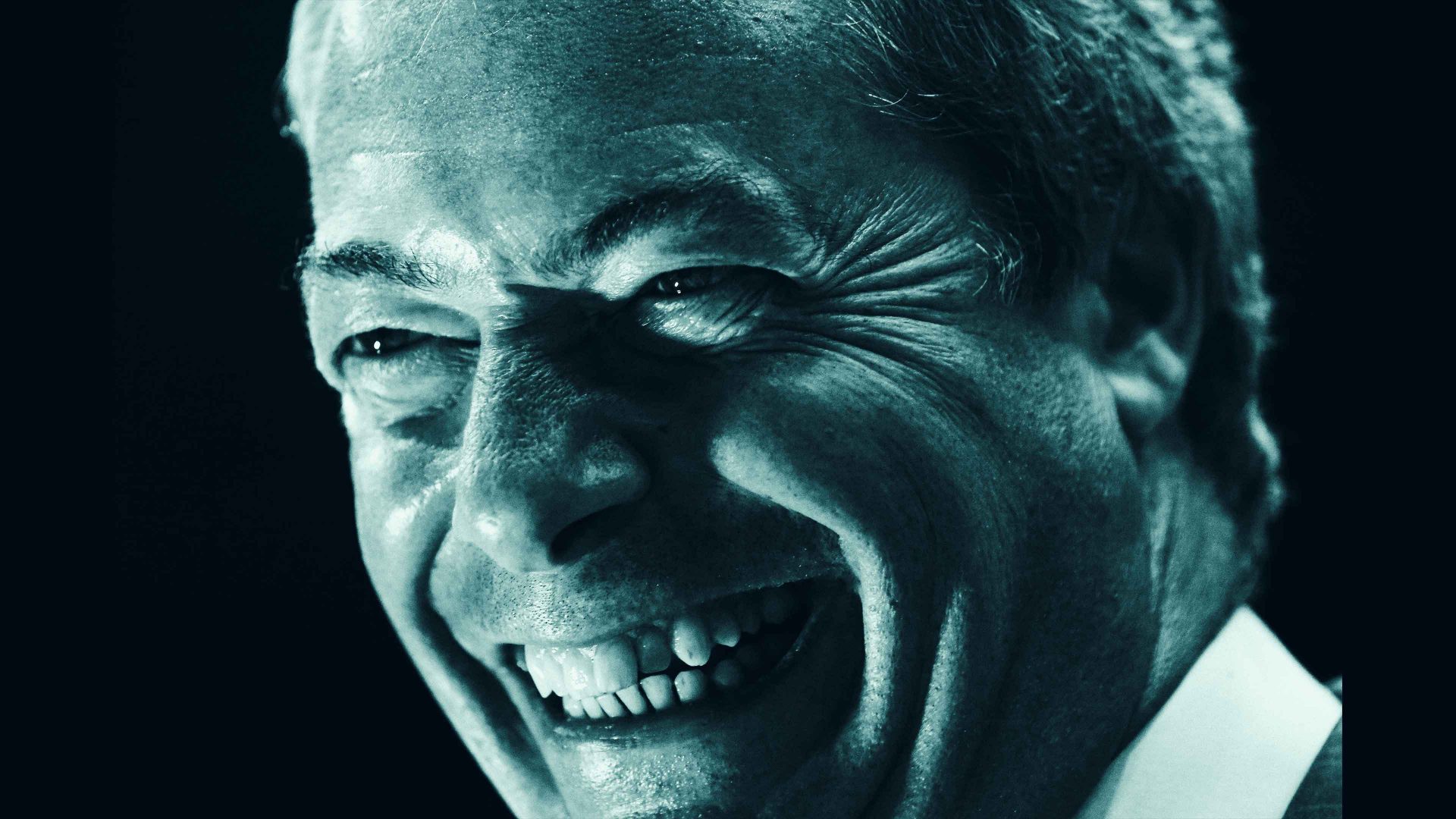
In March 2014, the New York Times ran a column that concluded: “This is Mr Farage’s moment, but it will pass.” What idiot wrote that? Yes, afraid so: guilty as charged.
True, in the general election of 2015, the UK Independence Party managed only to hold on to its single seat in the Commons (Clacton, by coincidence, then represented by Douglas Carswell). But a little over a year later Nigel Farage’s Leave.EU was a decisive factor in the outcome of the Brexit referendum; which, among much else, did for David Cameron.
In 2019, the Brexit Party’s victory in the European elections handed its leader yet another prime ministerial scalp, as Theresa May was driven from office. In December of that year, Farage’s electoral pact with Boris Johnson delivered the Tories the hefty majority they needed to legislate for the UK’s withdrawal from the European Union. And that, as it turned out, was before he really got started.
So, having myself badly underestimated Farage 12 years ago, I have been dismayed by the festival of copium among many progressives since Thursday’s milestone elections in England, Scotland and Wales – not least on social media and in “Podnewington”, the UK liberal equivalent of the US MAGA-adjacent “Podcastistan”.
I keep reading or hearing that Reform UK has peaked, that it has hit its electoral ceiling, that, in effect, it’s all downhill for Nigel from here. Well, it might be, I suppose. The one upside of the pulverising volatility of hypermodern politics is that, with three years to go until the likely date of the next general election, anything is conceivable.
But it’s a big mistake to confuse therapeutic assertion with psephological probability. As Mark Carney, former Bank of England governor and now prime minister of Canada, said in an online address to his country last month: “Hope isn’t a plan and nostalgia is not a strategy.”
If you really think these elections somehow marked the beginning of the end for Farage, consider the following. When he resumed leadership of Reform in June 2024, the party only had one MP (Lee Anderson, a Tory defector). It now has eight. In the 2021 elections to the Welsh Senedd and the Scottish parliament, it failed to secure a single seat. On Thursday, it finished second in both devolved elections (tying with Labour in Holyrood).
Much has been made of the fact that the party’s projected national share of the vote, on the basis of its performance in English council elections, was down from 30% last year to 26%. But this is counterfeit confidence. Broadly speaking, the seats contested in 2025 were in Tory-inclined rural terrain: the heartlands of the right that Reform has to win. This year, Labour’s “red wall” was the principal target – and Farage scored bullseye after bullseye.
It is certainly true that these elections marked unequivocally the end of the old Conservative-Labour duopoly: we now live in a multiparty democracy, which has, quite legitimately, revived the campaign for electoral reform. But, no less certainly, the principal lesson is that Reform still has strong momentum, kinetic energy and a trajectory as clear as it is poisonous. It has led the opinion polls since May 2025. Be in no doubt: from a standing start two years ago, it is now the only truly national party. That alone is a prodigious achievement.
If you want to thwart the Farage phenomenon, you have to first confront it – dispassionately. Of course it is absolutely essential that fierce scrutiny is applied to the 24 English local authorities Reform now controls; that Ofcom investigates the partisanship of GB News; that the Electoral Commission and Daniel Greenberg, the parliamentary commissioner for standards, pursue full inquiries into the undisclosed gift of £5m to Farage by crypto billionaire Christopher Harborne.
All this is necessary, but far from sufficient. The forces which Reform is turning to its conspicuous advantage are deep, magmatic and still poorly understood. And it’s later than you think. Three years is the blink of an eye when you have to unlearn much of what you were brought up to believe about politics.
Suggested Reading
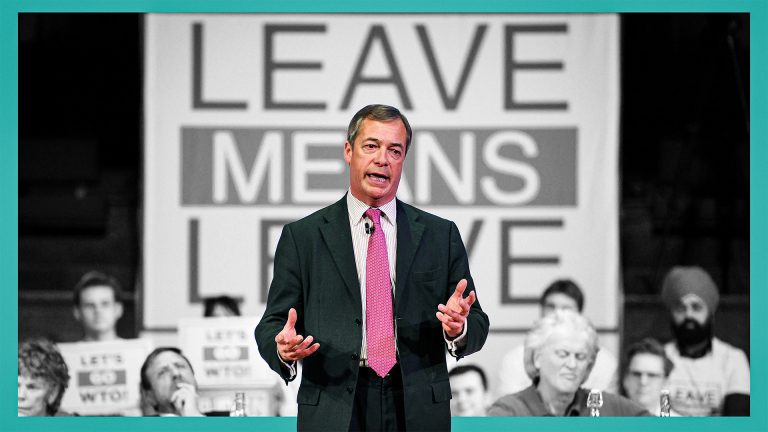
Farage wants to dodge the blame for Brexit. We can’t let him
The first and bitterest pill to swallow is what I have called “asymmetry of criteria”. The populist era has shown beyond doubt that not all parties or politicians are judged in the same way. Exhibit A: in November 2024, Donald Trump – twice-impeached, convicted on 34 felony counts, responsible for inciting an insurrection, found liable by jury for sexual assault – was plainly measured against very different standards to Kamala Harris.
No less clearly, Farage is judged by a wholly distinct set of expectations than Keir Starmer. In part, this is because insurgents are granted a latitude denied to incumbents. But it is also, I think, because Farage fits the description that Dave Chappelle has applied to Trump: “an honest liar”.
His dodginess, his nicotine-stained cheek, his gleeful playing of a system that the public already believes to be rigged: what, in another context, might be outright disqualifications are turned, by a dark political alchemy, into electoral strengths. While his opponents offer bromides and boilerplate language about policy resets, “the pace of change”, and “calm reflection”, Farage winks at the electorate as if to say: I see you, I’m on your side, I hate them all as much as you do.
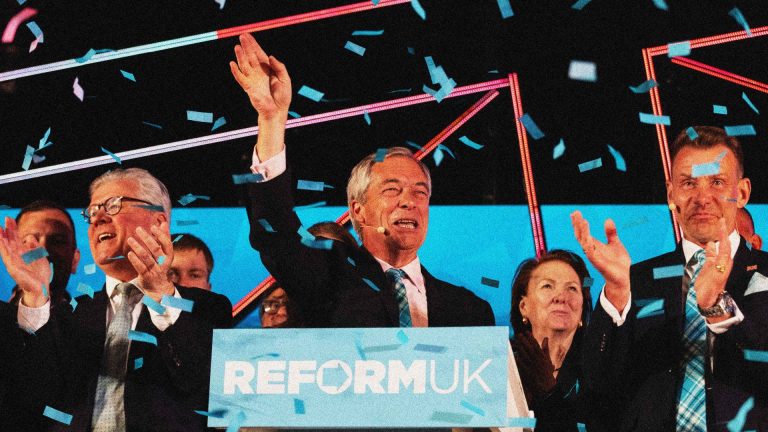
On Friday morning, the prime minister was promising not to “walk away” with all the flair of a soon-to-be-decommissioned dishwasher. Contrast Farage’s speech just before 9pm at Chelmsford City Racecourse: more shtick than conventional rhetoric, delivered with a glass of champagne in his hand.
He leant into the line “that I haven’t visited Clacton once since I was elected”. He made fun of the accents he had heard in Barnsley, where his party had just won. He doubted that a night on the tiles with Zack Polanski would provide much entertainment: “I mean, heroin’s just not my thing.”
But he insisted – and which other leader would say this? – that “we are the fun party”. He was completely at ease, chronically sleep-deprived but still going. Dislike him all you want (and there’s plenty to dislike), he is formidable.
He also said: “London has become a bit of a foreign country in many, many ways.” Well, he would, I suppose, given that Reform did badly in the capital, aside from its victory in Havering. But this was more than a scornful aside. In fact, it symbolises the very core of what makes Farage so dangerous.
Naturally, he was blowing a familiar dog whistle about the multiracial character of London. But he was also presenting the city not only as a place but as an idea: the metropolitan symbol of all that is wrong with Britain and that, in his venomous framing, threatens every other part of the country.
When he says “London”, he means the following: liberal elitism, luxury beliefs, privilege-hoarding, indifference to those outside the M25. He means that the centre of government, of financial services, of cultural institutions, of unaffordable property, and of quiet but deep nepotism, has become fatally detached from the nation it is meant to serve.

Through Reform’s lens, London is the place where rape-gang inquiries are blocked and then stalled; where housebuilding is prevented because it might wreck the idyllic view from the second homes of the rich; where a friend of Jeffrey Epstein is appointed ambassador to Washington.
This, like his contempt for migrants and asylum seekers, his hostility to Islam, his claim that the biggest social divide is between “those that work and those that don’t”, is the absolute essence of Farage’s politics. It is not about national renewal, or real patriotism, or even sovereignty. It is about division.
In this respect, he is (though I doubt he knows it) an authentic inheritor of the ideas of Carl Schmitt (1888-1985), the German jurist and political theorist, whose reputation is justly and indelibly stained by his collaboration with the Nazis in the 1930s.
Because of this association, Schmitt is rarely cited as an explicit authority today, except on the fringes of the MAGA right. But, even without attribution, his ideas have proved extraordinarily influential in the populist age.
In The Concept of the Political (1932), Schmitt coined what might be considered the defining axiom of politics in the early 21st century: “The specific political distinction to which political actions and motives can be reduced is that between friend and enemy.”
‘This is the absolute essence of his politics. It is not about national renewal, or real patriotism, or even sovereignty. It is about division.’
If the postwar project was shaped by the desire to find common ground, to cultivate pluralism, to construct a rules-based order, the ambition of today’s nationalist right is to locate, exacerbate and exploit the “friend-enemy” division in all its forms. This is the Schmittian way: the enemy is “the other, the stranger; and it is sufficient for his nature that he is, in a specially intense way, existentially something different and alien.”
This antagonistic binary leads us to the third key element of Farage’s political style. The attacks on his integrity, his character, his bigotry do not bother him; he welcomes them. Because the art of being Farage is to feed on condemnation; to reframe hostility as evidence of authenticity; to recode opposition, not as a threat to his narrative, but as its completion.
This use of so-called “persecution capital” is precisely how Trump won in 2024: turning the 91 indictments against him from a crippling liability into the very basis of his campaign. It is a method that prioritises identity over evidence. His core message to the public is not “I’m innocent” but “I’m on your side”.

Why is this working? Again, we have to dig deep. A key text is William Davies’s masterly account of the transformed role of emotion in the digital era, Nervous States: How Feeling Took Over the World (2018). At the heart of this reconfigured political landscape, Davies argues, is a sensitivity to the perceived distribution of suffering: a sensitivity that cannot be soothed with a torrent of facts and statistics (has there ever been a more tin-eared slogan than this government’s repeated declaration that the UK has “the fastest growing economy in the G7”?)
“A crucial ingredient in the allure of authoritarian leaders,” he writes, “is their promise to reinstate shared rules and meaning for how suffering gets allocated in society, based around tradition and premodern principles of punishment.”
No less pertinently to the case of Farage, Davies adds: “When an entire political and economic system appears rotten, a flagrant liar can give voice to an underlying truth. If there is one thing more important than prosperity to people’s wellbeing, then it is self-esteem.”
In this context, it is striking that a new survey by the UCL Policy Lab and More in Common entitled Respect Crisis has found that 75% of the public thinks the government has little or no respect for them – and that, at present, Reform is winning this “respect battle”.
On the face of it, it is inexplicable that so beige and straightforward a figure as Starmer should have excited so much personal loathing on the doorstep. Yet it is what he has come to represent rather than who he is that the voters hate: the intractable technocrat, the man who responds to the failure of his platitudes by simply repeating them, the knighted KC who claims (accurately if rather too often) to be the “son of a toolmaker” but, in every word and deed, personifies the liberal elite. No wonder Farage says the prime minister “is the greatest asset we have got”.
If you are wondering if any of this is fair, stop immediately. To quote Major William Rawls (John Doman) in season one of The Wire: “Fair? What the fuck is fair?” This is politics, not a court of law, or a school spelling bee. As Thucydides teaches us, democracy from its Athenian beginnings has been brutal, unjust, prone to authoritarianism. If those who seek to entrench decency and nurture progress forget this cold reality, then all is lost.
Intuitively, Farage grasps every aspect of the new politics, which is why he is winning and why he will continue to do so if progressives stick to the tired old methods. The only other political leader who is living squarely in the present is Polanski, who understands instinctively how to mobilise his new base and build upon it. All the rest of them – Starmer, Kemi Badenoch, Ed Davey – look like the fading ghosts of another time.
Clarity of understanding is emphatically not the same as despair. There is absolutely no inevitability to Farage’s path to No 10. For all his talents, he is a deeply flawed politician, a megalomaniac, and, like all such personalities, completely unpredictable. Faced with a genuinely audacious, dynamic counteroffer that addressed the pathologies and inequalities he feeds on – instead of inflaming them – he could crumble fast, consumed by the very forces that created him.
Nothing is certain in history. There is only human agency and what you do with it. I still think Reform can be defeated. But please believe me: time really is running out.