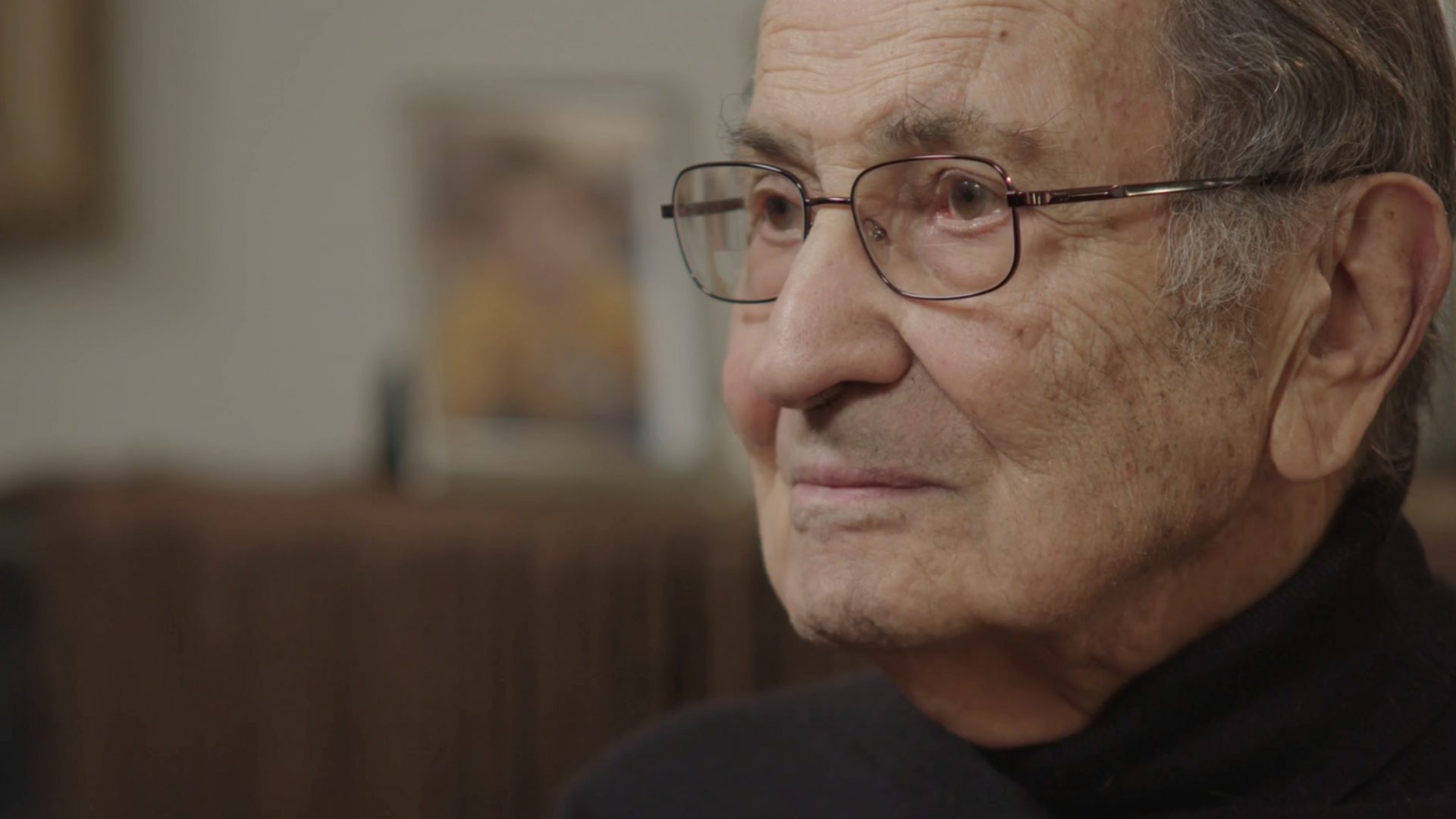
It is September 11, 2001 and the phone is ringing off the hook in Peter Sichel’s New York apartment. The 78-year-old semi-retired wine salesman is, however, understandably more preoccupied with the end-of-times scenario currently playing out in Lower Manhattan and wondering whether he should stay or, not for the first time, run for his life.
Money is not a factor in his decision. For 36 years, Sichel had been the brains behind an operation that turned an unsophisticated Liebfraumilch produced by the family business into the first truly global mass market wine brand.
At its peak in the mid-1980s, Blue Nun was shipping 24 million bottles per year to over 90 countries. It was then acquired by rival wine business LLangguth in 1996, and Sichel moved on to another project in the wine industry.
On this September morning, as rolling newscasts relate the world-changing events happening in his city, he has more options than most. But the incessant ringing of the phone cuts across any contingency planning. Irritated, Sichel nods and his long-standing personal assistant Maryann Dolzadalli answers the phone.
“It’s the head of the FBI,” she whispers, her hand over the mouthpiece. Sichel shakes his head and so Dolzadalli takes a message from Robert Mueller III and ends the call. Seconds later, the phone rings again.
This time it’s George J Tenet, director of the CIA. Same treatment.
At a time when communications are severely compromised by the ongoing situation at the World Trade Centre and elsewhere, this hotline remains open and the men using it are desperate to talk to Peter Sichel. They are not calling for urgent advice about the ideal serving temperature for a light-bodied, semi-sweet German white wine.
Rather, the heads of America’s key intelligence services are seeking urgent wise counsel from a semi-retired wine salesman who was once an intelligence expert with the wartime US Office of Strategic Services (OSS) and a senior official with its successor organisation, the Central Intelligence Agency. He served the latter as the first post-war bureau chief in Berlin and, after a period fighting the cold war from Washington, was then sent out to head up operations in Hong Kong.
Regarded by one historian as “A true insider during the heyday of the CIA during the late 1940s and 1950s,” over four decades after he had made his pivot from espionage to selling Blue Nun to the world, it seems Sichel was still on speed dial in a national emergency.
“We only discovered that [these phone calls] took place when we were talking to Maryann after our father’s funeral last year,” says Bettina, his 63-year-old daughter. “That he would still have connections to those people is just unimaginable.”
Suggested Reading
US spy chief: Trump is repeating the mistakes of Vietnam and Iraq
Her younger sister Sylvia jumps in on a three-way Zoom conversation. “He wasn’t a spy when we were growing up,” she adds. “He was working in the family wine business. I mean, he said he had worked for the OSS and the CIA but…” “But we never knew the extent of it,” Bettina cuts back in. “I had no idea he was that important and had such a big career. I’ve learned so much from this movie.”
That movie is The Last Spy, not so much a biopic as a rigorously researched documentary by 62 year old Katharina Otto-Bernstein. The German-American filmmaker’s impressive CV includes persuading some of the key secret agents of the cold war era to talk to her.
“I interviewed Günther Guillaume [East German spy inside the West German government whose discovery led to Chancellor Willy Brandt’s downfall],” she begins. “He introduced me to Ruth Kuczynski aka ‘Red Sonya’ [handler for the USSR’s ‘Atomic spies’] and through her auspices I then got to double agent Horst Hesse, who famously stole the lists of US agents in East Germany in the 1950s and hand delivered them to Markus Wolf [East German Stasi’s foreign intelligence division chief for over 30 years].”
Sichel turned up on her radar when she was fact-checking these interviews with iconic espionage figures and needed somebody to corroborate the story of Horst Hesse and the stolen agent list. “Sichel was the CIA station chief in Berlin at that time, and I met him through a colleague of my husband,” she explains. “He denied that any agent lists were ever stolen from him and suggested that they were probably stolen from Military Intelligence who, in his opinion, were never secure.”
Otto-Bernstein smiles. “As we can see in the film, this was not quite the case but we continued to talk, meet, and became friends. That’s how I learned about his incredible life.” Naturally, she wanted to tell his story but Sichel was writing his memoirs and not interested in making a film.
“He sent me the manuscript to his book; we exchanged comments and ideas,” she recalls. “It took ten years and the return of his galley copy, heavily redacted by the CIA, to finally prompt Peter to consent to working with me on this documentary… he was pretty annoyed with the CIA.”
And not for the first time. His determination to speak his mind to the decision-makers at the top of the agency (a personal evaluation report in the mid-1950s described him as being “prone to over-criticize and to be intolerant of what he considers ineptitude, mediocrity or irrelevance”) eventually led to an unwarranted FBI investigation into whether he might have communist sympathies. His daughters learned about this for the first time in the film. He had never mentioned it.
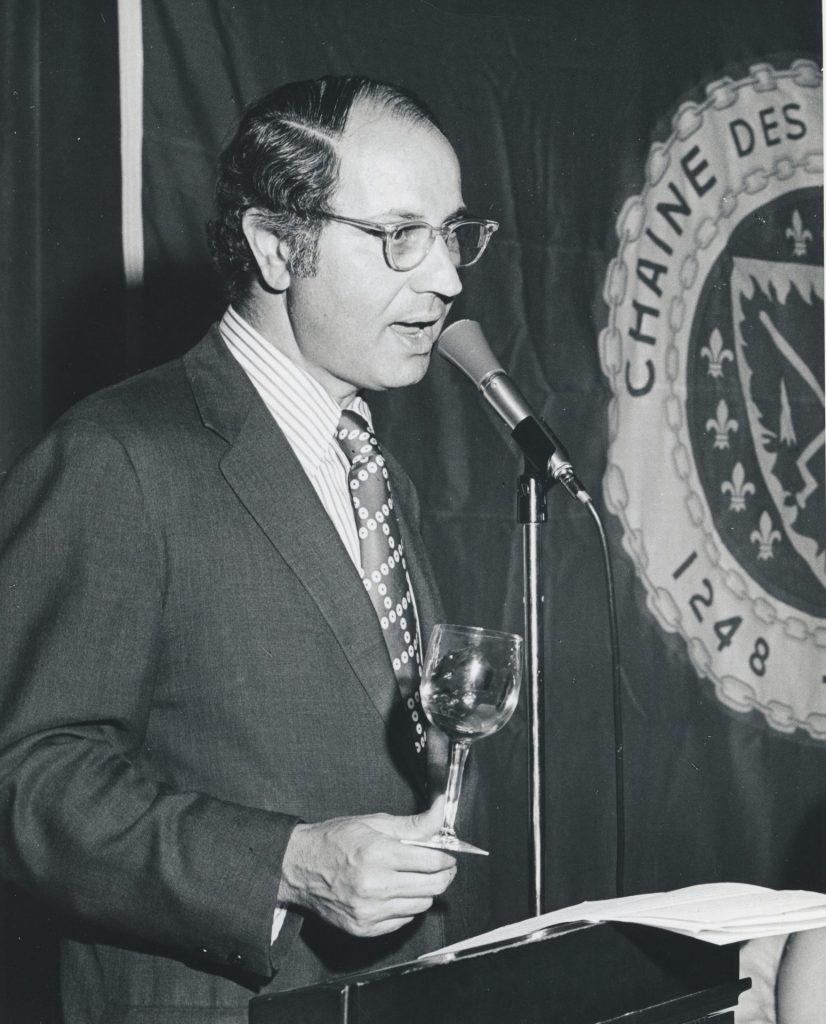
Nothing could have been further from the truth, however, either then or in his remarkably successful life as an elite business executive subsequently. He was completely exonerated but then eventually resigned his position in 1960 on a point of principle provoked by the agency’s general direction of travel.
To his mind, it was undergoing a transformation from an “intelligence-first” organisation to one driven by the exigencies of the cold war to develop an ill-informed over-reliance on the “action-side”. This could include anything from parachuting “freedom fighters” into Communist countries to foment resistance when the available intelligence indicated certain failure to the fetish for regime change that almost always met with a similar fate.
As he put it in his heavily redacted and self-published autobiography – The Secrets of My Life: Vintner, Prisoner, Soldier, Spy – when it was eventually released in 2016:
“The overthrow of Prime Minister Mohammad Mossadegh in Iran [Aug 1953] and the overthrow of President Jacobo Arbenz in Guatemala [Jun 1954], as well as the Bay of Pigs disaster in Cuba [Apr 1961], are good examples of when and where our American presidents found it expedient to dispose of those whom they and their national security advisors perceived as inimical rulers, to be replaced often by rulers and systems that were infinitely worse.”
His memoirs had been holed beneath the waterline by the censors at Langley Park and failed to trouble any best-seller lists but another event in 2016 was pivotal in Sichel’s decision to work with Otto-Bernstein on his life story: The victory of Donald J Trump.
Suggested Reading

Secret Service is today’s spy thriller wrapped in yesterday’s politics
“Peter was absolutely shocked by the election of Trump,” says the film-maker now. “He considered him to be dangerous and thought that through his testimony he could send a warning. He felt the world was heading toward tumultuous times and that democracy was in danger and that we must learn from the mistakes of the past in order not to repeat them. Looking at the global situation today he was of course correct and has emerged as quite the Cassandra.”
Mark Twain is reputed to have said, “History doesn’t repeat itself but it often rhymes” and if Sichel’s list of catastrophic foreign policy decisions from the 1950s and ‘60s sounds eerily familiar to any student of contemporary geopolitics then that is because the second Trump administration is not so much reading from the same discredited US foreign policy playbook as treating it as some kind of deranged manual: For Guatemala read Venezuela; then another attempt in Iran to force through regime change to correct the legacy that began with the removal of Mossadegh; and, inevitably, there is the promise of future “action” in Cuba. The CIA involvement in these foreign countries has been publicly confirmed in Venezuela and would be remarkable were it not the case in Iran and Cuba.
The former spy’s opposition to the destabilisation or overthrow of foreign governments and interference in democratic elections in the name of US policy objectives was not just a political position. It had already been hardwired into him by his experience and that of his family as German Jews.
Sichel was sent to school in England after the Nuremberg Laws removed their civil rights in 1935, while his parents relocated to Bordeaux in 1938. Two years later they were all interned as enemy aliens following Hitler’s invasion of France and had to negotiate their way out before escaping to America in April 1941. Sichel learned from his mother how to recognise the signs of creeping totalitarianism very young and never lost his very rational fear of authoritarian government.
To complement this antipathy to complacency, he tasted the reality of armed conflict at close quarters – something the decision-makers in the White House and the Pentagon today might find difficult to appreciate from behind a desk. When appointed head of an OSS unit attached to the US 7th Army poised to take part in the Western Allied invasion of occupied Europe aged just 22, he was in charge of 100 men.
Suggested Reading
Miles Davis is 100 – and this is why he still matters
When the war ended he was 15 kilometres north of Dachau and discovered what had been happening inside these ‘labour camps’ for the first time (“So inhuman that you somehow couldn’t absorb it and it remained that for a long time”). His worldview and philosophical take on the nature of humanity were being forged in the crucible of first-hand life experience.
A few months later, his brilliance as an “intelligence” officer and relative youth earning him the nickname “wunderkind” along the way, Sichel became the first bureau chief in post-war Berlin. He was charged with building up a spy network where one had never existed to keep an eye on the Russians before the cold war even began.
During the Berlin Airlift three years later, it was Sichel’s intelligence-gathering operation that predicted the Soviet Union was not planning on sweeping into West Germany. There were many other achievements, some still classified, before his expertise was required in Washington and then again Hong Kong, this time to mount surveillance against communist China.
These were the credentials that demanded he be “intolerant of what he considers ineptitude, mediocrity or irrelevance” inside the American secret service. These were the credentials when he was awarded a distinguished intelligence medal after resigning from the agency. These were the credentials when the heads of the FBI and the CIA needed to talk to him as 9/11 was taking place.
And these were the credentials that back up his assertion to Katharina Otto-Bernstein towards the end of his incredible life: “The US over-classifies information and that is irresponsible. There’s been no attempt to learn from the past. It is an institutional mistake of this country, of not being able to associate what is happening today from what happened 70 years ago and what we did at that time.”
No wonder Sylvia Sichel says: “We have a very grim joke in our family that [at least] he died before Trump could take office the second time.” “But,” adds her sister, “He was determined to stay alive just long enough to vote against him.”
The Last Spy is in select UK cinemas and available on demand from Amazon Prime Video, Apple TV, Sky Store, and YouTube. www.thelastspy.film
Bill Borrows can be heard on the EXPloaded podcast