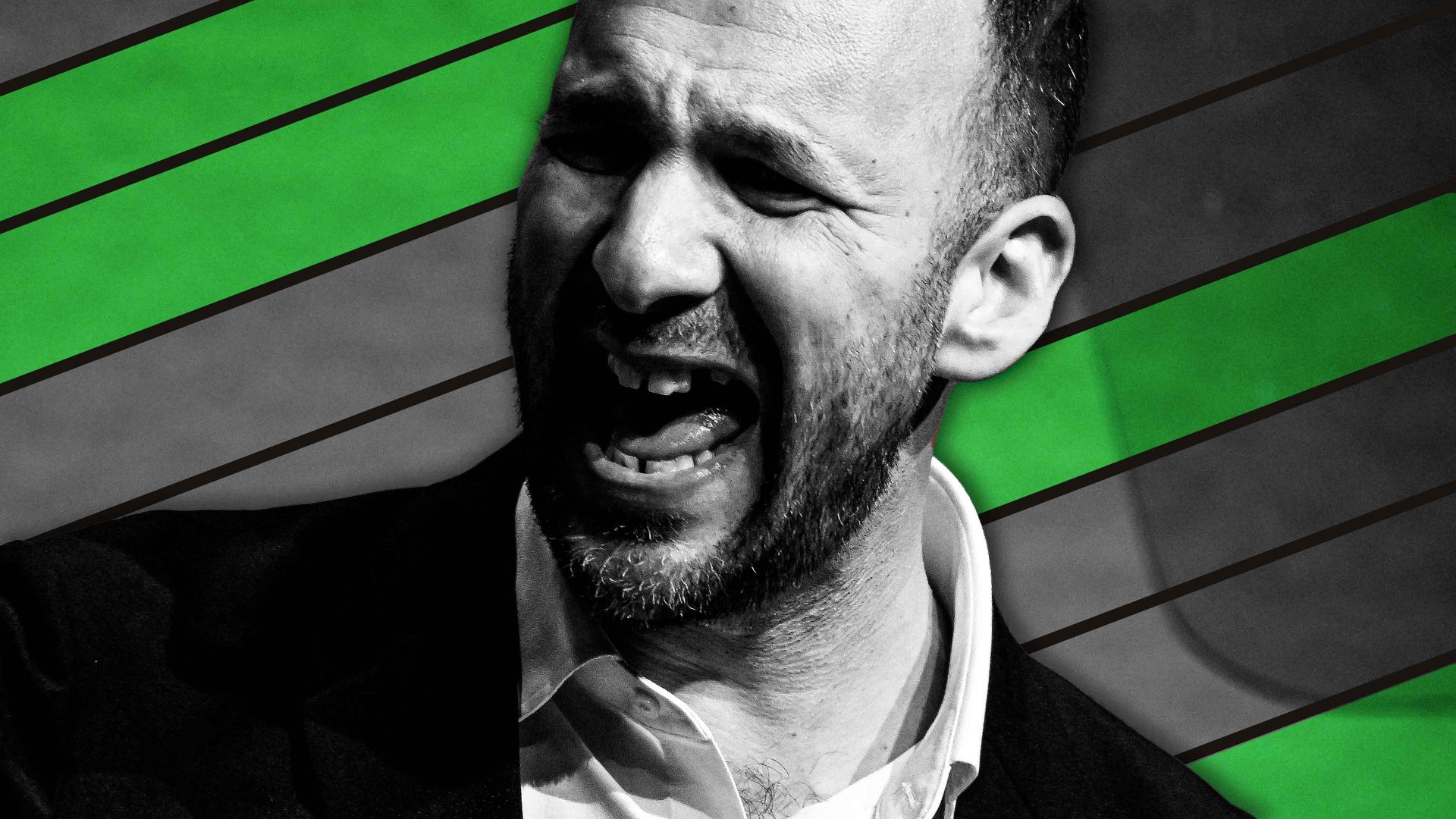

On the bullet train of hypermodern politics, it’s a good idea to keep a close eye on the landscape lest you miss something mountainous or singular. Since Péter Magyar’s electoral destruction of Viktor Orbán on April 12 – ending 16 years of elective autocracy – I have had a nagging sense that this historic moment has not yet yielded all its lessons.
Naturally, the initial response to the trouncing of Fidesz among all those who want to see the populist right defeated was one of justified celebration. By securing 141 seats out of 199 in Hungary’s national assembly, Magyar’s party Tisza had shown that the global march of MAGA-style nationalism is far from inevitable.
No less striking, however, was the specific ideological character of Orbán’s defeat. In four successive elections, he had seen off the socialists in 2010 and 2014, a hopelessly fragmented opposition in 2018, and, four years later, a big-tent coalition that embraced conservatives, the left, greens and libertarians.
Only when Magyar offered the exhausted, angry electorate a dynamic right wing alternative did Orbán finally fall. His campaign focused relentlessly on government corruption, public services and dilapidated infrastructure. He wants to mend Budapest’s relationship with the EU, which is good news for Ukraine as well as Hungary.
But he also promised “zero tolerance for illegal immigration”; he will preserve some of Orbán’s family support policies; though eschewing his predecessor’s taste for fiery rhetoric about “Christian identity” and civilisational struggle, he is unquestionably a nationalist and a patriot.
Does this mean that the populist right can only be beaten by a different flavour of the right? Of course not. One only has to think of Mette Frederiksen’s Social Democrats defeating the “blue bloc” that included the Danish People’s Party in 2019; in Spain, the socialist prime minister, Pedro Sánchez, has (so far) kept the conservative-far right alliance at bay. In the US, the Democrats are all but certain to make major gains in the mid-terms.
My point is different. Since the terrible disruptions of 2016, the burden of standing up to the populist right has fallen squarely and almost exclusively upon the parties of the left: socialist, social democrat and green. What used to be called the “centre right” – a dead term, in my view – is almost entirely irrelevant.
In the US, Barack Obama’s comprehensive defeat of Mitt Romney in 2012 prompted the Republicans to conduct what became known as the “autopsy”. It called for a GOP that was more inclusive, kinder and less strident on border control. In 2016, Donald Trump did precisely the opposite – and won.
In this country, what used to be called the “One Nation” wing of the Conservative Party is absent from the arena; as are the long-dispersed caucus of modernisers that spearheaded David Cameron’s rise to power.
In January, Ruth Davidson, a former leader of the Scottish Conservatives (once seen by many in the national party as a potential UK prime minister), and Andy Street, Conservative former mayor of the West Midlands, launched Prosper UK, a movement that champions “a practical, centre right approach”. Both are fine politicians with a strong record of public service. But it would be idle to pretend that their group has so far rattled the political rafters.
On the continent, what remains of the old centre right is also in desperate trouble. Only 15% of German voters are satisfied with the performance of chancellor Friedrich Merz; his CDU-CSU alliance regularly polls behind the far right AfD, which could easily win power in September in the eastern German state of Saxony-Anhalt.
In France, Jordan Bardella, 30-year-old president of the Rassemblement National, leads the polls in the race to succeed Emmanual Macron in next April’s elections. Bruno Retailleau, the mainstream conservative candidate, barely figures in these calculations.
The upshot of which is that, in the international struggle with the populist right, progressives are having to do all the work and put in all the hard yards. In a time of international peril, the parties of the left are increasingly the only load-bearing wall holding off autocracy. The post-populist right ought to be pulling its weight. The snag is that, in this country at least, it does not exist.
A year ago, I wrote that the Conservative Party was dead, a political zombie, and I stand by that verdict. But, in 2026, the future of a particular organisation, even one as old and electorally successful as the Tory machine, is much less important than the potential of a political sensibility.
As the sociologist Zygmunt Bauman wrote in the 2012 foreword to his masterpiece Liquid Modernity (2000), what unites the “[f]orms of modern life” is “precisely their fragility, temporariness, vulnerability and inclination to constant change”.
It is conceivable that a completely new political force may annex and transform the Conservative Party, just as MAGA has conquered the GOP and Zack Polanski has turned the Greens into an economic-populist and anti-Zionist alliance.
Alternatively, a start-up party may arise. Nigel Farage has been agile, if cynical, in his intermittent rebranding of his movement: from Ukip via Brexit Party to Reform UK. The Tisza party was formally founded in 2020, but barely troubled the scorekeepers until Magyar joined in 2024.
In today’s politics, structures and institutions matter much less than personal charisma and narratives. To focus on the latter: what might be the political offering, the story, of a right wing alternative to populism?
In 1997, it was clear that the Conservative Party needed to shift towards a socially liberal and fiscally conservative position if it was to recover. William Hague flirted with this for about a year. Michael Portillo tried again in the leadership contest of 2001 (won by Iain Duncan Smith). Only in 2005 did Cameron get the formula over the line and win the leadership – and then (with Lib Dem support) the keys to No 10. At the time, I strongly supported this strategy.
Suggested Reading

From Orbán fan to Orbán foe: will Péter Magyar change Hungary?
The irony was that, by the time the Tory modernisers achieved power, their ideas were already heading for obsolescence. The 2008 crash, the post-2004 migration surge and the incremental rise of Ukip – which I certainly underestimated – were pushing voters towards an entirely different quadrant: broadly speaking, they wanted more social conservatism and more economic intervention. Which is to say, the precise opposite of what the Tories were then offering.
One of the more predictable consequences of the Brexit wrecking ball was its shattering of the Conservative psyche. Once the European Union (Withdrawal Agreement) Act 2020 was on the statute books, the Tories remained in office but were in no fit state to govern; chasing Farage with slogans, macho gimmicks and xenophobic schemes; battling against the phantom menace of the “deep state”; ditching net zero targets. It was pitiful. And none of it stopped the rise of Reform.
I very much hope that the UK does not have to follow the Hungarian path and experience the poison and pain of a populist government before the emergence of a new “constitutional right” (an imperfect moniker, but it’ll have to do as a placeholder).
For a sense of what a Farage premiership would actually be like, don’t miss Peter Chappell’s excellent and chilling new book What If Reform Wins: A Scenario (Bloomsbury Continuum).
So the work needs to start now. What might such a movement offer? To be clear: this is not a thought experiment specifically intended to appeal to TNW readers. The question is rather: what, allowing for all the differences between Hungary and the UK, might the British counterpart to the Magyar phenomenon conceivably be like?
For a start, such an offer would be very different to what the Tory modernisers proposed in 2005: more than 20 years have passed, after all. From Margaret Thatcher, meanwhile, the only lesson that a new post-populist right should learn is that political movements thrive when they confront, without fear or favour, the issues that are pressing upon the nation, rather than the issues that make them feel comfortable.


To win and to be consequential – not the same thing, as Keir Starmer has shown – a political project must be remorselessly future-facing.
This hypothetical constitutional right would begin with two all-important propositions. First, that AI and automation are already changing everything and that the task of any responsible government is both to encourage the dynamism of tech and to regulate its pathologies: neither starry-eyed nor Luddite (watch as the populists turn their fire against robots as much as migrants). It would promise to create a new Department of Technology, Work and Education, headed by a cabinet minister with sweeping cross-Whitehall authority and a seat on the national security council.
Second, it would rediscover and reassert the value of pluralism: occupying the open prairie between the relativism of the left and the nativism of the populists. It would, in other words, understand social conservatism, but not be restricted or defined by it.
In a radically interdependent world, the fixation with immigration numbers is a mug’s game. Yes, strong border control is a necessity for any sustainable society. But so is a regular influx of newcomers to supply the labour market, make the economics of higher education sustainable, and strengthen Britain’s identity as a protagonist in the world rather than (as Brexit has signalled) a secessionist state.
In fact, integration is much more important than immigration control. And successful pluralism is very hard to achieve. The slogan “diversity is our strength” is political pablum. Diversity is part of the modern condition. The question is how different communities should live together, where they agree to disagree and – the most difficult bit of all – what non-negotiable core of rules and norms they will adhere to (beyond obeying the law and paying taxes). If you think any of this is straightforward, you haven’t been paying attention (or watching the news). Online scapegoating is easy. Hugging the cactus of community cohesion is very hard.
A new post-populist right would not sneer at the politics of place, British traditions, or anxiety about social change. It would manage such concerns, not inflame them. It would undertake the extraordinarily difficult task of showing that life in a complex, prosperous society is not a zero-sum game; that the interdependence of nations is matched by the interdependence of people.
It would embrace wealth taxes – mindful that even Milton Friedman thought that land levies were the “least bad tax”. It would revive and reframe environmentalism as an issue of national security and pride in Britain’s landscape, flora and fauna. It would draw as much upon the older conservationist traditions of Roger Scruton and Theodore Roosevelt as the modern rhetoric of climate emergency.
It would not countenance further juvenile wreckage of the international order such as withdrawal from the European Convention on Human Rights. Its patriotism would be expressed in the pursuit of the national interest on a global scale, in a multiplicity of hard-headed alliances.
It would relentlessly defend free speech, subject to the rule of law. It would stand up for science in every sector, including the irreducible reality of biological sex. It would not flinch at the idea of “the west” but fiercely reject any suggestion that this form of collective identity belonged to any race, creed or culture.
Above all, the constitutional right would have at its very heart a new intergenerational contract, mindful of Edmund Burke’s notion of a society as “a partnership not only between those who are living, but between those who are living, those who are dead, and those who are to be born”.
This definition resonates powerfully with the human instinct to pass on to our children a better life than we enjoyed – an instinct that we have contrived to thwart structurally, systematically and disgracefully.
Suggested Reading


How to stop the next Trump
A country with fast-declining birth rates like ours does not need natalist homilies, racist “replacement” theories, or insultingly small tweaks to the tax system. It needs a labour market that pays sufficient wages to people so they can raise a family without every adult doing three jobs. It requires citizens to be able to get on the property ladder before they are 40. Anyone undertaking this daunting task should swallow whole Abundance (2025) by Ezra Klein and Derek Thompson and its proposals to turbocharge housebuilding and build infrastructure at pace.
At every turn, the post-populist right would focus on the reasonable desire of every citizen for a fair shake; for a system in which elites recognise how rigged the system truly is and do something about it; for a state that is neither therapeutic (“there, there, thoughts and prayers”) nor inflammatory (“look, they’re to blame!”) but responsive, effective and kinetic.
To reiterate: this is not a suite of policies I would necessarily expect many TNW readers to vote for. My point is otherwise. A public sphere threatened by populism and autocracy needs all the help it can get.
The moment demands a conservative bulwark prepared to stand against Reform, Tommy Robinson and the far right for the strategic wellbeing of the polity.
There is nothing remotely like it on the political horizon. But there could be. And, more to the point, there needs to be.