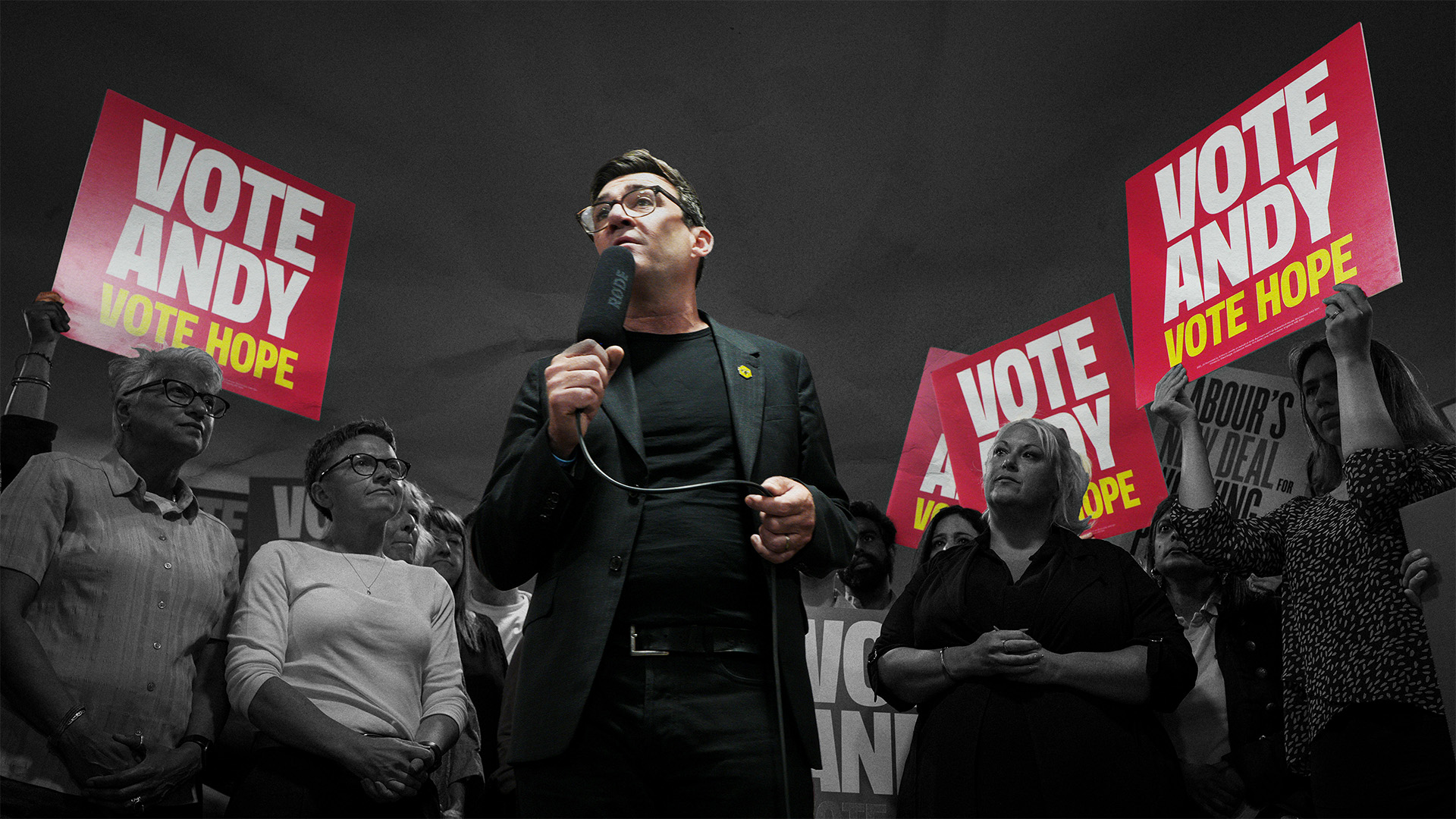
“It is our last chance to make a change, and we will take it”: when, in the early hours of Friday, Andy Burnham spoke these words in his acceptance speech in Wigan, he was not, as some have claimed, resorting to lazy boilerplate language. The newly elected MP for Makerfield was identifying an existential threat – and declaring his intention to confront it.
Lyndon Johnson famously said that the first rule of politics is to learn how to count. In the hyper-modern era, that maxim has been been supplanted by something even more basic: any politician who aspires to act meaningfully in the public interest and not to be swept away by the pulverising forces of our time, must have the straightforward discipline to look out of the window and see the world exactly as it is.
This is what Burnham meant. Labour is in the last-chance saloon; and so, if you believe in the survival of a decent, pluralist, liberal Britain, are the rest of us. The project he has undertaken is a Hail Mary pass in circumstances of extraordinary risk. What his supporters propose is not a “coronation”. It is pulling the ripcord on the reserve parachute.
Every part of his plan has to work. His return to parliament (which, never forget, Keir Starmer and Labour’s national executive committee initially thwarted in January by blocking his bid to become the party’s candidate in Gorton and Denton) is only the first of many steps that he must take successfully.
In risk analysis, this is called a “conjunctive chain of dependencies”; engineers would describe it as a “chain of single points of failure”. Burnham has to take the Labour brand that, less than two years after Starmer won a 174-seat majority, has become unpopular to the point of toxicity and restore to it the vigour it will need if the party is to prevail in the next general election (which will come sooner rather than later).
In dismal fiscal circumstances, with public trust in the gutter, he has to reinvent the government’s economic strategy so that it is not only financially viable but explicitly addresses the needs of voters crying out for a fair shake; for housing for themselves and their children; for greater security in the age of inflation, pay freezes, the expanding “precariat”, and the coming impact of AI upon employment.
He has to be both responsible (like it or not, no prime minister or chancellor can ignore the bond markets) and write a new narrative for the social contract that is the basis of national solidarity and civic cohesion. He needs to define a new settlement on border control, immigration and citizenship that addresses the resilient anxieties of a great many voters without yielding an inch to the nativists, the xenophobes and those who seek dopamine hits from deportation.
He has to run fearlessly towards the future – tackling the challenges of technology, intergenerational tension, climate emergency, human longevity, geopolitical instability – while respecting the attachments, traditions and allegiances of the present and the past (what the Christian egalitarian French philosopher Simone Weil, in one of the most prophetic books of the past century, called “the need for roots”).
To put it mildly, this is a big ask – as it would be for any new prime minister. It is comparable in scale to the respective missions undertaken by Clement Attlee in 1945 (to harness wartime solidarity and make it the engine of transformative statecraft) or Margaret Thatcher in 1979 (to smash the post-war consensus and liberate the animal spirits of the markets). But – unlike Attlee and Thatcher – Burnham faces the additional snag that he hopes to renew a government already in office: ask Gordon Brown how easy that is.
So his use of the word “chance” was far from accidental. The odds are still firmly stacked against him, or anyone else who leads his party into the next election. I give him 18 months, tops – tops – to repair the damage and turn “hope” (a word he invests with resonance) into a decent chance of success.
Suggested listening
The Two Matts Q&A: Where is Burnham weak? And is America humiliated?
Why so? Surely Reform suffered an abject humiliation in Makerfield, as it did in the Senedd by-election in Caerphilly in October and Gorton & Denton in February? Doesn’t the rise of Rupert Lowe’s extremist party, Restore Britain, and the 6.8 per cent of the vote it secured on Thursday represent a serious challenge to Nigel Farage’s command of the hard and far Right? Doesn’t Reform UK’s repeated selection of poor candidates suggest structural problems of party management?
Absolutely. But before all the Ewoks start dancing merrily because Darth Vader and the Emperor Palpatine are dead, a word of caution. Farage has extraordinary stamina: he has been at the coalface of populist nationalism since 1992. More than any other individual, he is responsible for outmanoeuvring the institutions and elites to secure Brexit almost exactly ten years ago.
During the pandemic, he quietly reinvented himself, shifting his focus away from the disaster of the UK’s departure from the European Union towards immigration, hostility to Islam and the discrediting of net zero. Reform has consistently led in national opinion polls for more than a year and triumphed in the local elections this year and last while rising to second place in the Senedd and joint-second in Holyrood.
Behind the scenes, Danny Kruger, the intellectually formidable defector from the Conservatives, is well advanced on Reform’s manifesto work, drafting a document that will surprise some in its scope and its detail. The party not only wants a mandate to govern. It is seeking to thwart the anticipated opposition of the House of Lords to the radical measures it envisages by invoking the Salisbury convention (the principle that the second chamber cannot thwart legislation explicitly promised in the government’s manifesto).
Suggested Reading

How Gen Z fell for Andy Burnham
In other words: don’t confuse Reform’s present and undoubted predicament for its inevitable decline. Don’t assume that its shabby candidate selection means that all parts of the party’s machine – still, don’t forget, under construction – are malfunctioning.
Above all: look at the dangerously racialised public sphere. Every time there is a murder, or a violent incident, or an accident on public transport, or even a horror at a zoo, social media fills instantly with vile speculation about the ethnicity, religion or national origins of those involved.
There is a terrifying reflex – one that would have been unthinkable a decade ago – to assume that the perpetrators are Black, or Muslim, or asylum seekers, and, no less axiomatically, that the authorities are engaged in an evil woke cover-up. All too often, real-life violent protest follows online mania. The intravenous drip of poison is still flowing into the body politic, spreading division, suspicion and the seeds of chaos.
I wish with every fibre of my being that this were not so. But it is. To pretend otherwise is the height of irresponsibility and a form of myopia that is often indistinguishable from wilful blindness. Simply reciting the centre left catechism – “diversity is our strength”, “we’re better than this” – is performative vacuity and doesn’t shift the dial a notch.
At moments such as these, ask yourself again and again: what is my priority? Do you really care more about the country than the sensitivities of your party, or your political faction, or the friends you meet at Gail’s?
I have voted Labour, but I am not a Labour tribalist. On the basis of what I see out of the window, I approach this exclusively as a citizen, seeking only to stop Reform getting hold of the reins of power.
I do not want my country, the country that my late father came to from Malta more than 70 years ago, to become the scene of fledgling authoritarianism; of deepening ethnic and cultural conflict; of mass deportation; of secession from basic international agreements, including the European Convention on Human Rights, the UN Convention Against Torture, the UN Refugee Convention, and the Council of Europe anti-trafficking convention.
So, with this in mind, and in the present circumstances, please forgive me if I say that I really don’t give a stuff about the Labour rulebook. In other contexts, it might be interesting to have a protracted textual debate about chapter 4, clause II, rule 2, and the precise procedures by which the party should choose a new leader. But this is not such a context.
This much I do know. Having moderated a Labour leadership hustings at Elland Road in July 2015 and toured such gatherings to report the 2020 contest to succeed Jeremy Corbyn, I have serious doubts about the confident claims of editorial writers, podcasters and pundits that this particular process is the best way to stress-test Burnham’s capacity to do the job.
Indeed, think back six years to the first weeks of Covid lockdown and Starmer’s own decisive defeat of Rebecca Long-Bailey and Lisa Nandy. Far from disclosing his true plans for the party and how he proposed to repair the terrible damage done by his predecessor, he trimmed and tap-danced, promising not to ditch Corbynism entirely or to throw “the baby out with the bath water”, when that was the very essence of his strategy.
It was, of course, a very successful strategy, one that enabled him to take Labour from its worst defeat since 1935 to a massive landslide victory in just over four years: a monumental achievement which (especially if, as widely expected, he now makes a dignified exit) will secure his place in the party’s history.
My point is that Starmer’s conduct in the 2020 hustings was disingenuous to the point of outright deception. The Labour left had every right to feel misled, because they were. To this day, the prime minister’s allies say that he did what was necessary to become leader and then changed direction to take account of the pandemic’s economic impact and the impact of the Ukraine war upon his options.
Fair enough. But the fact remains that leadership contests are a poor guide to how the victor will govern and how their primary objectives will fare when they make contact with reality. The only definitive test is government itself.
Second-best is the trial by fire that Burnham has recently been through. Yes, the constituency of Makerfield does not speak for the nation as a whole, but nor does the Labour selectorate. In a seat that, with a different candidate, Reform would have almost certainly won, Burnham last week achieved a 23-point swing compared to the results on May 7 in the constituency’s council wards. Indeed, he won more votes than all the other candidates combined.
Every day, he was interrogated not only by the local electorate but by the national and international media. No by-election in living memory has attracted such a scrum of activists, journalists and rubberneckers (one Labour MP described it to me as “Glastonbury for crazy politicos”). By any metric, he passed with flying colours. There will be no better proof of concept unless and until he enters No 10.
In this respect, I am reminded of the line variously attributed to a German university professor, the chair of an Irish company, and an unnamed senior Whitehall mandarin: “This is all very well in practice. But how does it work out in theory?” What many of Labour’s gatekeepers propose to do is to take the exhilarating moment of opportunity that Burnham has created and subject it to laboratory vivisection. To what possible purpose?
A full-blown leadership contest will take his insurgency, his kinetic energy and his shock-and-awe vitality and smother it in procedure and factionalism. I keep reading that a rapid and ruthless transition from Starmer to Burnham would be a “stitch-up”.
The real stitch-up would be a Labour roadshow arranged to spare the feelings of the movement. At the end of it all, he would almost certainly prevail anyway; but, en route, he would have to appease party sects, schmooze unions, square circles, and engage in committee-speak rather than the authenticity that is his finest asset.
The 2015 Labour contest lasted 17 weeks, while the 2020 race ate up more than 12. In both cases, the party was in opposition. Today, it is in government and, in every conceivable sense, the circumstances are more urgent. Labour does not have this kind of time to squander, and nor do the rest of us.
Two years ago, Starmer’s task was to put the Conservative government out of its misery and he succeeded magnificently. But in 2026 the threat faced by the country is not five more years of Rishi Sunak but a new form of populist nationalism that would alter fundamentally the basis upon which this country is governed and vandalise the spirit of patriotic pluralism that, as much as the rule of law, social solidarity, and individual liberty, defines what it is to be British.
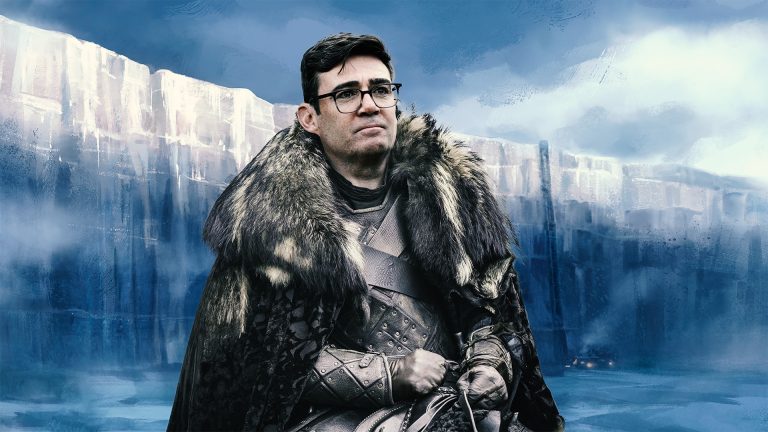
What can be said without a shred of doubt is that the technocratic style favoured by Starmer was not equal to this task. Whether we like it or not, we live in an era in which personality, storytelling talent and relentless energy matter as much as policymaking, administrative competence, and command of bureaucracy. “Vibes” are not enough; but neither, on its own, is administrative diligence.
Burnham promises to combine the two. Starmer’s allies have huffed that he has only been mayor of Greater Manchester, conveniently forgetting that he has held three Cabinet posts. The PM never missed an opportunity to remind the world, as proof of his executive experience, that he had been director of public prosecutions. If credentials are the test, why was Starmer so much better prepared in 2024 than Burnham is today?
As it happens, credentials are, in this instance, a secondary priority. What matters most right now is intention and political will. Does Burnham fully intend to wrench the mantle of change-maker of Farage and hang on to it with uncompromising ferocity? Is he prepared to move at warp speed, hurtle through the crash barriers of tribal sensitivity, do whatever it takes to make the voters feel respected, recognised, seen – and to match that connection with audacious measures that will ensure that the promise of “change” is more than a political bromide?
I think Burnham is a serious figure and was especially impressed by his performance in Greater Manchester during the pandemic – a localised, door-to-door strategy that was a marked and refreshing contrast to the hapless, stop-go approach of Boris Johnson’s government.
Can I be sure that he would make a good prime minister in normal circumstances (if they still exist), let alone this very dangerous setting? Of course not. Uncertainty is intrinsic to politics in the 2020s, and anyone who pretends otherwise is selling you snake-oil.
What I do know is that a window of opportunity has opened but will close sooner than you might imagine or hope. Burnham was right to insist that “there will be no second chance.” There will be no honeymoon, no “brat summer”.
Everything now has to succeed, every piece has to fall into place, every act of sabotage has to be seen off. To win, Burnham must defy political gravity.
But there is, at least and at last, a chance. Remember them? The chance to stop the worst possible outcome. The chance to stop the slide into debased nationalism and to take the country in a different, confident, relentlessly future-facing direction.
A chance, then. Don’t let Labour ruin it.
 Most popular
Emily Maitlis’s diary: As I was saying to George Clooney just the other day…

Why Slavoj Žižek probably hates you

There’s only one reason Trump went to Ireland – it wasn’t to meet the Taoiseach

A new film about Elon Musk reveals him as so awful it’s almost tragic. Almost