Given how its tentacles reach into every aspect of UK life post our formal departure in 2020, it is difficult to quantify how many times Brexit has been formally debated in the House of Commons ever since. Given that it touches virtually every aspect of public policy, it would be unfair to say that it hasn’t been picked apart extensively virtually every week over the past six years.
But a debate on the actual wisdom of the overall decision? That hasn’t been forthcoming. The perceived wisdom that it was done, move on, nothing to see here, seems to have precluded any form of sensible, reasonable debate on the rightness or not of the decision.
This week, a debate was held in Parliament – albeit in Westminster Hall, in effect a break-out room for interested parties to hold debates of usually niche and often esoteric interest. Not the ideal place for one on the impact of the 2016 Brexit referendum, 10 years after the event. But it was the one we got.
Called by SNP MP, ardent Remainer (as one would expect) and former Runrig synth wizard Pete Wishart, you might have thought Reform would have been there mobhanded, keen to sing the virtues of Brexit, cheer its successes and toast its MPs’ roles in securing the verdict which was, for many of them, their lives’ work. But no, they were not. No Nigel Farage, no Richard Tice. Even Lee Anderson appeared to have found something better to do – perhaps a dot-to-dot puzzle.
In fact, the only Reform MP who bothered attending was Andrew Rosindell. Can you picture him? Try. No – that’s Mark Francois you’re thinking of. Rosindell was the Conservative MP for Romford who defected in January to very little fanfare, and was previously best-known for campaigning post-Brexit for BBC One to broadcast the national anthem after shutdown every night. BBC One has not shut down at night since 1997.
It was the job of Rosindell, not a man you’d necessarily want to find next to you on an Only Connect team, whose job it was to bat for Brexit in a room that, sparsely-attended as it was, was dominated by Remainers.

Otherwise, a couple of Tory true-believers aside, it was an opportunity for speaker after speaker to tear into the disaster that is Brexit in every aspect – led by Wishart, a talented speaker with an eye for the Hansard stenographer.
“I thought that there would be an overwhelming clamour to secure a debate to celebrate the 10 years since the Brexit referendum,” he said with mock incredulity.
“I thought people would be tripping over themselves to ensure that they could tell us about all the wonderful things that have happened.
“It would have been an opportunity to go wandering through the sunlit uplands to celebrate the dynamic economic growth and political stability that had been secured, the fact that immigration was under control, and all the wonders of our new-found freedoms.”
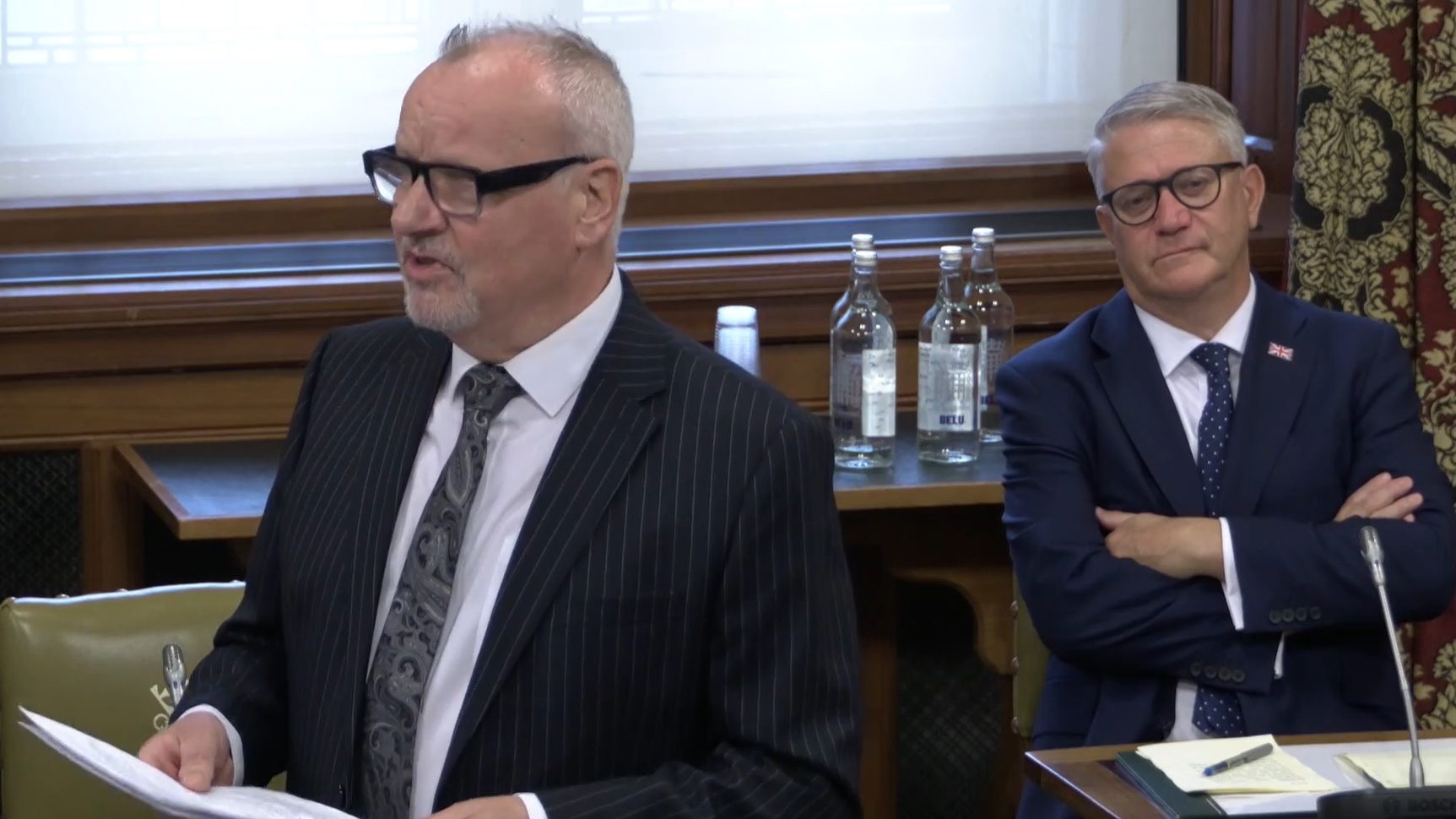
Throughout this, Rosindell sat behind him, arms sullenly crossed and with the face of a man who’d just been told his budgie had been shot.
The Reform MP had his go – interjecting, gurning, looking variously furious, injured and perplexed, but whenever a speaker gave way and let him speak, he gave the game away. He never spoke about Brexit’s current benefits or its future potential, but instead, he ruminated on the past. John Major had not been spoken about so much in Parliament for nearly three decades.
“We were not part of a simple trading arrangement: under the Maastricht treaty, which the Conservative government of John Major signed us up to without a referendum, our sovereignty was handed away to a political union,” he complained.
Suggested Reading
The island where everyone now hates everyone else
“Those in the civil service, those in government under Theresa May and the establishment in this country did everything they possibly could to derail Brexit,” he moaned at another point. “Under Theresa May’s agreement, we would have been half in and half out of the European Union.”
A later speaker, the Conservative MP for Kingswinford and South Staffordshire Mike Wood, was actually on Rosindell’s side, attacking Andy Burnham’s government for pursuing “unilateral dynamic alignment, shackling the 92% of British firms that do not trade with the EU to Brussels’s rulebook”. But that didn’t chime with Rosindell, who didn’t want to talk about the future. He wanted to talk about the past!
“Does he also repudiate John Major’s government for bringing in the Maastricht treaty, which created political union in the first place?” asked Rosindell, hopefully. Wood looked baffled. “It is one thing to look back over the past 10 years, but I hope the honourable gentleman will excuse me if I plead that I was taking GCSEs in 1992 rather than paying attention to what John Major was doing,” he said, not entirely unreasonably.
It was a pathetic sight from a politician who peaked around the early 1990s and is resolutely determined to stay there. But at least he turned up, which was more than can be said of any of his party colleagues.
“I secured this debate because I could not believe that in June this year, no one made any attempt to even recognise the fact that we had left the European Union 10 years ago,” said Wishart in his introduction. “There was no carrying of the honourable member for Clacton down the Mall in ticker-tape processions.”
No, there wasn’t. No wonder he stayed away.
 Most popular
My truly deranged encounter with Trump apologist Kellyanne Conway

Suella Braverman’s book has sold only 106 copies. This is why
The moral depravity of Robert Jenrick

Hungary’s lesson to the world: Populism isn’t permanent