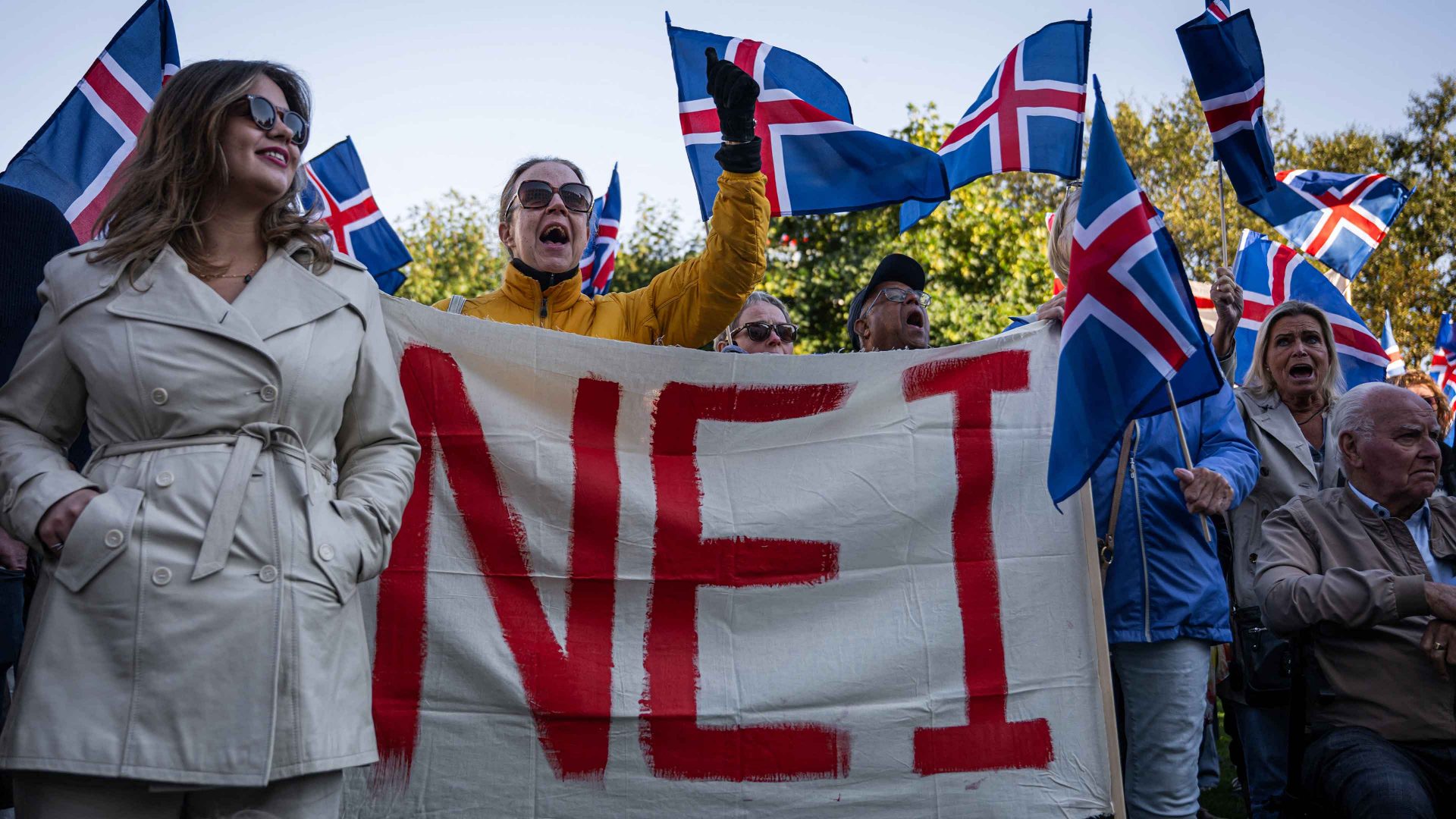
The votes were counted by Sunday morning, yet Iceland feels less like a country that has reached a decision about its relationship with the EU than a family that has just finished a very ugly argument.
Icelanders rejected the proposal to resume EU accession talks by a margin of 52.8% to 47.2%. To the British eye, those numbers will look remarkably familiar. Reykjavík leaned towards Europe; most of rural Iceland did not.
There are some places in the world where politics feels distant and impersonal. Iceland is not one of them. Here, politics is more like a family quarrel.
You know the people involved. You know their parents. You may have gone to school with their children, sat beside them at a wedding or seen them at the market. You know who they married, who they divorced, who their grandmother was, who owns the fishing company – and also who once said something unforgivable on the radio, or social media.
And so, when Iceland argues over Europe, it is not like Britain during Brexit. That involved media empires, celebrities, and millions of strangers shouting at one another across a country of nearly 70 million people. Iceland has around 400,000 inhabitants. It is a nation – but politically, it can sometimes feel like a small town that has been handed a national flag. That has given the EU debate a kind of bitter intimacy.
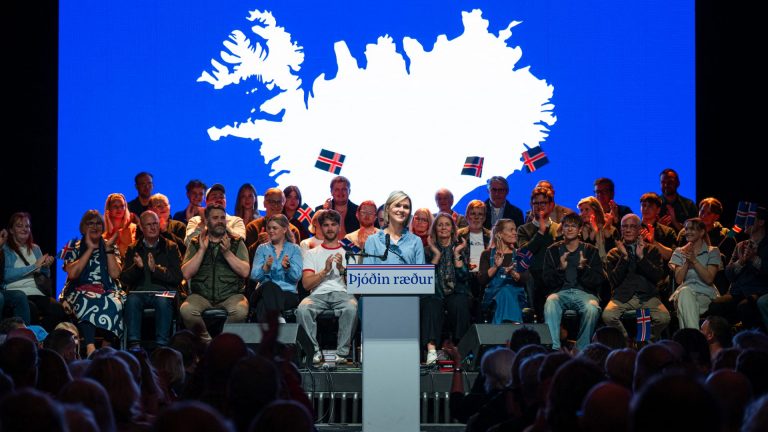

I have watched the Europe question come back to life here like the reopening of a seismic faultline. It began in the wreckage of the financial crisis, known as the kreppa. In 2009, after Iceland’s banks collapsed and the króna plunged, the government applied for EU membership. Joining looked like an emergency exit – people were losing their jobs, mortgage repayments were soaring, and Europe seemed to offer stability.
But Icelanders have long had an instinctive suspicion of anybody telling them what to do. That suspicion has a particular smell here, a mix of salt and cold sea air. It comes in with the fishing trawlers.
Fishing is not simply an industry in Iceland; it is history, wealth, sovereignty, and national pride rolled into one. Every Icelander has had sailors in the family. The idea that bureaucrats in Brussels might have something to say about Icelandic waters has always riled an otherwise mild people.
Then came 2013. A new Eurosceptic government froze the accession talks. The promise was that the negotiations would not continue without a referendum. In 2015, the foreign minister told Brussels that Iceland no longer wished to be regarded as a candidate country.
That should have been the end of it, but it wasn’t. This recent referendum was not on whether to join the EU immediately, but whether to reopen the conversation.
The noise in Iceland was extraordinary. When everyone knows everyone, disagreement feels much more real – it is civil but also savage. A political opponent is not merely an opponent. You know them.
Families split. Friendships were strained. Social media became unbearable. There was bullying and threats directed at politicians, including to foreign minister Þorgerður Katrín Gunnarsdóttir.
This is not normal in Iceland. Or, at least, it is not the Iceland many outsiders imagine: the country of steaming hot springs, sweeping black sand beaches, vast glaciers glowing blue in the distance, and people speaking quietly over coffee while the wind rattles the windows.
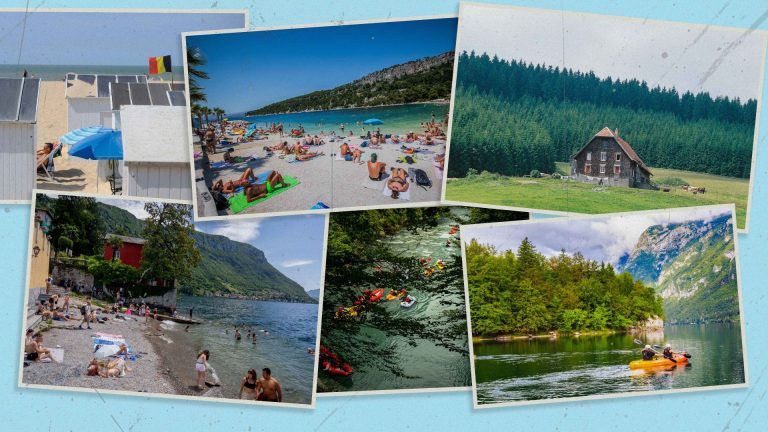
But perhaps that is the point. While the landscape is enormous, the society is tiny. And Europe has become the argument in which all the old anxieties meet. Sovereignty. Fishing. Money. Inflation. The króna and the memory of the crash. The fear of being swallowed by a larger continent.
It is tempting to look at all this and think “Brexit”. There are certainly echoes. The arguments over sovereignty, the warnings about outsiders, the misinformation, and the increasingly emotional language. Gunnarsdóttir warned that the country could face a “Brexit moment”, accusing opponents of borrowing tactics from the British campaign.
But Iceland is not Britain. For one thing, it is inside the Schengen area. Iceland’s size makes the viciousness of the EU argument more dangerous, not less. Because when the campaign ends, the opponents do not disappear.
Icelanders will continue to argue over Europe more fiercely than before. Because in a country this small, nothing is ever really over.