As Fiona has learned during almost half a century together, I don’t really do holidays; “I work in different places” (my copyright). She has thus grown used to, and in the main tolerates – with occasional lapses into complaint – my “deeply unhealthy relationship with work” (her copyright).
In our just-ended “summer holiday”, the work in different places took us to no fewer than nine European countries (I am including Britain) in under three weeks. We had a great time. Well, I did, and Fiona said she did.
I met – with several days to spare – the deadline for a new book that will be out in October, doing the final copy edit in the passenger seat of the car as we drove back from Croatia, the southernmost of our European countries visited, and deciding on the best cover options somewhere near the Luxembourg-Belgian border, with Fiona still at the wheel.
Let me start in Croatia, as Split (and the fact that Fiona would only come if our dog, Skye, came too) was the reason for the long drive in the first place. Since 2009, I have been an ambassador for the Youth Sport Games, a remarkable initiative that brings together children from across a region scarred by war and gets them to compete in sport.
This year, in addition to children from Croatia, Serbia, Bosnia and Herzegovina, Slovenia and North Macedonia, there was a contingent from Ukraine as special guests. And boy, were they special. I cannot tell you how humbling it is to be told by two 14-year-olds from Ukraine, who have lived four of those years in war, that they listen to your podcast in their English lessons, and then to be told “thank you for being so nice about Ukraine”.
In 30 years, the YSG has grown to become the biggest amateur sports event in Europe, with half a million children taking part this year alone. We really could do with something like it in the UK.
The climax of the event is a match between the winners of the YSG football tournament (boys and girls) and an all-star team of former footballers (oh, plus me, Uefa president Aleksander Čeferin, EU commissioner Magnus Brunner, a world champion handball player and a top basketball player).
It meant that I can now add to what I call my Maradona list (great players I have played with since the age of 49) Zlatan Ibrahimović, Claude Makélélé, William Gallas, Pavel Nedvěd, Nemanja Vidić, and more. French World Cup winner Marcel Desailly was there too. I first met him 20 years ago when we played in the inaugural Unicef Soccer Aid with Diego Maradona. Have I ever mentioned that I once played with Maradona?
Suggested Reading
Sometimes I do “do God”, but only as a favour to the Pope
Ridiculously, given that I was the oldest and the least experienced footballer in the squad, I was made captain of a team who between them had more than 10,000 appearances for clubs and countries, nine Champions Leagues, ten Serie A titles, nine Premier Leagues, four La Ligas, two European Championships, a Ballon d’Or and a World Cup. Like I said, I had a great time. More than that though, I saw yet again the power of sport to do good when it is in the hands of good people, rather than bad people like Fifa president Gianni Infantino or World Cup red card adjudicator Donald Trump.
The Games, and bagpipes, are the reason I landed something of a scoop, namely an interview with the Uefa president. He is also a YSG ambassador and at last year’s event in Sarajevo, I asked him to be a guest on LEADING. He does very few interviews – unlike Infantino, he prefers football to be more famous than himself – but he said that if we were both in Split in 12 months’ time, he would do it. He kept his word.
As to why he chose me over the many real journalists bidding for an interview, he told Martyn Ziegler, the Times journalist who broke the story about Gianni Infantino’s attempts to sell his soul and the World Cup to Jared Kushner’s brother, that it was because he liked my bagpipe-playing in Bosnia last year.
The interview made news all over the world, underlining how rarely he speaks out as he did, and also just how important football is to people everywhere. There were so many different stories to choose from – most outlets went on his attack on Infantino, his determination that the World Cup sell-off and a European Super League will never happen, and his ruling himself out of the Fifa job.
But there was one exchange deemed more memorable by the small number of people in the room in the AC Marriott hotel in Split where we recorded the interview. In addition to the production team, these included Čeferin’s wife, Barbara, former Burnley manager Sean Dyche, and an old university friend of mine, Tim Kerr-Dineen. (Fiona was walking the dog.)
We left Croatia for Slovenia, and settled for a couple of days on Lake Bohinj. Oh my God. So beautiful. After the 38-degree heat in which we played the 4-4 draw in Split, Slovenia was blissfully cooler, the lake was one of the cleanest and freshest swimming spots we have found, Skye recovered her mojo, and this time when Fiona said she was having a great time, I believed her.
Suggested Reading
My Muskpuppet moment with ruddy idiot Rupert Lowe
My Trump Derangement Syndrome led me to do a bit of focus group work, asking Slovenians what they thought of their fellow countrywoman Melania Trump. Not a lot is the answer. It didn’t take me long to learn that Slovenia feels about as proud of having a Slovenian as Trump’s First Lady as the people of Acton do to have one of theirs as the wife of exiled Syrian dictator Bashar al-Assad, currently enjoying life in Moscow courtesy of Trump’s pal, Vladimir Putin.
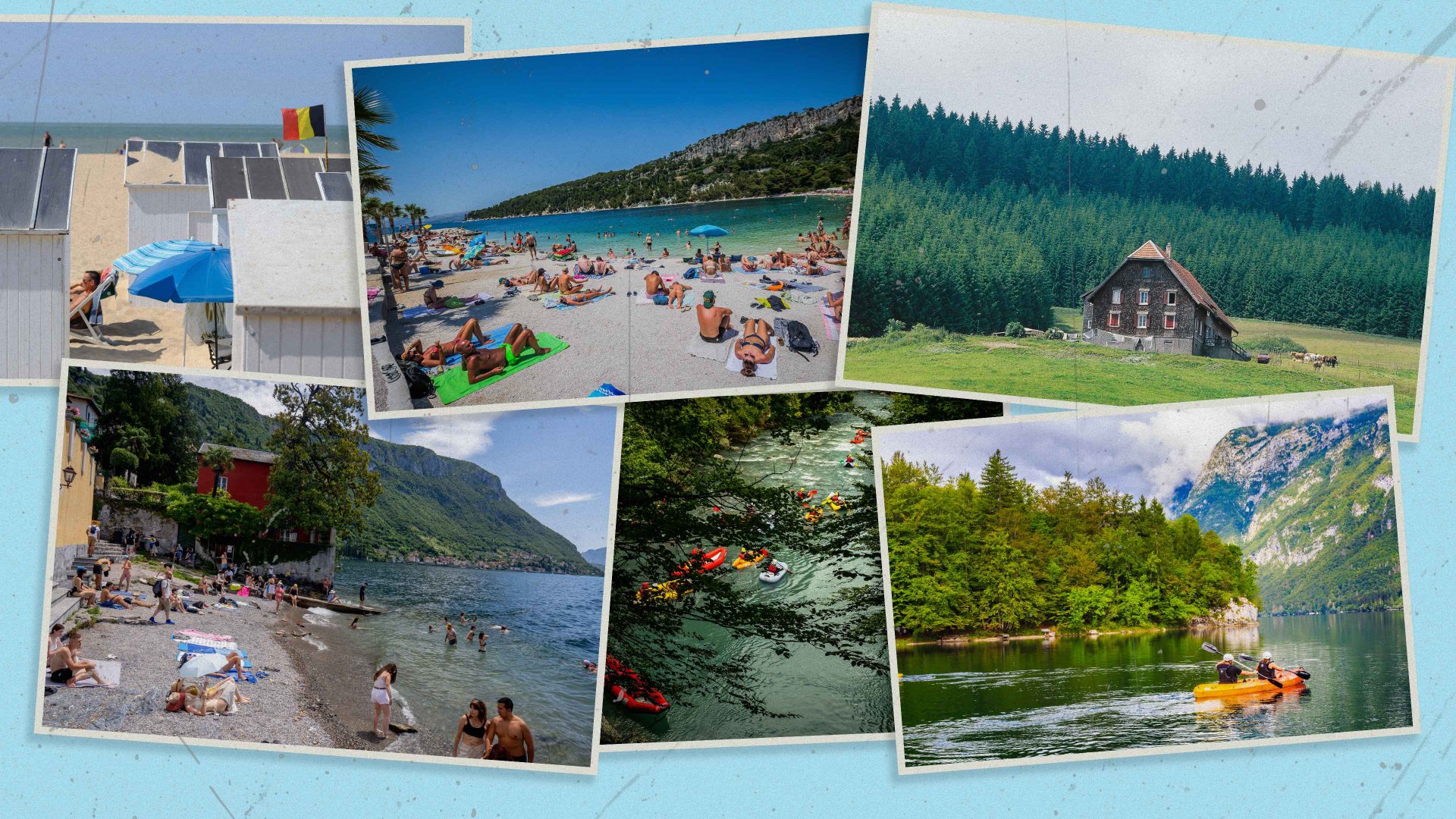
So France was too hot, in common with most of the world since its leaders stopped being serious about climate change; in Italy we stayed with friends at a place so beautiful I promised not to reveal where it was as it is so unspoilt; the drive through Croatia was fabulous if, like me, you love trees; Slovenia’s landscapes are on a par with the best of Scotland, and the people similarly warm and friendly; Austria had the best service station salad bar I have ever seen; in Germany, we revisited Baden-Baden, which is like a tree porn site, has one of my favourite bookshops, one of Fiona’s favourite hotels, and an assiduous vet who did all the post-Brexit nonsense that dog owners have to do since the 2016 act of self-harm. Last stop before home was Ostend, whose seafront has been transformed since I was a young busker there 50 years ago.
So many highlights, but a recurring theme was bumping into Americans who could not get over how varied, how interesting, how modern and how ancient, how so very special Europe is. The Trump-Vance-Musk-MAGA machine puts in a lot of time, effort and money into portraying Europe as broken, and suffering from “civilisational erasure,” as the US national security strategy calls it, helped in this by FarageLoweRobinson and the right wing rags.
Thankfully, Americans with passports, brains and open minds know different.