When is a member of something not a member? When it is an “associate member”, apparently… whatever that means.
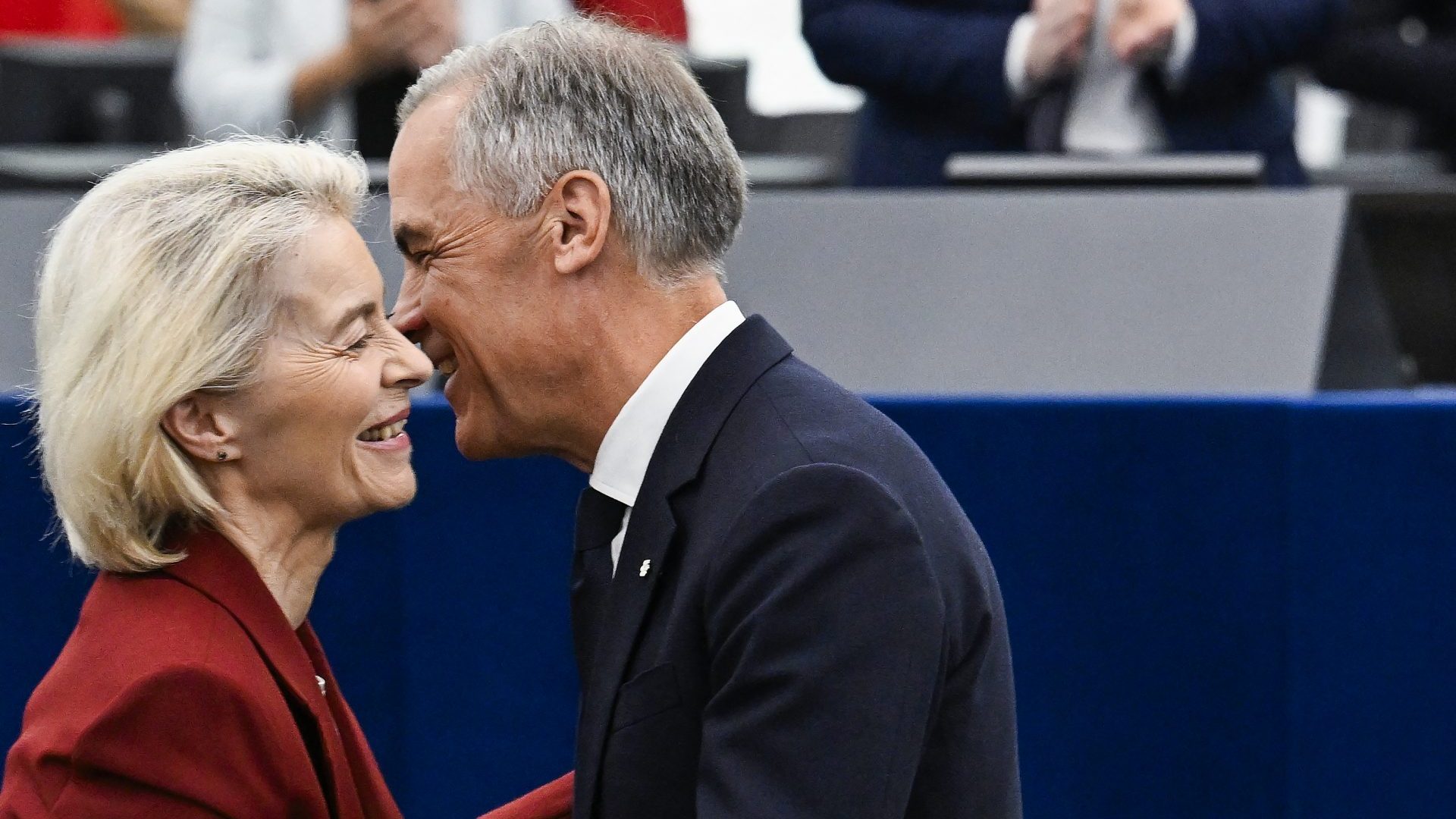
European Commission president Ursula von der Leyen’s show-stopping invitation, during her annual State of the Union speech this week, for Canada to have “associate EU membership” was surprising for many reasons.
One was that it remains unclear whether von der Leyen had checked in advance that Canada wanted to be offered such a status, although prime minister Mark Carney has been advocating for closer alignment in the face of an increasingly belligerent and erratic Washington DC.
The other is that it appeared to fly in the face of everything the EU has said for decades. For all the occasional talk of concentric circles, of a “two-speed Europe”, where the word membership was concerned there was no half-in option: states were either a member of the Union, with its four freedoms and all that entails, or they were not. Cherry-picking was not an option.
Now it appears that political reality concentrates minds. It is not immediately obvious what associate membership means, especially as the EU and Canada haven’t been able to implement even the deal they have at present (10 EU member countries including France, Poland and Italy are yet to ratify the EU-Canada free trade agreement nearly a decade after it was signed, largely amid concerns over Canadian agricultural produce flooding the continent).
Von der Leyen says associate membership will create an “alliance for the future to create a common prosperity and economic security space”, which, as Joël Reland of UK in a Changing Europe has written, is “deliciously vague”. Will Canada in effect join the single market? In which case, will it sign up to frictionless trade and, if so, will they find some artful way of Canada contributing to those rules without sending MEPs to Brussels?
We don’t know. What we do know is that Canada has lots of critical raw materials and rare earths, both of which the EU would very much like to wean itself off its dependence on China, and Canada would quite like a market in which to sell its goods, which Trumpite America no longer wants. And it turns out in such geopolitical times that the EU can be rather less narrow in its thinking.
Inevitably, this move will – and already has – pose questions about Andy Burnham’s proposed reset with the EU, and if associate membership might be an option for the UK.
Initial mood music from Brussels is a big no, with an obvious reason: Canada is not in Europe, and therefore membership of the EU is not an option. For the UK it is, and indeed was, and thus if it – or Ukraine, Moldova, Georgia or Norway – wants in, it’s full membership, bells and whistles, or nothing at all.
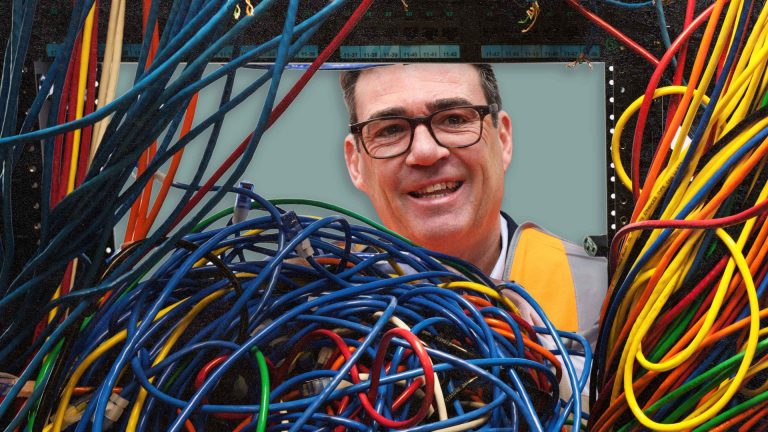

But it does show a flexibility of thought in the Commission if Burnham is prepared to explore what might be achieved beyond his current very narrow ambitions of agrifood, carbon markets, joining the internal electricity market and youth visas, all of which began under his predecessor, Keir Starmer. The EU might be finally waking up to the, ahem, new world. New partnerships, von der Leyen said, were needed “in the cold fragility of today’s world”.
As the Labour MP Stella Creasy said this week, “even if this doesn’t progress past aspiration there can be no doubting that Mark Carney has shown what you can achieve with a clear ambitious message, and a focus on common challenges not red lines”.
After Iceland’s rejection of opening talks on membership of the EU in a referendum last month, Fabian Zuleeg, the chief executive of the European Policy Centre, suggested it was time that the EU developed new models which might offer “partial, gradual or associated membership options”. It seems it is now open to the idea.
None of which is to say the EU would happily grant the UK such a status overnight. Canada, after all, did not file for an unnecessarily acrimonious divorce just a decade ago. But it suggests that maybe – just maybe – the door might be slightly ajar, were Burnham just to lean a little more heavily on it.
 Most popular

Emily Maitlis’s diary: As I was saying to George Clooney just the other day…

A new film about Elon Musk reveals him as so awful it’s almost tragic. Almost
Never again? Think again. The far right’s resurgence in Germany should terrify all Europeans
There’s only one reason Trump went to Ireland – it wasn’t to meet the Taoiseach