

“Britain will become the first country in the world where it is impossible for children to take, share or view naked pictures on their devices,” said the Home Office press release. One imagines Jess Phillips was pleased to see a policy she has lobbied for being PRed into existence. She resigned from the cabinet just over a month ago over Keir Starmer’s “stalled and delayed” promises around online safety for children.
The other people who will be pleased are the directors of SafeToNet, the company cited in the announcement as a concrete example of the policy’s viability. The company has long sought to cosy up to government. It was cited by Oliver Dowden, the former culture secretary, in early debates about the Online Safety Bill back in 2020. It has now effectively had its “Harmblock” technology endorsed by the UK administration.
But it is not clear, though, whether its implementation is a good idea – or even possible.
Of course, the production and dissemination of CSAM is a serious issue. Nearly 37,000 child sexual abuse image offences were recorded in the UK in the period 2024/25, and it is true that a significant proportion of these were self-generated.
Tackling this issue requires better, more workable solutions (education! platform liabilities!) than a software-based Hail Mary from a single provider, however successfully it has lobbied government to convince ministers that it’s the only solution in town.
The Home Office statement says that SafeToNet has created “software that blocks nude content and prevents images being taken if the camera detects a child”. This isn’t, in fact, how the tech is supposed to work. It claims to detect nudity, not age.
But what’s important to note here is that while this might be true, we only have SafeToNet’s word for it. The company hasn’t to date provided any white papers or peer reviews of their tech. All there is to go on is their own marketing.
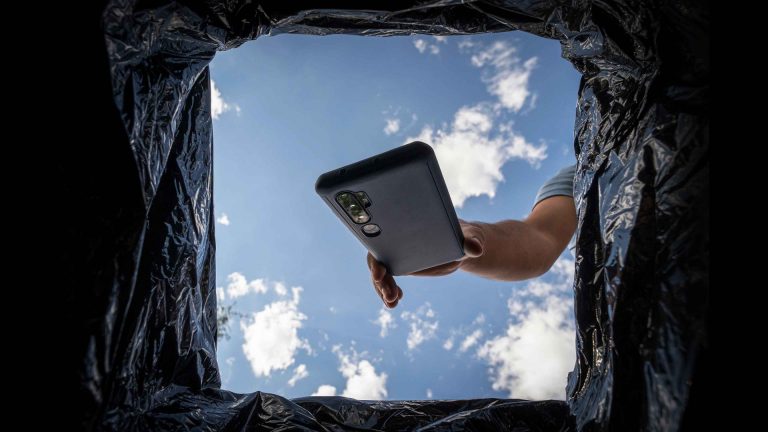
And according to that marketing, Harmblock – the software in question – works like this. Installed as part of a phone’s operating system, the programme takes regular low-res screenshots of a users’ phone and uses AI to analyse them; if it detects something that looks like nudity, it blocks the image from appearing on-screen. It works across the phone’s camera, its apps, its storage and the browser, in theory meaning that users can be prevented from seeing (or saving) any image that the AI believes features too much flesh.
There are some questions about this. For a start, there’s very little information available from SafeToNet about what sort of AI is being used, and the dataset it has been trained on. The company claims it has been “ethically sourced”, but what this means in practice is unclear.
Suggested Reading


Don’t ban kids from social media – the real problem are the over-60s
There’s no clear information about its performance, specifically the degree to which Harmblock throws up false positives and false negatives, and how that changes by content type. There’s nothing to suggest that independent researchers have been allowed to conduct tests to see whether it actually works.
Then there’s the question of privacy. Little information is available about what the system does with the screenshots it takes of a user’s phone activity, and privacy campaigners have warned of a potential slippery slope. Big Brother Watch director Silkie Carlo said: “protecting children online is vital, but these are outrageous plans that will fail to address the underlying causes of online harm.”
“These plans would replace efforts for meaningful tech and parental responsibility with performative, authoritarian government control that children can easily circumvent by accessing adult-registered devices. However, for the UK’s 50 million adults using the internet, this backdoor digital ID requirement would invoke the death of anonymity and internet privacy.”
Exactly how this could be implemented at a device level on every phone in the UK within the government’s desired three month timescale is also a big question. There is one device on the market that currently ships with Harmblock installed, but that’s a custom phone – the HMD Fuse – built with a bespoke operating system from the ground up.
Installing this sort of software on every single Android and iOS phone in the country – across all devices and networks – is a little harder. The Age Verification Providers Association says, bluntly, that “building the novel cross-platform architecture that appears to be envisaged, together with the associated technical standards, liability framework and commercial arrangements, is, with the best will in the world, not achievable as fast as ministers require.”

It’s also worth noting that SafeToNet is itself a curious company. It’s been pushing variants of its “anti-sexting technology” for years, even being lauded by that notable champion of women and girls’ safety, Prince Andrew, at his “Pitch at the Palace” events as early as 2017. The company’s founder, Sharon Pursey, told the Daily Mail in 2019 that “the duke’s ‘little black book’ has opened countless business opportunities.”
There’s also a slightly-odd religious subtext to this. A YouTube video from 2025 shows Sharon and Richard Pursey talking onstage about how theirs is a mission from God and it was, apparently, He who has “created the safest phone in the world”. All entirely normal stuff.
Still, what does it matter if the tech works, if it’s a privacy nightmare, or if it’s even possible to install it on tens of millions of devices within three months? Who cares if the people behind it are evangelicals who believe that they’re doing the work of the divine by protecting kids from onscreen flesh? Keir got an eyecatching policy announcement, and either a fillip to his hopes of seeing off the Burnham challenge or a Defining Legacy Moment.
As is common with this government’s approach to technology, announcements are made with more of a focus on the reaction of Mumsnet than the viability of implementation. Still, it makes for a good headline, and that’s what matters.
 Most popular

I was at Eton with Charles Spencer – this is how it explains his battle with the royals

Emily Maitlis’s diary: My deep dive into Jeffrey Epstein’s hidden empire – and the network that let him get away with it

The Greens’ foolish anti-Zionism vote is a disaster for Zack Polanski

Putin’s wartime economy is heading for catastrophe