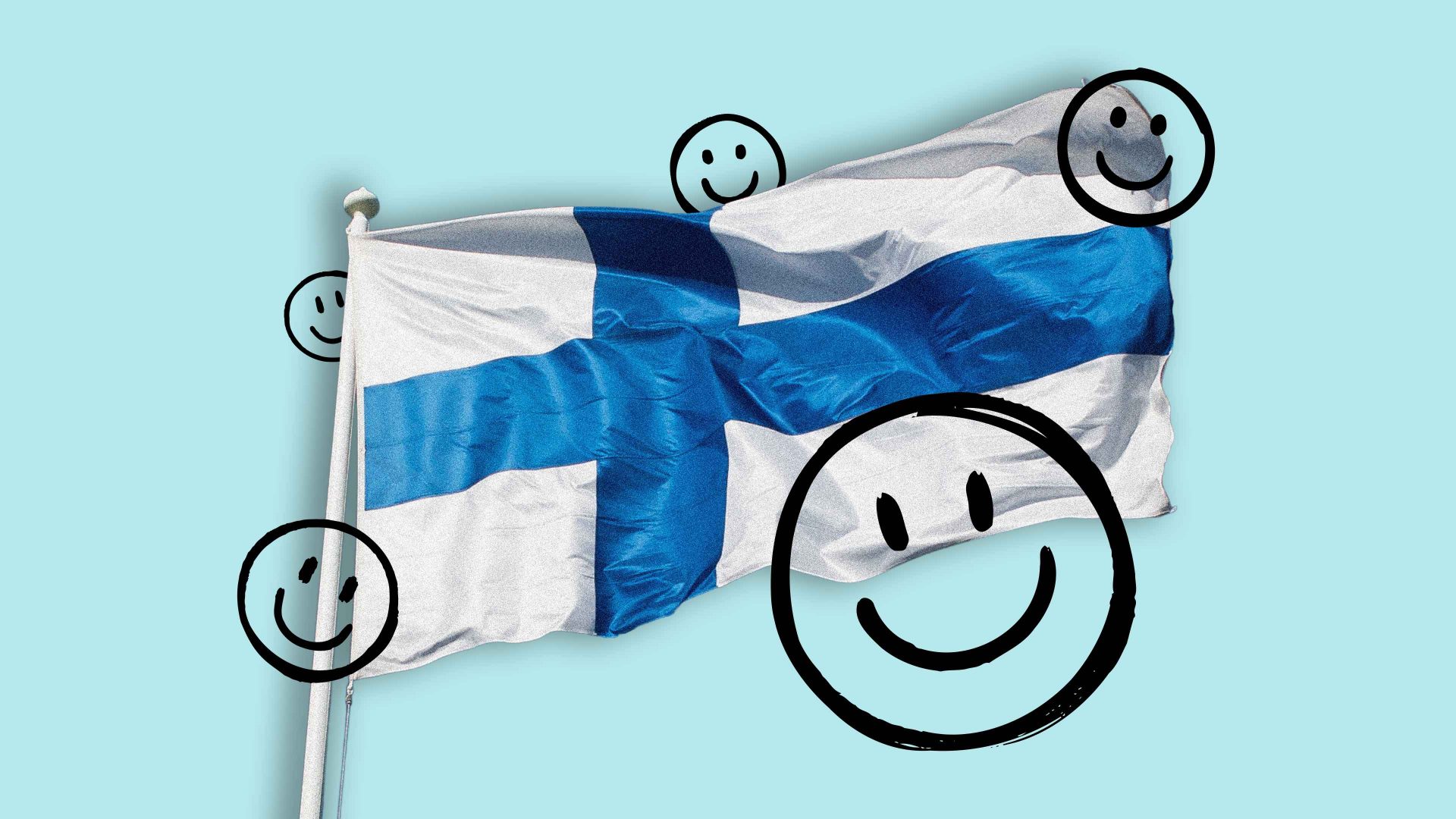
To Finland… which, for eight years in a row, has been named “Happiest Country in the World”. There was even more happiness than usual last week, the Finns celebrating being crowned ice hockey world champions after defeating Switzerland by a golden goal in Zurich.
Perhaps more happiness than usual, too, because the weather was absolutely perfect. Warm and sunny, but not humid, and given that we are getting closer to the longest day of the year, light for almost 24 hours.
Luckily, I had thick curtains in my Helsinki hotel room. Otherwise, as happened the last time I was here, I would have really struggled to sleep. Back then, in Tampere, I found that suddenly waking at 3am to discover it was broad daylight outside made falling back to sleep impossible.
“You get used to it,” everyone assured me. But what I find remarkable is that at the other end of the weather scale, when winter comes, it is darkness and freezing cold that dominate, and yet, still, those Happiest Country in the World triumphs keep on coming.
“You get used to it,” the Finns assured me on that one too. I’m really not sure I would. One of my worst childhood memories was of leaving home to walk to school when it wasn’t yet fully light.
I could definitely get used to this summer version of Helsinki though. So clean. Great trams. Nice trees and stunning statues. Friendly people. The Ukrainian flag flying from plenty of buildings, as a reminder of whose side they are on in the war provoked by their Russian neighbour.
The Baltic Sea nearby and swimmable. And my idea of heaven down by the port, an open-air, three-pool swimming centre, one of them fresh seawater at a refreshing 10C, saunas galore – my God, they do love their saunas – and a rooftop restaurant serving salmon soup for lunch. Happy days.
Among the reasons given for the Finns’ happiness, which is measured by Oxford University’s Wellbeing Research Centre, are their comprehensive social support system, strong civic engagement, low crime rates, work-life balance, hardly any corruption, trust in institutions.
I reckon nature tops them all, though, with their vast forests and numerous lakes. Their love of nature also perhaps partly explains why the Finns have done a better job than most in making the transition from dirty fuels to renewables, free from the absurd arguments of the climate change deniers who are part of this debate in the UK and the US.
They had no idea that Reform UK now routinely refer to “net stupid zero”, which suggested to them that rank stupidity has sadly entered our climate politics.
Suggested Reading
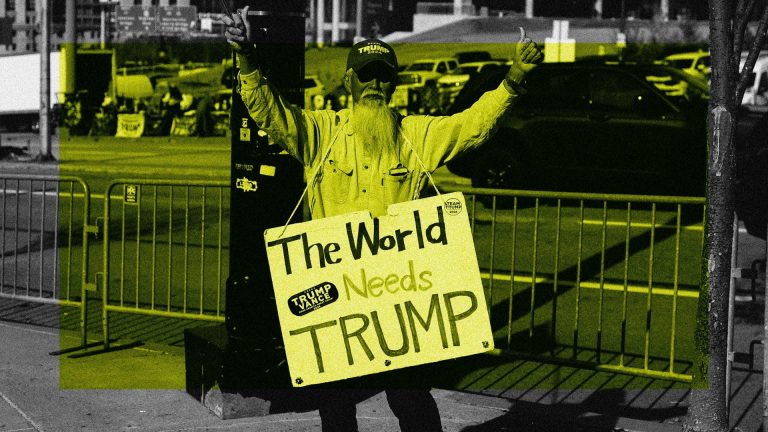
My airport row with a Trump supporter
As for the US, check out energy secretary Chris Wright standing behind Donald Trump, claiming US petrol prices have been driven up more by “Democratic green policies” than the war in Iran. Gaslighting. Madness.
The Nordics really value their environment. Taking renewables and nuclear power together, more than 90% of Finland’s electricity production is fossil-free. Iceland’s power is 100% renewable electricity. In Norway, every single new car sold is now electric battery-run.
I was there for a conference hosted by Eurelectric, the federation representing Europe’s electricity industry. It was opened by the president, Alexander Stubb, one of the brightest political leaders de nos jours.
He gave us a Finnish proverb… “A pessimist will never be disappointed”…, but said he preferred to be optimistic because “optimists have more fun in life”.
His public speaking style relies very much on the triptych, structuring his thoughts and arguments in threes. Examples: “We over-rationalise the past. We over dramatise the present. We underestimate the future.” “We became reliant on Russia for our energy, China for our economy, the USA for our security.” “EU decision-making goes in three stages … crisis, chaos, followed by sub-optimal solutions.”
No wonder, then, that he wrote a book called The Triangle of Power, based on the notion that the world has three great political forces … the west led by the USA, the east led by China, and, increasingly, the countries of the global south.
When we chatted at the Munich Security Conference a few months ago, we discussed whether the triangle should not become a rectangle, with Europe as the fourth corner. So I was pleased to hear him say he now felt perhaps he should have called it The Rectangle of Power in the first place. Next edition maybe?
Another triptych: “We face security pressure from Russia, economic pressure from China, political pressure from the USA.” His response was threefold too: Europe has to get its act together, and actually implement the Draghi reports on competitiveness; Europe has to become stronger militarily; and Europe needs the next wave of enlargement.
He described enlargement as “the best policy Europe has ever had”. But it has stalled.
His vision of enlargement – if need be, with different rules for different countries at different times – includes not just the current candidate countries in the Balkans who are getting tired of waiting, but the UK, Ukraine, Norway and Iceland (who will soon have a referendum on whether to re-open talks about possible entry).
He added Turkey into the mix, despite concerns about democratic backsliding, precisely because of their military strength. And Canada too. “Wouldn’t it be wonderful if Canada became the 28th state of the EU, rather than the 51st state of the USA?” Indeed it would.
Stubb is one of the few European leaders Donald Trump seems to respect, helped by his scratch golf handicap and his impressive Iron Man times. But though he did not spell it out in words of one syllable, if I read between the words, the message was pretty clear… as Ukraine has learned, the US is no longer a reliable partner, so if we want security guarantees against Russia, we have to develop our own.
President Stubb invited me for dinner at his recently refurbished official residence, about 20 minutes from the city centre, which may well have overtaken La Moncloa, the Spanish PM’s offices in Madrid, as my favourite government building. Architecturally stunning, in beautiful grounds, overlooking the Baltic and some islands in the near-distance, it is a curious mix of James Bond lair and cool, efficient Scandi comfort.
I met his British-born wife, Suzanne, for the first time, who has made a really positive impression on the Finnish public for the simple fact that she has learned the language, and speaks it well enough to do speeches and interviews. We Brits are notoriously bad at learning languages, and Finnish is a notoriously difficult language, which makes it all the more impressive.
Oh, and she has done the Iron Man too; which, in case you didn’t know, means swimming 2.4 miles, cycling 112 miles, then running a marathon. The Stubbs must be the fittest power couple politics has ever produced.
I had a meeting with the chief executives of the big energy organisations from the entire region, and the most interesting thing I learned was this: back when the North Sea oil was flowing, if the UK government had set up a Sovereign Wealth Fund along the lines of the one set up by Norway, where oil was flowing even more strongly, we would today be richer to the tune of £700bn.
If politics, government and leadership are about preparing your country for the future, it is hard to escape the view that, faced with a very similar boon, Norway made a much better job of it than we did.