Constituencies are strange and often arbitrary things. Created as a way of splitting the UK into 650 roughly equal areas for the purposes of representation in Westminster, they often ignore local history and political geography.
Makerfield is one such seat. There is no town called “Makerfield” nor any unique identity particular to the constituency. Instead, it is a constituency formed of a handful of Wigan’s suburbs, a few other nearby towns and the countryside between them.
Around a third of the seat is cut off from the rest by the M6. There has been little to bring the disparate elements of this seat together – at least, until now.
The voters of Makerfield have been given the unique opportunity to – in practice, if not in theory – directly elect the next prime minister, something unprecedented in British politics. By-elections are usually triggered either by the death of a serving MP, or else when one is forced out by scandal.
This one was different. Josh Simons, the outgoing MP for the seat, had resigned his ministerial role amid a row over spying on journalists while leading the think tank Labour Together. But his resignation as an MP was a deliberate act to allow Andy Burnham to challenge Keir Starmer for the premiership. This contest is something Labour brought upon itself, thrusting Makerfield into the spotlight as it did so.
Visiting the seat, it is clear the people of the area feel ambivalent about their newfound role as the centre of attention for the nation’s politics. Ashton-in-Makerfield – typically just known as Ashton by locals – is bearing the brunt of media attention, perhaps because of its name, and with weeks still to go they are already tiring of it.
An influencer in a suit emblazoned with union flags tries to record a man-in-the-street video – though his man-in-the-street is mic’d up and reading off cue cards – outside a Wetherspoons. Locals barely even spare him a look as they enter the pub.
Makerfield is precisely the sort of seat that it’s become obligatory to say is “ignored” or “left behind” by the Westminster elite. That’s certainly a narrative that both serious candidates in the constituency are happy to embrace. Labour’s Burnham and Reform’s Robert Kenyon are falling over to present themselves as the best champion for the local area, pushing local issues, giving “forgotten” Makerfield a voice.
It is, of course, understandable that both candidates would tell Makerfield’s voters as much. They assume it’s what they want to hear. In reality, though, the narrative is nonsense. The past decade of politics has been dominated by both major parties going all out to give voters in seats such as Makerfield exactly what they want.
Makerfield has been a solidly Labour seat for decades, but it also voted to leave in the Brexit referendum by an estimated 65% to 35%. It is located squarely in the red wall, and is made up of small towns rather than cities. This is exactly the kind of seat that was so ruthlessly and effectively targeted by Boris Johnson in his 2019 landslide election – even if Labour held on to Makerfield itself with a majority of around 5,000.
But it is not only the Conservatives that have hyper-focused on places such as Makerfield in the years following the Brexit vote. This is exactly the kind of seat Morgan McSweeney put at the centre of Labour’s strategy under Keir Starmer – deliberately alienating Labour’s new core vote of younger, urban liberals to try to appeal to Reform-curious older voters.
Both Starmer and McSweeney can claim this strategy worked, to a point. Labour’s vote share in cities dropped in 2024, but the party won back red wall seats to secure a landslide. But in the two years since the general election, trying to straddle the desires of both sets of voters has plunged the government into historic unpopularity.


The real story of the last decade is not that Makerfield and places like it have been ignored. Instead, it’s that both Labour and the Conservatives went all out to win over people in seats such as this one – and both are now broadly loathed after their efforts.
The Conservatives, historically second place in Makerfield, are set to lose their deposit in this by-election. Reform won every council seat that was contested in the constituency last month. It is very obvious that any Labour candidate other than Burnham would lose this by-election by a landslide.
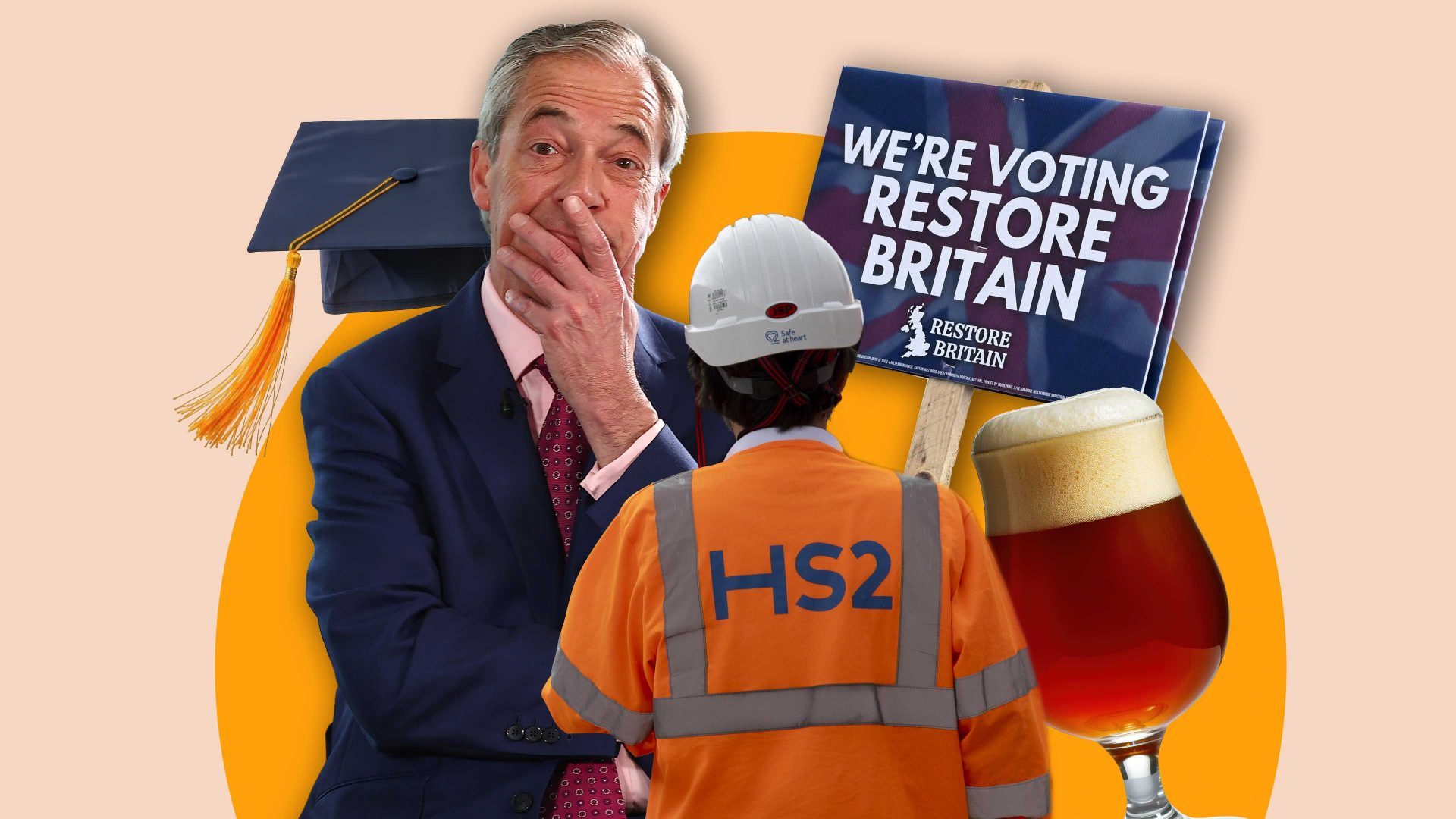
Burnham and his campaign team are clearly well aware of that. The posters in windows across the constituency tell that story all on their own. Two are happy to name their parties: “WE’RE VOTING RESTORE BRITAIN” and “VOTE REFORM UK 18TH JUNE” can be seen in plenty of windows.
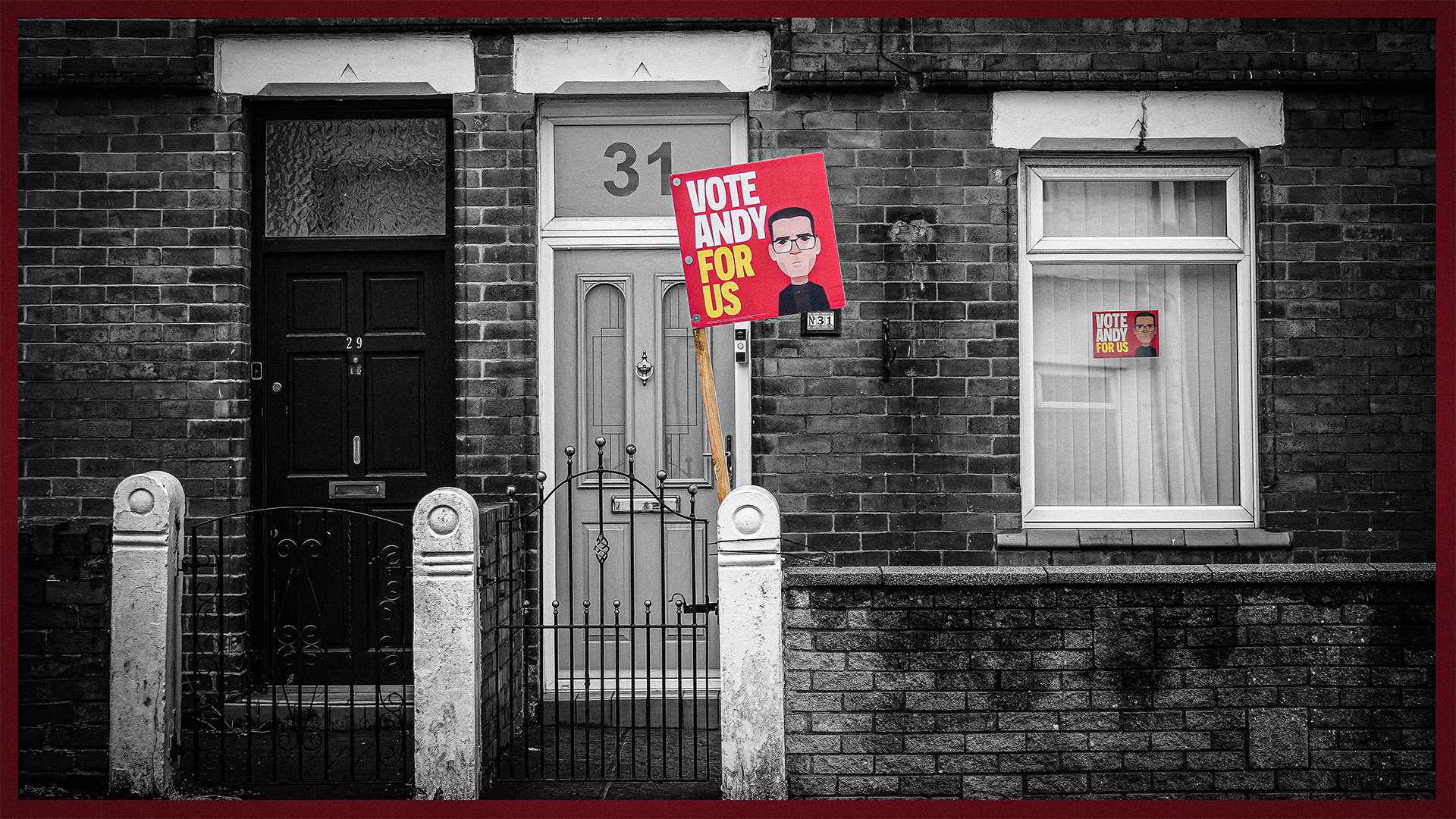
The name of “Labour”, though, is absolutely nowhere to be found. Instead, bright red posters saying “VOTE ANDY FOR US” signal support for the mayor of Greater Manchester.
The Labour branding has been scrubbed entirely. Early in the campaign, canvassers from out of town brought along their Labour-branded merchandise or stickers. Now, they go out without it – at least until some “VOTE ANDY” badges and stickers are printed instead.
Labour canvassers readily admit that their unofficial message on the doorstep is unconventional for a governing party – one tells me that he had taken to telling undecided voters that voting for Burnham was the quickest way to get rid of Starmer. He said the message seemed to be proving quite effective.
Burnham might have ditched the Labour Party branding, but he still has the party machinery behind him. Labour activists from across the country are travelling in to support him, as are MPs and frontbenchers. Jonathan Reynolds – who as chief whip is responsible for ensuring MPs are loyal to the leadership – has been in the seat campaigning for the man seeking to topple his boss. There is a deeply bizarre air to much of the contest.
The Burnham campaign seems to be leaning heavily on one cabinet ally in particular: Ed Miliband. Multiple Labour campaigners in the area believe Burnham and Miliband are holding daily or near-daily strategy calls, while Miliband adviser Grace Pritchard has been seconded to run the campaign’s communications.
No one in Labour wants to take Makerfield for granted, even if they are increasingly confident of a win, but everyone involved has a very clear eye on what might come next – and very quickly – should Burnham win.
The result is a bizarre general election through the eyes of one constituency only, with Burnham making exactly the kind of campaign pledges and giveaways parties typically make during such contests.
Burnham has hinted at cuts to income tax during his BBC Question Time appearance, and promised cuts to business rates for high street shops and pubs. He has walked back his support for building on green belt land, and softened his previous support for rejoining the European Union.
Even pro-EU activists in the area are fairly forgiving of Burnham for doing what it takes to win the seat, and neither the Green Party nor the Liberal Democrats are actively campaigning in the race, reducing the risk of splitting the anti-Reform vote virtually to zero.
Activists in the area seem glad of that focus. Veteran pro-EU campaigner Josh Hindle, who lives in the constituency, is one of the administrators of a 6,000-strong Facebook group that has had anti-Brexit activity as its main focus.
For the election, though, it has rebranded as Wigan for Progress – not least as a rival page, organised by Restore Britain, has managed to amass 10,000 followers in less than a year.
“This sentiment has always been there in areas like this, but it’s now permeated more into the mainstream, and the complete reckless abandon for any sense of moderation within social media companies has just exacerbated this tenfold,” says Hindle.
He believes that even if Burnham wins the by-election, it is virtually inevitable that Reform will take over the council in next year’s local elections – and so beating back the populists is his priority.
“We can’t look at results like this and think to ourselves, well, these places are obviously just right wing or they’ve turned right wing,” he says, instead viewing the rise of Reform and Restore as a backlash against political failure. The danger gets worse if Labour and others simply accept Reform’s framing of politics.
“This is the most dangerous thing, where the first victims of this are areas like mine,” he says. “The most likely outcome that it’s going to be is that young people and people with disabilities are going to end up being on the chopping block for really draconian cuts for the sake of what they consider to be DEI, and whatever else they’re copying from the GOP in America.”
The contest in Makerfield is not an optimistic one. No one involved is trying to say the country is being run well, or that the government is doing a good job. Instead, each is trying to present themselves as the best chance of throwing off the unhappy present.
Things are already fractious: on at least two occasions, intemperate words between Reform and Restore activists have reportedly resulted in scuffles, while Labour canvassers report being run off by irate Restore voters. In some ways, the choice on offer to Makerfield is a middle finger to Westminster with a red rosette or a light blue one.
Burnham could still lose this race, though polling by Survation suggests he is about 10 points ahead in the contest as it stands. Many voters are undecided, and a major news story or scandal could upend things – and polling has been known to be wrong. Barring upsets, though, Burnham is likely to be the next MP for the seat, and soon afterwards is likely to be the prime minister.
Whether Burnham is actually promising Makerfield anything new, though, is a much more open question. The Conservatives won the 2019 general election by promising the red wall they could deliver better services, lower taxes and make Brexit work. Labour won in 2024 by promising better services, without tax rises, and that they could fix Brexit.
So far, Burnham’s “new” offer to Makerfield looks an awful lot like what has come before – a promise that this time, he is the man who somehow actually can offer lower taxes and better services, while also being a voice for “the north”. It is not entirely clear how voters in London – Labour’s last remaining heartland – are supposed to feel about that once he is prime minister.
Suggested Reading


What Andy Burnham’s by-election playlist says about him
Burnham is running in Makerfield because that’s where he found an MP who was willing to resign to make room for him. But the very makeup of the seat means that Burnham’s prime ministerial career will rely upon straddling the exact same awkward divide that Starmer tried and failed to bridge – holding cities against a resurgent Green Party, while delivering on impossible something-for-nothing promises to the red wall.
For now, Burnham can make this work because voters genuinely don’t associate him with the government. His personal popularity in the region is real, and voters don’t blame him for Starmer’s record.
At the next general election, though, Burnham will be the incumbent MP and the incumbent prime minister – and so far, he is trying the same tactic of telling Makerfield’s voters what he thinks they want to hear, and ducking any tough choices on public finances, higher taxes or our long-term relationship with Europe.
The Burnham operation in Makerfield is truly impressive, and seems likely to defy political gravity – getting him elected as a Labour MP just weeks after the seat went by a landslide to Reform in local elections.
But that one-man lonely landslide also feels like it is planting seeds of what might grow into Burnham’s undoing – a campaign committing him to the same tactics and constraints that took down Johnson, Sunak and Starmer, especially once Burnham becomes just another incumbent.
Makerfield is in the spotlight, whether it likes it or not. Andy Burnham is promising to deliver what the constituency wants – but does he actually know what it needs?