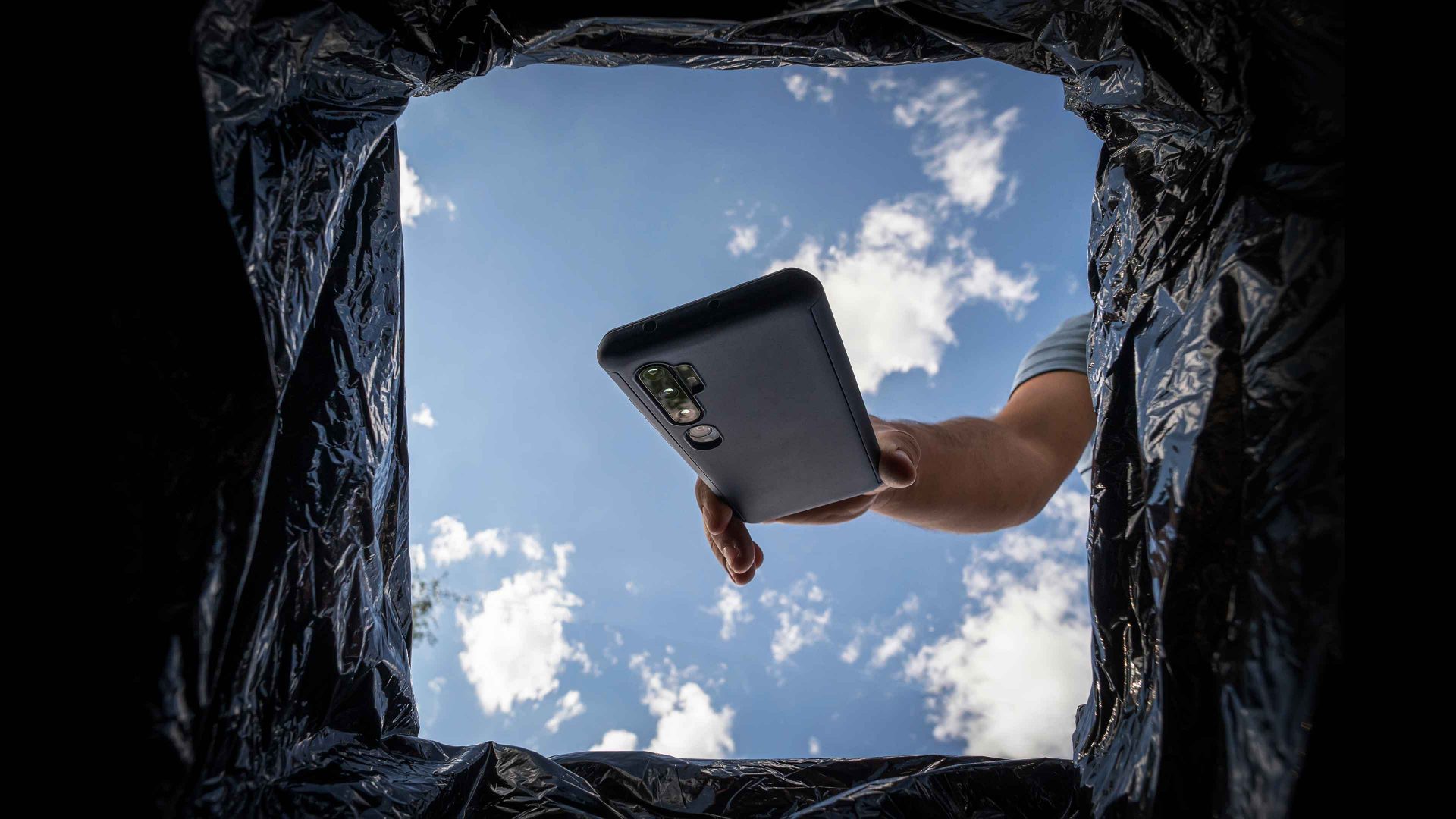
I started secondary school in 2015, and for my first few years phones were effectively contraband. If you were caught with one – even glancing towards your blazer pocket was enough to arouse suspicion – it would be confiscated until the end of the day. But slowly, and quietly, they began to creep into school life more and more, to the point where now it feels as though they’d have to be surgically removed.
It happened in small, reasonable concessions. Teachers would tell students to take a photo of the homework written on the board. Or remind them to message absent classmates to check in. And then, the shining reward at the end of the lesson: a Kahoot (a quiz that students play online). All educational, yes, but it subtly normalised the idea of having your phone out in class.
And that’s before you factor in what happened after Covid. Overnight, the boundary between school and home dissolved. Teachers and students could email each other at any hour – not in a sinister way, but in a way that meant homework might land in your inbox at 7pm, and questions about it might be sent back at 10.
Since that line was blurred, it has become very hard to put the genie back in the bottle: for example, according to a 2024 survey, phones disrupt 92% of lessons.
A teacher friend of mine described the sum total of his job as “a tiresome and constant battle to get pupils to put away their phones. It’s like a drug, they can’t help but sneak a look at every opportunity.”
Post-covid reliance on tech has also created a world for teens in which your phone is your entire life: not only your main method of communication, self expression, engagement with your interests, but now how you see your timetable, top up your lunch money, and turn in homework. No wonder there’s been a 52% increase in children’s screen time between 2020 and 2022.
For that reason, I am broadly supportive of the government U-turning and taking a firmer line on phone bans in schools. Removing phones from classrooms, and secondary education at large, does at least reinforce the idea that the world does not revolve around a constant stream of notifications. It would also, quite practically, make teaching easier.
But there’s something else going on here that a blanket ban doesn’t quite address. The omnipresence of tech in modern childhoods is also exposing – and in some cases deepening – class divisions.
You might assume this shows up in an obvious way: richer children with newer, flashier phones, poorer children left behind or bullied for it. And in some places, that’s probably true. But increasingly, it feels like the opposite dynamic is taking hold.
Think about the way class markers work in Britain. When Rishi Sunak was ridiculed for suggesting he didn’t grow up especially affluent because he didn’t have Sky TV, people were quick to point out that this, if anything, showed him up as more middle class.
Screen-free childhoods are beginning to follow the same pattern.
It is already in vogue for middle class parents to push for a smartphone-free upbringing. They’re more likely to read the endless headlines about the manosphere, or brain rot, or just be very into Montessori.
When I was a teen, it was often the kids from more middle class backgrounds who held onto brick phones until fourteen, while it was the children from more disadvantaged backgrounds who had iPhones in primary school.
Suggested Reading

Don’t ban kids from social media – the real problem are the over-60s
This is not conjecture – according to government data, children in the lowest income quintile have nearly double the screen time of those in the highest.
And to be clear, the difference isn’t about which parents love their children more – it’s about circumstance. It is much easier to limit screen time in households where parents work regular hours and family evenings can be structured around reading books or conversation, as opposed to families where parents might work night shifts or long hours. And, middle class families can afford to place their children in extracurricular activities that naturally replace time spent online.
One teacher speaking at the National Education Union conference this month noted that students without access to private tutoring are more likely to rely on tools like ChatGPT to do their schoolwork. And as we know, overreliance on AI leads to a cognitive deficit, especially in younger people.
When there are already so many class-based barriers in education – ones that determine how smooth your path into university is, that shapes how you speak in interviews – you now have another divide opening up; children who rely on tech, and those who don’t.
The benefits for those who have less tech-centered education, and life, go far beyond exam results. Because children who are effectively addicted to the internet – and it is an addiction – are more likely to develop mental health disorders: a third of children in the UK have been exposed to self-harm material.
And, they are obviously more likely to become dissatisfied with their appearance, absorbing impossible standards at younger and younger ages. The fact that toddlers are now performing skincare routines online, as reported in The Guardian, should be enough to make anyone’s skin crawl.
So yes – banning phones in schools is a good start. But it is not a complete solution. If anything, it risks obscuring the bigger issue – because if middle class children are the ones most likely to go home to screen limits, books, and structured activities, while others remain in largely unregulated online worlds, then the disparity only continues to grow.
We are at the early stages of a divide that we won’t fully understand for decades, one that may show up in differences in brain development, in attention, in resilience, in the ability to think independently.
In the future, we may find that the real root of success and potential lies not in access to technology, but rather in the ability to do without it.
 Most popular

I went looking for Trump’s America – this is what I found

18 things that will absolutely, definitely happen if Trump gets whopped in the midterms
Emily Maitlis’s diary: Why are we turning away the people who could make Britain richer?

‘The deep state stole my mini-budget’: An exclusive extract from Liz Truss’s new book