Though it is true that all political careers ultimately end in failure, as the saying goes, those seeking to reach high office should also be careful not to peak too early. Once the public has had a good look at you and decided that, all things considered, it didn’t much like what it saw, there will be little chance of you climbing back up in the opinion polls.
It isn’t entirely impossible, of course, but the road to success becomes considerably narrower if someone has dipped before. This is something that probably should keep Zack Polanski up at night. Like one of those sad adults who keeps fondly reminiscing about their time as one of the cool kids in high school, the leader of the Green Party in England and Wales has been in post for just over a year, but it seems that his best days are already behind him.
This week ought to be a great one for him and his party, as he is standing in the high-profile by-election of Holborn and St Pancras, to be held early in October, and is about to head to the Greens’ yearly shindig in Brighton. If there is a spotlight to be found, then Polanski should be at the centre of it.
Instead, new data released by YouGov on September 30 showed that – with apologies for what follows – it just isn’t that easy being green after all. Back in March, at their peak, 15% of voters said they were intending to vote for the party in a general election. Perhaps most importantly, 28% said they would consider voting for them.
The new leader had been in place for just over six months but, already, his potential seemed boundless. The figure for the former has now been stagnant at 11% since July, and the latter came down to a now-stable 23% in August.
Suggested Reading

Please Zack Polanski, never ever speak French again
Other figures present an even bleaker picture for the party. Back in April, still during the party’s great surge, 26% of people had a favourable opinion of Polanski, compared to 34% who had an unfavourable opinion of him – fairly impressive figures for a political figure in the 2020s.
Today, only 21% of people claimed to like the leader, and a whopping 50% said they didn’t – giving him a net favourability rating of minus 29. The only major party leader with a lower net score is Nigel Farage.
Perhaps unsurprisingly, only 21% of voters now believe he’s doing a good job as Green Party leader – down from 34% in April – and 48% believe he’s doing poorly in the role. Few politicians have ever gone through such a swift reversal of fortunes. It also seems hard to definitively say what happened, as Polanski hasn’t, say, tanked the economy like Liz Truss did, or had to weather a single huge scandal.
Instead, it may just be that, over the past six months, people have quite simply realised that he just doesn’t seem up to the job. An initial wave of enthusiasm was understandable, as Keir Starmer’s premiership was becoming increasingly unpopular, and people felt desperate for some energy and a sense of optimism emerging from somewhere. Though Polanski’s brand of left-wing populism managed to offer this at first, his edifice crumbled quickly.
At first there was the “hypnotits” problem: the revelation that he’d once suggested hypnotherapy could be used to augment a woman’s breast size. When caught out, he explained that he’d been a “young Londoner” at the time – he was 31 – and originally said he’d been misrepresented, before apologising.
The Red Cross kerfuffle followed, where he was found to have claimed that he’d worked as a spokesperson for the non-profit – something for which no-one ever found any proof. He eventually removed the claim from his website.
More recently, he refused to apologise for accidentally reposting a picture of a man wearing a t-shirt with a guillotine and the words “we’re only making plans for Nigel” on Instagram, arguing that he should not have to say sorry for what was “an inadvertent mistake”.
Suggested Reading
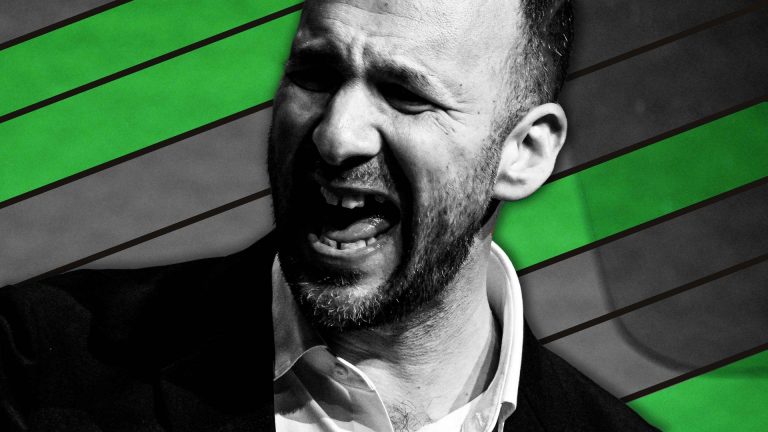

We need to talk about Zack Polanski
He also failed to vote in the local elections earlier this year, and got in hot water for not paying any council tax over the three years during which he lived on a houseboat. While Green party supporters have argued that these scandals are minor at best, and only published for cynical reasons, they all manage to say something about Polanski’s character, and his abilities as a political figure.
Because the Greens don’t really have a base in the House of Commons, their leaders are often, by definition, quite untested, and relatively unknown quantities. Though Polanski had been deputy leader before going for the top job, he was only able to start proving himself once he got elected.
It may seem a tad early to start writing the obituary of his political career but, one year in, the verdict does seem to be clear: if the Green party wants to be taken seriously, it must choose a serious figure to represent them. Polanski just doesn’t seem to be that person.
 Most popular

Churchill, the Beatles, St George: All the English heroes who aren’t actually English
The New World at 500: Independence isn’t our marketing slogan. It’s our business model
The problem is they just don’t care about us any more
Sorry Nigel, but the polls show you’ve had it