If racism is a constant, shifting in form while adapting to circumstance, Australia has its own way of expressing it. As the country examines antisemitism through a royal commission, it is confronting one manifestation of racism while continuing to live with another.
In Alice Springs, that divide has taken a brutal shape.
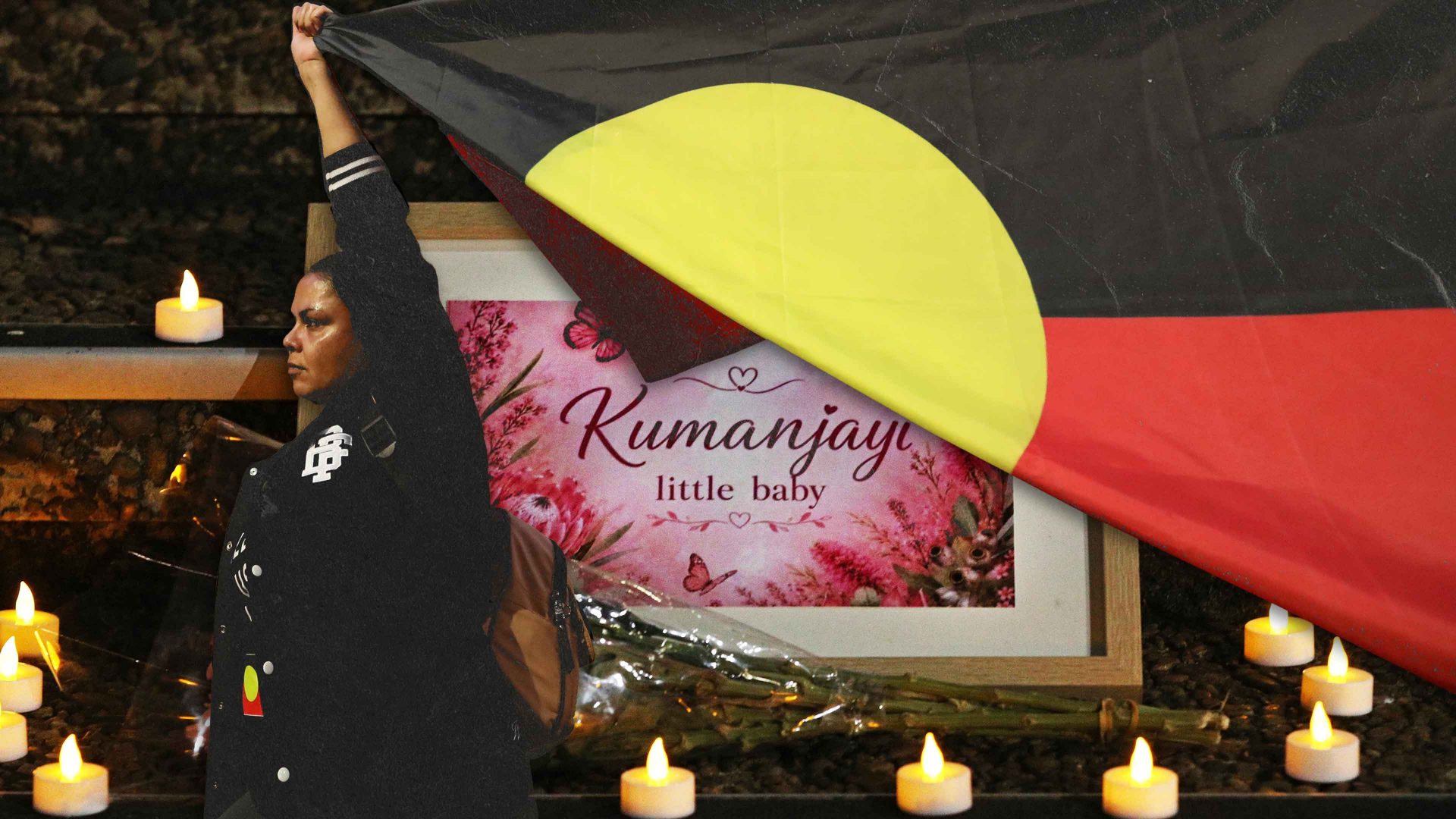
A five-year-old girl who went missing from her home in a First Nations township was later found dead. For five days, residents and law enforcement searched for the child. When her body was found, the unity fractured.
Calls for the accused to face traditional Indigenous justice, or “payback,” spilled into rioting and violence. Cars were set alight, emergency services were suspended, and alcohol sales were restricted.
Aboriginal elders, including the child’s grandfather, called for calm, warning that the unrest reflected a deeper trauma and a lack of trust in how the law is applied and whom it protects.
Suggested Reading


The Iran war has taught Australia a new, brutal truth about itself
What happened in Alice Springs was not an isolated failure. It reflects a deeper divide in Australia between the authority of the state and its credibility among some First Nations communities, where the law is present but not always trusted, and does not always protect.
The accused, 47-year-old Jefferson Lewis, has been formally charged with murder and sexual assault. He had only recently been released from prison and was staying at Ilyperenye, outside Alice Springs. He is reported to have a history of violence.
Community leaders later questioned how he was able to travel to Alice Springs and talk his way into the township without supervision. These are familiar questions.
Senator Jacinta Nampijinpa Price, the aunt of the dead child, has argued that violence and abuse in Indigenous communities are overlooked, and that efforts to force greater scrutiny run into resistance.
Attempts to confront the issue of child sexual abuse in remote communities, she said, hit “a wall” of denial, with authorities turning “a blind eye to little children like my niece… [whose] plight often just flies under the radar. It frustrates the hell out of me”.
Suggested Reading
Ghosts of the apartheid monster
In that context, calls for “payback” are not simply an eruption of anger. They reflect a parallel understanding of justice, one that takes hold when people believe that the formal system does not work for them.
In some parts of Australia, the law is at once both present and absent: heavily enforced, yet not consistently experienced as protective. Indigenous Australians remain among the most marginalised in a wealthy country, more likely to be policed, more likely to be imprisoned, and less likely to see the law operate in their favour than other Australians.
The most high-profile attempt to address this gap was the 2023 referendum on an Indigenous Voice to Parliament, an advisory body intended to give First Nations communities a say in the policies that affect them. Its failure closed off a pathway many had seen as a modest step toward redressing that divide.
That sat alongside a growing public language of recognition. References to “country” – ancestral lands – are now routine in public life: Sydney, for instance, is Gadigal land; Melbourne is Naarm land, Brisbane is Meanjin land. Ceremonies begin with acknowledgements of traditional custodians, and “welcome to country” has become a fixture of official events.
But the language of recognition has not settled the question of belonging. That was made clear at recent ANZAC Day commemorations, where opening “welcome to country” remarks by Ray Minniecon, an Indigenous veteran, were met with heckling. These were moments in which a national ritual collided with a still-contested idea of who it includes – and who it does not.
The backlash has been building. In 2015, Adam Goodes, an Australian rules football champion in a country where the game carries near-sacred status, spoke about racism. Goodes, who is from an Indigenous background, was driven out of the sport after a sustained campaign of booing. A year earlier, he had been named Australian of the Year. Journalist Stan Grant stepped back from public life after similar abuse. Both cases have underscored how conditional acceptance can be.
The murdered child – now referred to as Kumanjayi Little Baby in keeping with cultural practice -– is the clearest victim in this latest manifestation of the consequences. But the damage runs wider, through a community that is already carrying the weight of violence, and the conditions that allow it to endure.
Suggested Reading
The lesson Australian justice has for Trump – and for the world
Billions have been spent on policing, health, education, housing and legal services in a steady effort to manage the consequences, with far less success in addressing the causes of the violence. It has become a political football, shaped to suit competing audiences: appeasing outrage, reassuring leadership, and narrowing the space for serious debate.
In the wake of the Bondi Beach killings last December, Australia has moved to examine antisemitism, in a necessary response to a visible and shocking form of racism.
The harder question is why other forms, no less entrenched, continue to be absorbed rather than addressed. Alice Springs offers an answer. The death of a child, and the violence that followed, are expressions of a divide the country has yet to resolve.
That divide is not hidden. It is lived, and it endures.