Anzac Day begins in the half-light, with the same language repeated each year since 1916 – of service, sacrifice and mateship – and an implicit understanding of war: that those sent to fight do so within limits that separate soldiering from brutality.
It is a language most Australians know by heart, even if few have seen what it looks like when those limits are pushed.
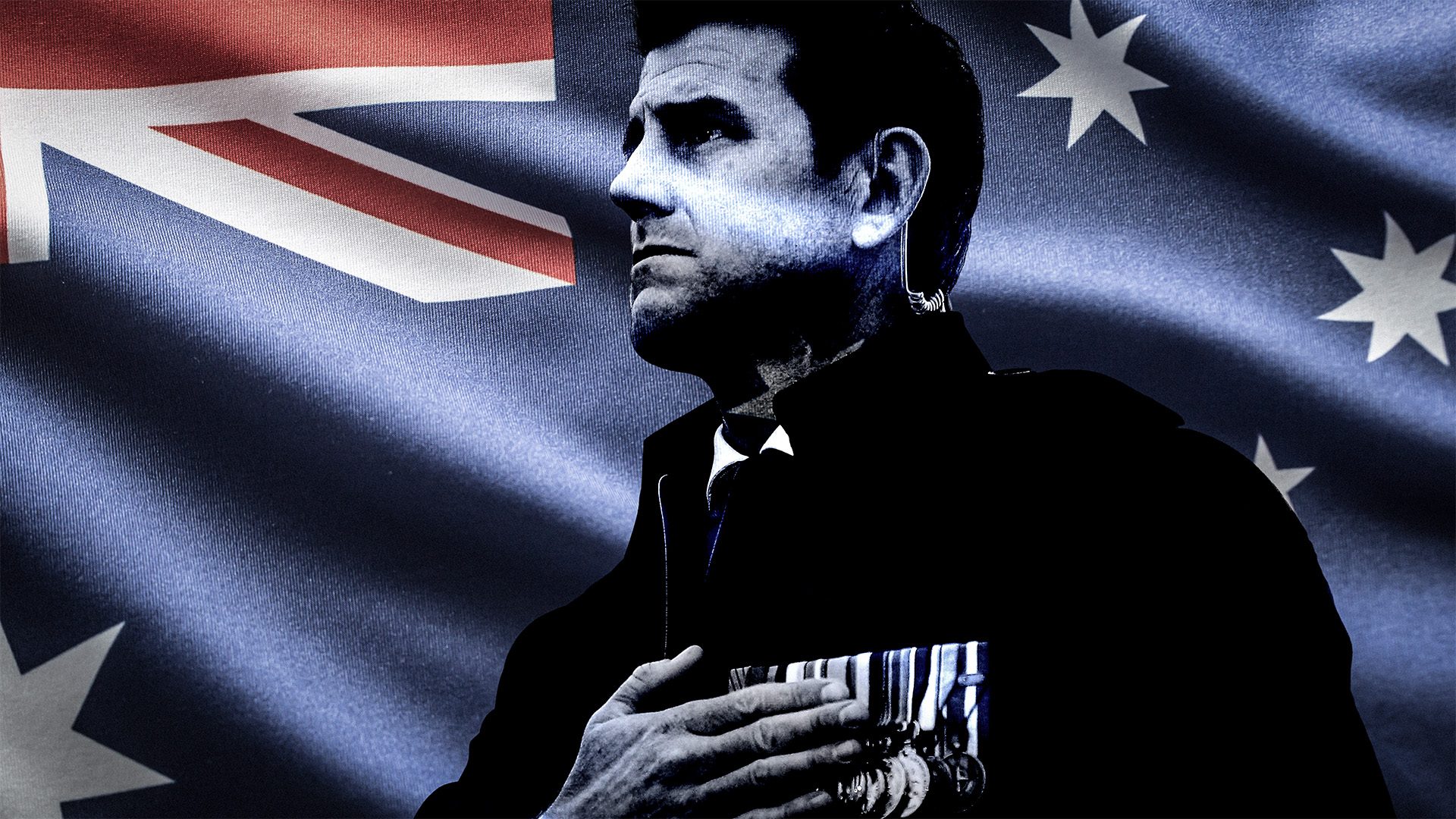
But that understanding is now under strain. Australia’s most decorated soldier, Ben Roberts-Smith, is at the centre of allegations that cut directly across the story that Anzac Day tells about war.
The question confronting Australians as they commemorate their heroes this April 25 is whether democracies enforce the rules they claim to fight by, or whether those rules hold only until they are tested.
In the United States, under Donald Trump, the conduct of war has moved in the opposite direction, from accountability and verification, towards justifying civilian harm and recasting targets after the fact. Outcomes are declared before they can be independently assessed, and failures are recalibrated as victory, often without evidence.
On April 7, Trump wrote on his Truth Social platform that “a whole civilisation will die tonight” if the Iranian government failed to meet his demands. The statement collapsed the distinction between threat and outcome, and between military target and civilian population.
The rules that govern war depend on something beyond the simple deployment of arms. Like all rules, they depend on facts that can be established: who was targeted, why, and to what effect.
Without that verifiability, the line between lawful and unlawful violence dissolves, and war descends into atrocity. Civilian deaths can be recast as legitimate targets, detainees as combatants, and mistakes as success. When that happens, all constraint vanishes from the battlefield.
The Roberts-Smith case has been an attempt, years after the events in question, to establish what happened in a place most Australians will never see, under conditions designed to obscure as much as they reveal. That is how these wars are fought – in fragments and contested accounts, in places where certainty is rare and memory often stands in for evidence.
The case has unfolded through a defamation action brought by Roberts-Smith against media organisations that reported allegations of unlawful killings in Afghanistan. The allegations have been contested at every stage, and the findings remain politically charged and culturally uncomfortable. Separately, allegations of war crimes are now the subject of police investigation.
It has proceeded from a simple premise: that what happens in war can be known, and once known it can be judged.
It is a process, however, that is neither neat nor fast. It unfolds long after the public has moved on, and when incentives are running in the opposite direction. It depends on institutions willing to withstand pressure: courts that hear disturbing evidence, journalists who challenge national myth, and a culture that does not shut those efforts down when they become inconvenient.
Suggested Reading


The Iran war has taught Australia a new, brutal truth about itself
It assumes that truth is not always visible but that it can be found, given time and effort and support.
This is the fault line running through modern conflict. The rules of war still exist and are invoked – often, as in Afghanistan, to the frustration of soldiers fighting an enemy that does not recognise those laws.
The force of the rules depends on whether there is a mechanism to establish what happened, and the will to act on the findings. Where those conditions hold, accountability is possible. Where they do not, the rules are just rhetoric.
The tension is not new. Australia’s conduct in war has long sat uneasily alongside the story the country likes to tell itself. A new account of the 1914 occupation of German New Guinea, largely forgotten in the shadow of the Gallipoli landings the following year, documents summary punishments, public floggings and reprisals carried out by Australian forces against prisoners and local people.
The episode, told by Michael Piggot in his book New Feller Master: Beyond the Trenches Australia’s Neglected WW1 Story, caused political embarrassment, and raised concerns about how Australian prisoners might be treated in return.
What endures instead is Gallipoli, and the language that grew around it – service, sacrifice, mateship – which came to define how Australians understand war. The earlier contradictions were written out.
For most Australians, war is encountered through ritual, through poppies, dawn services, and reverence for past and present heroes. Most will never face the snap decisions that bridge life and death, often in seconds and under extreme stress.
When those realities do surface, they are often refracted through another national instinct – the suspicion of the “tall poppy” and the tendency to cut down those who rise above the rest. It’s an easy frame, but a misleading one.
The scrutiny of Roberts-Smith has been cast in those terms by some people, as if the issue is resentment of status rather than an examination of conduct.
It’s not the same thing. The question is not whether a decorated soldier has been unjustly brought low, but whether the conduct of war is subject to examination at all.
When facts can be established, there is accountability, even if it is delayed. Where they are obscured or retold in real time, judgement is not possible.
Where respect for fact endures, so too does the possibility that those who authorised, enabled or sought to hide illegal wartime conduct will eventually be held to account, no matter how venerated or powerful they happen to be.
Lynne O’Donnell is an associate editor of The New World
 Most popular


‘The deep state stole my mini-budget’: An exclusive extract from Liz Truss’s new book

Nigel Farage’s attack on the RNLI and co is a new low even for this bottom-feeder

18 things that will absolutely, definitely happen if Trump gets whopped in the midterms
I went looking for Trump’s America – this is what I found